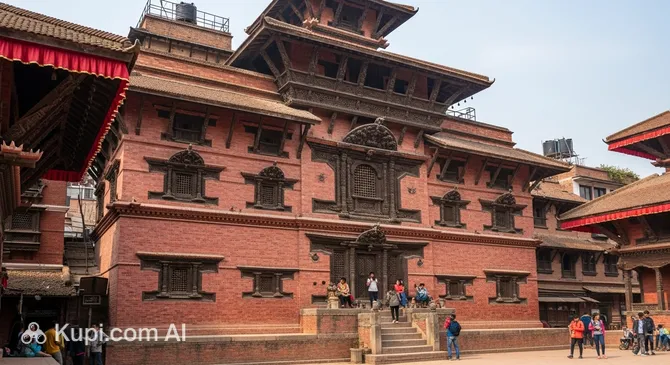
Kumari Ghar is a mystical temple and the official residence of the living goddess Kumari, located in the heart of Kathmandu. This majestic three-story red brick building in Nepal is decorated with unique wood carvings, which are considered among the finest examples of Newari architecture.
Kumari Ghar. Illustration.
Source: Kupi.com AI
Traveler photos:
A young girl, recognized as the earthly incarnation of the Goddess Taleju, lives in this sacred place. The temple is a unique symbol of religious harmony, as the deity is revered by both Hindus and Buddhists. Although entry to the inner chambers is permitted only to followers of Hinduism, tourists are free to enter the courtyard to admire the architecture and experience the aura of this sacred site.
As an integral part of the Durbar Square complex, a UNESCO World Heritage Site, Kumari Ghar attracts travelers with its mystery and ancient rituals. It is one of the few places on the planet where you can witness a living tradition of worshipping an earthly deity that has continued unbroken for centuries.
Contacts
Kumari Ghar is located in the heart of the historic center. To check visiting details during major festivals, it is recommended to consult the information center at Durbar Square in Kathmandu.
When visiting Kumari Ghar, most tourists hope to see the living goddess herself. She occasionally appears at the central carved window of the courtyard, usually between 9:00 AM and 11:00 AM and 4:00 PM and 6:00 PM. It is important to remember that it is strictly forbidden to take photographs at the moment of the Kumari's appearance—this is considered a violation of the ritual's sanctity.
While waiting for the deity, take a moment to closely examine the temple's courtyard. Its facade is adorned with incredibly detailed carvings depicting lions, peacocks, and intricate geometric patterns. The atmosphere here is filled with tranquility and reverence, providing a brief escape from the bustle of lively Kathmandu.
After your visit to the temple, be sure to stroll around the surrounding areas of Nepal at Durbar Square. Here you can visit the Hanuman Dhoka Palace, meet local sadhus, or browse souvenir shops selling traditional Nepalese masks and singing bowls.
Getting There
The sacred residence is located in Durbar Square in the center of Kathmandu. If you are staying in the popular tourist district of Thamel, the walk to the temple will take about 15–20 minutes. This is a great opportunity to get an inside look at life in Nepal's old city, passing by artisan shops and tiny shrines.
From Tribhuvan International Airport, the most convenient way to reach the site is by taxi. The journey to Durbar Square takes between 20 to 30 minutes, and the fare is approximately 500–800 Nepalese rupees. Rickshaws and small buses also operate across the city and can take you to the entrance of the historical zone, from where the Kumari Ghar building is just a few minutes' walk away.
For those using a navigator, the exact address of the site is: Layaku Marg, Kathmandu 44600. Please note that parking directly at the temple is extremely limited, so it is better to leave your vehicle in nearby parking areas and continue on foot.
Nearest city: Kathmandu
History & Facts
The tradition of worshipping a living goddess in Kathmandu dates back to the 17th century and the reign of the Malla dynasty kings. The Kumari Ghar building itself was constructed in 1757 by order of King Jaya Prakash Malla. He erected this magnificent brick house in Nepal specifically for the deity to strengthen his connection with the Goddess Taleju, who was considered the patroness of monarchs.
The process of selecting a Kumari is a strict and mysterious ritual. The girl must belong to the Shakya caste and possess 32 signs of perfection, including specific eye color and tooth shape. One of the most challenging tests for a young candidate is spending a night in a dark room filled with frightening deity masks, where she must remain completely calm to confirm her divine nature.
The Kumari lives in the temple until her first blood appears (either from an injury or the start of menstruation), which symbolizes the goddess leaving her body. After this, she returns to her family and leads a normal life. The authorities in Nepal pay former goddesses a monthly allowance, and the site remains an essential pilgrimage center uniting Hindu and Buddhist traditions.
Time Needed
A quick tour of Kumari Ghar and waiting for the goddess to appear at the window usually takes between 30 minutes to 1 hour. This is enough time to enjoy the courtyard's architecture and admire the intricate wood carvings.
If you plan to combine your visit with a detailed exploration of the entire Durbar Square in Kathmandu, including the Hanuman Dhoka Museum and neighboring temples, it is best to set aside 2–3 hours. This will allow you to immerse yourself in the atmosphere of Nepal's ancient capital without rushing.
Working Hours
The Kumari Ghar temple itself is open to visitors daily and around the clock. However, life inside is governed by strict religious rules. If you wish to see the Kumari, plan your visit for the morning hours (9:00 AM to 11:00 AM) or the evening (4:00 PM to 6:00 PM).
During major religious festivals, such as Indra Jatra, access to the courtyard may be restricted, as the goddess leaves her residence to participate in solemn processions through the streets of Kathmandu.
Open 24 hours
Nearby
Exploring the surroundings of Durbar Square can significantly enrich your trip. Near the residence of the goddess, you will find not only ancient palaces but also places for family recreation and walks.