Support

Nguru

About

Nguru is not just a major settlement in Yobe State, but a true trading crossroads in northern Nigeria. Located on the left bank of the Hadejia River, this city of approximately 270,000 people preserves the atmosphere of a traditional African trade hub. Here, the cultures of the Kanuri, Bede, and Manga peoples harmoniously intertwine, creating the unique flavor of the savanna region.

\n\n

The city's rich history dates back at least to the 15th century. During the height of the Bornu Empire, Nguru served as an important administrative center and the residence of the governor who controlled the western provinces. For centuries, the city flourished through trans-Saharan trade, serving as a vital point on caravan routes where salt, leather, and textiles were exchanged.
\n\n
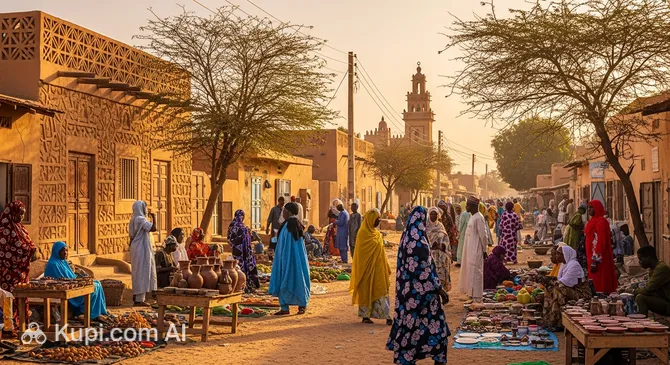
Nguru. Illustration.
Source: Kupi.com AI
\n\n

Today, Nguru remains a crucial agricultural and transport hub. Tourists are drawn here not by the glitz of modern megacities, but by the authenticity of daily life: bustling markets, traditional crafts like pottery, and proximity to the unique natural landscapes of the Lake Chad Basin. It is an ideal destination for those wishing to see the real, non-touristy Nigeria in all its simplicity and majesty.

\n\n

A visit to this city offers an excellent experience for travelers interested in the ethnography and economy of the region. We invite you to experience the hospitality of the locals and explore trading traditions that have remained unchanged for centuries.

Weather Overview

Nguru is located in a tropical savanna climate zone, characterized by sharp transitions between dry and wet seasons. For most of the year, hot and arid weather prevails. Temperature maximums often reach 38–41°C, especially in April and May, which are considered the hottest months of the year. Nights during the dry season bring relative coolness, when the thermometer can drop to 14–16°C.

\n\n

The rainy season in the region usually lasts from June to October, peaking in August. During this period, most of the annual rainfall occurs, which can lead to seasonal flooding near the Hadejia River. Humidity increases significantly, but the rains bring long-awaited relief from the extreme heat, lowering daytime temperatures to a more comfortable 27–30°C.

\n\n

To plan a comfortable trip, it is useful to know what the weather in Nguru will be like during different months of the year. The most favorable time for a visit is considered to be the period from November to February: at this time, the sky remains clear, and the heat is not so exhausting. However, dust storms (Harmattan) coming from the Sahara are possible during these months, so travelers are recommended to have goggles and light scarves with them.

Average monthly temperature

Average monthly precipitation

Interesting Facts

Nguru is a city with a rich past and a unique character. Here are some fascinating facts about this place:

\n\n
    \n
  • Ancient Roots: The city existed as early as the 15th century, and by the 16th century, it acquired the status of the residence for the Galadima—a high-ranking governor who ruled the western territories of the powerful Bornu Empire.

  • \n
  • Railway Terminus: Since 1930, Nguru has been the terminus of the Western Line of the Nigerian Railway Corporation, linking this remote northern region to the port of Lagos on the Atlantic coast.

  • \n
  • Meat Capital of the Region: The city is considered one of the largest livestock trading centers in Nigeria. Its significance in this industry is so great that as early as the 1960s, one of the country's most modern abattoirs at the time was built here.

  • \n
  • Natural Treasure: The city gave its name to the unique Hadejia-Nguru Wetlands, which are protected under the Ramsar Convention as a habitat for thousands of migratory birds arriving even from Europe.

  • \n
  • Strategic Hub: Thanks to its position on the border between the Hausa lands and the Bornu Empire, the city was for centuries a key point of trans-Saharan trade, where the interests of merchants from across West Africa converged.

  • \n

How to Get There

Getting to Nguru is a task that requires planning, as the city is located in a remote northern region of Nigeria. There is no direct air service to the city, so the nearest major air hub is Mallam Aminu Kano International Airport (KAN), located approximately 300 kilometers away. From Kano, you can reach the destination via intercity buses or taxis; the journey along federal highways takes between 5 to 7 hours depending on road conditions.

\n\n
AirportPassenger trafficDistance
Mallam Aminu Kano International Airport585 190228 km
Gombe Lawanti International Airport56 403290 km
Bauchi Airport21 540294 km
\n\n

Historically, the most important mode of transport is the railway. Nguru Railway Station serves as the terminus for the Western Line originating from Lagos. Nigerian Railway Corporation (NRC) trains pass through Kaduna and Kano. While this is a budget-friendly way to travel, it should be noted that trains may run irregularly, and the journey from Lagos can take more than a day. Nevertheless, it is a unique way to witness the changing natural zones of the country.

\n\n\n\n

If you are planning a visit, it will be helpful to learn more about all the options for how to get to Nguru from neighboring states. Bus services connect the city with Damaturu (the capital of Yobe State, about 150 km) and Potiskum. Roads in this region are often busy with trucks carrying livestock and grain, and during the rainy season, the journey can take significantly longer due to washed-out sections on the approaches to the city.

Main Attractions

While Nguru is not a classic tourist center with an abundance of monumental landmarks, it offers a unique immersion into the atmosphere of the traditional Nigerian north. The main center of attraction here is the Central Market. This is a living organism where the trade of livestock, grain, and local handicrafts never stops from early morning. For the traveler, this is the best opportunity to see the authentic life of the region and purchase unique leather goods or traditional ceramics.

\n\n

The city's architectural character is complemented by the Emir's Palace—the residence of the local ruler. The building is designed in the traditional style characteristic of Kanuri culture and serves as an important symbol of local heritage preservation. Adjacent to the palace are majestic mosques, whose minarets rise above the low-rise buildings, forming the city's recognizable skyline along the Hadejia River.

\n\n

For nature lovers, the Hadejia-Nguru Wetlands in the surrounding area will be a true discovery. This vital ecosystem is recognized as a site of international importance, where one can observe the migration of rare birds. Despite the lack of developed tourist infrastructure, a trip to the wetlands offers an unforgettable experience of the pristine savanna nature and the chance to see flamingos and other birds in their natural habitat.

\n\n

Another equally interesting site is the Nguru Railway Station, built in 1930. The station building and the terminal itself, which marks the end of the Western Line, embody an entire era in the development of Nigeria's transport. A walk around the station grounds allows you to feel the spirit of the time and understand the strategic importance of the city as a link between the north and south of the country.

Local Cuisine

The gastronomy of Nguru reflects the rich agricultural traditions of Northern Nigeria and the cultural heritage of the Kanuri and Hausa peoples. The staple of the diet here consists of thick, hearty puddings known as tuwo, made from sorghum, millet, or maize. These are served with a variety of aromatic sauces, such as miyan kubewa (based on okra) or nutritious peanut and spinach-based sauces. Due to the proximity of the Hadejia River, fresh and dried fish are frequently featured on local menus.

\n\n

Meat dishes hold a special place, as the city is a major livestock trading center. You should definitely try kilishi—a local specialty consisting of thinly sliced dried beef, generously seasoned with spices and peanut paste. Also popular is jollof—spicy rice, which is prepared here with a distinct northern flair. For dessert, markets often offer sweet peanut cakes and millet treats.

\n\n

The dining culture in the city revolves around street stalls and small tea shops near the station and market. Locals often eat at bukas (local eateries), where for a small fee (just 1–3 dollars), you can get a substantial portion of food. Notable drinks include tuwade tea (strong tea with milk and spices) and the refreshing corn-based drink kunu. Strong alcohol is very rare in the city due to the region's deep Islamic traditions.

Travel Tips

Traveling to Nguru is a chance to see the authentic life of northern Nigeria. To make your trip comfortable and safe, check out these practical tips.

\n\n
    \n
  1. Clothing and Dress Code: Choose light clothing made from natural fabrics to better handle the heat. As this is a conservative Muslim region, it is highly recommended to wear modest clothing that covers the shoulders and knees for both men and women.

  2. \n
  3. Health: Before your trip, be sure to get a yellow fever vaccination and take antimalarial medications. Drink only bottled water and use repellents, especially in the evenings.

  4. \n
  5. Finance: International cards are practically not accepted in the city, and ATMs may be unavailable or may not work with foreign banks. Carry a sufficient supply of cash in Naira for all expenses.

  6. \n
  7. Security: Avoid walking alone after dark and always keep your valuables with you. Closely monitor local news and follow the safety recommendations of local authorities.

  8. \n
  9. Connectivity: Wi-Fi in hotels is rare and often slow. It is best to buy a local SIM card (MTN or Airtel) immediately upon arrival in Nigeria for stable mobile internet.

  10. \n
  11. Etiquette: Greetings are very important in local culture. Always greet people before asking a question or starting to trade. Before taking photos of locals or their homes, always ask for permission.

  12. \n
  13. What to Avoid: Do not consume alcohol in public places and do not attempt to photograph government buildings or strategic sites such as bridges and security posts.

  14. \n
  15. Pro Tip: If you plan to visit the wetlands, hire a local guide at the market—this will not only ensure safety but also help you find the best spots for bird watching.

  16. \n
\n\n

Following these simple rules will help you establish rapport with the locals and make your stay in this unique trading city pleasant and memorable.

Entertainment & Nightlife

The entertainment scene in Nguru is deeply rooted in local traditions and differs significantly from that of typical megacities. Nightlife is virtually non-existent due to the conservative lifestyle of Yobe State. Evening leisure for locals usually centers around tea houses near the market or central squares, where people gather for slow conversation over a cup of traditional spiced tea. This is the perfect time to feel the calm rhythm of the city after the daytime heat.

\n\n

Daytime activities are more active. Football is immensely popular—matches between local teams attract many spectators and are the main social event of the week. Tourists can join the fans at makeshift stadiums to experience the Nigerian passion for the game. Visiting the artisan quarters is also an interesting experience, where you can watch weavers and potters at work.

\n\n

For those seeking more modern entertainment formats, such as cinemas or large shopping malls, it is recommended to plan trips to larger cities like Kano. In Nguru itself, the focus is on ethnographic tourism and nature observation in the nearby wetlands, which become the primary destination for eco-tours during bird migration seasons.

Parks & Museums

In Nguru itself, you won't find classic museums with standard exhibits; however, the city itself can be described as a kind of "living museum" under the open sky. The role of history keeper is performed here by the Emir's Palace and the architecture of the old quarters, reflecting the centuries-old traditions of the Kanuri people. The way of life, craft workshops, and even the old railway station speak far more eloquently of the region's history than any display case could.

\n\n

Regarding parks, there are virtually no organized green zones within the city limits—the construction here is dense and functional, tailored to the needs of agriculture and trade. Greenery is represented mainly by shaded alleys near major mosques and private courtyards where residents escape the daytime heat. The banks of the Hadejia River serve as the main "park" for locals, where nature retains its natural appearance.

\n\n

For those seeking true natural riches, the destination of choice is the Hadejia-Nguru Wetlands. This is a vast territory east of the city that serves as a nature reserve of global significance. While there are no neat paths or benches, eco-tourism enthusiasts will find the untouched beauty of the wild here and can see thousands of birds, making this place the primary natural "gallery" of the entire region.

Getting Around

The transport system of Nguru is simple and adapted to the needs of an agricultural trading center. The main means of getting around the city and the immediate suburbs are motorized rickshaws, known in Nigeria as "keke napep," and motorcycle taxis (okada). This is the fastest and most affordable way to get from the railway station to the central market or residential areas. The cost of a trip is low, usually less than one dollar, but the price should be agreed upon in advance.

\n\n

Internal communication is also provided by minibuses, which locals call "danfo." They connect the city center with the outskirts and neighboring settlements. Be prepared for the fact that transport is often overcrowded, and schedules are quite approximate: vehicles depart as they fill up. During peak hours, when traders return from the market, congestion can occur on main streets, exacerbated by the movement of trucks and herds of livestock.

\n\n

For long-distance travel, the railway station is the key hub, with trains departing toward Kano and Lagos. There are also several bus stations ("motor parks") in the city, where you can find taxis and minibuses to major cities in Yobe State and neighboring regions. Payment for city transport is made exclusively in cash, so it is always useful to carry small bills in the local currency.

Accommodation

The hotel sector in Nguru is primarily oriented toward business travelers and traders, so the choice of accommodation is quite specific. There are virtually no luxury chain hotels in the city, but budget guesthouses and inns are widely available. Most of them are concentrated around the railway station and the central market, which is convenient for those arriving for commercial purposes.

\n\n

The cost of accommodation in local hotels typically ranges from $10 to $30 per night. For this price, guests are offered a basic set of amenities: a bed, a fan, and a private shower. Air conditioning is less common and more expensive. For those planning a longer stay, locals sometimes offer rooms for rent, allowing for a deeper immersion into the daily life of northern Nigeria.

\n\n

When planning your trip, it is recommended to book accommodation in advance, especially if your visit coincides with major market days or religious holidays when the flow of traders to the city increases. It should be kept in mind that international booking systems may not display all available options, so accommodation issues are often settled on-site or through direct contact with guesthouse owners.

Nearby Cities

Nguru is a convenient starting point for exploring the unique settlements and natural beauties of northern Nigeria. Thanks to a developed bus network and the railway line, travelers can easily plan short excursions to neighboring regions to see the diversity of cultures and landscapes in this area.

\n\n

One of the most popular destinations is a trip to Gashua, located just 64 kilometers away. This city is also known for its traditions and proximity to the river. Another interesting destination is Potiskum, a major commercial center of the state, which can be reached in a couple of hours. For those ready for a longer journey, the road is open to ancient Kano, one of Africa's oldest cities, which impresses with its historical markets.

\n\n
CityPopulationDistance
Gashua125 81764 km
Goure14 639124 km
Azare105 687136 km
Potiskum86 002147 km
Dutse153 000175 km
\n\n

Exploring the surroundings allows for a better understanding of the economic and cultural interconnectedness of the towns in Yobe State. Each such trip reveals new facets of life in the savanna—from bustling roadside markets to quiet settlements where time seems to have stood still. Do not miss the opportunity to broaden your horizons and meet the hospitable residents of neighboring communities.

Shopping & Souvenirs

Shopping in Nguru is an adventure for those who appreciate authenticity and traditional color. The main place for shopping is the Central Market, which is considered one of the largest in Yobe State. There are no fancy shopping malls here, but there is an abundance of goods the region is famous for: from high-quality gum arabic to leather products. The market is divided into sectors where you can find everything from spices and grain to clothing and livestock.

\n\n

Special attention should be paid to local souvenir products. The city is famous for its artisans, so the best purchases would be ceramics made using ancient techniques, and handmade leather bags or wallets. Textiles with traditional patterns are also popular. Most retail outlets are small shops and open stalls located along the main streets leading to the railway station.

\n\n

Shops usually operate from early morning until sunset, while Friday is a special day when many stalls close during prayer time. The primary method of payment is cash (Nigerian Naira); the use of bank cards in the market stalls is impossible. And do not forget to bargain—in Nguru, this is not just a way to lower the price, but an important part of the communication culture, allowing you to show respect to the seller.

Reached the end of the page?

That means the route is fully explored