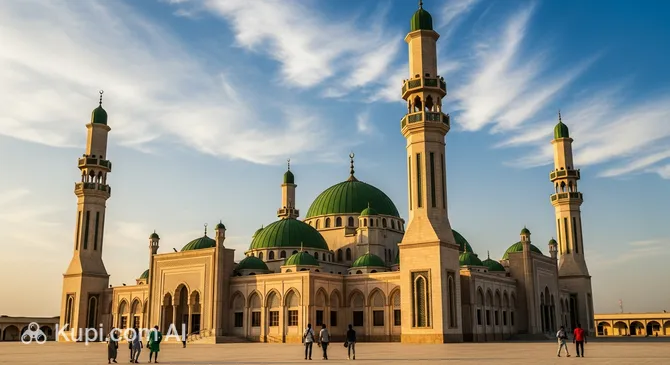
Damaturu is a dynamic administrative center in northeastern Nigeria. The city was designated the capital of Yobe State in 1991, providing a powerful boost to its development. Situated on picturesque savanna plains, it blends traditional African life with its role as a modern administrative hub.
Damaturu. Illustration.
Source: Kupi.com AI
The city's geographical location makes it an important commercial crossroads. It is home to around 255,000 people, and the atmosphere is filled with the business activity of government institutions and commercial ministries. The city's status as the headquarters of the Damaturu Emirate plays a vital role in the city's history, giving it special cultural significance in the region.
For travelers, Damaturu is primarily interesting as an authentic place to experience the daily rhythm of savanna life. Key landmarks include modern government buildings, the Governor’s residence, and Yobe State University, which gives the city the characteristics of an educational center. Visiting Damaturu offers a chance to see the real, non-touristy Nigeria in all its functional beauty.
Weather Overview
The climate in Damaturu is typical of a tropical savanna, featuring distinct dry and wet seasons. Temperatures remain high throughout the year, creating an atmosphere of eternal hot summer. You can check the current weather forecast for Damaturu on our website before planning your trip.
The hottest period is April and May, when temperatures can reach +40°C. During this time, humidity is minimal, and the sun is very strong. Expect sweltering heat during the day and pleasant coolness in the evenings. The period from July to September brings long-awaited rains, peaking in August — this month sees the most rainfall, briefly turning the savanna landscapes green.
The winter months (December and January) are characterized by dry and clear weather with average temperatures around +22°C. The Harmattan wind often blows during this period, bringing dust from the Sahara, which can slightly reduce visibility but makes the daytime heat more tolerable. This is considered the most comfortable time for tourists to visit the city.
Average monthly temperature
Average monthly precipitation
Interesting Facts
Official Status: Damaturu officially became the capital of Yobe State on August 27, 1991, immediately after the creation of the state itself.
Logistics Hub: The city is located on the important A3 federal highway, which connects it to key points such as Potiskum and Maiduguri.
Education Center: It is home to Yobe State University, founded in 2006, which was originally named after Bukar Abba Ibrahim.
Traditional Leadership: Damaturu is the historical headquarters of the Damaturu Emirate, maintaining its status as an important cultural and spiritual center for the region.
Vast Territory: The Damaturu Local Government Area covers approximately 2,366 km², making it one of the largest by area in the state.
How to Get There
Damaturu is a major transport hub in the northeast of the country, though it is primarily accessible by land. The main artery connecting the city to the rest of the world is the A3 highway. It provides convenient links to Maiduguri to the north and Potiskum to the south. You can find more details on how to get to Damaturu on the specialized pages of our guide.
There is no airport directly in Damaturu. Travelers most often use Maiduguri International Airport (YYOL), located about 100 kilometers away. After landing in Maiduguri, you can reach Damaturu by intercity bus or taxi; the trip usually takes 2 to 3 hours depending on road conditions and traffic.
There is currently no rail service in this area. For long-distance travel from cities like Abuja or Lagos, comfortable interstate buses are widely used. Travel time from the capital can range from 12 to 20 hours, so it is recommended to plan your trip in advance and choose daytime departures for greater comfort and safety.
Station
Passenger traffic
Distance
Maiduguri Railway Station
1
130 km
Bauchi Railway Station
1
286 km
Main Attractions
Damaturu is primarily an administrative and market center, so there are few world-class tourist attractions here. Nevertheless, the city offers a unique immersion into life in northeastern Nigeria. The main draws are the central markets, which bustle with trade in agricultural products, livestock, and traditional handicrafts.
The city's architectural character is defined by its government buildings. Special attention should be given to the Governor's residence and the complex of state ministries, which stand out for their monumentality. These sites emphasize Damaturu's status as the important political center of Yobe State.
For those interested in education and science, the campus of Yobe State University is a point of interest. This modern educational institution is not only a training ground for the region's professionals but also serves as a cultural hub where public events are frequently held. A stroll through the university grounds allows you to feel the city's intellectual atmosphere and see the life of Nigerian youth.
Local Cuisine
The culinary culture of Damaturu is closely tied to the traditions of the Hausa people and the region's agricultural characteristics. The local diet is based on dishes made from millet, sorghum, and peanuts. Be sure to try Tuwo — a thick and hearty porridge usually served with various soups seasoned with aromatic leaves and spices.
Meat lovers will enjoy the local fried rice, Tuya, as well as mutton and beef dishes prepared according to Halal traditions. A specific feature of the city is the abundance of fresh products straight from the markets. Local street food, found in small roadside cafes and market areas, offers the honest and rich flavors of home-cooked Nigerian cuisine.
Popular drinks in Damaturu include tea and Kunnu — a traditional non-alcoholic grain drink similar to kvass. The food scene here is simple and authentic, without flashy restaurants, but with a warm atmosphere. When visiting local eateries, it is recommended to choose spots popular with the locals, where the ingredients are always fresh.
Travel Tips
Visiting Damaturu is a chance to see the real Nigeria, but such a trip requires some preparation. These tips will help you feel confident and comfortable in the capital of Yobe State.
Clothing and Dress Code: Choose light clothing made from natural fabrics to protect against the heat, but remember to respect local customs. Since the majority of residents are Muslim (Hausa), it is recommended to dress modestly, covering shoulders and knees.
Transport: For getting around the city, it is best to use three-wheeled rickshaws or taxis. If you decide to use a motorcycle taxi (okada), be careful and always hold on tight.
Finances: The primary currency is the Nigerian Naira. Cards are rarely accepted, so always carry cash. ATMs are available in the center, but they do not always work with international cards.
Health: Be sure to drink only bottled water and use insect repellent. During the dry season, there can be a lot of dust in the air, so people with allergies should bring protective masks.
Communication: The main language is Hausa, but many government employees speak English. Learn a few greetings in Hausa — it goes a long way with the locals.
Etiquette: Always greet people before asking for anything. You should only take photos of people and administrative buildings with prior permission.
What to Avoid: Intercity travel at night is not recommended. Also, avoid walking in remote outskirts of the city after sunset.
Connectivity: A local SIM card can be purchased at the markets or along the A3 highway; this will provide you with stable mobile internet, as Wi-Fi is rarely found in hotels.
Damaturu will welcome you with its hospitality and authenticity if you follow these simple rules. Have a pleasant and safe journey!
Entertainment & Nightlife
Damaturu's entertainment scene reflects the city's conservative and business-like character. There are no noisy nightclubs or large concert venues typical of major metropolises. The city's nightlife is quite quiet and focused on family outings and evening gatherings in local cafes. The main crowd in the evenings consists of government employees, students, and traders relaxing after the workday.
Daytime entertainment mostly involves visiting markets and strolling through central squares, which serve as the main landmarks for residents. Cultural life often revolves around Yobe State University, where student events and festivals may take place. If you are looking for more active evening entertainment, locals often recommend a trip to nearby larger centers; however, Damaturu itself lends itself to a calm and measured pastime.
Safety in the city is maintained at a good level in administrative districts, but for nighttime travel, it is recommended to use the services of trusted taxis or local three-wheeled rickshaws. Evenings in Damaturu are a time for tasting street food and slow conversations in the cozy atmosphere of a provincial capital.
Parks & Museums
Damaturu is located in the dry savanna zone, which determines the nature of local green spaces. There are few classic European-style parks here, but the Yobe State University grounds are a kind of oasis with landscaped paths and areas for walking. It is one of the most pleasant places in the city to enjoy peace away from the market bustle.
The museum infrastructure in the city is currently under development. Nevertheless, Damaturu's role as the headquarters of the Emirate allows you to touch history by visiting the traditional squares in front of the residences of local leaders. Cultural ceremonies are often held here, which can be more interesting than any formal museum.
For outdoor recreation, residents also use the open spaces around state administrative buildings, where trees have been planted to provide shade. Despite the harsh climate, the city strives to maintain functional public spaces that become centers of attraction in the evening when the heat subsides.
Getting Around
The public transport system in Damaturu is simple and efficient for moving around the compact center. The main means of transport for locals and visitors are motorcycle taxis (okada) and three-wheeled rickshaws. They are maneuverable, inexpensive, and allow you to quickly reach markets or government offices even during peak hours.
Minibuses, which locals call Dango, are also used for travel between districts. This is the most budget-friendly way to get around, although the buses are often overcrowded. Payment on city transport is made in cash to the driver; there are no fixed tickets or transit cards, so it is recommended to carry small change. Thanks to the flat terrain, many parts of Damaturu are quite accessible for walking, especially in the morning hours. If you require more comfort, there are taxi services in the city that can be called through hotels or found at designated stands near markets and along the main A3 highway. There is no rail transport or metro in the city, which is typical for most provincial centers in the region.
Accommodation
Accommodation options in Damaturu consist mainly of functional guesthouses and small mid-range hotels. Most of the hotel stock is geared toward government employees on business trips, students, and transit travelers. There are virtually no luxury hotels here, but you can find decent budget options with basic amenities.
The most convenient areas to stay are near the administrative center and along the A3 highway. Proximity to government buildings ensures better infrastructure and a quieter environment. Accommodations near the university are also popular, often chosen by teachers and researchers.
When planning your trip, keep in mind that online booking services may not display all available options. Sometimes it is more reliable to arrange accommodation through local contacts or book rooms in proven guesthouses a few days before arrival. Housing prices in Damaturu remain quite affordable, making the city accessible to budget travelers.
Nearby Cities
Thanks to its location on the federal highway, Damaturu serves as a convenient starting point for exploring neighboring regions of northeastern Nigeria. The city's surroundings offer several destinations, each with its own unique character.
Just 96 kilometers to the south is Potiskum — a major commercial hub known for its massive livestock markets and active commercial life. It is a great option for a day trip to see the scale of Nigerian trade. In the other direction, about 129 kilometers away, lies Maiduguri. This is the capital of the neighboring state, offering more developed urban infrastructure, museums, and historical landmarks.
Exploring these cities allows for a better understanding of the diversity of cultures and traditions in Yobe and Borno states. Buses and taxis run regularly between the cities, making travel around the region accessible and educational for those who want to see more than just one provincial capital.
Shopping & Souvenirs
Shopping in Damaturu is primarily a vibrant adventure in local markets. The city does not have massive shopping malls, but its central markets more than make up for this with their local color. Here you can find everything from fresh grains (millet and sorghum) to the famous local peanuts for which Yobe State is known.
For those looking for souvenirs, the work of local weavers is worth noting. Traditional fabrics with unique patterns from the northeastern region make excellent reminders of your trip. Trade is mostly concentrated along the A3 highway, where there are numerous shops selling essentials and handicrafts.
Shops in the city usually open early in the morning and stay open until sunset, while the most active trading in the markets takes place in the first half of the day. Payment is made predominantly in cash (Naira), so tourists should take care to have small change in advance. Strolling through Damaturu's market stalls is the best way to feel the pulse of the city and interact with the locals.