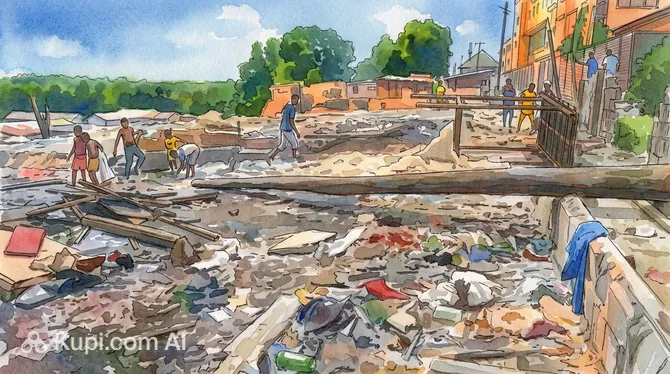
Welcome to Damboa — a colorful corner of Borno State, located in the northeastern part of Nigeria. This city is not your typical glossy postcard tourist destination; however, it offers travelers a rare opportunity to witness the authentic life of an agricultural region that has preserved the spirit of its traditional way of life. The atmosphere here is imbued with the tranquility of the provinces, where the daily rhythm is dictated by farming and the lively trade at local markets.
Geographically, the city holds an important position as the administrative center of the largest local government area in the state by landmass. With a population of about 233,500 people, the city serves as a hub for many surrounding villages. Damboa. Illustration.
Source: Kupi.com AI
The surrounding landscapes are classic African savanna — flat terrain that changes its appearance from dusty gold to lush green depending on the season.
The historical heritage of this land is inextricably linked to the powerful Kanem-Bornu Empire, which dominated the region for centuries. Although the modern city looks modest, echoes of its great past can still be traced in its architecture and the customs of its inhabitants. The primary languages spoken here are Hausa and Wandala, adding linguistic diversity to the cultural palette of the place.
A visit to this region will be a true discovery for those seeking authenticity and wanting to get to know "unfiltered" Africa. We invite you to experience the hospitality of the local people and immerse yourself in the atmosphere of the traditional Nigerian North.
Weather Overview
The city of Damboa is dominated by a typical tropical savanna climate, characterized by a distinct change between dry and wet seasons. Travelers should be prepared for the heat that prevails here most of the year. The climate of the city dictates the rhythm of life for all its inhabitants and affects the condition of the roads in the region.
The dry season lasts from November to May. During this time, temperatures can rise to +40°C, especially in March and April. Nights in December and January can be relatively cool (around +15°C). During this period, the Harmattan wind often blows, bringing dust from the Sahara. The wet season arrives in June and continues until October. Rainfall peaks in August, when up to 275 mm of rain falls, bringing long-awaited freshness but potentially making movement around the area difficult.
In general, expect hot and dry weather in the first half of the year and heavy tropical downpours in the second. The most comfortable time for a visit is considered to be the months from November to February, when the heat has not yet reached its peak and humidity is at its lowest.
Average monthly temperature
Average monthly precipitation
Interesting Facts
The administrative district centered in Damboa covers an impressive area of 6,219 square kilometers, making it the largest by territory in Borno State.
Although the exact date of the city's founding is hidden in the mists of time, its fate for centuries was closely intertwined with the history of the Kanem-Bornu Empire, one of Africa's oldest monarchies.
The linguistic map of the city is unique: despite English being the official language, colorful dialects of Hausa and Wandala are most commonly heard in everyday life.
For lovers of precise data: the geographical heart of the city is located at coordinates 12.7566° North latitude and 11.1561° East longitude.
The city is an important regional postal hub, having its own unique postal code — 601.
How to Get There
The transport accessibility of Damboa largely depends on road connections with the key cities of Borno State. There are no airports or railway stations in the city itself, so the main way to get here remains land transport. Travelers should keep in mind that road conditions can change depending on the season, especially during the rains, which affects travel time.
The nearest major transport hub is Maiduguri, located approximately 82 kilometers away. A trip by taxi or bus from this city usually takes 2 to 3 hours. Damboa can also be reached from the city of Damaturu, covering a distance of about 214 kilometers, which will take 4–5 hours. You can study the routes in more detail in the section on ways to travel.
For those planning a flight, the final destination will be one of Nigeria's major airports, after which you will need to transfer to a bus or a rented car. Aviation infrastructure in the region itself is limited, and there are no regular passenger flights directly to the city.
Railway communication in this area is currently not developed, so it is not possible to plan a route by train directly to the city. The main focus should be on private carriers and regular bus lines connecting the city with neighboring administrative centers.
Station
Passenger traffic
Distance
Maiduguri Railway Station
1
90 km
Main Attractions
The city of Damboa is a place where the main attraction is life itself and its slow, steady flow. You won't find world-famous museums or amusement parks here, but you can see architecture that reflects the traditional style of the region, closely tied to the centuries-old history of the Kanem-Bornu Empire. Strolling through the residential quarters, it's worth paying attention to the traditional buildings, which are adapted to the hot savanna climate.
The centers of the city's social and economic life are the local markets. These are true hubs of daily activity, where you can see a vast variety of goods — from vibrant fabrics to exotic spices. A visit to the bazaar allows tourists not only to purchase unique souvenirs but also to observe authentic trading rituals that have changed little over recent decades.
For those interested in administrative culture, the local government buildings located in the center may be of some interest. They stand out against the rest of the buildings and serve as landmarks for meetings. Overall, a walk through the city's central square provides an opportunity to feel the rhythm of provincial Nigeria and see the city as it is for its residents — hardworking, simple, and hospitable.
Local Cuisine
A gastronomic journey to Damboa is an introduction to the traditional flavors of northern Nigeria. The local diet is based on cereals such as millet and sorghum, which are grown in the surrounding fields. One of the main dishes to try is Tuwo — a thick and nutritious millet porridge, usually served with various spicy vegetable and spice sauces.
For lovers of meat delicacies, a must-try item is Suya — spicy meat (usually beef or goat) grilled over an open fire and generously sprinkled with a mixture of peanut flour and pepper. Also popular is Fura — a bean-based dish that locals often eat for breakfast or lunch. The style of eating here is predominantly street-based: the best culinary discoveries await you in the markets, where food is prepared right in front of you using the freshest ingredients.
Among the drinks, local spiced tea and traditional palm wine, which is popular in this savanna region, hold a special place. The food culture in the city is simple and democratic — there are no pretentious restaurants, but there is a sincere desire to treat guests to the best that this land provides. The freshness of the ingredients and the abundance of natural spices make the local cuisine truly memorable.
Travel Tips
A trip to Damboa requires a certain amount of preparation and knowledge of local features. These tips will help make your trip more comfortable and safe.
Clothing and Essentials: Choose light clothing made of natural fabrics, as the climate is very hot. Important: the region is conservative, so prefer a modest dress code that covers shoulders and knees. Be sure to bring a hat, sunglasses, and a reliable repellent.
Transport: The best way to get around is by hired taxi or renting a car with a local driver. Plan all movements for daylight hours, as there is almost no street lighting.
Finances: The official currency is the Nigerian Naira (NGN). ATMs in the city are a rarity, and cards are accepted very reluctantly. Be sure to stock up on cash by exchanging currency in advance in major cities like Maiduguri.
Health: Drink only bottled water and avoid ice in drinks. It is recommended to carry a basic first-aid kit and insurance. The nearest qualified medical assistance can be found in the state's administrative center.
Communication: The primary language of communication is Hausa. Learn a few greeting phrases: "Sannu" (hello) or "Nagode" (thank you). English is understood by administration staff and the youth. It is better to purchase a SIM card in advance.
Local Etiquette: Greetings are very important — always say hello to people before asking for something. Ask for permission before taking photos of local residents or their homes.
What to Avoid: Do not discuss political or religious topics with strangers. Avoid walking on the outskirts at night and do not display expensive equipment or jewelry.
Additional Tip: Bring a power bank, as there are power outages in the region.
Despite its simplicity, this city is capable of providing a unique experience of immersion into real African life. Travel with an open heart and respect for local traditions!
Entertainment & Nightlife
The entertainment infrastructure in Damboa is minimal, as the city lives in accordance with a traditional agrarian lifestyle. There are no large nightclubs, cinemas, or modern entertainment centers here. The main form of leisure for local residents remains the market squares during the day and cozy gatherings with family or friends after sunset.
If you are looking for a more active evening program or cultural events, it is customary to head to Maiduguri, located about 82 kilometers away. There, you can find basic cafes and restaurants offering more modern service. In the city itself, life quiets down with the arrival of dusk, making it an ideal place for those seeking peace and solitude away from urban noise.
Daytime activities are limited to exploring the surrounding natural landscapes or observing the work of local artisans. The absence of a mass entertainment industry makes a stay here truly calm and meditative. This is a city where people come not for parties, but for a deep immersion into the atmosphere of provincial northern Nigeria.
Parks & Museums
The cultural landscape of Damboa differs from the usual tourist routes. There are no classic museums or art galleries with permanent exhibitions in the city. The history of this land is passed down from generation to generation through oral traditions and preserved in the customs of the inhabitants. For those who want to touch the past, the best "museum" will be a visit to the traditional quarters, where the architecture and daily life are living exhibits in themselves.
As for parks, there are no specially designated recreational zones with attractions or decorative gardens in the city. Green zones are mainly represented by the natural savanna vegetation surrounding the city. Small clusters of trees can be found near administrative buildings, where they provide much-needed shade on hot days.
Local residents find relaxation in the natural landscapes beyond the city limits. If you love nature, a walk on the outskirts accompanied by a local guide will allow you to see the beauty of the wild savanna, get acquainted with the local flora, and feel the vastness of the Nigerian plains. This is a specific type of recreation that requires a love for open spaces and authenticity.
Getting Around
The transport system of Damboa is as simple and functional as possible, reflecting the needs of an agrarian community. You won't find subways or trams here; the main means of transport for locals and guests alike are minibuses (dango) and motor rickshaws. These types of transport run between the city center, markets, and nearby villages, providing basic mobility.
Fares are paid exclusively in cash directly to the driver. Prices for trips are very affordable, but there is no fixed schedule — transport usually departs as it fills up. During peak hours, it can be a bit crowded, but due to the low building density of the city, serious traffic jams are rare here.
For traveling short distances within the central part of the city, it is convenient to use the services of motorcycle taxis, which are highly maneuverable. If you need to go to another city, such as Maiduguri, it is best to use the services of private carriers or taxis, which can be found at special stands near the city exit. Travelers should remember that during the rainy season, traveling on unpaved roads can be difficult.
Accommodation
Accommodation options in Damboa are limited and primarily focused on practicality. You won't find luxurious five-star hotels or large international hotel chains here. Most of the offerings are modest guesthouses and small guest homes that provide basic amenities for transit travelers and specialists visiting the region on business.
The main places to stay are concentrated in the central part of the city, which is convenient for access to transport hubs and markets. Since the tourism infrastructure is in its early stages of development, the level of comfort in such establishments can be described as "Spartan" but quite acceptable for a short-term stay.
If you are planning a trip, it is recommended to book accommodation in advance by contacting the owners directly or through partners in Maiduguri, as popular online booking services may not display all available options. Prices for accommodation here are very budget-friendly, making the city accessible to economical travelers.
Nearby Cities
Damboa can serve as a starting point for exploring the surrounding areas of Borno State, which hide many interesting places. A trip to neighboring cities will allow for a better understanding of the diversity and scale of this region.
The nearest and most significant destination is Maiduguri. As the administrative capital of the state, this city offers many more opportunities for shopping, cultural leisure, and comfortable accommodation. The distance of 86 km (about 82 km in a straight line) makes it an ideal option for a day trip. Another important point is Chibok, located just 33 km away, known for its agricultural activities.
If you are ready to drive a bit further, it is worth paying attention to Biu or Damaturu. These cities have their own unique atmosphere and serve as important nodes on the map of the northern part of the country. A trip to Gwoza will also open up new horizons of local color.
Exploring the surroundings will give you a more complete picture of life in the Borno savannas. We recommend planning trips during daylight hours to fully enjoy the views and return safely to your place of rest.
Shopping & Souvenirs
Shopping in Damboa is primarily about visiting traditional open-air markets, which are the heart of the city's economy. There are no familiar shopping centers with air conditioning and escalators, but there is the unique atmosphere of an African bazaar. The market rows are concentrated in the city center, and this is where residents from all the surrounding villages flock.
The main item a tourist should pay attention to is local fabrics. Nigerian textiles are famous for their vibrant patterns and high quality, and at the Damboa market, you can find unique handmade cuts. Also popular are the products of local artisans, traditional spices, and the freshest agricultural products: peanuts, millet, and legumes.
Shops and market stalls usually open early in the morning and operate until sunset. It is important to remember that payment is accepted exclusively in cash in the local currency — Nigerian Naira. Tax Free options are not available in such places, but the prices of goods are often significantly lower than in large cities. Bargaining is part of the culture here, so don't hesitate to discuss the price with the seller — this will not only help you save money but also start a friendly conversation.