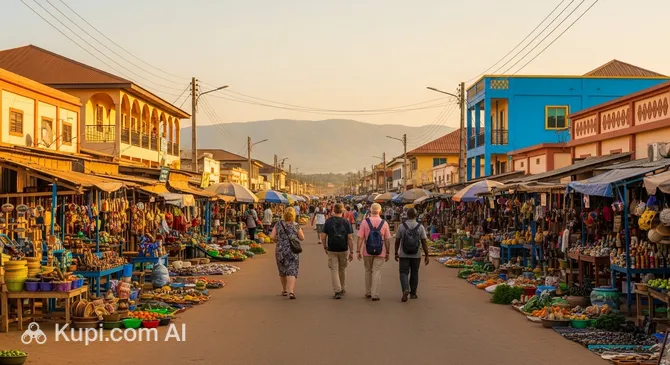
Located in the picturesque northeast of Nigeria, Mubi is a vibrant regional center in Adamawa State. Nestled in the foothills of the Mandara Mountains, this city serves as an important administrative and educational hub for the region. With a population of around 200,000, it is the second most significant city in the state, offering travelers an authentic look at life in the Sahel zone.
The city's atmosphere is filled with the energy of daily life; you won't find the pretentiousness of major tourist centers here, but there is plenty of provincial African flavor. Its position on the border with Cameroon has played a key role in the city's history, making it a significant trading and transit point. Mubi is a place where modern educational institutions, such as the Federal Polytechnic, coexist with traditional markets and ways of life.
Mubi. Illustration.
Source: Kupi.com AI
For a tourist, Mubi can be an interesting stop on an itinerary thanks to its proximity to the Mandara Mountains, which offer rugged yet majestic landscapes. While the city is not a classic resort, it attracts those seeking to immerse themselves in the real environment of northern Nigeria, far from the beaten path. We invite you to get to know this hardworking town and experience the true rhythm of life in the savanna.
Weather Overview
Mubi is characterized by a typical tropical savanna climate with two distinct seasons. From October to May, there is a dry period when the sky remains mostly clear and rain is a rare occurrence. If you are planning a trip, it is worth checking the weather in Mubi in advance for the specific dates of your visit.
The hottest months are March and April, when daytime temperatures can reach 37-38°C. During this time, the region often falls under the influence of the harmattan—a dry wind from the Sahara that brings fine dust. Expect very hot summers and relatively mild, dry winters with average temperatures around 23-25°C in December and January.
The rainy season begins in June and continues until September, bringing long-awaited cool and greenery. Peak rainfall occurs in August, when the city and its surroundings in the Mandara foothills are transformed. Despite the high humidity during this period, the air temperature becomes more comfortable for walking, dropping to an average of 27-28°C during the day.
Average monthly temperature
Average monthly precipitation
Interesting Facts
The city of Mubi holds several interesting features worth knowing before your trip:
Mubi holds a respectable 49th place by population among all cities in Nigeria, making it an important demographic center in the country's northeast.
The Federal Polytechnic, which has become the "heart" of the city, was officially transferred here from Yola in 1982 by a special presidential decree.
Geographically, Mubi is closer to the Garoua International Airport in Cameroon (about 100 km) than to its own country's capital, Abuja, which is more than 640 km away.
The city is situated at an altitude of about 580 meters above sea level, which slightly tempers the tropical heat compared to the low-lying areas of Adamawa State.
How to Get There
Transport accessibility to Mubi relies heavily on road connections, allowing tourists to fully appreciate the landscapes of Nigeria. The main route into the city is through the state capital, Yola. If you are planning a trip, detailed information can be found in the how to get to Mubi section.
For those who prefer air travel, the nearest major hub is Yola Airport. There is also an option to travel via neighboring Cameroon using the Garoua International Airport; however, this requires navigating border and visa formalities, which can complicate the journey.
Railway service is virtually non-existent in this part of the country, so buses and intercity taxis remain the primary means of transport. The trip from Yola usually takes between 3 to 5 hours, depending on road conditions and traffic intensity on the regional highways.
Station
Passenger traffic
Distance
Maiduguri Railway Station
1
178 km
Main Attractions
The city of Mubi is not one of the world's major tourist capitals, and its main "attractions" lie in its everyday life and infrastructure. One of the liveliest spots is the Central Markets, where you can feel the true spirit of regional trade and see a variety of goods—from local fabrics to agricultural products from the Mandara foothills.
An important site in the city is the campus of the Federal Polytechnic. It is more than just an educational institution; it is a true intellectual center that largely shapes the city's character and rhythm of life. Walking through its grounds or visiting the student quarters allows you to see the modern side of provincial Nigeria.
For those who appreciate urban architecture and dynamics, the main point of interest is Ahmadu Bello Way. This is where the main banks, shops, and basic elements of the urban environment are concentrated. Although there are no traditional museums in the city, the majestic Mandara foothills serve as its natural backdrop, visible on the horizon and beckoning lovers of wild, undeveloped landscapes.
Local Cuisine
The culinary traditions of Mubi are a vibrant reflection of Sahelian gastronomy, where the diet is based on cereal crops. It is definitely worth trying tuwo—a thick porridge made from millet or sorghum, usually served with flavorful soups. Equally popular is furafura—distinctive snacks or cakes that have become a hallmark of local street food.
Meat dishes in the region are primarily represented by beef and goat, which are stewed in rich peanut sauces with local herbs and spices. The city's gastronomic landscape is formed by street stalls and small canteens, where the food is always fresh, filling, and affordable.
Among beverages, local strong tea and various refreshing grain-based decoctions remain favorites. Exotic seekers might encounter traditional palm wine, though non-alcoholic drinks prevail in the Muslim Sahel. The best place to experience the local cuisine is the city markets, where food is prepared right in front of you, preserving the authentic taste of the Mandara foothills.
Travel Tips
A trip to Mubi is a chance to see the real, non-touristy Nigeria. To make your journey comfortable and safe, use our practical tips.
Clothing and Essentials: Choose light clothing made of natural fabrics, as it is hot in the region. Given the conservative traditions of the Sahel, prefer a modest style: covering your shoulders and knees will help show respect for local customs. Be sure to bring comfortable closed shoes for the dusty streets.
Transport: The easiest way to get around is by auto-rickshaws. Always agree on the price of the trip in advance, as there are no meters. For travel between cities, use the buses from Yola.
Finances:Cash (Naira) is critically important in the city. ATMs are available on Ahmadu Bello Way, but they do not always accept international cards and can run out of cash quickly. Cards are very rarely accepted in shops.
Health and Safety: Drink only bottled water and use repellents, especially during the rainy season. Avoid traveling between cities at night or walking on the outskirts after sunset.
Communication: English is the official language, but knowing a few phrases in Hausa or Fulfulde will help you instantly win over the locals. For connectivity, it is best to buy a local SIM card (MTN or Airtel) in the city center.
Local Etiquette: Greeting is an important part of the culture. Always greet sellers or drivers before getting down to business. Politeness opens many doors here.
What to Avoid: Do not photograph government buildings, bridges, or military personnel without explicit permission—this can cause suspicion and problems with the police.
Extra Tip: Try the local tea in the street tea houses—it is the best way to meet the townspeople and find out the latest news in an informal setting.
May your visit to Mubi be a bright and memorable experience in the heart of Africa!
Entertainment & Nightlife
The entertainment industry in Mubi is quite modest, which is typical for provincial cities in the northern part of the country. You won't find noisy nightclubs or large concert halls here. The city's evening life is mainly centered around the tea shops in the markets and small street cafes, where locals gather for leisurely conversations.
A certain amount of cultural activity can be observed at the Federal Polytechnic. Student events, festivals, and meetings take place here periodically, adding some excitement to the daily routine. The city's central squares and markets remain the main points of social interaction until sunset.
Safety in the evening requires reasonable caution. Travelers are advised to stick to well-lit central areas for walks and avoid visiting the outskirts alone. In the absence of a developed taxi network, it is better to plan nighttime travel in advance through trusted drivers or your accommodation management.
Parks & Museums
In Mubi, there are virtually no classic parks or museums that tourists are used to in large metropolises. The role of "green zones" is filled here by natural landscapes: the open spaces of the savanna and the majestic Mandara foothills, which serve as a beautiful backdrop for the city and a place for informal walks by nature lovers.
Since specialized cultural galleries are absent, educational sites take their place. The Federal Polytechnic campus, with its open spaces and academic buildings, is the main place for relaxation and cultural exchange for the city's youth and intellectuals.
The lack of organized parks is compensated for by the lively atmosphere of the market squares and central streets, where life teems in the shade of occasional trees. Locals often spend their free time in open spaces that turn lush green during the rainy season, transforming the city's surroundings into a picturesque African landscape.
Getting Around
The public transport system in Mubi is predominantly informal, which is typical for many Nigerian cities. The main means of transport for locals and tourists alike are auto-rickshaws (known as "keke napep") and motorcycle taxis. They are maneuverable, affordable, and allow you to quickly reach any part of the city, including remote areas and the college.
For group trips or moving between neighborhoods, minibuses—known locally as "dankali"—are used. This transport has no fixed schedule; they depart as they fill up, and routes are often flexible, depending on the needs of the passengers. Fares are always paid in cash directly to the driver.
There are virtually no traffic jams in Mubi, except on market days and during peak hours near educational centers. Tourists are advised to use official call taxis or negotiate with rickshaw drivers in advance. It is important to remember that the amount of transport on the streets decreases sharply in the evening, so trips after sunset should be planned well ahead of time.
Accommodation
The hotel sector in Mubi is primarily geared toward transit travelers, business visitors, and students' relatives. Guesthouses and small private lodges predominate, offering a basic but acceptable level of comfort. Accommodation costs are usually low, ranging between 10–30 dollars per night.
The most convenient areas to look for accommodation are near the main street, Ahmadu Bello Way, and the areas adjacent to the polytechnic college. These locations have better-developed basic infrastructure, making it easier to find dining spots and transport for getting around town.
Experienced travelers recommend booking in advance, especially if your visit coincides with major educational or regional events. While there are no luxury five-star hotels in the city, the hospitality of the locals and the authentic atmosphere compensate for the lack of frills.
Nearby Cities
Mubi's location makes it an interesting starting point for exploring the eastern edges of Adamawa State and the border areas. Although the region is mainly agricultural, trips to neighboring towns allow for a deeper understanding of the diverse cultures of northern Nigeria and northern Cameroon.
One potential destination is a trip to the town of Chibok, located about 80 kilometers away. It is also relatively easy to reach the border from Mubi, beyond which lie the Cameroonian towns of Guider and Figuil. These trips offer views of unique rocky landscapes and allow for a comparison of life in two neighboring countries.
We recommend taking the opportunity to explore the surrounding areas to see the majesty of the Mandara Mountains and the color of local villages. Such a trip will be a true adventure for those who appreciate non-touristy routes and the sincere hospitality of the savanna residents.
Shopping & Souvenirs
Shopping in Mubi is primarily about visiting traditional open-air markets, which are the heart of the city's economy. There are no glittering shopping malls here, but there is the opportunity to purchase authentic goods from the Sahel region. Travelers often look for vibrant local fabrics and skillfully woven baskets, which make excellent souvenirs.
The main commercial activities are concentrated along Ahmadu Bello Way. In this area, you can find small stalls, household goods stores, and bank branches. This is the place where you can buy everything needed for daily life and feel the rhythm of local trade that hasn't changed for decades.
Shops usually operate from early morning until sunset, and it is customary to pay in cash with Nigerian Naira at the markets. Be prepared that cards are rarely accepted, so having small bills will be a big advantage. The process of buying at the market is often accompanied by friendly haggling, which is an integral part of the local culture.