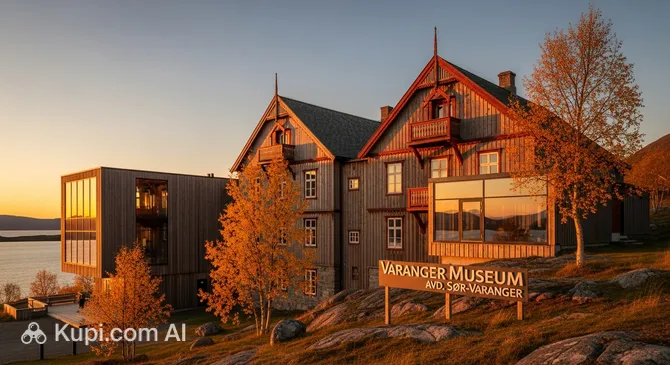
The Varanger Museum, Sør-Varanger branch, also known as the Borderland Museum (Grenselandmuseet), is the main cultural venue in the city of Kirkenes. The museum is dedicated to the unique history of life at the junction of the borders of Norway, Finland, and Russia, offering a fascinating narrative about the coexistence of different cultures in the harsh conditions of the North.
The main museum building welcomes travelers right at the entrance to the city. Here you will find exhibitions covering a wide range of topics: from the ancient life of the Sami people to the development of the mining industry and the events of World War II. This is a place where the history of the borderlands comes to life through authentic household items, photographs, and unique technical artifacts.
Through this museum, Kirkenes communicates the idea of cultural exchange and neighborliness. The special atmosphere of multiculturalism makes visiting the museum a must for anyone wanting to understand how the character of this northern region's residents was formed over the centuries.
Contacts
To plan your visit and clarify details, you can use the contact information for the Varanger Museum administration in Sør-Varanger. The museum is always happy to welcome guests and is ready to answer questions about current exhibitions.
Truly rare finds await visitors in the museum's halls. One of the central exhibits is the legendary Soviet Ilyushin Il-2 ground-attack aircraft. This plane was shot down during the war and spent a long time in a local swamp, which helped it remain perfectly preserved. Today, it is fully restored and is the pride of the collection.
On the first floor, there are detailed dioramas that vividly demonstrate daily life in the border regions. You will see traditional dwellings and tools of the indigenous peoples, as well as learn about the operation of local mines. The walls are decorated with paintings by local artists, conveying the harsh beauty of Arctic nature.
For a deeper immersion in history, we recommend using the audio guides, which are available in several languages, including Russian. They accompany the tour of each major exhibition with a detailed narrative, allowing you to learn interesting facts that are not always found on the information plaques.
Getting There
The Sør-Varanger Museum is conveniently located right on the E6 highway at the main entrance to Kirkenes. If you are traveling by rental car, you will easily find the museum building by following the prominent signs; a spacious parking lot is available next to it.
For those using public transport, bus No. 60 stops nearby. You can also quickly reach the museum by taxi from anywhere in the city. If your journey starts from Kirkenes Airport (KKN), the trip will take about 15–20 minutes, covering a distance of 15 kilometers.
In the warmer months, many tourists prefer to walk from the center of Kirkenes. The route, about 2–3 kilometers long, allows you to leisurely enjoy the Arctic landscapes before diving into the study of the region's history.
Nearest city: Kirkenes
History & Facts
The museum's history began in 1964 when it was founded as a private educational institution. Over time, its significance grew, and it came under the management of the Sør-Varanger municipality, becoming a crucial guardian of the memory of life at the crossroads of three borders — Norway, Finland, and Russia.
This region has always been a meeting point for different peoples. The exhibitions tell the story of the Pomor trade, which linked Northern Norwegians and Russian merchants, as well as the mass colonization of lands by the Kvens (Finnish immigrants) in the 19th century. Until the mid-1830s, the main population here consisted of the Sami, whose traditions are still carefully preserved within the museum walls.
Special attention is paid to the period of rapid economic growth in the early 20th century. Thanks to the development of the mining industry and fishing, the population of Kirkenes more than doubled in just twenty years. The museum recreates that era of hope and industrial change that shaped the modern character of the region in great detail.
Time Needed
To leisurely explore all the treasures of the Borderland Museum, a typical visitor should plan for 1.5 to 2.5 hours. This is quite enough time to carefully examine the main exhibits and feel the atmosphere of each themed zone.
If you plan to use an audio guide and learn about the restoration of the Il-2 aircraft in detail or study the nuances of indigenous daily life, your visit may take a bit longer. The museum is organized very logically, allowing for comfortable movement between the halls even with a limited amount of time.
Working Hours
The Sør-Varanger Museum is open to visitors daily, making it a convenient stop in any traveler's schedule. The museum doors are hospitably open from 09:00 to 15:00, both on weekdays and weekends.
Nevertheless, it is recommended to check the museum's official website before your trip. On public holidays or during special events, the schedule may change, so checking in advance will help you avoid any disruptions to your travel plans.
09:00–15:00
Nearby
Kirkenes is a city with a compact center, so after visiting the museum, you can easily reach other iconic locations. A stroll around the area will allow you to better feel the historical atmosphere of the borderland and see monuments dedicated to its past.