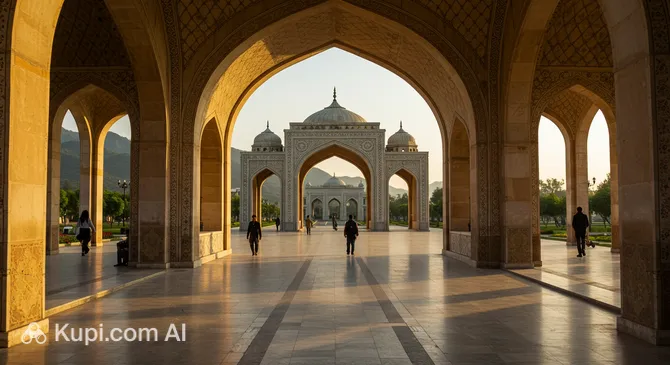
Imagine an elegant pavilion with architecture perfectly suited for a hot climate. Baradari is a traditional structure found throughout Pakistan. The name itself comes from "bara" (twelve) and "dar" (door), reflecting the building's design: a classic pavilion has twelve open arches that ensure the free circulation of cool air.
Baradari. Illustration.
Source: Kupi.com AI
Traveler photos:
In Islamabad, this architectural landmark is located on Margalla Road. It represents an historical settlement that has served as a testament to the region's rich culture for centuries. The site is significant as an example of traditional craftsmanship harmoniously integrated into the capital's modern infrastructure.
For tourists, Baradari is interesting primarily for its atmosphere and aesthetics. It’s a place to see how simple yet ingenious engineering solutions of the past provided comfort for people long before the invention of air conditioning. The pavilion is a beautiful example of where functionality meets elegance of form.
Contacts
For those planning a visit to Baradari, it's helpful to know the exact location of the site. The pavilion is situated in the F-9 district of Islamabad. While this historical landmark does not have an official website or a direct contact number, it is easily found on maps.
Visiting Baradari is primarily an opportunity to experience the aesthetics of the past. Tourists come here to appreciate the unique architecture and the symmetry of the twelve doors. This spot is perfect for photography enthusiasts: the play of light and shadow within the pavilion's arches allows for striking shots at any time of day.
Historically, these pavilions were hubs of cultural life. They hosted poetry evenings, live music, and dance performances (mujra). Thanks to its exceptional acoustic properties, sound travels through the Baradari in a unique way, making it a favorite spot for rulers who wished to enjoy art in a private setting.
Today, you can simply relax here, enjoying the fresh breeze that passes freely through the building's open arches. It is an excellent place for quiet reflection or for discovering the region's historical heritage at a comfortable pace.
Getting There
Getting to Baradari is easy, as the attraction is located right on Margalla Road—one of the city's main transport arteries. The capital's well-developed infrastructure makes navigation intuitive, even for first-time visitors.
The most convenient way is to use a taxi or popular ride-sharing apps (such as Uber or Careem) from the city center. The journey will take very little time. If you prefer public transport, look for routes heading toward the F-9 sector and Fatima Jinnah Park.
It is worth noting that the area surrounding the pavilion is very picturesque: the proximity to the Margalla Hills, with their hiking trails and viewpoints, allows you to combine an architectural tour with an outdoor walk. Islamabad is famous for its abundance of greenery, so the journey to the site will be pleasant and comfortable.
Nearest city: Islamabad
History & Facts
The first Baradari structures began to appear en masse during the late Mughal era. They were originally conceived as an integral part of palace ensembles and luxurious garden complexes. Architects of the time sought to create spaces that were both grand and functional, providing relief from the heat in South Asia’s climate.
These pavilions served not only as retreats but also as symbols of high status for their owners. They were used to receive honored guests, hold philosophical discussions, and enjoy the arts. Each of the twelve doors symbolized openness to the world and hospitality, while the absence of solid walls emphasized the connection between man and nature.
Today, such structures are recognized as a vital part of the architectural heritage carefully preserved by Pakistan. Exploring the Baradari in Islamabad offers tourists a unique chance to see how ancient building traditions are integrated into the modern life of the capital, remaining a living reminder of the culture of past centuries.
Time Needed
A visit to Baradari usually takes from 45 minutes to 1.5 hours. This is enough time to leisurely study the pavilion's architectural features, take atmospheric photos, and simply enjoy the quiet within this historical space.
If you plan to combine your visit with a walk through the adjacent park or an exploration of nearby neighborhoods, it is better to set aside half a day for this part of the city. This will allow you to immerse yourself in the atmosphere of historical Islamabad and take a break from the city's hustle and bustle without rushing.
Working Hours
When planning your visit, you don't need to worry about strict time limits. Baradari in Islamabad is open to visitors 24 hours a day, seven days a week—from Monday to Sunday.
This schedule allows you to choose the most convenient time for your visit: whether it’s early morning, when the sun's rays break beautifully through the arches, or late evening, when the pavilion takes on a particularly mysterious appearance.
Open 24 hours
Nearby
A visit to Baradari can easily be combined with other interesting sights in the city. The F-9 district, where the pavilion is located, is one of the capital's greenest and most recreational areas, offering many options for family leisure.
Exploring the surroundings will allow you not only to enjoy history but also to dive into the modern life of the city, visit amusement parks, or modern shopping centers located nearby. Below is a list of nearby attractions worth including in your itinerary.