Support

Lok Virsa - National Institute of Folk and Traditional Heritage

About

At the foot of the scenic Shakarparian Hills in Islamabad lies a fascinating world of tradition — the Lok Virsa Museum. It is a premier cultural institute and the country's first state museum of ethnology. Here, under one roof, the tangible and intangible heritage of Pakistan is gathered, from the majestic northern mountains to the endless southern deserts.
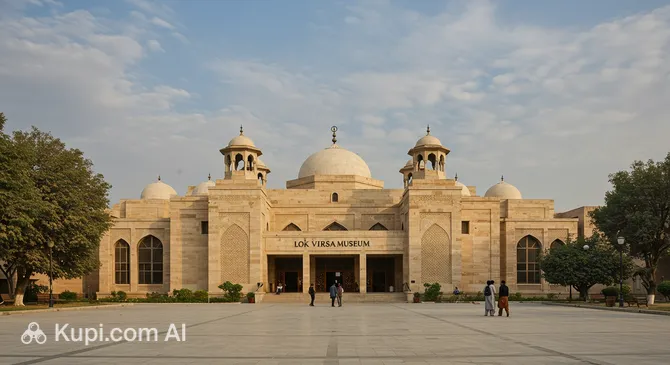
Lok Virsa Museum
Lok Virsa Museum. Иллюстрация. Источник: Kupi.com AI

The museum complex is impressive in the scale of its collections. In its halls, you can see rare musical instruments such as the alghoza (double flute) and the Sufi rubab, as well as admire the exquisite Multan blue pottery and heavy handcrafted silver jewelry. Special attention is drawn to the detailed dioramas that literally bring to life scenes of rural life, nomadic lifestyles, and vibrant folk dances like the Bhangra.

Lok Virsa is not just a static display but a center for "living heritage." Through ongoing research, fieldwork, and festivals, the museum actively supports and promotes national identity. It is a place where history meets the present, allowing every visitor to feel the soul of the Pakistani people.

Contacts

For up-to-date information on special exhibitions or group tours, you can contact the museum administration directly.

How to contactContact
AddressShakarparian Rd, Islamabad, 44000, Пакистан
Phone+92 51 9249209
Websitewww.lokvirsa.org.pk

What to Do

A visit to Lok Virsa is a true journey through space and time. Begin your experience with a detailed exploration of the regional pavilions, where the unique character of each province is revealed through costumes, everyday items, and traditional crafts. Be sure to look for the collection of musical instruments: some, such as the chimta or ektara, are beautiful works of art in their own right.

The museum's atmosphere is enhanced by live installations and dioramas. You can see what nomadic camps or traditional Sufi gatherings looked like, experiencing the spirit of hospitality and the continuity of generations. For art lovers, there are magnificent examples of wood carving, leather goods, and the famous namdas (felted rugs).

If you are lucky enough to be here during the famous Lok Mela festival, prepare for an incredible celebration of color and sound. During this time, folk musicians perform, storytellers share ancient legends, and master craftsmen create their masterpieces before the public's eyes. It is an ideal time for a family visit, when culture becomes truly interactive and accessible to everyone.

Getting There

Reaching the capital's cultural center is easy, as the Lok Virsa Museum is located in a popular area at the foot of the Shakarparian Hills. The most comfortable way is to use a taxi or ride-sharing services like Careem and Uber. A ride from the central districts of Islamabad will take 10 to 20 minutes depending on traffic.

If you prefer public transport, you can take buses or minibuses to the "Shakarparian" stop, and complete the rest of the journey on foot or by a colorful local rickshaw. For those traveling by private or rental car, there is convenient parking available on the museum grounds.

The journey from Islamabad International Airport to the museum takes about 30–45 minutes. When planning your visit, try to avoid rush hours to ensure the drive is as quick and pleasant as possible. Remember that walking through the park surrounding the museum is free and offers its own pleasure with scenic views.

Ближайший город: Islamabad

History & Facts

The idea of creating a unique institution like Lok Virsa emerged in the early 1970s. During an era of rapid modernization, the country's leadership recognized the urgent need to protect and preserve the vanishing folklore heritage that had been passed down orally for centuries. The institute was officially founded in 1974, becoming the primary guardian of the folk memory of Pakistan.

A significant milestone in the museum's history was 2002, when the organization was granted autonomous status. This allowed for expanded research activities and strengthened the museum's position as the country's first state institution of ethnology. The museum's founders aimed to create not just a storehouse for old objects, but a living "cultural consciousness" for the nation, bringing together the traditions of all regions—from Gilgit-Baltistan to Balochistan—under one roof.

Over decades of work, the museum has evolved into an authoritative center where the documentation of oral traditions, music, and crafts is conducted at a scientific level. Each expedition to remote corners of the country brought back new knowledge, which is now carefully preserved in the Lok Virsa archives, reflecting the people's commitment to their roots and cultural diversity.

Time Needed

To leisurely explore all the exhibits and walk through the museum's outdoor areas, it usually takes between 2 to 4 hours. This time is sufficient to visit the main halls, examine the dioramas, and enjoy the unique collection of musical instruments.

If your visit coincides with a cultural festival or if you plan to study the photo archives in detail and participate in interactive programs, you should set aside at least half a day. Deep immersion into the atmosphere of "living heritage" requires time and quiet contemplation.

Working Hours

The museum welcomes guests six days a week. The standard operating hours are Tuesday to Sunday from 10:00 AM to 8:00 PM. Please note that on weekdays, closing hours may be moved forward to 6:00 PM, so it is better to plan your visit for the first half of the day or the weekend.

It is important to remember that Monday is a day off, and the museum is closed to visitors. Before your trip, it is recommended to check the official website for any potential schedule changes, especially during public holidays or religious events.

DayWorking hours
понедельникЗакрыто
вторник10:00–20:00
среда10:00–20:00
четверг10:00–20:00
пятница10:00–20:00
суббота10:00–20:00
воскресенье10:00–20:00

Nearby

A visit to the museum can easily be combined with a stroll to other interesting spots in the capital. The Shakarparian Hills area offers many options for recreation, allowing you to spend a full and diverse day.

NameDistance
Lok Virsa Heritage Museum0.1 km
Pakistan Monument Museum0.4 km
Pakistan Monument0.6 km
TKR 30.8 km
Shakarparian Viewpoint0.9 km
Shakarparian National Park2 km
Kachnar Park2.3 km

Reached the end of the page?

That means the route is fully explored