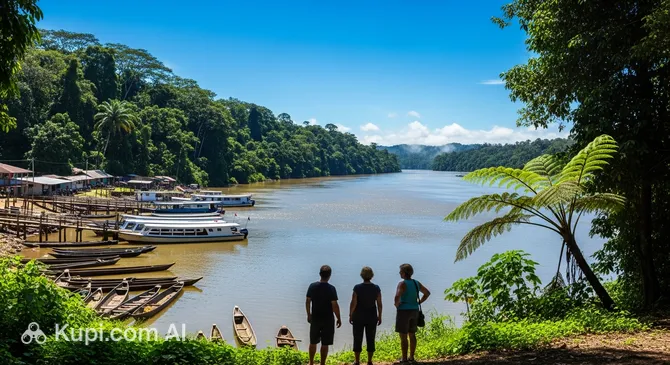
Shopping in Kiunga is primarily a functional experience rather than a leisure activity, reflecting the town's role as a remote industrial and logistical hub. Visitors will not find high-end fashion boutiques or sprawling retail complexes here. Instead, the local commerce is centered around practical general stores that stock essential supplies for the community and mining industry, alongside vibrant open-air markets that offer a colorful glimpse into the daily life and culture of the Western Province.
The main commercial activity is concentrated in the compact town center, situated conveniently near the riverfront and the port facilities. This area is easy to navigate on foot and contains a cluster of wholesale and retail outlets. These stores are typically "one-stop shops" run by long-established trading companies, selling a mix of groceries, clothing, hardware, and camping gear. For tourists preparing for a jungle expedition or a river trip, this is the place to stock up on bottled water, batteries, and non-perishable food items.
There are no Western-style shopping malls in Kiunga. The closest equivalent is the large supermarket and department store located in the heart of the town. This air-conditioned establishment serves as the primary retail anchor, offering a wide range of imported goods, from Australian food brands to basic electronics and household items. While it lacks the entertainment facilities of a modern mall, it provides a cool respite from the tropical heat and is the most reliable place to find imported comforts.
The true highlight of the local shopping scene is the Kiunga Market. This bustling open-air hub is where the town comes alive, serving as the central meeting point for villagers from the surrounding rainforest and river communities. Here, vendors display fresh produce grown in the fertile jungle soil, including sago, taro, sweet potatoes, and an abundance of tropical fruits like pineapples and bananas. It is also the best place to see the catch of the day from the Fly River, with freshwater prawns and Barramundi often available for sale.
For travelers looking to bring back a memento, the market and small roadside stalls are the best places to find authentic souvenirs. The Western Province is known for its distinct weaving styles. Look for bilums (traditional string bags) made from natural plant fibers, which often feature earthier tones compared to the bright acrylics found in the Highlands. Wood carvings are another specialty, with local artisans creating intricate sculptures of crocodiles, eagles, and spirits that reflect the region's deep connection to the river and its wildlife. Woven baskets and trays are also popular and easy to transport.
Store opening hours in Kiunga generally follow standard business times, with most shops opening around 8:00 AM or 9:00 AM and closing by 4:00 PM or 5:00 PM. Many businesses close early on Saturdays and remain closed on Sundays, so it is wise to plan your shopping for weekdays. The local market is liveliest in the early morning; arriving before 8:00 AM ensures the best selection of fresh produce and crafts.
Cash is king in Kiunga. While the main supermarket and major hotels may accept credit cards (Visa is the most commonly accepted), the vast majority of transactions, especially at the market and smaller shops, are conducted in Papua New Guinea Kina (PGK). ATMs are available in the town center, but they can occasionally run out of cash or experience technical issues. It is highly recommended to carry sufficient small denominations, as vendors often struggle to make change for large banknotes.
Tax-free shopping and VAT refunds are not available in Kiunga. The prices you see on the shelf or negotiate at the market are final. Bargaining is generally not a custom in stores with fixed prices, but polite negotiation can sometimes be acceptable when buying multiple handicraft items directly from artisans at the market.