Support

Mount Hagen

About

Welcome to Mount Hagen, the bustling capital of the Western Highlands Province and the third-largest city in the country. Nestled in the fertile Wahgi Valley, this vibrant urban center offers a fascinating mix of traditional highland culture and modern commercial activity. As a gateway to the highlands of Papua New Guinea (Niugini), the city is surrounded by majestic mountain peaks and lush coffee plantations, creating a scenic backdrop for any traveler's adventure.

The city is named after the extinct volcano Mount Hagen, located to the north-west. Unlike the coastal regions, the area enjoys a refreshing, spring-like climate year-round due to its high elevation. With a population of approximately 68,000 people, it serves as the economic heart of the region. While the history of Mount Hagen as a developed township is relatively short—beginning with the arrival of gold prospectors in the 1930s—the valley itself has been inhabited for millennia, boasting some of the oldest evidence of agriculture in the world.
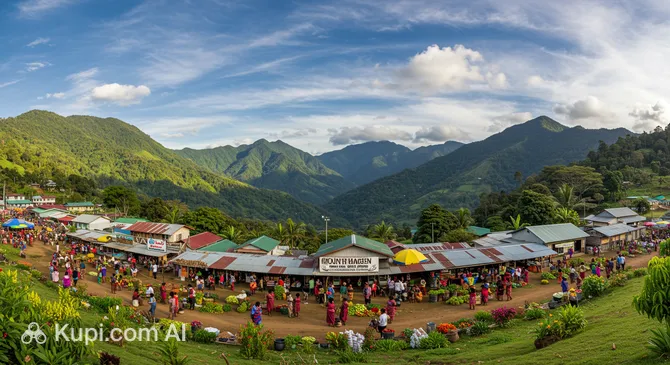
Mount Hagen. Source: Kupi.Binoculars

Visitors are often drawn to the city for the world-renowned Mount Hagen Cultural Show, a spectacular "sing-sing" where hundreds of tribes gather to showcase their elaborate body paint, feathers, and traditional dances. Beyond the festivals, the region is famous for producing some of the finest coffee in the world, and touring a local plantation is a must for any enthusiast. The city's main market is another highlight, offering a colorful and lively glimpse into local life, filled with fresh produce from the rich volcanic soil.

Whether you are here to witness the dazzling cultural festivals, explore the rugged mountain terrain, or simply enjoy the cool highland air, Mount Hagen promises an unforgettable experience. It is the perfect base for discovering the unique traditions and natural beauty of the Western Highlands.

Weather Overview

Mount Hagen enjoys a consistent, spring-like climate year-round, largely due to its high altitude in the Western Highlands. Unlike the intense tropical heat found in the coastal regions of Papua New Guinea, the weather in Mount Hagen remains refreshingly cool and moderate. The temperatures are remarkably stable from January to December, making the city a comfortable destination to visit at any time of the year.

Expect mild daytime temperatures peaking around 20°C and crisp nights where the air cools down to approximately 11°C to 12°C. Travelers should be prepared for frequent dampness, as the region records a high number of wet days each month, often reaching up to 30 days of precipitation in January and March. While the period from June to August is slightly cooler and sees a drop in precipitation volume, carrying a raincoat and warm layers for the evenings is essential regardless of when you visit.

Interesting Facts

Beyond its reputation as a commercial hub, Mount Hagen holds fascinating secrets and deep cultural roots that often surprise travelers. Here are some intriguing details about the history and traditions of this highland city.

  • Ancient Agricultural Origins: Just a short distance from the city lies the Kuk Early Agricultural Site, a UNESCO World Heritage property. Archaeological findings here prove that people began draining swamps for cultivation independently around 9,000 years ago, making the region one of the few places on Earth where agriculture originated autonomously.

  • The Moka System: The local Melpa people are renowned for the "Moka," a traditional ceremonial exchange system. In this unique culture, a person's status is earned not by hoarding wealth, but by how much they can give away to rival tribes, primarily in the form of pigs and kina shells.

  • A Recent Discovery: Despite being a major population center today, the Wahgi Valley was completely unknown to the outside world until 1933. When Australian gold prospectors first flew over the mountains and landed in the valley, the local inhabitants initially believed the strangers were returning ancestor spirits.

How to Get There

Reaching the heart of the Western Highlands is an adventure defined by the region's rugged geography. Because of the mountainous terrain, air travel is the most practical and popular way to arrive. You can find more about how to get to Mount Hagen and detailed travel logistics on our dedicated page.

The primary gateway for visitors is Mount Hagen Airport (IATA: HGU), located directly in the valley. As a key transport hub for the highlands, it welcomes regular flights from the capital and other regional centers. The airport is situated approximately 6.8 km from the city center. A trip by taxi or hotel shuttle is convenient and typically takes about 30 minutes.

Another option for travelers exploring the wider region is Goroka Airport (IATA: GKA). However, it is important to note that this airport is located in the city of Goroka, which is about 129.6 km away from Mount Hagen. The transfer involves a drive along the Highlands Highway, which offers stunning views but can be lengthy. Expect the journey by bus or car to take approximately 3.5 to 4 hours.

For clarity, here is a summary of the main airports in the vicinity:

Airport Name City Passenger Traffic Km from City
Mount Hagen Airport Mount Hagen Large 6.8
Goroka Airport Goroka Medium 129.6
Madang Airport Madang Medium 185.8
Moro Airport Moro Small 124.5
Mendi Airport Mendi Small 72.5

Main Attractions

The city and its surroundings offer a unique blend of vibrant local life, ancient history, and breathtaking natural beauty. While the urban center is bustling with commerce, the immediate vicinity provides access to some of the most significant cultural and natural sites in the Highlands. Here are the top attractions to explore during your visit.

The heartbeat of the city is undoubtedly the Mount Hagen Market. Widely regarded as one of the finest and most colorful markets in the country, it is a sensory immersion into Highland life. Here, traders from across the Wahgi Valley gather to sell fresh produce, including sweet potatoes, taro, and strawberries, grown in the region's rich volcanic soil. It is also a fantastic place to see locals in traditional attire and to purchase handmade bilums (woven string bags) and other artifacts. The atmosphere is lively and friendly, offering a genuine connection with the local community.

Just a short drive from the city center lies the Kuk Early Agricultural Site, a location of immense global importance and a UNESCO World Heritage Site. This archaeological marvel provides evidence that agriculture was developed here independently over 9,000 years ago, making it one of the birthplaces of modern farming. Visitors can tour the drained swamps and ancient garden systems, learning how early inhabitants transformed the landscape. It is a fascinating destination for history buffs and anyone interested in the origins of human civilization.

For nature lovers and birdwatchers, a trip up to Rondon Ridge is essential. Located on the mountains overlooking the city, this area offers sweeping panoramic views of the entire Wahgi Valley below. The surrounding rainforests are home to numerous species of the famous Birds of Paradise, as well as orchids and diverse wildlife. Many travelers visit the lodges in this area to embark on guided nature walks, hoping to catch a glimpse of the spectacular plumage that Papua New Guinea is famous for.

Finally, no trip to the Western Highlands is complete without exploring its renowned Coffee Plantations. As the coffee capital of the country, the area around Mount Hagen is dotted with estates producing high-quality Arabica beans. Several plantations offer tours where visitors can witness the entire process, from harvesting the red cherries to drying and roasting the beans. It is a great opportunity to taste some of the world's best organic coffee right at the source while enjoying the serene, green landscapes of the plantations.

Local Cuisine

The local cuisine of Mount Hagen is a direct reflection of its status as the "food bowl" of Papua New Guinea. Thanks to the fertile volcanic soil of the Wahgi Valley, the region produces an abundance of fresh, organic ingredients that define the local flavor profile. Food here is hearty, unpretentious, and deeply connected to the land, with a focus on root vegetables, leafy greens, and succulent meats raised in the cool highland climate.

The absolute centerpiece of culinary culture in the Highlands is the traditional Mumu. This is not just a dish but a method of cooking where food is slow-roasted in an earth oven filled with hot stones. A typical Mumu feast features tender pork, chicken, or lamb layered with kaukau (sweet potato), cooking bananas, and leafy greens like aibika, all steamed in coconut milk within banana leaves. The result is a smoky, tender, and communal meal that serves as the highlight of festivals and gatherings.

For daily sustenance, the sweet potato (kaukau) is the undisputed staple, often roasted or boiled and served with nearly every meal. Due to the high altitude, the region also produces excellent temperate climate crops that are rare elsewhere in the Pacific, such as strawberries, broccoli, and potatoes. Visitors should also look out for freshwater trout, which is farmed in the mountain streams and offers a lighter alternative to the pork-heavy traditional diet.

When it comes to drinks, Mount Hagen is world-famous for its coffee. As the heart of the country's coffee industry, the city offers the chance to taste high-quality Arabica beans right at the source. It is common to find excellent, locally roasted coffee in hotels and cafes. On the alcoholic side, the national favorite is SP Lager, a crisp beer produced by the South Pacific Brewery, which is widely available and enjoyed by locals and tourists alike.

Dining options in Mount Hagen range from authentic street experiences to comfortable hotel restaurants. The Mount Hagen Market is the best place to sample fresh fruits, garden vegetables, and local snacks like fried flour balls or scones sold by street vendors. For a sit-down meal, most tourists frequent the restaurants within the major lodges and hotels. These establishments offer a safe and reliable mix of Western cuisine, Asian dishes, and local specialties, utilizing the incredible fresh produce harvested from the surrounding valley.

Travel Tips

Planning a trip to Mount Hagen is the start of an exciting adventure into the heart of the Papua New Guinea Highlands. To help you navigate the unique local culture, climate, and logistics of this vibrant city, we have compiled a list of essential practical tips to ensure your journey is as smooth and enjoyable as possible.

  1. Clothing and Gear: Pack for the "eternal spring" climate. Since the weather is cooler here than on the coast, bring warm layers like fleece jackets or sweaters for the crisp evenings. A reliable raincoat or poncho is mandatory, as showers can occur daily. For footwear, sturdy, waterproof hiking boots are best, especially if you plan to visit the muddy markets or plantations. Dress conservatively to respect local customs; avoid overly revealing clothing.

  2. Transportation: The safest and most convenient way to get around is by arranging private transfers through your hotel or lodge. While public minibuses, known locally as PMVs, are abundant and cheap, they can be crowded and confusing for first-time visitors. Taxis are available, but it is safer to use those recommended by your accommodation rather than hailing them on the street. Walking is fine during the day in busy areas, but avoid it at night.

  3. Finances: The local currency is the Papua New Guinean Kina (PGK). Cash is absolutely essential for purchasing fresh produce at the Mount Hagen Market or buying artifacts from villagers. ATMs are available in the town center (mostly Westpac and BSP banks), but they can occasionally be out of service, so carry a backup reserve. Credit cards are generally accepted only at major hotels, lodges, and large supermarkets.

  4. Health and Safety: Always drink bottled or boiled water, as tap water may not be safe for tourists. While the highlands have a lower risk of malaria than the coast, it is still present, so consult your doctor about prophylaxis and use insect repellent. Pharmacies are available in the town center but may have limited stock; bring your own prescription medications. regarding safety, stick to secure hotel grounds after dark and avoid displaying expensive electronics or jewelry in public.

  5. Communication: English is one of the official languages and is widely used in business and government. However, the lingua franca, Tok Pisin, is spoken by almost everyone. Learning a few phrases like "Gude" (Hello) or "Tenkyu" (Thank you) will go a long way in building rapport. Mobile coverage is decent in the city; buying a local SIM card (Digicel is popular) at the airport or in town is recommended for data access.

  6. Local Etiquette: The people of the Western Highlands are generally friendly and proud of their culture. A handshake is the standard greeting. When visiting villages or markets, always ask for permission before taking photographs of people. While many are happy to pose, some—especially those in traditional dress—may expect a small payment (fee) in return. Treat this as a respectful exchange rather than a demand.

  7. What to Avoid: Avoid wandering the streets after dark. The city becomes very quiet at night, and safety risks increase significantly. It is best to dine and relax within your hotel or lodge in the evenings. Also, avoid stepping over food or people's legs when sitting on the ground, as this is considered culturally disrespectful.

  8. Additional Tip: If you are a coffee lover, do not leave without buying a bag of local Mount Hagen coffee beans. It is often cheaper and fresher to buy them at local supermarkets or directly from a plantation tour than at the airport duty-free shops. It makes for a perfect, aromatic souvenir of the Highlands.

By keeping these practical tips in mind, you will be well-prepared to embrace the rugged beauty and rich traditions of Mount Hagen. With the right preparation, your visit to the Western Highlands will be a safe, culturally rewarding, and truly unforgettable experience.

Entertainment & Nightlife

Entertainment and nightlife in Mount Hagen differ significantly from what travelers might expect in major global cities. Rather than a sprawling district of nightclubs and discos, the evening scene here is largely centered around the major hotels and social clubs. These venues serve as the primary hubs for socializing, offering a secure and relaxed atmosphere where tourists, expats, and locals mingle. The nightlife is less about hopping from bar to bar and more about settling into a comfortable venue to enjoy good food, live music, or a few drinks after a day of exploring the highlands.

For visitors, the most popular and safe options are located within the compounds of the city's top hospitality establishments. The Highlander Hotel is a staple of the local social scene, featuring a well-stocked bar and restaurant that often hosts guests for evening drinks in a garden setting. Another notable venue is the historic Mount Hagen Club. Originally established during the colonial era, it retains a classic atmosphere and is a favorite spot for a quiet beer, a game of snooker, and conversation with long-time residents. The McRoyal Hotel also offers a lively setting for dining and evening entertainment, often featuring local bands on weekends.

The atmosphere in these venues is generally casual and welcoming. There is rarely a strict dress code, although smart casual attire is recommended—long trousers and closed shoes are standard for men. On Friday and Saturday nights, the energy picks up as locals celebrate the weekend, often accompanied by the sounds of popular Papua New Guinean music. While the crowd inside these establishments is friendly, the vibe is distinctly laid-back compared to the high-energy clubbing scenes found elsewhere.

Safety is the single most important consideration for enjoying nightlife in Mount Hagen. The streets of the town center can be unpredictable after dark, and walking around at night is strictly advised against. The "bustling" street life near local bottle shops is best avoided by tourists due to security risks. Instead, rely exclusively on hotel shuttles or arranged private transport to move between venues. Most reputable hotels provide security guards and fenced parking, ensuring a worry-free environment for their guests.

For daytime entertainment, the options are more culturally focused than commercial. While you won't find large amusement parks or movie theaters, the city offers unique experiences like visiting the Mount Hagen Cultural Centre, which houses a small museum displaying traditional artifacts and art. The showgrounds are also a focal point during festival seasons. For a more relaxed afternoon, many visitors enjoy the landscaped gardens of the major lodges or take short excursions to nearby coffee estates to see the processing facilities in action.

Parks & Museums

While Mount Hagen is not defined by manicured urban parks in the traditional sense, it is a city enveloped by breathtaking natural landscapes and vibrant living culture. The "green spaces" here are the mist-covered mountains and lush rainforests that border the town, while the local heritage is preserved not just in glass cases, but in the daily lives and artistic traditions of the people.

For nature lovers, the most significant green area is the Rondon Ridge and its surrounding rainforests. Located just a short drive uphill from the city center, this area offers pristine nature trails that wind through ancient trees and ferns. It is a world-class destination for birdwatching, offering visitors a high chance of spotting several species of the magnificent Bird of Paradise. The cool, fresh air and the panoramic views of the Wahgi Valley make it a perfect escape from the bustle of the town below.

Within the city and its immediate outskirts, many of the well-established lodges maintain spectacular Orchid Gardens. Papua New Guinea is famous for having more orchid species than any other country, and these private gardens serve as accessible botanical sanctuaries. Walking through them, visitors can admire rare and colorful blooms that grow naturally in this high-altitude climate, providing a peaceful environment for relaxation and photography.

In terms of cultural institutions, the Mount Hagen Cultural Centre is a key stop for those wishing to understand the region's heritage. This facility features a museum and a gallery space dedicated to the history and arts of the Western Highlands. Exhibits typically include traditional ceremonial attire, ancient stone axes, woven bilums, and intricate wood carvings. It provides valuable context to the dazzling sing-sings, explaining the deep symbolic meanings behind the feathers and face paint used by the local tribes.

Architecturally, the Holy Trinity Cathedral stands out as a significant landmark. It is a fascinating example of how Christianity has been integrated with local culture. The building's design incorporates traditional "haus tambaran" (spirit house) styles, featuring towering spires and indigenous motifs. It is not only a place of worship but a monument to the unique identity of the Highlands, making it an interesting site for visitors to admire.

For a dive into deep history, the Kuk Early Agricultural Site remains the premier historical destination. As a UNESCO World Heritage site, it offers an open-air museum experience where you can see the drainage ditches and archaeological remnants of one of the world's oldest agricultural systems. Unlike a typical museum, here the history is etched into the landscape itself.

Insider Tip: For a truly authentic experience, ask about visiting a local village for a private viewing of their "spirit house" or a small-scale cultural demonstration. Unlike the large festivals, these intimate visits allow you to see the traditional gardens and family structures up close, offering a personal connection to the living history of the Melpa people.

Getting Around

Public transport in Mount Hagen is informal, decentralized, and quite different from the structured systems found in major international cities. There is no metro, tram, or railway service available. Instead, the city relies almost entirely on a network of road-based vehicles that connect the urban center with surrounding villages and the wider province. For visitors, understanding this system is key to navigating the area, although many choose private alternatives for comfort and security.

The backbone of local transportation is the PMV (Public Motor Vehicle). These are typically 15 to 25-seater minibuses, often white with specific colored stripes denoting their route. They congregate at designated "stops" or market areas but can often be flagged down along the road. PMVs do not run on a fixed timetable; they depart only when they are full. While they are an authentic way to experience local life, they can be crowded, loud, and somewhat chaotic for a first-time traveler.

The payment system is strictly cash-only. There are no travel cards, passes, or mobile apps for public transport here. Fares are very affordable and are collected by a "crew" member (conductor) who rides with the driver. You simply pay your fare once seated or upon exiting. It is highly recommended to carry small denomination coins and notes, as the crew may not always have change for large bills. Prices are generally fixed for specific distances, but it is wise to ask a local or the crew for the fare before boarding.

Taxis offer a more private alternative to minibuses. You can find them at the airport, near major hotels, and in the town center. Unlike in some cities, taxis here may not always use meters, or the meters may be ignored. It is standard practice to negotiate and agree on the fare with the driver before starting your journey. Taxis are generally safer and more comfortable than PMVs, but it is still advisable to use reliable operators recommended by your hotel or accommodation provider.

For tourists, the most practical advice is to prioritize safety and timing. Public transport and taxis operate primarily during daylight hours. Services wind down significantly after sunset, and it is strongly advised not to use public transport at night due to safety concerns. If you need to travel in the evening, arrange a private transfer through your hotel. Additionally, while rental cars are available (mostly at the airport), road conditions can be challenging. Consequently, hiring a car with an experienced local driver is often the best option for exploring the area stress-free.

Accommodation

Accommodation options in Mount Hagen cater primarily to business travelers, birdwatchers, and tourists arriving for the famous cultural festivals. While the selection is not vast, the city offers a range of reliable and comfortable places to stay. Most reputable hotels and lodges are located within secure, guarded compounds, providing a safe environment along with essential amenities such as restaurants, bars, and Wi-Fi, which might be slower than international standards but is generally functional.

For those seeking convenience and a central location, the city's established hotels are the best choice. The Highlander Hotel is widely considered the premier option in town. Part of a major hotel group, it features lush tropical gardens, a swimming pool, and a quality restaurant that serves as a social hub for expats and visitors. Another popular establishment is the McRoyal Hotel, which offers modern rooms and conference facilities, making it a frequent stop for business travelers and tour groups alike.

Travelers looking for a more immersive and scenic experience should look towards the lodges perched on the mountains surrounding the valley. Rondon Ridge is the standout luxury option, located about 40 minutes from the city center. Situated at a high elevation, it offers eco-friendly accommodation with spectacular panoramic views of the Wahgi Valley. It is an ideal base for nature lovers, as the lodge is surrounded by rainforest trails home to numerous Bird of Paradise species.

It is important to note that accommodation availability fluctuates drastically depending on the season. If you plan to visit during the annual Mount Hagen Cultural Show in August, booking months—or even a year—in advance is absolutely essential, as every room in the province sells out quickly. Additionally, always arrange your airport transfer directly with your hotel. Most properties provide reliable shuttle services, which are the safest and most stress-free way to reach your accommodation upon arrival in Papua New Guinea (Niugini).

Nearby Cities

Situated in the heart of the Western Highlands, Mount Hagen serves as a strategic base for exploring the diverse regions of Papua New Guinea (Niugini). While the rugged mountain terrain can make overland travel an adventure in itself, several key towns and provincial capitals are located within a reachable distance. These neighboring cities offer a mix of highland traditions, agricultural hubs, and coastal escapes, each with its own unique character.

To the southwest lies Mendi, the capital of the Southern Highlands Province. It is the closest major urban center to Mount Hagen and serves as a gateway to the spectacular limestone landscapes of the region. Traveling eastwards along the Highlands Highway, you will reach Goroka. Known for its pleasant climate and its own famous cultural show, Goroka is a major center for the coffee industry and offers a relaxed highland atmosphere.

Further afield, the geography shifts dramatically towards the coast. Madang, often called the "prettiest town in the Pacific," is located to the northeast. Although the direct distance seems moderate, the journey involves crossing significant mountain ranges, often making air travel the preferred option. Similarly, Wewak on the northern coast and the historic gold-mining town of Bulolo are important regional centers that showcase the country's geographical variety.

Here is an overview of the nearby cities, their approximate populations, and distances from Mount Hagen:

City Population Distance (km)
Mendi 56,055 73
Goroka 21,507 129
Madang 62,023 186
Wewak 25,143 260
Bulolo 20,000 304

Shopping & Souvenirs

Shopping in Mount Hagen is an adventure that immerses you in the local Highland culture. While you will not find high-end fashion boutiques or sprawling international shopping complexes, the city offers a unique array of traditional crafts and essential goods. The experience is centered around bustling local trade rather than luxury retail, providing a genuine glimpse into the daily lives of the people in Papua New Guinea (Niugini).

The commercial activity is primarily concentrated in the Town Center, particularly along the streets surrounding the main market and the bus terminals. This area is always teeming with activity, lined with general stores, hardware shops, and pharmacies. It is a compact district where most errands can be run on foot, though the crowds can be dense, so it is advisable to keep your valuables secure while browsing.

For a more modern retail experience, the Tininga shopping outlets are the gold standard in the city. Tininga operates the largest and most well-stocked supermarkets and department stores in Mount Hagen. Here, travelers can find imported groceries, toiletries, clothing, and camping gear. These centers offer a safe, clean, and often air-conditioned environment, making them the go-to spot for tourists needing to stock up on supplies or Western comforts.

The absolute highlight of the local shopping scene is the Mount Hagen Market. Widely considered one of the best markets in the country, it is a vibrant hub of commerce. While it is famous for its incredible variety of fresh fruit and vegetables, it is also a treasure trove for handicrafts. Locals from surrounding villages gather here to sell their wares, creating a lively atmosphere filled with color and conversation that you simply cannot miss.

When looking for souvenirs, the most iconic item to purchase is a Bilum, a traditional hand-woven string bag. The designs in the Western Highlands are distinct, durable, and colorful, making for a practical and beautiful memento. As the region is the coffee capital of the country, a bag of locally roasted Mount Hagen Coffee is another essential purchase. Additionally, you may find traditional items such as stone axes and intricate wooden carvings, which reflect the deep history of the local Melpa people.

Business hours in the city are generally from 8:00 AM to 5:00 PM on weekdays, with shorter hours on Saturdays and many places closed on Sundays. It is important to complete your shopping before late afternoon, as most businesses shut down promptly as dusk approaches. While major outlets like Tininga accept credit cards, cash is king everywhere else. You will definitely need small denominations of the Papua New Guinean Kina for the markets and street vendors.

Tax-free shopping or VAT refund schemes are not typically available for tourists in Mount Hagen. Visitors should not expect duty-free facilities within the city; such services are generally limited to the international departure areas at the main gateway airport in Port Moresby.

Reached the end of the page?

That means the route is fully explored