Support

Ilo

About

Ilo is a picturesque port city on the southern coast, where rugged desert landscapes harmoniously meet the waters of the Pacific Ocean. This cozy corner attracts travelers with its relaxed atmosphere, well-maintained embankments, and its status as one of the region's most comfortable cities to live in.

Located in the Moquegua region, the city is an important economic hub with a population of about 66,000. The climate is arid but tempered by the ocean breeze, keeping the weather pleasant almost year-round. When planning a trip to Peru, it is worth paying attention to this destination if you are looking for a quiet seaside getaway far from the noisy tourist trails.
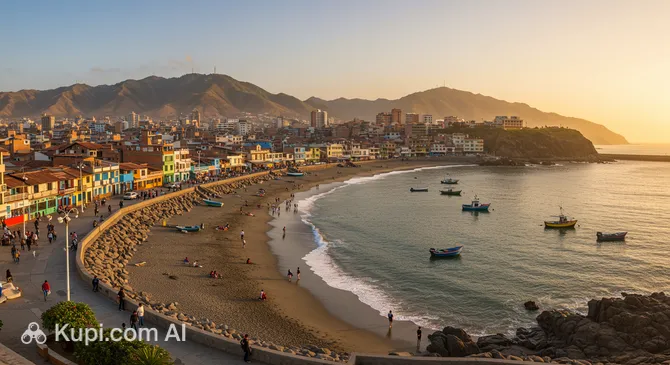
Ilo. Illustration.
Source: Kupi.com AI

Despite its modern appearance, this place has deep roots. The fascinating history of Ilo is linked to the ancient Chiribaya culture, traces of which are still being studied by archaeologists in the city's outskirts. Today's Ilo is a blend of tradition and modernity, where port life coexists with resort relaxation.

Among the main attractions is the Jose Galvez Glorieta — an elegant wooden gazebo on the pier that has become the city's symbol and an ideal spot for sunset photos. Beach lovers should visit Pozo de Lisas, a wide beach with golden sand located south of the center. The city is also famous for its promenade (Malecon), lined with parks and sculptures.

Ilo leaves the impression of a welcoming and bright city. It is an excellent stop for those who want to enjoy the freshest seafood, stroll along the ocean shore, and feel the authentic rhythm of life on the Peruvian coast.

Weather Overview

The city's climate is determined by its location in a coastal desert zone, which guarantees the absence of sweltering heat and prolonged downpours. Thanks to the ocean's influence, the weather in Ilo remains comfortable and predictable almost year-round, making it an excellent destination for a relaxing getaway.

The warmest period occurs at the beginning of the year: from January to March, the average temperature stays around 20–21°C, and during the day, the air can warm up to 23°C. This is the only time when rare precipitation is theoretically possible, although even in January and February, the number of wet days usually does not exceed two.

With the arrival of June and lasting through October, it becomes cooler: the thermometer drops to average values of 15–16°C, and nights can be fresh (around 13°C). Expect a moderately warm summer and a cool, exceptionally dry winter, which is perfect for walks along the embankment but may require a light jacket in the evenings.

Average monthly temperature

Average monthly precipitation

Interesting Facts

Beyond its main attractions, Ilo holds many fascinating secrets that reveal themselves only to the most curious travelers. This city is not just a port, but a crossroads of ancient cultures and unique natural phenomena.

  • Ancient Chiribaya Shepherds. In the city's outskirts, archaeologists discovered unique burials of dogs belonging to the pre-Columbian Chiribaya culture. These animals, known as "Chiribaya shepherds," were revered by the locals and buried with honors, signifying their high status in ancient society.

  • A Symbolic Shore. A few kilometers south of Ilo lies the "Bolivia-Mar" zone. This is a narrow strip of coastline that Peru leased to Bolivia for long-term use as a gesture of friendship. Although there is no major port here, this beach holds significant symbolic value for the landlocked country.

  • Kingdom of Sea Lions. Very close to the city limits is Punta de Coles, a nature reserve inhabited by massive colonies of fur seals and guanay cormorants. Thanks to the cape's isolation, the animals feel safe here, allowing tourists to observe wildlife from a very close distance.

  • Olive Oasis. Despite the surrounding desert landscape, the Ilo River valley is a hub for olive production. In the El Algarrobal district, you can find olive trees that are several centuries old, and the local olive oil is highly prized by gourmets.

How to Get There

When planning a trip to Peru's southern coast, it's worth thinking about logistics in advance, as direct access to the city may require transfers. You can explore all available routes and transport options by following this link: more about how to get to Ilo.

There is no active commercial airport in Ilo itself that accepts regular passenger flights. The nearest convenient hub is Tacna Airport (IATA: TCQ), also known as Coronel FAP Carlos Ciriani Santa Rosa International Airport. It is located in the city of Tacna, approximately 121 km from Ilo. A taxi or private transfer from this airport takes about 3 hours and 20 minutes. This is the most common choice for those flying on domestic flights from Lima.

Another popular alternative is Rodríguez Ballón International Airport (IATA: AQP), located in the major city of Arequipa. This is an important regional transport hub that handles a larger number of flights. The distance to Ilo is about 146 km, and the driving time is approximately 4 hours. A trip from Arequipa also allows you to enjoy scenic views of the desert landscapes on the way to the ocean.

For convenience, here is a summary of the main airports:

AirportPassenger trafficDistance
Tacna Airport557 059122 km
Chacalluta Airport705 179132 km
Rodriguez Ballon International Airport2.0 mln146 km
Juliaca Airport353 625272 km

There is no direct rail connection to Ilo, so trains are not used as a primary way to reach the resort. Travelers typically arrive at one of the aforementioned airports and then transfer to intercity buses or rent a car. The bus network in Peru is very well-developed: comfortable liners regularly run along the Pan-American Highway, connecting Ilo with Lima, Arequipa, Tacna, and other coastal cities.

Main Attractions

Ilo is a city that reveals itself in the details. Here, you can leisurely stroll along the embankment, explore ancient history, or enjoy architecture steeped in the sea breeze. Here are the main places to visit to get to know this port city better.

Jose Galvez Glorieta. It's impossible to imagine a trip to Ilo without a photo in front of this elegant structure. Located on the historic pier, the wooden gazebo was built in the early 20th century and serves as the city's main symbol. A walk along the boards of the old bridge over the ocean allows you to feel the atmosphere of the past and enjoy stunning coastal views, especially at sunset.

San Jeronimo Temple. Standing on the city's main square, the Plaza de Armas, is this church built in 1871. The building holds the status of a national historical monument. Tourists are drawn to its unusual architecture featuring wood and metal, as well as its unique font carved from a single stone and the ancient altar preserved to this day.

El Algarrobal Museum (Chiribaya Museum). For those interested in archaeology, a trip to the Ilo River valley will be a true discovery. This museum houses an extensive collection of artifacts from the Chiribaya culture, which flourished here long before the Incas. The exhibition includes excellently preserved ceramics, textiles, and mummies that tell the story of the ancient desert dwellers' lives and beliefs.

Coastal Malecon. Ilo's embankment is the heart of urban life and an ideal place for an evening promenade. The landscaped pedestrian zone stretches along the ocean, decorated with gardens, gazebos, and modern sculptures. Here, you can rest on a bench while watching the fishing boats or visit one of the many restaurants to try fresh seafood.

Local Cuisine

Ilo's gastronomic scene is a true feast for seafood lovers. Thanks to its status as an important port, fish and shellfish reach local restaurant tables literally hours after being caught. The cuisine here is distinguished by the freshness of its ingredients and the vivid influence of the Moquegua region's culinary traditions, where the desert meets the ocean.

The main culinary symbol of the city is rightfully considered "Pulpo al olivo" — tender octopus served under a thick sauce made from purple olives. This dish is prepared with particular mastery here, as the Ilo River valley is famous for its olive groves. The combination of the salty seafood flavor and the creamy texture of the olive dressing creates a unique taste that is impossible to forget.

Of course, no lunch on the coast is complete without the classic ceviche. In Ilo, it is made from the freshest white fish, generously seasoned with local lime and spicy rocoto pepper. For those who prefer hot dishes, it's worth ordering "Jalea" — an assortment of fish, squid, and shrimp deep-fried in a crispy breading, served with fried yucca slices and tartar sauce.

Among the drinks, the king of the table is Pisco. Since the Moquegua region is one of the official producers of this grape brandy, the quality of the drink here is top-notch. Tourists are encouraged to try the refreshing Chilcano cocktail (pisco with ginger ale) or a classic Pisco Sour. Among non-alcoholic drinks, Chicha Morada is popular — a sweet drink made from purple corn with added pineapple and cinnamon.

The food culture in Ilo is democratic and varied. For an authentic atmosphere and inexpensive but hearty portions, head to the central market, where locals eat thick fish soups for breakfast. For a romantic dinner, the restaurants on the Malecon (embankment) are ideal: here you can enjoy refined dishes and a glass of wine while watching the sunset over the Pacific Ocean.

Travel Tips

A journey to Ilo promises to be relaxing and full of pleasant discoveries, but a little preparation will make it even more comfortable. We have gathered practical recommendations to help you organize a trip to this cozy port city without unnecessary worries and avoid common mistakes.

  1. Clothing and Essentials. Given the desert coastal climate, you will be comfortable in light clothing made from natural fabrics (cotton, linen) during the day. However, evenings by the ocean can be cool and windy, so be sure to bring a windbreaker, jeans, or a warm sweater. Important: the sun here is very intense, so a hat, high-quality sunglasses, and high-SPF sunscreen are necessary even in cloudy weather.

  2. Transport. The city center and embankment are easy and pleasant to explore on foot. For trips to Pozo de Lisas beach or more remote areas, it's most convenient to use a taxi — the prices are quite reasonable. For local flavor, you can use mototaxis (tuk-tuks) for short distances, but it is best to agree on the fare before getting in.

  3. Finances. The official currency is the Sol (PEN). Major supermarkets and hotels accept Visa and Mastercard, but small restaurants, souvenir shops, and markets primarily take cash. ATMs are available in the city center, but it's always better to have small bills for tips and fares. When budgeting, keep in mind that prices here are lower than in Peru's capital.

  4. Health and Safety. Ilo is a calm and friendly city, but you should still follow basic rules: do not leave your belongings unattended on the beach or in crowded places. Pharmacies (Boticas) are easy to find in the central part of the city. The number one health rule: drink only bottled water and avoid drinks with ice in street cafes to prevent stomach upsets.

  5. Communication. The primary language is Spanish. English is not widely spoken, so download an offline translator or learn a few basic phrases. A SIM card from local operators (Claro, Movistar, Entel) can be purchased at service centers with your passport, providing you with stable mobile internet for navigation and communication.

  6. Local Etiquette. Peruvians are very polite and value greetings. When entering a shop, getting into a taxi, or addressing a passerby, be sure to say "Buenos días" (good morning) or "Buenas tardes" (good afternoon). You should only take photos of locals with their permission — many will readily agree if you show respect.

  7. What to Avoid. Do not swim at wild beaches or where red flags are displayed. The Pacific Ocean in this region is known for strong undercurrents that can be dangerous even for experienced swimmers. Also, try not to plan important tasks during the siesta (midday), when many small establishments may be closed.

  8. Gourmet Tip. Be sure to visit the local markets not just for groceries, but for a unique souvenir — olives. Ilo is famous for its olive groves, and buying a jar of local olives or a bottle of fresh oil directly from farmers is an excellent choice. This is a delicious and authentic gift that is hard to find in the same quality in other regions.

Ilo is a city that invites a slow pace of life. By following these simple tips, you can focus on what matters most: the sound of the ocean, the taste of the freshest seafood, and the beautiful sunsets that this coast is so famous for.

Entertainment & Nightlife

Nightlife in Ilo reflects its coastal character: relaxed, fun, and infused with the sea breeze. While the city may not boast the scale of a capital's party scene, it has everything you need for a great evening: from cozy bars overlooking the ocean to lively clubs where people dance until dawn.

The epicenter of evening activity is always the Malecon (Embankment). As dusk falls, this area comes alive: restaurant lights flicker on, and the rhythms of salsa and reggaeton drift from open bar doors. It is the perfect place to start the night — you can take a slow walk, choose a spot that suits your mood, and enjoy a cocktail to the sound of the surf. Several popular venues are also concentrated in the Boca del Rio area, attracting young people and dance lovers.

If you are looking for specific places to dive into the local atmosphere, consider these venues:

Aqua Ilo. One of the city's most famous nightclubs. People come here for energetic parties, modern music, and a spacious dance floor. The venue often hosts themed nights and invites DJs, drawing both locals and tourists.

Monkey Beach Club. This spot is great for those who prefer a pub or restobar format. It offers a more casual setting suitable for chatting with friends over a glass of beer or a signature cocktail. The interior and music create a positive vibe without unnecessary pretension.

El Cantante Karaoke Bar. For those who love to showcase their vocal talents, this venue is a real find. Karaoke is very popular in Peru, and there is always a cheerful and friendly atmosphere here where everyone can feel like a star on stage.

The atmosphere in Ilo's venues is democratic. Most bars don't have a strict dress code, but for a night out at a club (like Aqua), choosing a smart casual style is recommended. The fun usually kicks off closer to midnight, especially on Fridays and Saturdays. The crowd is open and sociable, and the musical repertoire ranges from Latin American hits to international pop music.

Practical Tips and Safety:

  • Transport: It is best to use official taxis at night. They can be called by phone or through the hotel reception. Avoid using mototaxis (tuk-tuks) late at night for long distances.
  • Prices: Club entry fees and drink prices in Ilo are significantly lower than in Lima or Arequipa, making a night out here quite budget-friendly.
  • Safety: The central areas and the embankment are considered safe for evening walks; however, it is better not to wander deep into unlit residential blocks or walk alone on beaches at night.

Regarding daytime entertainment, Ilo offers more laid-back leisure. While there are no massive amusement parks, you can visit the Municipal Amphitheater, which occasionally hosts cultural events and open-air movie screenings. History buffs will enjoy the museums dedicated to the Chiribaya culture, and families with children will appreciate the walks through the parks and developed recreation areas along the coast.

Parks & Museums

Ilo offers travelers a wonderful combination of coastal freshness and deep historical heritage. Despite the region's desert climate, the city and its surroundings feature unique natural zones, while local museums hold the keys to unraveling the ancient civilizations that inhabited these lands long before the arrival of the Spanish.

Lomas de Ilo Nature Reserve. This is a unique ecosystem north of the city that represents the "mist oasis" phenomenon. During the winter period (from June to October), the dry hills are covered with a thick carpet of greenery and flowers thanks to moisture brought by ocean mists. It is an ideal spot for ecotourism, trekking, and bird watching, allowing you to see a completely different, blooming side of Peru's desert coast.

El Algarrobal Olive Forest. Although this is an agricultural zone, the century-old olive groves in the Ilo River valley feel like a massive shady garden. A walk among the giant trees, planted back in the colonial era, provides coolness and tranquility. It is not just a park but a living historical monument where you can have a picnic and enjoy the silence far from the sea surf.

Culturally, the city takes pride in its heritage, presented in several exhibitions:

Naval Museum (Museo Naval). Located in the coast guard building, this small but informative museum tells the story of the region's maritime history. The exhibition includes navigational instruments, ship models, historical documents, and artifacts from the War of the Pacific. This place will be especially interesting for those who want to understand Ilo's strategic importance as a port over the centuries.

Chiribaya Culture Museum (Museo de Sitio El Algarrobal). This is the province's main cultural institution, providing a glimpse into the daily life of the mysterious Chiribaya people. Unlike general historical overviews, here you can see unique polychrome textiles and intricately crafted ceramics in detail. Tourists are particularly drawn to the perfectly preserved mummies and reconstructions of burial rites, which demonstrate the high social development of this ancient culture.

Architecture lovers should note the historic mansions (Casonas) in the city center. These 19th-century buildings, such as Casona Gambetta, stand out with their massive wooden balconies and richly decorated facades. They serve as excellent examples of coastal Republican architecture and create the unique atmosphere of an old port city.

Insider Tip: If you find yourself in the El Algarrobal area, try to find the ancient oil presses (almazaras), some of which still operate using old techniques. Locals are often happy to show the production process, turning an ordinary tour into a fascinating gastronomic and historical experience.

Getting Around

Ilo's transport system is simple, intuitive, and perfectly suited to the size of this small coastal city. You won't find a metro, trams, or complex transfer schemes here. The backbone of public transport consists of shared taxis (combis) and minibuses. They run along the main streets, connecting the center, the port, the embankment, and residential areas. Identifying a route is easy: the main stops are usually written on the windshield or called out by a conductor, who often rides in the bus's open doorway.

A unique and very popular feature of local traffic is the mototaxi — covered three-wheeled motorcycles with a bench for passengers in the back. This is an ideal option for short trips around the city, especially if you need to get from the market to your hotel or the beach. They are maneuverable, cheaper than a regular taxi, and allow you to experience the local flavor with the breeze blowing through. However, remember that mototaxis are prohibited from driving on highways outside residential zones.

For more comfortable travel or trips with luggage, it's better to use a classic taxi. In Ilo, as in many other cities in the region, cars lack meters. This is a key point for tourists: the price of the trip must be negotiated with the driver in advance, before you get into the car. Usually, city rates are fixed and very affordable, but the price might be slightly higher for foreigners, so don't hesitate to haggle politely.

The payment system here is highly traditional: cash only. There are no transport cards, passes, or mobile apps for paying for buses in Ilo. Payment is made to the conductor or driver when exiting (in minibuses) or before the trip (in taxis). It is strongly recommended to always carry small coins and low-denomination bills (soles), as drivers may not have change for large banknotes.

Since Ilo is a compact city, many attractions, especially in the embankment and central square area, are within walking distance. Renting a car only makes sense if you plan independent travels to the surrounding beaches or deeper into the Moquegua region. Car-sharing and bike rental services are virtually non-existent here, so for longer trips, tourists most often agree on an hourly rate with taxi drivers.

Accommodation

The choice of accommodation in Ilo is diverse enough to meet the needs of most travelers, even if you won't find ultra-luxury five-star resorts here. The city offers a wide range of options: from budget hostels and guesthouses (hospedajes), popular with backpackers, to comfortable mid-range hotels catering to business travelers and families. Short-term apartment rentals are also growing in popularity, which is particularly convenient for large groups.

In terms of location, the most attractive area for tourists is the embankment (Malecon) and the city center around Plaza de Armas. Staying here puts you within walking distance of the main attractions, seafood restaurants, and the famous Glorieta gazebo. This is a safe and lively area, ideal for evening strolls. Another option is the vicinity of Pozo de Lisas beach, located south of the city. Accommodation here is chosen by those who prioritize beach relaxation, though you should consider the distance from urban infrastructure and the need for transportation.

Booking Tip: Ilo is a popular summer destination for residents of the region, so the "high season" here lasts from January to March. If your trip to Peru falls during these months, it is highly recommended to book accommodation several weeks before arrival, as the best options fill up quickly.

The price range in the city can be described as moderate. Budget rooms are available at very affordable prices, and the cost of staying in hotels with ocean views and pools remains reasonable compared to major tourist centers. Large hotels are listed on international booking platforms, but many small family-run inns still operate through direct contact or social media, so it's sometimes worth looking for options locally.

Nearby Cities

For those looking to explore the surroundings, Ilo serves as an excellent starting point for day trips to several interesting nearby locations. The city's location allows for relatively quick access to the administrative and cultural centers of southern Peru, each with its own unique character.

Just an hour's drive away is the regional capital, Moquegua. This city is famous for its traditions of winemaking and pisco production, as well as its cozy colonial architecture and quiet streets. A bit further south is the city of Tacna, which attracts travelers with its rich history related to Pacific events and opportunities for great shopping in the free trade zone. For those ready for a slightly longer journey, Arequipa is an intriguing option — the famous "White City," surrounded by volcanoes and renowned for its gastronomy.

CityPopulationDistance
Moquegua69 88266 km
Mollendo28 305100 km
Tacna286 240123 km
Arequipa1 008 290139 km
Arica202 131143 km

These nearby destinations provide a glimpse into the diverse culture and landscapes of the region: from fertile valleys with vineyards to high-altitude plateaus and bustling commercial centers.

Shopping & Souvenirs

Shopping in Ilo is less about chasing global brands and more about connecting with the authentic life of a port city and acquiring unique gastronomic souvenirs. You won't find the massive multi-story malls typical of megacities here, but you can enjoy browsing through colorful local markets and small shops selling goods produced in the Moquegua region.

The main shopping areas are concentrated in the city center, near the main square (Plaza de Armas) and the embankment. The streets adjacent to the center are filled with small shops offering clothing, shoes, and household goods. A stroll through these blocks allows you to combine architectural sightseeing with buying necessary essentials and souvenirs.

If you prefer a modern retail format, it's worth stopping by Plaza Vea Ilo. This is the city's main shopping center and supermarket, where you can buy groceries, electronics, clothing, and household items in a familiar setting. A standard range of products is available here, and it is one of the few places where bank cards are guaranteed to be accepted and ATMs are available.

The true heart of urban trade beats in the markets. The most famous is Pacocha Market (Mercado Pacocha). This colorful place offers literally everything from the freshest fruits and vegetables to textiles and handicrafts. Tourists come here to feel the atmosphere of the real Peru, haggle with vendors, and try local snacks. The fish terminal is also worth mentioning, where the morning catch is sold, though it's more of an attraction for the eyes and foodies than a place for classic shopping.

The main souvenir you should definitely bring back from Ilo is olives and olive oil. The Ilo valley is famous for its olive groves, and local products are considered some of the best in the country. You can buy various varieties of olives (the purple botija are especially popular), olive patés, and cold-pressed oil. Another great gift would be a bottle of Pisco — the grape brandy produced in the Moquegua region.

Shops in the city usually operate from 9:00 to 21:00, though small private shops may close for a siesta in the middle of the day (roughly from 13:00 to 15:00). Markets open early in the morning, around 6:00–7:00, and stay open until the afternoon. The primary method of payment is cash (soles). Credit cards are accepted in supermarkets, hotels, and large restaurants, but for purchases at the market or in souvenir stalls, be sure to have small bills on hand.

The Tax Free system exists in Peru, but it is mainly geared toward major tourist centers like Lima or Cusco. In Ilo, finding shops that process the necessary documents for IGV (sales tax) refunds for foreigners will be difficult, so you shouldn't count on this option when shopping here.

Reached the end of the page?

That means the route is fully explored