Support

Baguio

About

Baguio is a true oasis of freshness and cool, located in the north of Luzon island. Known as the "Summer Capital" of the Philippines, this city attracts travelers with its unique atmosphere and pleasant climate, which differs strikingly from the sweltering heat found in most regions of the country.

The city is nestled in the heart of the Philippine Cordilleras, at an altitude of about 1,500 meters above sea level. Thanks to this location, Baguio enjoys a temperate mountain climate—even during the hottest months, the air temperature here rarely rises above +26°C. The city's population is approximately 366,000, making it an important cultural and educational center in the Benguet province.
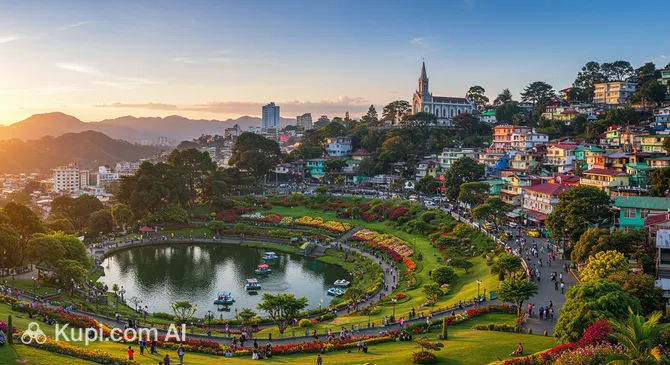
Baguio. Illustration.
Source: Kupi.com AI

Baguio charms its guests with an abundance of greenery, pine forests, and flower gardens. Iconic spots include Burnham Park, an ideal place for strolls and relaxing by the lake, and the bustling Baguio City Market, where you can find the freshest local produce, strawberries, handicrafts, and unique souvenirs. The city is also famous for its Our Lady of Atonement Cathedral, which towers over a hill and offers panoramic views.

A trip to Baguio is an opportunity to escape the bustle of big cities, enjoy the mountain cool, get acquainted with the culture of the indigenous Cordillera peoples, and simply have a pleasant time. The city offers an amazing combination of natural beauty, colonial architecture, and distinctive traditions, making it an attractive destination for all types of travelers.

You can find more interesting facts on the Baguio city history page.
Weather Overview

The weather in Baguio is characterized as moderately warm and humid throughout most of the year. Average monthly temperatures range approximately from 22°C to 25.5°C. The city typically experiences a pronounced rainy season, peaking between June and October, bringing heavy rainfall; July and August are the wettest months, with about 22 mm and 20 mm of rain respectively and almost daily showers.

Drier and slightly cooler weather sets in from December to April. January, February, and March are the months with the least precipitation (only 2 mm each). Therefore, when planning your trip, expect a warm and very humid summer with frequent, almost daily rains, and a cooler, significantly drier winter. For more detailed information on weather conditions, including monthly data, you can visit the Baguio Climate page.

Average monthly temperature

Average monthly precipitation

Interesting Facts

In addition to its famous cool breezes and pine forests, Baguio holds many fascinating stories and facts that make it even more attractive to travelers. Here are just a few of them:

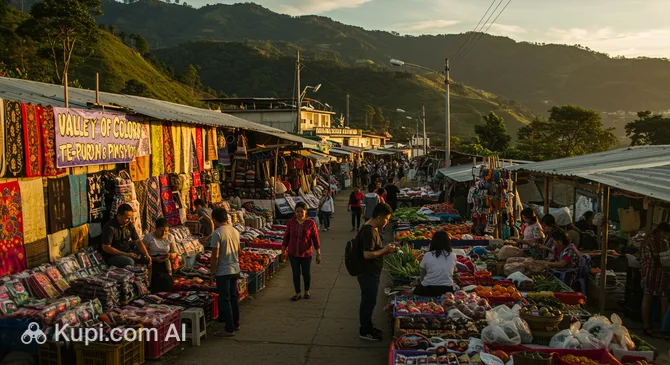
Valley of Colors. Illustration.
Source: Kupi.com AI

Traveler photos:

  • The city was envisioned and built by Americans in the early 20th century as a mountain resort, and it was they who introduced the famous pine trees that gave Baguio its nickname, the "City of Pines." Central Burnham Park, designed by American architect Daniel Burnham, is a living reminder of this heritage.

  • Baguio is home to The Mansion—the official summer residence of the President of the Philippines, highlighting the city's status as an important administrative and resort hub in the country.

  • Every year in February or March, Baguio blooms with the Panagbenga Festival. This festival of flowers transforms the streets into a colorful parade featuring giant floral floats, street dancing, and exhibitions, attracting thousands of tourists.

  • At the bustling Baguio City Market and its surrounding areas, you can meet members of the indigenous Igorot people, who preserve their unique traditions and crafts and offer authentic handmade products.

How to Get There

Traveling to the "Summer Capital" of the Philippines is an adventure in itself, as the city is located high in the mountains. You can find more details on how to get to Baguio by exploring all available routes, but the most popular way for international tourists remains flying to the nearest major transport hubs and then transferring to ground transport.

There is no active international airport within Baguio city itself that accepts regular flights. Most travelers choose Ninoy Aquino International Airport (IATA: MNL), located in the capital, Manila. It is approximately 215 km from Baguio. Comfortable buses regularly depart from Manila airport; travel time is between 4 and 6 hours, depending on traffic and the chosen route.

A more convenient alternative might be flying into Clark International Airport (IATA: CRK), which is located in Angeles City. This airport is much closer—only 135 km from Baguio. A bus or taxi ride from here will take about 3 hours, which significantly saves time compared to a transfer from Manila.

For your convenience, here is a summary of the main airports used to reach the region:

AirportPassenger trafficDistance
Vigan Mindoro Airport130 km
Clark International Airport2.4 mln135 km
Cauayan Airport66 415136 km
Tuguegarao Airport225 961183 km
Laoag Airport78 229197 km

There is no direct rail connection to Baguio. Due to the complex mountainous terrain of Benguet province, no tracks were laid here, so trains are not used by tourists to visit this region. The main types of land transport remain intercity buses and private cars, which ascend to the city via scenic winding roads, such as the famous Kennon Road or the Marcos Highway.

Main Attractions

Baguio, the summer capital of the Philippines, enchants travelers with its cool climate, picturesque mountain landscapes, and many interesting sites. Several key attractions stand out and are definitely worth including in your itinerary.

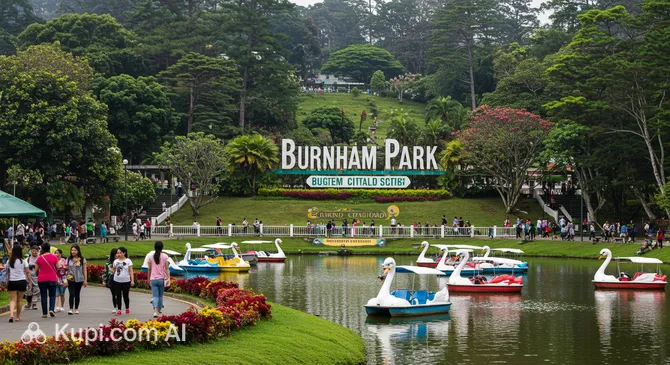
One of the most famous and beloved locations is Burnham Park. This spacious green oasis in the city center is named after the American architect Daniel Burnham. Here you can rent a boat for a ride on the lake, rent bicycles, have a picnic on the grass, or simply walk along the well-kept paths while enjoying the fresh air. The park offers entertainment for all ages and is a popular recreation spot for both tourists and locals.

Burnham Park. Illustration.
Source: Kupi.com AI

Traveler photos:

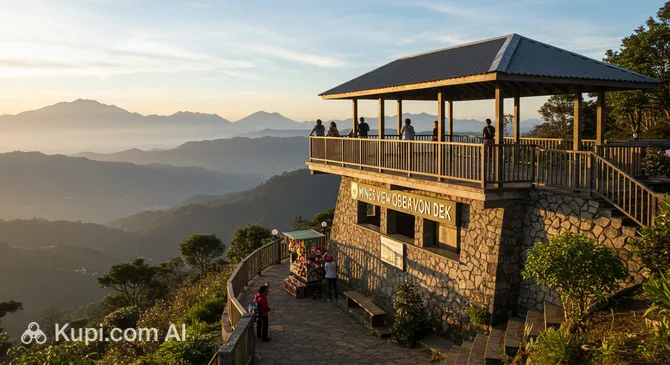
To enjoy breathtaking panoramic views of the surrounding mountains and former gold mines, be sure to visit Mines View Park. This spot is perfect for photography, especially at sunrise or sunset. You can also buy souvenirs here, try local delicacies, and even take photos in the traditional clothing of the indigenous Igorot people.

Mines View Observation Deck. Illustration.
Source: Kupi.com AI

Traveler photos:

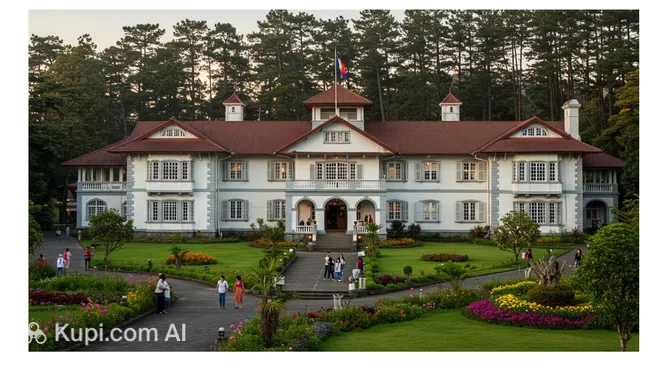
An iconic historical and architectural site is The Mansion. This is the official summer residence of the President of the Philippines. Although access to the interior of the building is restricted, tourists can admire its grand facade and stroll through the surrounding grounds with manicured gardens. The main gates of the mansion, which are a replica of the gates at Buckingham Palace, are particularly popular for photos.

The Mansion. Illustration.
Source: Kupi.com AI

Traveler photos:

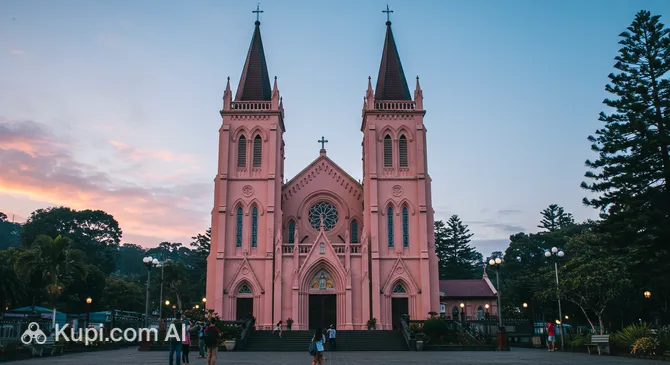
It is impossible to imagine Baguio without the Baguio Cathedral, also known as the Our Lady of Atonement Cathedral. This beautiful religious structure, with its distinctive pink facade, stained glass windows, and twin spires, is one of the city's symbols. The cathedral is located on a hill overlooking Session Road and serves as an important spiritual center for local Catholics.

Baguio Cathedral (Our Lady of the Atonement Cathedral). Illustration.
Source: Kupi.com AI

Traveler photos:

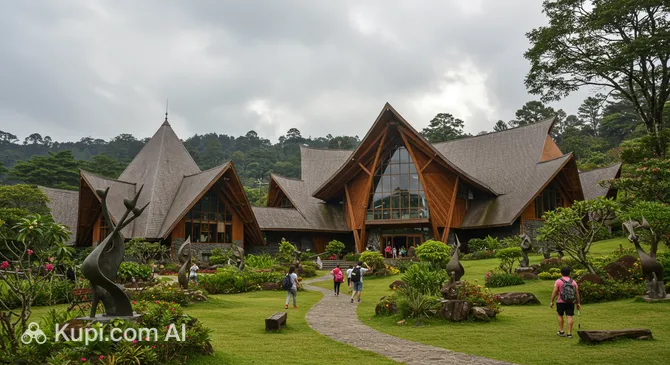
Art and culture lovers should definitely stop by the BenCab Museum. It houses an extensive collection of works by Benedicto Cabrera, a National Artist of the Philippines, as well as pieces by other contemporary Filipino masters and exhibits dedicated to the traditional art of the indigenous Cordillera peoples. The museum is located in a scenic setting overlooking a garden and the surrounding mountains, which adds a special atmosphere to this cultural space.

BenCab Museum. Illustration.
Source: Kupi.com AI

Traveler photos:

Local Cuisine

The gastronomy of Baguio is a true discovery for foodies, as the city is famous for its fresh mountain vegetables and, of course, its renowned strawberries. The cool climate favors the cultivation of products rarely found in other regions of the Philippines, making the local cuisine particularly interesting.

Be sure to try the local strawberries, which can be found everywhere—from fresh berries to various desserts, pastries, and jams. Another hallmark of the city is ube jam, a sweet and fragrant preserve made from purple yam, often brought back as a souvenir. Among the traditional dishes reflecting the culinary traditions of the indigenous Cordillera peoples, pinikpikan—a specially prepared chicken soup—and sinanglao—a hearty beef soup with bitter notes and herbs—stand out.

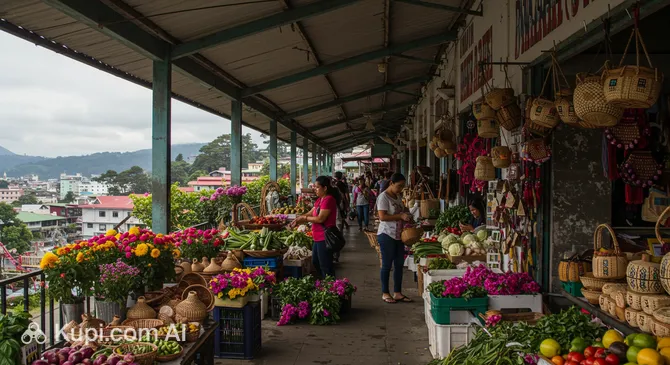
The food culture in Baguio is diverse and offers options for every taste and budget. To soak up the local atmosphere and try authentic street food, such as grilled corn, sweet potato (kamote-cue), or various skewers, head to the Baguio City Market. You can also find the freshest vegetables, fruits, and local delicacies here. In the evening, the Baguio Night Market comes alive, offering a wide selection of inexpensive and tasty food. For a more thorough introduction to regional cuisine, there are numerous family-run restaurants, such as Farmer's Daughter Restaurant, which serves dishes made from local ingredients.

Baguio City Market. Illustration.
Source: Kupi.com AI

Traveler photos:

Baguio is also known for its excellent coffee, grown in the mountain areas of Benguet. Numerous coffee shops will offer you a cup of fragrant, freshly brewed coffee. Among non-alcoholic drinks, fresh juices made from local fruits and traditional thick hot chocolate are popular, which you can try at places like Choco-late de Batirol. As for alcoholic beverages, you can find both popular Philippine beers and local variations of rice wine known as tapuy.

Overall, Baguio's dining scene attracts tourists with its freshness, focus on "farm-to-table" products, abundance of fruits and vegetables, and unique dishes influenced by indigenous cuisine. It is a true paradise for those who appreciate natural flavors and want to experience authentic mountain cooking in the Philippines.

Travel Tips

Planning a trip to Baguio, the charming summer capital of the Philippines? These practical tips will help you better prepare for your journey and get the most out of your stay in this unique mountain city, known for its cool climate and scenic landscapes.

  1. Clothing and Essentials: The climate in Baguio is noticeably cooler than the rest of the Philippines, especially in the evenings and early mornings. It is recommended to bring light jackets, sweaters, or fleeces. During the rainy season (usually from June to October), don't forget an umbrella or a raincoat. Crucially important is comfortable footwear for walking in the hilly terrain, parks like Burnham Park, and local markets. Sunscreen and a hat are also useful, as the sun at high altitudes can be intense, as well as a universal adapter for electrical appliances.
  2. Getting Around the City: The most popular and authentic form of public transport in Baguio is the jeepney. Taxis are also widely available. For convenience, you can use mobile ride-hailing apps like Grab. Car rentals are possible, but be aware that city traffic can be heavy, especially during the tourist season, and parking can be hard to find. Many central attractions are within walking distance of each other.
  3. Finances and Expenses: The local currency is the Philippine Peso (PHP). You can exchange currency at banks or exchange offices, which are often found in shopping malls. Credit and debit cards are accepted in most hotels, large stores, and restaurants. However, for payments in small establishments, markets, and jeepneys, it's better to have cash. ATMs are quite common. Tipping is not strictly mandatory but is appreciated for good service (usually 5-10% in restaurants if a service charge is not included in the bill).
  4. Health and Safety: Pharmacies (botika) are easy to find throughout the city; some may be open 24 hours. Baguio has hospitals and clinics where tourists can receive medical assistance. It is recommended to have travel insurance. Baguio is considered a relatively safe city for tourists. Nevertheless, you should take standard precautions: keep an eye on your belongings in crowded places like the city market and avoid walking in poorly lit areas after dark.
  5. Communication and Connectivity: The official languages are Filipino (Tagalog) and English. English is widely spoken, especially in the tourism sector, so there should be no communication problems. Locals also speak Ilocano. Useful phrases: "Salamat" (Thank you), "Magandang umaga/hapon/gabi" (Good morning/afternoon/evening). A local SIM card (e.g., Globe or Smart) can be purchased at the airport, malls, or small shops. Wi-Fi is available in most hotels, cafes, and some public areas.
  6. Local Etiquette: Filipinos are very hospitable and friendly. Greetings usually involve a smile and a nod. Using the words "po" and "opo" when addressing elders or as a sign of respect (e.g., "Salamat po") will be appreciated. Try to behave modestly in public places. Avoid loud talking or public displays of frustration.
  7. What to Avoid: Try not to raise your voice or engage in public arguments, as this is considered impolite. When shopping at markets, you can politely ask about a discount, but overly aggressive bargaining, especially with small vendors, is not encouraged.
  8. Extra Tip: Baguio is famous for its annual Panagbenga Festival (Flower Festival), which takes place in February. If your trip coincides with this time, book your accommodation well in advance and be prepared for large crowds. Be sure to try local delicacies: strawberry taho (a tofu dessert), ube jam (purple yam), and fresh berries from the market.

We hope these tips help you plan an unforgettable trip to Baguio! Enjoy its unique atmosphere, cool mountain air, and the hospitality of the local residents.

Entertainment & Nightlife

Baguio, known for its cool mountain climate and scenic landscapes, transforms after dark, offering tourists and locals a variety of options for evening and nighttime leisure. While the city isn't as famous for a boisterous nightlife as some of the Philippines' major metropolises, there are certainly places to have a good time after sunset.

Most of the night activity in Baguio is concentrated along the lively Session Road and the adjacent Harrison Road. Here you will find numerous bars, pubs, cafes with live music, and restaurants that stay open late. The atmosphere in most establishments is quite relaxed and casual, attracting a mixed crowd from students to tourists. There is usually no strict dress code, but neat casual attire is appropriate.

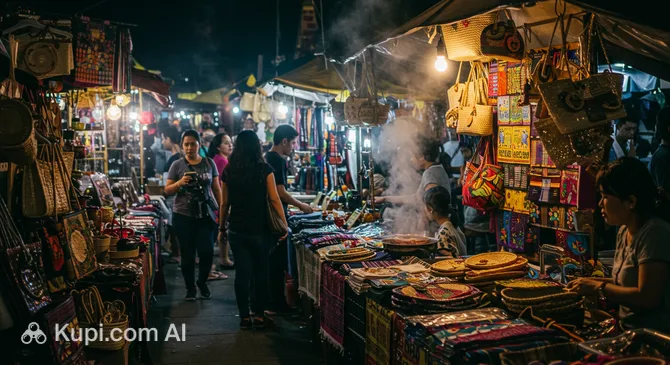
One of the most popular spots for evening entertainment is the Baguio Night Market, which spreads out along Harrison Road. It usually opens around 9 PM and continues until midnight. This is a great place to soak up the local flavor, try a variety of street food (from BBQ to local sweets), buy inexpensive clothes, souvenirs, and much more. It's always crowded and fun, and the prices are a pleasant surprise.

Baguio Night Market. Illustration.
Source: Kupi.com AI

Traveler photos:

If you are looking for a place with live music and a cozy atmosphere, check out Cafe Will. This establishment is known for its performances by local musicians and its pleasant setting where you can relax with a drink after a busy day. The city also has several karaoke bars, which are very popular among Filipinos, and small clubs where you can dance to modern hits.

Cafe Will. Illustration.
Source: Kupi.com AI

Traveler photos:

Practical tips for night walks in Baguio:

  • Time: Most bars and nightspots come to life after 9-10 PM, especially on weekends. The Night Market is best visited between 9 and 11 PM.
  • Prices: Food and drink prices in Baguio are generally moderate. A dinner at a restaurant or a few drinks at a bar won't break the bank.
  • Transport: Taking a taxi is the most convenient way to get around at night. Make sure the driver turns on the meter or agree on a price in advance. Ride-hailing apps are also available.
  • Safety: Baguio is considered a relatively safe city. However, as with anywhere, you should take basic precautions: keep an eye on your belongings and avoid poorly lit or deserted streets late at night. Main tourist areas like Session Road are well-patrolled.

While the focus here is on nightlife, during the day Baguio also offers plenty of interesting activities. You can visit the famous BenCab Museum, stroll through picturesque Burnham Park, explore the Baguio Botanical Garden, or check out the Sky Ranch Baguio amusement park. The city also has theaters and cinemas for cultural leisure.

Overall, the nightlife in Baguio offers a pleasant variety for those looking to relax and have fun after daytime excursions, combining local charm with a friendly and safe atmosphere.

Parks & Museums

Baguio, the summer capital of the Philippines, charms visitors not only with its cool climate but also with its abundance of green spaces for relaxation and a rich cultural heritage reflected in its museums and historical landmarks. The city offers many opportunities for those seeking both peace in nature and immersion in local history and art.

Central among the parks is the famous Burnham Park, designed by American architect Daniel Burnham. Here you can go boating on the lake, rent a bike, or simply enjoy a picnic on the grass. Equally popular is Wright Park, known for its horseback riding and the scenic "Pool of Pines." It is an excellent spot for family outings and photo sessions. Another green gem is the Baguio Botanical Garden, where you can see the region's diverse flora, including traditional Igorot huts showcasing indigenous culture.

Burnham Park. Illustration.
Source: Kupi.com AI

Traveler photos:

For art lovers, the BenCab Museum is a must-visit, featuring works by the National Artist of the Philippines Benedicto Cabrera, as well as other contemporary Filipino masters. The museum is set in a picturesque location overlooking gardens and the forest, enhancing the experience. Another unique site is Tam-awan Village. This is a reconstructed traditional Ifugao and Cordillera tribal village that also serves as an open-air gallery and a venue for workshops, allowing for a deeper understanding of highland culture.

BenCab Museum. Illustration.
Source: Kupi.com AI

Traveler photos:

Among the iconic architectural sites is The Mansion—the official summer residence of the President of the Philippines, with its grand gates and manicured gardens open to visitors. Nearby stands the Baguio Cathedral, built on a hill and serving as an important religious and historical center of the city. Its pink facade and stained glass windows attract many tourists and pilgrims.

The Mansion. Illustration.
Source: Kupi.com AI

Traveler photos:

For those seeking less touristy but authentic experiences, the Bell Church is a quiet and colorful site with Chinese pagodas, ponds, and gardens, offering panoramic views of the surroundings. Also interesting is the Heritage Hill and Nature Park Garden (Old Diplomat Hotel), which combines the historical atmosphere of an abandoned hotel with the serenity of a nature park.

Getting Around

Public transport in Baguio is a colorful and very affordable system, though it differs from common European standards. There are no metros or trams, but getting around the city is fairly easy once you master the local nuances.

The main types of public transport in Baguio are the famous Philippine jeepneys and tricycles. Jeepneys are brightly decorated, converted American military jeeps that run on fixed routes. The route is usually displayed on the windshield or side of the jeepney. Payment is made in cash directly to the driver or the conductor, if there is one. Fares are very affordable, typically ranging from 15 to 30 Philippine pesos for a short trip within the city, and may vary slightly depending on the distance. Buses also operate in the city, mainly serving longer routes and connecting different districts.

Tricycles—motorcycles with an attached passenger sidecar—are convenient for short trips or for reaching places where jeepneys don't go. The cost of a tricycle ride is usually negotiable and depends on the distance; short trips can cost from 50 to 150 Philippine pesos, but it is always recommended to clarify the price before starting the trip, especially if the destination is far or in a hard-to-reach area. There are generally no special transit cards for jeepneys or tricycles—payment is made in cash for each ride.

Tourists should carry small bills and coins for fares. Tickets as such are not issued in jeepneys and tricycles. Transport starts running quite early in the morning and finishes late in the evening, although the frequency of traffic on some routes may decrease in the late hours. To figure out which jeepney you need, don't hesitate to ask locals or drivers—they are usually very helpful.

As an alternative to public transport, taxis are always available in Baguio. It is recommended to use taxis with a working meter or agree on the price beforehand, especially for popular tourist destinations. Ride-hailing services via mobile apps may also be available in the city, providing a convenient and often more predictable pricing option. Due to the city's hilly terrain, bike rentals are not as popular as in flat cities, but can be found for short rides in certain areas.

Accommodation

When planning a trip to Baguio, you will find a fairly wide range of accommodation options to suit various preferences and budgets. The city offers everything from budget guesthouses and hostels for economical travelers to comfortable mid-range hotels and more luxurious options, including short-term rental apartments.

Many tourists prefer to stay in areas close to major attractions and transport hubs. The central part of the city, especially near Burnham Park and Session Road, is popular for its easy access to shops, restaurants, and entertainment. For those seeking a quieter atmosphere and a resort-style holiday, the Camp John Hay area offers excellent options with scenic views and developed infrastructure.

Baguio Country Club. Illustration.
Source: Kupi.com AI

Traveler photos:

Among the well-known hotels in Baguio offering quality service, the Baguio Country Club stands out, known for its elegance and wide range of services, as well as the The Manor at Camp John Hay (Garden Wing), located in a picturesque setting with comfortable rooms. These hotels are often popular with tourists seeking a comfortable stay.

Regarding booking, it is strongly recommended to reserve your accommodation in advance, especially if your trip coincides with the peak tourist season (such as during the Panagbenga Festival or the Christmas holidays), as the best options can sell out quickly. Prices range from budget-friendly options to luxury hotel rooms. Most hotels and guesthouses can be booked via popular international and local online platforms, as well as directly through hotel websites or by phone.

Nearby Cities

For those who want to explore the surrounding areas, Baguio serves as an excellent starting point for day trips to several interesting nearby locations:

CityPopulationDistance
La Trinidad137 4048 km
Tuba48 31212 km
Itogon61 49812 km
Tublay19 42913 km
Sablan11 58813 km

La Trinidad, known as the "Strawberry Capital of the Philippines," attracts visitors with its famous strawberry farms where you can pick your own berries, as well as the colorful StoBoSa houses painted on the hillside.

Bauang in La Union province is a popular coastal destination offering sandy beaches, resorts, and surfing opportunities, making it a great place to relax by the sea.

Pozorrubio is a lively municipality in Pangasinan province where you can experience local culture, taste regional delicacies, and see typical Filipino provincial life.

Agoo, also located in La Union, is famous for its historical Basilica Minore of Our Lady of Charity, an important pilgrimage site, as well as its picturesque coastal areas.

Itogon, located in the same Benguet province as Baguio, is known for its mountainous landscape, gold mining history, and offers opportunities for hiking and nature exploration, including hot springs.

These nearby destinations provide insight into the diverse culture and landscapes of the region.

Shopping & Souvenirs

Baguio, known as the "Summer Capital of the Philippines," offers a unique shopping experience that combines modern malls with bustling local markets. The city is famous for fresh produce, especially strawberries and vegetables, as well as handicrafts like woven items, wood carvings, and silver jewelry. Here you can find both quality goods at affordable prices and exclusive souvenirs.

The city's main shopping artery is Session Road. This busy street is lined with shops, restaurants, banks, and department stores. You can find clothing, shoes, electronics, and much more here. A walk along Session Road is an experience in itself, allowing you to feel the pulse of the city.

For those who prefer shopping in more comfortable settings, Baguio has several shopping centers. One of the most popular is SM City Baguio, located on a hill and offering not only a wide selection of shops and restaurants but also a beautiful view of the city. Another well-known mall is Porta Vaga Mall, where you can also find a variety of goods and services.

City Baguio Mall. Illustration.
Source: Kupi.com AI

Traveler photos:

An integral part of shopping in Baguio is its markets. The Baguio City Market is the place to buy the freshest vegetables, fruits (especially the famous local strawberries), flowers, and local delicacies such as strawberry jam, peanut butter, honey, and coffee. In the evening, the Baguio Night Market along Harrison Road comes to life, where you can find inexpensive clothing (including "ukay-ukay" or second-hand items), shoes, accessories, souvenirs, and, of course, street food.

Porta Vaga Mall. Illustration.
Source: Kupi.com AI

Traveler photos:

Recommended souvenirs to bring home from Baguio include: strawberry products (jam, wine, sweets), ube jam (purple yam jam), peanut brittle, traditional "walis tambo" brooms, handmade wood carvings, silver jewelry, and woven crafts by local artisans. Coffee beans from the Cordillera region are also popular.

Most shopping centers in Baguio operate from approximately 10:00 AM to 9:00 PM daily. Market hours vary: the City Market is usually open from early morning until evening, while the Night Market starts after 9:00 PM. Credit cards are accepted in shopping malls and large stores, but cash is preferred in markets and small shops. ATMs are easy to find throughout the city.

Information regarding the Tax Free system for tourists in the Philippines is not as widely publicized as in some other countries. Usually, this system does not apply to goods purchased in markets or most regular shops. If you make large purchases in specialized stores or department stores, it's worth checking the possibility of a tax refund directly with the seller.

Nearby cities

Reached the end of the page?

That means the route is fully explored