Support

Tam-awan Village

About

Imagine a place where time seems to slow down, opening a portal into the past of the archipelago's mountain peoples. Tam-awan Village is a unique cultural and artistic center located in the picturesque city of Baguio, Philippines. It is a detailed reconstruction of an ethnic settlement of the indigenous Igorot people.

The main highlight of the complex is the collection of authentic traditional houses brought from various parts of the Cordillera region. Here, you can see the famous huts of the Ifugao people, built without a single nail and perfectly adapted to life in the highlands. Every architectural detail is full of meaning and harmoniously integrated into the surrounding natural landscape.
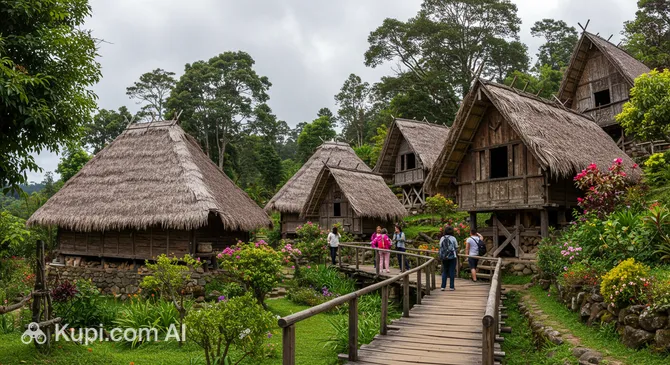
Tam-awan Village
Tam-awan Village. Иллюстрация. Источник: Kupi.com AI

Today, Tam-awan is more than just an open-air museum; it is a living space for creativity. The village combines an ethnographic exhibition, art galleries, and workshops where contemporary Filipino artists draw inspiration from the ancient traditions of their ancestors. This is a must-visit destination for those who want to experience the true, non-touristy soul of the Philippines.

Contacts

To inquire about special events or book workshops, you can use the cultural center's official communication channels.

How to contactContact
Address366-C Long Long Benguet Rd, Baguio, 2600 Benguet, Philippines
Phone+63 74 446 2949
Websitewww.tamawanvillage.com

What to Do

A stroll through Tam-awan Village turns into a fascinating exploration of the life of mountain tribes. You can step inside authentic huts and see how their interior space has been organized for centuries. Special attention should be paid to the unique engineering solutions: for example, the traditional toilet and the ventilation system in Ifugao houses demonstrate the surprising practicality of ancient builders.

For art lovers, there is an art gallery displaying the works of local masters. The collections are constantly updated, and the themes of the paintings often echo the mythology and daily life of the Cordillera region. Traditional weaving demonstrations are frequently held, where you can watch the process of creating vibrant fabrics by hand.

After walking the hilly trails, stop by the local cafe. It serves dishes featuring elements of national cuisine, prepared with fresh local ingredients. Tasting authentic food surrounded by ancient huts is the best way to complete your cultural immersion. Crafts workshops are also frequently held on-site, in which all visitors are welcome to participate.

Getting There

Tam-awan Village is conveniently located at 366-C Long Long Benguet Rd. The journey from the center of Baguio, often called the country’s summer capital, takes only about 10–15 minutes by transport.

The easiest and most comfortable way to get there is by taking a local taxi. Drivers are very familiar with the location, as it is one of the region's key cultural landmarks. You can also take a jeepney (traditional Filipino minibus) following the Long Long Road route. A jeepney ride allows you to immerse yourself even more in the local atmosphere before even arriving at the village.

For those who prefer navigating on their own using maps, the coordinates are 16.4296517 N and 120.5763849 E. The road leads through picturesque hilly sections characteristic of the Cordillera mountain region.

Ближайший город: Baguio

History & Facts

The history of this unique place began in 1998, when Tam-awan Village was officially opened in Baguio. The idea for the project came from a group of local enthusiasts and artists who sought to preserve the vanishing heritage of the indigenous peoples of the Cordillera region.

The cultural center focuses on showcasing the pre-colonial way of life of the Igorot, Ifugao, and Kalendan tribes. For centuries, these peoples lived in harmony with the harsh mountain environment, developing unique architectural and domestic traditions that the village's creators have reconstructed with great precision.

Tam-awan Village serves as a living open-air museum. It acts as an important link between the past and the present, ensuring that modern generations do not forget the authentic customs and crafts of their ancestors. Over the decades of its existence, the project has become one of the primary guardians of Filipino culture in the northern part of the archipelago.

Notably, many architectural elements presented here have deep ancient roots. The use of natural materials and the absence of metal nails in the traditional huts is not just a reconstruction, but a living testament to the engineering skill of the mountain peoples, passed down from generation to generation.

Time Needed

To explore the entire ethno-village without rushing, visitors usually need 2–3 hours. This is plenty of time to not only peek inside each hut and study their construction features but also to visit the local art gallery.

If you plan more than just a tour and want to stop by the cozy cafe to try traditional dishes or spend some time in the weaving workshop, it is best to set aside half a day for your visit. The village atmosphere encourages contemplation, so there is no need to hurry here.

For photography enthusiasts, this place is a real find—the play of light in the authentic interiors of the Ifugao huts is worth taking the time for some thoughtful shots.

Working Hours

Tam-awan Village is open to guests daily, making it a great addition to your itinerary any day of the week. The schedule is very convenient for tourists: the complex welcomes visitors from 7:00 AM to 8:00 PM.

This schedule allows you to enjoy both the morning coolness and soft light for photography, as well as the cozy evening atmosphere when the lights come on and the traditional houses look particularly mysterious.

7:00 – 20:00

Nearby

After immersing yourself in the ethnic atmosphere of Tam-awan Village, it is worth exploring other interesting sites nearby. The city is famous for its parks, unusual buildings, and natural views that will round out your understanding of Cordillera culture.

Exploring the surrounding area will help you better feel the contrast between the region's traditional past and its modern tourist face. Within a few kilometers, you will find both historical parks and modern entertainment venues.

NameDistance
The Farmer's Daughter Restaurant0 km
Igorot Stone Kingdom0.3 km
Valley of Colors2.2 km
Our Lady of Lourdes Grotto2.2 km
Bell Church2.4 km
Good Taste Restaurant2.6 km
Burnham Park2.6 km

Reached the end of the page?

That means the route is fully explored