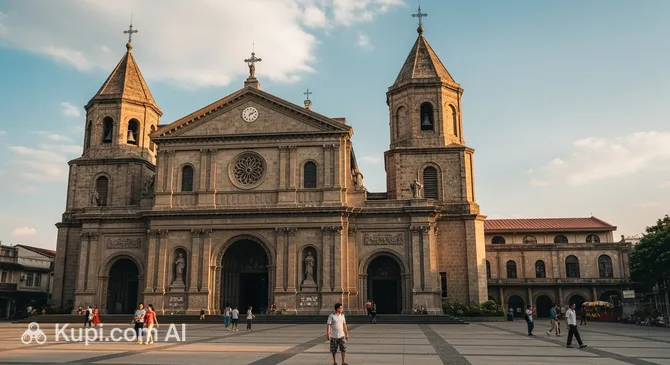
The Antipolo Church Historical Marker is a significant cultural heritage site located in the city of Manila (Metro Manila region), Philippines. This historical marker officially designates a site of immense importance for the country's Catholic heritage and the spiritual development of Rizal province.
Antipolo Church Historical Marker. Illustration.
Source: Kupi.com AI
Traveler photos:
The marker was installed to highlight the role of Antipolo as a major pilgrimage center. It tells visitors about the development of religious architecture and how this site became a spiritual magnet for millions of Filipinos over the centuries. For a tourist, it is an excellent opportunity to look into the past and understand the deep connection between the city's history and its faith.
Contacts
You can find this site using GPS coordinates or the official address in Rizal Province. As it is an outdoor commemorative plaque, there is no direct contact with the administration via phone or email.
The main activity when visiting this site in the Philippines is a detailed study of the information marker. Visitors can read about the stages of construction and the significance of the church, which has served as a bastion of faith for centuries. This is a mandatory stop on the itinerary for those interested in religious history and the architectural heritage of the archipelago.
For photography enthusiasts, the historical plaque will be a wonderful addition to shots capturing the atmosphere of old Antipolo. This place also encourages quiet contemplation and allows you to feel the energy of the region's spiritual center. Many tourists use this location as a starting point for a deeper exploration of pilgrimage traditions and visits to local shrines.
Getting There
The attraction is located on the eastern outskirts of Metro Manila, in Rizal Province. The most convenient way to get here from the capital is by public transport. Buses and shuttle vans regularly run from various districts of the metropolis to the center of Antipolo.
For a more comfortable trip, it is recommended to use a taxi or ride-hailing services. Since the city is located on an elevation, the journey can take from 45 to 90 minutes depending on traffic density. Private transport is also a great option: follow the address H5QG+4H6, Unnamed Road, Antipolo.
Nearest city: Manila
History & Facts
The history of this site is closely intertwined with the colonial past of the Philippines. Antipolo began to develop as one of the archipelago's most important spiritual centers as early as the beginning of the 17th century, when monastic orders began to settle here. The Royal Monastery of Saint Clare of Manila is one of the prominent examples of how significant the region was for the Catholic Church during that era.
The historical marker was installed to record the city's role as the country's primary pilgrimage hub. Over the centuries, thousands of believers have made the journey to local shrines, which has turned Antipolo into the "Pilgrimage Capital of the Philippines." The plaque serves as a reminder of the deep roots of faith that have shaped the modern image and culture of this region.
Interestingly, the marker commemorates not only a religious building but also the historical context of architectural development. It highlights the continuity of traditions and the importance of preserving the memory of events that contributed to the city's growth and its transformation into an important cultural landmark for the entire Filipino people.
Time Needed
To carefully examine the historical marker and read the information presented on it, 15–30 minutes is usually sufficient. This is a short but important stop for those who want to touch upon the history of pilgrimage in the Philippines.
If you plan to combine viewing the plaque with a walk around the church grounds or a visit to nearby souvenir shops, we recommend setting aside about an hour. However, the marker itself is a concise object that does not require a long stay.
Working Hours
Since the historical marker is located outdoors in a public area, it is actually available for viewing 24 hours a day. You can approach it and study the information at any time convenient for you.
Nevertheless, to visit the adjacent temple grounds or participate in services, it is recommended to check the schedule on the official resources of local parishes in advance. It is better to plan your viewing of the marker during daylight hours for a more comfortable reading experience and better photography.
Nearby
Exploring the surroundings of the historical marker will help you better understand the atmosphere of the region and add variety to your trip. In addition to religious shrines, this part of the country is home to popular amusement parks and recreation areas that are ideal for family leisure.
Many of these sites are within an hour's drive, allowing you to create a rich itinerary for the whole day. Visiting water parks and themed zones will be a great addition to seeing historical monuments.