Support

De La Salle University Manila

About

Imagine a vibrant hub of knowledge and culture in the heart of the Philippine capital. The De La Salle University (DLSU) Museum is more than just an exhibition space; it is a vital part of one of the most prestigious higher education institutions that the Philippines is proud of. Located in a historic district, this site combines a rigorous academic environment with a rich intellectual heritage.
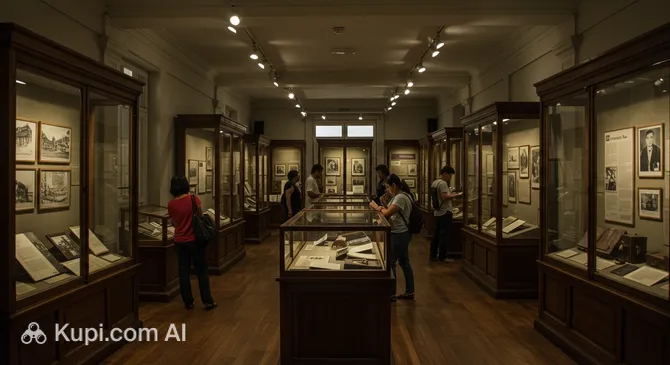
De La Salle University Museum
De La Salle University Museum. Иллюстрация. Источник: Kupi.com AI

Situated in a metropolis like Manila, the university campus serves as a significant cultural landmark. Founded back in 1911, it has evolved into a leading educational hub where modern architectural solutions coexist with well-maintained green zones. For travelers, this place is interesting primarily as a mirror of the country's modern life and its striving for progress.

Although the site is classified as a museum, its significance is much broader. It is a holistic cultural environment that brings together libraries with rare collections, innovative laboratories, and art galleries. A visit to De La Salle University allows for a deeper understanding of the history of Philippine education and shows how the traditions of a Catholic order are integrated into a dynamic urban landscape.

Contacts

To clarify visiting details or to book a campus tour, it is recommended to check the official information. The main contact details are provided below:

How to contactContact
Address2401 Taft Ave, Malate, Manila, 1004 Metro Manila, Филиппины
Phone+63 2 8524 4611
Websitewww.dlsu.edu.ph

What to Do

A walk through the university's expansive grounds is a great way to feel the rhythm of the modern, youthful capital. Visitors can admire the modern architecture of the academic buildings, peek into quiet green courtyards, or watch sports competitions at local venues. Be sure to pay attention to the university libraries and art galleries, which often host temporary exhibitions dedicated to art, history, and science.

If you're lucky, you might catch an open lecture or a cultural festival, which are regularly held on campus and are open to the public. It is also worth visiting the local chapel, which is a quiet oasis and reflects the Catholic traditions of the institution. For those who get hungry, there are cafes on site where you can try local cuisine in the company of students and faculty.

Photography enthusiasts will definitely love it here: the combination of innovation centers, memorial areas, and lively alleys creates a wonderful backdrop for photos. This place is ideal for those who want to temporarily trade noisy tourist streets for the inspiring and intellectual atmosphere of an academic campus.

Getting There

Getting to the campus, located at 2401 Taft Ave, Malate, is quite simple thanks to the city's developed transport network. The fastest way is to use the LRT-1 light rail and get off at Vito Cruz or Gil Puyat stations. From there, you can reach the university's main gates in 5–10 minutes on foot or by taking a jeepney.

If you are traveling from Ninoy Aquino International Airport (NAIA), a taxi or a ride via the Grab app will take approximately 30–45 minutes, depending on traffic conditions. Many buses and public utility vehicles also run along Taft Avenue, stopping almost right at the university entrance.

For those already in central areas such as Rizal Park or Intramuros, a walk to the campus can take about 20–30 minutes. The Malate district is quite lively and is considered a convenient area for walking routes, making it easy to combine a university visit with other city sights.

Ближайший город: Manila

History & Facts

The history of this place began back in 1911, when De La Salle College was founded under the leadership of the Brothers of the Christian Schools. Initially located in the Paco district, the institution was intended exclusively for boys, emphasizing high-quality Catholic education. Saint Jean-Baptiste de La Salle, after whom the university is named, laid the foundations for pedagogy focused on ethics and service to society.

A significant milestone in its development was 1975, when the institution officially received university status. It was during this period that the campus finally settled in the Malate district on Taft Avenue, where it remains today. The move marked a new era: the expansion of educational programs and the transition to co-education.

Over the decades of its existence, De La Salle University (DLSU) has become one of the pillars of the country's educational system. It has stood the test of time, constantly modernizing its infrastructure to meet global standards while remaining true to its historical roots and the spiritual values of Lasallian education.

Time Needed

For a quick introduction to the campus grounds and architecture, 1–2 hours is usually enough. This time is sufficient to take a leisurely stroll through the main alleys, view the building facades, and feel the overall atmosphere of this academic space.

If you plan to visit the art galleries, peek into the library, or attend one of the temporary exhibitions, we recommend setting aside 2–3 hours for your visit. Such an immersion will allow you to explore the displays without rushing and enjoy the calm rhythm of university life away from the city bustle.

Working Hours

The university campus is typically accessible for visits from Monday to Saturday. Standard operating hours for the grounds are from 06:00 to 22:00. It is worth noting that on Sundays, the institution is generally closed to the general public.

As this is an active educational institution, access to specific halls, museums, or libraries may depend on the academic schedule and internal events. Before planning your visit, we recommend checking the latest information on the university's official website.

DayWorking hours
понедельник06:00–22:00
вторник06:00–22:00
среда06:00–22:00
четверг06:00–22:00
пятница06:00–22:00
суббота06:00–22:00
воскресеньеЗакрыто

Nearby

The university's location in the Malate district makes it an excellent starting point for exploring other interesting places in the capital. The surrounding area is rich in entertainment centers, parks, and cultural sites that will help you form a complete picture of the multifaceted metropolis.

Exploring nearby locations will allow you to harmoniously complement your travel itinerary, moving from an academic atmosphere to bright impressions and active recreation.

NameDistance
Roo Malate Rooftop Cafe1.1 km
Coconut Palace1.4 km
National Museum of Natural History2.4 km
National Museum of Anthropology2.6 km
National Museum of Fine Arts2.8 km
Mansion Sports Bar and Lounge3 km
Intramuros3.4 km

Reached the end of the page?

That means the route is fully explored