Support

Bolinao

About

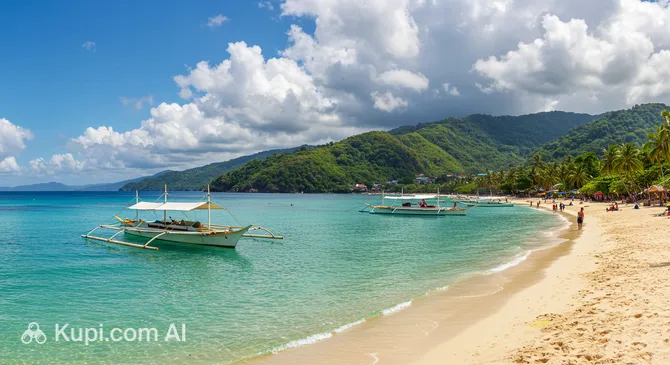
Bolinao is a charming coastal town located in the western part of Pangasinan province on Luzon Island. This picturesque corner, washed by the waters of the South China Sea, attracts travelers with its calm atmosphere and natural beauty. If you are planning to visit the Philippines, Bolinao will be an excellent stop on your itinerary, located about 282 kilometers from bustling Manila.

Bolinao. Illustration.
Source: Kupi.com AI

With a population of around 84,000, the town offers ideal conditions for those seeking solitude and wanting to take a break from the urban rush. Although modern Bolinao is known primarily as a resort, the history of Bolinao also holds many interesting chapters that shape the unique character of this place. Locals are known for their warm hospitality, making any stay here particularly comfortable.

The region's main treasures are its natural attractions. Here, golden beaches, crystal-clear waterfalls, and mysterious caves await you, creating a unique landscape. Visiting Bolinao should definitely be part of your plans to enjoy untouched nature and explore one of the country's most scenic spots.

Weather Overview

Bolinao welcomes travelers with a warm tropical climate that remains comfortable throughout the year. The average air temperature consistently stays between +26°C and +29°C, peaking in May when the thermometer often exceeds +31°C. To choose the perfect time for your trip, we recommend checking in advance what weather in Bolinao is typical for your chosen month.

The most favorable period for beach holidays and excursions lasts from December to April. During this time, the probability of precipitation is minimal: for example, only about 3 rainy days are recorded per month in February and March. This is the dry season, when the sun shines brightly and the sea remains calm and welcoming.

From May to October, the region experiences the rainy season. During this period, humidity rises, and the number of rainy days increases sharply, reaching a peak in July and August (up to 30 days with precipitation). Expect hot weather year-round with a dry and sunny period in winter and spring, giving way to a season of frequent rains in the summer and autumn months.

Average monthly temperature

Average monthly precipitation

Interesting Facts

Bolinao holds many fascinating secrets that make the Philippines such an alluring destination for explorers. Beyond the main resort areas, unique natural and historical sites are hidden here, deserving special attention.

  • Waterfall System. Picturesque cascades are located in the town's outskirts, with Bolinao Falls 1 being the most famous. Although the journey from the center takes about 45 minutes over a rather rough road, travelers unanimously agree: the chance to plunge into crystal-clear water surrounded by wild nature is definitely worth the effort.

  • Underground Lake. One of the most mysterious attractions is the Enchanted Cave. This place not only plays an important role in the cultural life of locals and is shrouded in legends, but also offers tourists a rare opportunity to swim in cool underground waters inside a limestone grotto.

  • Historical Landmark. Bolinao Lighthouse is not just a navigational structure, but also a popular viewpoint with a rich history. Due to its location, it offers a breathtaking panoramic view of the coast and the sea, making it a must-visit spot for all lovers of beautiful photography.

How to Get There

Bolinao is located far from noisy metropolises, which helps preserve its natural charm but requires travelers to plan their route. The town itself does not have its own airport, so tourists usually fly into major air hubs on Luzon Island and then continue by land. You can find more details on how to get to Bolinao to choose the best mode of transport.

A convenient option for many travelers is Clark International Airport (CRK). It is located in Angeles City, approximately 147 km from Bolinao. This is a modern international airport often chosen to avoid the capital's traffic jams. A trip from here by taxi or rental car will take roughly 4 hours, depending on road conditions.

The most popular point of arrival remains Ninoy Aquino International Airport (MNL), located in Manila. The distance to Bolinao is about 236 km. Since this is the country's main hub, most international flights land here. However, it should be noted that the journey from the capital to the resort can take about 6–7 hours by bus or car due to traffic and distance.

For convenience, here is a summary of the main airports:

AirportPassenger trafficDistance
Vigan Mindoro Airport143 km
Clark International Airport2.4 mln147 km
Cauayan Airport66 415209 km
Laoag Airport78 229214 km
Ninoy Aquino International Airport50.1 mln236 km

Railway communication is not developed in this region of the Philippines, and there are no active train stations in or around Bolinao. The primary way to travel by land remains the highway system. Regular bus services connect the town with Manila and other centers in Pangasinan province, offering an affordable and scenic way to reach the coast.

Main Attractions

While Bolinao is often associated with relaxed holidays by the water, this town offers much more than just beautiful scenery. Here, you can find an amazing combination of natural riches and cultural heritage. Traveling through this region, you can explore pristine rivers, unique marine sanctuaries, and architectural monuments that tell of a colonial past when the Philippines were under the influence of the Spanish crown.

Patar Beach is rightfully considered the main gem of the coast and is often called the "Boracay of the North." This place is famous for its wide stretch of creamy golden sand that gently slopes into the turquoise waters of the South China Sea. The beach's distinction lies in its pristine nature: there are no large hotel chains blocking the horizon, which helps maintain an atmosphere of seclusion. Patar is ideal not only for swimming but also for long walks at sunset when the sky and water are painted in incredible shades.

Church of St. James the Great is a monumental structure in the town center, built back in 1609. The temple is a striking example of colonial architecture and one of the oldest churches in Pangasinan province. Its walls are built from blocks of black coral and limestone, giving the building a unique textured look and special strength that has allowed it to survive numerous typhoons and earthquakes over the centuries. Inside, an atmosphere of tranquility prevails, and the ancient altar draws attention with its intricate detail.

Balingasay River is a true ecological paradise and one of the cleanest rivers in the country, having repeatedly received awards for ecosystem preservation. Travelers are offered a cruise along the calm waters surrounded by dense mangrove forests, which are home to various birds. A popular activity here is lunch on a floating raft restaurant, where you can enjoy local seafood dishes to the sounds of nature.

Rock View Beach offers a completely different panorama compared to the sandy Patar. This place is known for its impressive rock formations against which sea waves crash. Huge stone boulders create natural observation decks offering breathtaking views of the endless ocean. It is an ideal location for photo shoots and contemplating the power of the sea.

Santiago Island, located off the coast of Bolinao, attracts lovers of the underwater world. It is home to the famous Giant Clam Nursery, where enormous Tridacna shells are grown and protected. Tourists can go snorkeling to see these marine giants in their natural habitat and admire the colorful coral gardens surrounding the island.

Local Cuisine

Bolinao's cuisine is a true feast for seafood lovers. Thanks to the town's coastal location, the local menu is based on the freshest seafood, which goes from the fishermen's nets to the table almost immediately. Here, you can enjoy the taste of crabs, shrimp, various shellfish, and fish, prepared according to traditional recipes using aromatic local spices and sauces.

Special attention should be paid to local interpretations of classic Filipino hits. Be sure to try sinigang — a famous sour-savory soup, which in Bolinao is cooked with a rich fish broth or an assortment of seafood. Another gastronomic discovery is adobo: while in other parts of the country this dish is more often made with chicken or pork, here meat is frequently replaced with seafood, stewed in a piquant sauce of vinegar, soy sauce, and garlic.

The tropical climate of Pangasinan province gifts the region an abundance of juicy fruits. Bolinao is famous for its incredibly sweet mangoes, ripe papayas, and coconuts. The local food culture is closely tied to nature: tourists often adopt the local tradition of having picnics at scenic spots. Lunch with fresh fruit and light snacks in one of the bamboo huts by Bolinao Falls 1 is an unforgettable experience combining delicious food with the beauty of the jungle.

As for drinks, the best way to cool off in the heat remains natural coconut water (buko juice), often served right in the shell. Popular Filipino beer brands and local rum are widely available in the town's establishments, perfectly complementing a seafood dinner at sunset.

Travel Tips

Preparing for a trip to Bolinao requires attention to detail, as it is not a typical resort metropolis but a cozy provincial corner. These practical tips will help you avoid common mistakes and make your introduction to this picturesque region as comfortable and safe as possible.

  1. Clothing and gear. Since the climate here is hot and humid, opt for light, breathable clothing made from natural fabrics. The most important item in your luggage is aqua shoes (coral shoes). Many of Bolinao's beaches have rocky bottoms, and when visiting waterfalls, you'll have to walk on slippery stones. For a visit to the Church of St. James, choose clothing that covers your shoulders and knees as a sign of respect for local traditions.

  2. Transport nuances. There are no taxis or services like Grab in the town. The main way to get around is by tricycles (motorcycles with sidecars). You must agree on the fare with the driver in advance, before boarding. For seeing all the sights, it's more economical to rent a tricycle with a driver for the whole day. If you are a confident rider, you can rent a scooter, but be prepared for narrow provincial roads.

  3. Finances and cash. In Bolinao, the rule is: "Cash is King." ATMs are only available in the town center (Poblacion), and they are often empty or do not accept foreign cards. There are no ATMs at all in the Patar Beach area. Be sure to withdraw enough Philippine pesos in Manila or a large city before leaving. Cards are accepted only in a few large hotels.

  4. Health and first aid kit. 24-hour pharmacies (such as Mercury Drug) are located in the town center, but getting to them from the resort zone at night is problematic. Pack a first aid kit: remedies for stomach upset, antiseptics, and, most importantly, high-quality repellents. Mosquito activity is high in the evenings. Drink only bottled water to avoid digestive issues.

  5. Connectivity and internet. Buy a SIM card (Globe or Smart) upon arrival in the Philippines. Wi-Fi in Bolinao hotels is often slow or unstable. Be aware that in remote spots like caves or far stretches of Patar Beach, mobile signals may disappear completely. Download offline maps in advance.

  6. Etiquette and communication. Locals are very friendly and value politeness. Greet people with a smile. When talking to elders, Filipinos use the respectful particles "po" and "opo" — a tourist using these words will evoke sincere warmth. It is customary to behave with restraint in public places; loud shouting or arguing is considered bad form.

  7. What to avoid. It is strictly forbidden to step on corals or touch marine life, especially in sanctuary zones (e.g., near Santiago Island). Also, avoid swimming in the sea alone at night or during strong waves — currents can be unpredictable, and there are no lifeguards on wild beaches.

  8. Gastronomic tip. While in Bolinao, be sure to try the local delicacy — Binungey. This is sticky rice cooked in a bamboo stem with coconut milk. It is sold by street vendors near the church and waterfalls; it's a great and safe snack that is best eaten with local mango or sugar.

By following these simple recommendations, you can focus on the most important thing — enjoying the incredible sunsets and natural wonders of Bolinao. May your trip be smooth, safe, and leave you with only the warmest memories!

Entertainment & Nightlife

Nightlife in Bolinao differs significantly from the noisy parties of Boracay or the capital, Manila. Here, you won't find huge nightclubs with neon signs and world-class DJs. Evening leisure in this town is imbued with an atmosphere of provincial comfort, relaxation, and connection with nature. Most activity quietens down fairly early, so entertainment is oriented toward peaceful rest, delicious food, and socializing.

The centers of attraction in the evening are two main areas: the Patar Beach coast and the town center (Poblacion). In the Patar resort zone, life hums within the hotels and resorts. Many hotels, such as Puerto Del Sol or Treasures of Bolinao, have their own bars and restaurants by the water. Here you can enjoy a cocktail to the sound of the surf, listen to live acoustic music, or have a candlelit dinner. The dress code in such places is very casual—shorts and light dresses are perfectly appropriate, though swimwear is best left for the beach.

In the town center, the Poblacion area, the atmosphere is more authentic and lively. Videoke bars are popular here—the main entertainment for Filipinos. Locals love to sing, so loud ballads often drift out of small establishments. This is a great way to immerse yourself in the local culture: order a bucket of ice-cold beer and try performing your favorite song. The crowd here is always friendly and will support any performer with applause.

Specific establishments worth visiting in the evening include:

  • Sungayan Grill — a famous floating restaurant on the Balingasay River. Although it doesn't stay open late into the night, it’s the perfect spot for an early sunset dinner. They serve the freshest grilled seafood in atmospheric bamboo huts.
  • El Pescador Resort Hotel & Roof Deck — a venue offering a nice view. Here you can spend an evening in a more civilized setting, enjoying the sea breeze and local cuisine.

If you're looking for budget options and local flavor, head to St. James Church. In the evening, street food stalls often set up around the town square. This is a kind of mini-night market where you can try chicken or pork barbecue (isaw), as well as sweet desserts, for very little money.

Practical tips for tourists:

  • Transport: This is the main challenge in Bolinao at night. Tricycles (local motorcycle taxis) are extremely hard to find after 8:00–9:00 PM, especially if you stay in the remote Patar area. Arrange with a driver in advance to pick you up at a set time, and be prepared for night rates to be higher than daytime ones.
  • Safety: The town is considered safe, but the roads between the center and the beaches are virtually unlit. Walking along the highway at night is not recommended due to traffic risks. Always carry a charged phone and a flashlight.
  • Prices: Dinner at a hotel restaurant will cost an average of 500–800 pesos per person, while street food and beer in the center will be several times cheaper.

Regarding daytime entertainment, beyond the beaches and waterfalls, the cultural program in town is quite modest. It's worth stopping by the Bolinao Museum (a branch of the National Museum of the Philippines), which features archaeological finds and exhibits detailing the region's rich history and local flora and fauna. It's a small but informative place that provides a nice break from beach activities.

Parks & Museums

Although Bolinao is primarily known for its beaches and seascapes, the town and its surroundings offer curious travelers an interesting immersion into the natural environment and historical past of the region. Here, green zones seamlessly transition into wild jungles, and a few but significant cultural sites tell of the rich heritage of this part of the country, where the Philippines reveal a new, educational side.

Bolinao Falls Nature Park. This is not just a place for swimming, but an extensive green area hidden in dense tropical vegetation. The territory around the three cascades (Bolinao Falls 1, 2, and 3) is a picturesque nature reserve. Here you can walk along forest paths, enjoying the shade of ancient trees and the singing of birds. For tourists, this is a great opportunity to see local flora in its pristine state while having a picnic in one of the bamboo gazebos surrounded by the sounds of the jungle.

Cape Bolinao Lighthouse Grounds. The hill on which the famous lighthouse stands is effectively an open-air park with one of the best panoramic viewpoints in the region. The space around the structure is covered with thick grass and shrubs, making it an ideal place for leisurely walks in the fresh air. From the high cliff, you can see the endless sea and rocky coast, while the constant sea breeze provides coolness even on a hot day.

Among cultural institutions, the Bolinao Museum holds a special place. It is a branch of the National Museum of the Philippines and plays a key role in preserving the history of Pangasinan province. The museum's exhibition is diverse: it features archaeological finds testifying to ancient trade with China and neighboring countries, ethnographic items from the daily lives of local residents, and specimens of the region's flora and fauna. A visit to the museum allows for a deeper understanding of how the culture of this coastal town was formed over the centuries.

From a historical and architectural perspective, the main object of interest (besides the ancient church in the center) is the Cape Bolinao Lighthouse itself. Built by Americans in 1903, it is one of the oldest and tallest lighthouses in the country. This engineering feat is an important monument of maritime history that has guided ships in the South China Sea for over a hundred years. Although climbing the tower itself is often closed for safety, viewing the architecture of the base and the scale of the construction impresses any tourist.

For those seeking a unique experience at the intersection of science and nature, it's worth visiting the UPMSI Marine Laboratory (University of the Philippines Marine Science Institute). While it is not a museum in the classical sense, the giant clam and coral nursery on Santiago Island functions as a living open-air educational platform where you can learn about the conservation of marine ecosystems from passionate biologists.

Getting Around

The public transport system in Bolinao differs significantly from major metropolises: you won't find a metro, trams, or typical city buses with validators here. The town and its surroundings are primarily served by small-scale transport, which is ideal for narrow roads and short distances. The main and most popular means of transport for tourists are tricycles — motorcycles with a covered sidecar that function as local taxis.

Tricycles ply both the town center (Poblacion) and take passengers to remote attractions like Patar Beach or the waterfalls. There are two formats for trips: public, where you share the transport with other passengers on short routes, and "special trip" — an individual hire to a specific point. For travelers, the second option is usually most relevant, especially if you need to reach a beachfront hotel with luggage.

To move between neighboring districts (barangays) or along the main highway, you can use jeepneys — the recognizable elongated minibuses. They follow fixed routes, and boarding and disembarking are done at the passenger's request at any permitted location. This is the most budget-friendly way to get around, though jeepneys do not have a set schedule and usually only depart from the terminal once the cabin is full.

The payment system in Bolinao is extremely simple and conservative: only cash is accepted. Transport cards, mobile apps, or bank terminals do not work here. Payment is handed directly to the driver at the end (for tricycles) or during the trip (in jeepneys). Tourists are strongly advised to always have a supply of small coins and low-denomination bills, as finding change for a large banknote is often difficult for drivers.

One of the main features of local transport is the lack of meters in tricycles. The cost of the trip must be agreed upon in advance, before boarding. For popular tourist routes (for example, a sightseeing tour of the caves and the lighthouse), drivers often offer to hire a tricycle with a driver for a half or full day. In such cases, polite bargaining is appropriate.

Typical ride-hailing apps or car-sharing services do not function in this region. As an alternative, many travelers choose to rent a scooter or motorcycle. Rental points can be found in the town center and near some resorts. This gives freedom of movement and avoids dependency on finding transport, which is especially relevant in the evening when tricycle activity decreases.

Intercity buses from major companies are also present in the town, but their terminal, located near the town church, serves mainly for connections with other cities and the capital. Using large buses for moving within Bolinao itself is inconvenient and impractical.

Accommodation

Accommodation in Bolinao is diverse enough to satisfy both budget travelers and those seeking a comfortable resort experience. The town offers a wide range of options: from inexpensive hostels and "transient houses" (short-term rentals popular in the Philippines) to cozy boutique hotels and beachfront resorts with private beaches.

When choosing a place to stay, you should consider the two main areas, each offering its own style of holiday:

  • Patar Beach. This is the main tourist zone, where most resorts are concentrated. Staying here is the best choice for those who want to wake up to the sound of the waves and watch sunsets directly from their balcony. Accommodation here ranges from simple bamboo cottages to more expensive complexes with pools and manicured grounds. Note that this area is far from the town center, making it quieter and more peaceful.

  • Town Center (Poblacion). This area suits travelers who value proximity to infrastructure and cost savings. Many budget hotels and guesthouses are located here. Staying in the center is convenient due to the proximity to the bus terminal, town market, pharmacies, and inexpensive cafes. From here, it's easy to rent a tricycle for all-day trips to attractions.

Booking tips and prices. The price range in Bolinao can be described as moderate. Budget accommodation and rooms in private homes are available at very affordable prices, while the cost of a night in comfortable beachfront resorts corresponds to the country's average. It's important to remember that during peak seasons (especially during Holy Week and the summer months from March to May), demand for housing is enormous. It is recommended to book rooms several weeks, or better yet months, before the trip.

While popular international booking platforms can be used to find accommodation, many small guesthouses and local resorts in Bolinao actively take bookings through their social media pages. Before booking, check for the availability of a generator (in case of power outages) and payment methods, as many properties prefer cash.

Nearby Cities

For those who want to explore the surrounding areas, Bolinao serves as an excellent starting point for day trips to several interesting nearby locations. The Pangasinan region is rich in natural wonders and historical monuments, easily reachable by bus or rental transport.

Just 23 kilometers from the town is Alaminos. This destination is perhaps the most popular for a short trip, as it is home to the famous Hundred Islands National Park. Travelers come here to rent a boat and spend the day island hopping, snorkeling, and enjoying picnics on secluded beaches.

A bit further, about an hour's drive away, is Lingayen — the administrative capital of the province. This town will interest history and architecture buffs: it features the majestic Pangasinan Provincial Capitol, considered one of the most beautiful buildings in the Philippines. Lingayen is also known for its long beach and memorial park dedicated to General MacArthur's landing during World War II.

If you want to feel the rhythm of a larger city and sample more local cuisine, head to Dagupan. It holds the unofficial title of the "Milkfish (Bangus) Capital." Here you can visit lively markets, try the freshest seafood in local restaurants, and see old churches. On the way, you can stop by the town of Calasiao, famous for its traditional "puto" rice cakes, which make a great souvenir.

CityPopulationDistance
Bani52 60314 km
Alaminos99 39723 km
Agno29 94728 km
Sual39 09132 km
Dasol31 35542 km

These nearby destinations allow you to get a sense of the diverse culture and landscapes of the region, making your journey through Pangasinan even more rich and memorable.

Shopping & Souvenirs

Shopping in Bolinao is drastically different from typical trips to shopping centers in large metropolises. Here you won't find luxury boutiques or massive malls with international brands. Instead, the town offers an immersion into an atmosphere of provincial authenticity, where the main goods are the freshest seafood, unique local delicacies, and handmade crafts. Shopping here is a way to support local artisans and take home a piece of the culture that the Philippines are proud of.

The main commercial life is concentrated in the town center, in the Poblacion area. The streets adjacent to the town church and municipal hall are filled with small shops, pharmacies, and stalls selling essential goods. This is where tourists can find everything they need for a beach holiday: from sunscreens to flip-flops and hats. Small souvenir shops can also be found at popular attractions such as the lighthouse and waterfalls.

There are no large capital-style shopping and entertainment complexes in town. The most notable retail site is the CSI Warehouse Club — a branch of a popular regional supermarket chain. Here you can buy food, drinks, basic clothing, and household goods at fixed prices. For tourists, this is a convenient place to stock up on water and snacks before heading to remote beaches where shops are virtually non-existent.

The true heart of local commerce is the Bolinao Public Market. It's worth coming here early in the morning to catch the widest selection of the freshest fish and seafood for which the town is famous. In addition to gastronomy, the market sells tropical fruits, vegetables, and woven items. This is a colorful place where you can observe the daily life of the townspeople and feel the real rhythm of the city.

Gastronomic gifts are the most common souvenirs brought from Bolinao. The main local specialty is Binungey, sweet sticky rice baked in bamboo stems with coconut milk, sold in bundles. Bagoong (fermented fish paste) — a signature product of Pangasinan province — and various dried fish are also popular. Lovers of crafts will appreciate jewelry, magnets, and decor made from shells, which local artisans create with great skill.

Shops in town usually open around 8:00 AM and finish work quite early, around 6:00–7:00 PM, though the market comes alive before dawn. The primary and often only method of payment is cash. Credit cards are accepted only in a few large establishments, so tourists are strongly advised to carry a sufficient supply of cash, especially small bills for transactions with street vendors and tricycle drivers.

The Tax Free (VAT refund) system does not apply in Bolinao. Since trade is primarily conducted through small private shops and market stalls, the issuance of receipts for tax refunds is not available here. Prices for goods originally include all taxes and remain quite affordable compared to major international resorts.
Nearby cities

Reached the end of the page?

That means the route is fully explored