Support

Lucena

About

Lucena is a dynamic, highly urbanized city located on the picturesque island of Luzon, about 130 kilometers south of Manila. As the capital of Quezon Province in the CALABARZON region, the city serves as an important economic and administrative hub. Travelers are often drawn to the Philippines for its natural beauty, and Lucena is no exception: it is nestled on the shores of Tayabas Bay, which defines its status as one of the country's largest fishing ports.

With a population of around 280,000, the city surprises with its blend of pragmatic business activity and traditional Filipino hospitality. The climate here is maritime tropical, ensuring lush greenery and a fresh sea breeze that permeates the city neighborhoods. The history of this place is a tapestry of Spanish colonialism and the struggle for independence, reflected in its architecture and local way of life.
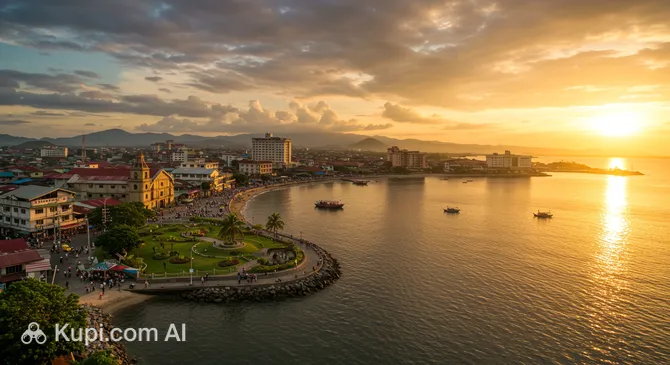
Lucena. Illustration.
Source: Kupi.com AI

For tourists, Lucena is primarily interesting as an authentic regional hub. Here, you can witness real life in the country away from overcrowded resorts, visit colorful fish markets, or head to the majestic Cathedral. The city is also known as a center for coconut processing, which adds a special flavor to the local landscapes and cuisine.

A visit to Lucena is an excellent opportunity to get to know the culture of the Quezon region, enjoy the freshest seafood, and feel the rhythm of a modern Filipino city. We invite you to discover this "Gateway to Southern Luzon" and enjoy its unique atmosphere.

Weather Overview

Lucena is influenced by a maritime tropical climate, due to its location by Tayabas Bay. Warm, and at times hot, weather persists throughout the year. The average air temperature usually fluctuates between 24–30°C. The hottest months are April and May, when the air warms up to 30.5°C, while the coolest period is January with an average temperature of about 25°C.

The region is characterized by a clear division into dry and wet seasons. The period from December to May is considered the most favorable for visiting, as rainfall is minimal, although short-lived rains are possible at any time. The wet season peaks from June to October, when monsoon rains hit the city and the probability of typhoons increases. If you want to learn more about the weather in the city before your trip, we recommend monitoring current forecasts.

High humidity is a characteristic feature of Lucena, which is especially noticeable in the summer months. The sea breeze in coastal areas slightly tempers the heat, but in the city center, the buildings can trap warmth. When planning a visit, consider that during the rainy season (especially in July and October), rainfall can exceed 300–400 mm per month, which sometimes affects transport operations.

Average monthly temperature

Average monthly precipitation

Interesting Facts

  • Founded by the Spanish: The city was founded by Spanish settlers back in 1571 under the formal name "Lucena de Don Juan."

  • Beautiful View: Before receiving its current name in honor of a Franciscan monk, the settlement was called Buenavista, which means "beautiful view" in Spanish—a tribute from the colonists to the scenic Tayabas Bay.

  • Political Independence: Although Lucena is located within Quezon Province, it holds a unique administrative status as a Highly Urbanized City and is governed entirely independently of provincial authorities.

  • Coconut Capital: The city is a major center for the coconut industry; it produces the famous Filipino coconut distillate—lambanog.

  • Revolutionary Past: Lucena played a strategic role during the Philippine Revolution, serving as an important hub for communication and troop supply.

How to Get There

Lucena is a key transport hub for southern Luzon, making it easily accessible for travelers heading from the capital. The city is located approximately 130 km from Manila, and you can get here in several convenient ways depending on your preferences for comfort and speed. Detailed information about routes can be found in the section on how to get to Lucena.

The primary way to travel between Manila and Lucena is by road. A trip by private car or taxi via the southern expressways takes between 2.5 to 3.5 hours, depending on traffic. Bus services are also well-developed: comfortable intercity buses depart from various Manila terminals (such as Cubao or Buendia) almost around the clock, with a travel time of about 4 hours.

AirportPassenger trafficDistance
Ninoy Aquino International Airport50.1 mln91 km
Clark International Airport2.4 mln179 km
Naga Airport71 487182 km
Boracay Airport3.8 mln226 km
Bicol Airport662 580241 km

Rail service in this region has its own specifics, and while railroads have historically played an important role, tourists should check the current schedule and availability of trips in advance. Lucena remains an important point on the map of routes connecting the capital with the southern provinces.

Main Attractions

Although Lucena is better known as a commercial and industrial center, it hides several gems worthy of travelers' attention. One of the main spiritual and architectural landmarks of the city is the Saint Ferdinand Cathedral. This majestic building serves not only as a place of worship but also as an important historical landmark reflecting the deep Catholic traditions of the region. Its peaceful atmosphere and classical architecture attract both the faithful and history enthusiasts.

For those looking for a place to relax outdoors within the city, Perez Park is ideal. This is a central public space where locals gather for walks and socializing. The park is famous for its well-maintained walkways and is a great example of how relaxation zones are preserved in an urbanized center. In the evenings, the atmosphere here is particularly lively and friendly.

The port area is an equally interesting point on the city map. This is the "heart" of Lucena's economy, home to one of the most active fishing markets in the country. Observing the morning trade of freshly caught fish and sea delicacies allows tourists to truly feel the city's character. For nature lovers, the Quezon National Forest Park is located in the immediate vicinity of the city—a protected area with rich flora and fauna, perfect for a day trip.

Local Cuisine

Lucena's gastronomy is a true feast for lovers of seafood and exotic flavors. As a major port, the city is famous for its fresh seafood: fish, shrimp, and shellfish prepared in many variations. Be sure to try dishes made with coconut milk (gata), which gives the local cuisine a delicate and rich flavor.

If you want a familiar snack, the city features both international chains, such as a fast food restaurant in Lucena, and local favorites. One such popular spot is Buddy's Pizza, which serves not only pizza but also traditional Filipino delicacies like Pancit Habhab—unique noodles that are traditionally eaten directly from a banana leaf without using utensils.

Special mention goes to the local drink lambanog—a potent coconut distillate often referred to as "coconut vodka." It is produced in the city's outskirts and is considered the pride of the Quezon region. The city's gastronomic scene is best explored at local markets and small restaurants in the center, where prices remain affordable and portions generous.

Travel Tips

Preparing for a trip to a city as distinctive as Lucena requires considering local specifics. These practical tips will help make your journey comfortable and safe.

  1. Clothing and essentials: Choose clothing made of light, breathable fabrics, as it is almost always hot and humid in the city. Be sure to bring an umbrella or a light raincoat—tropical showers can start suddenly. For visiting cathedrals and official institutions, it is recommended to wear clothes that cover the shoulders and knees.

  2. Transport: The main transport in the city consists of jeepneys and tricycles. For trips around the city, it's best to use tricycles, negotiating the fare beforehand. If you plan to travel outside the city, it's most convenient to rent a car or use a taxi.

  3. Finance: The official currency is the Philippine Peso (PHP). Large shopping centers accept cards, but always carry cash in small denominations for tricycle fares and market purchases. ATMs are located mainly in the center and shopping malls.

  4. Health and Safety: The city is generally safe, but follow standard precautions: do not leave your belongings unattended and avoid walking in poorly lit or deserted areas at night. Drink only bottled water and use insect repellent.

  5. Communication: The primary language is Tagalog, but English is widely spoken, especially in the service industry and shopping centers. A few polite phrases in the local language ("Salamat" — thank you) will earn you the locals' goodwill. You can buy a SIM card at any mall.

  6. Local Etiquette: Filipinos are very friendly and value politeness. A smile and a calm tone will help resolve any issues. Respect local religious traditions, especially during church services.

  7. What to avoid: Do not criticize the local cuisine or traditions in conversations with residents, and try not to show open impatience in queues or during transport delays—the concept of "Filipino time" and composure are valued here.

  8. Best time to visit: Plan your trip for the dry season from November to May to avoid typhoon season and enjoy sunny weather.

By following these simple recommendations, you can fully focus on exploring this interesting region and gain only positive emotions from your trip.

Entertainment & Nightlife

Nightlife in Lucena has a relaxed, regional character and is mainly concentrated around popular shopping centers and local dining establishments. The main spot for evening leisure for locals and visitors alike is a modern shopping complex where you can visit the Bar and Grill at SM City Lucena. This popular venue is known for its casual atmosphere, live music, and excellent selection of Filipino dishes, perfectly complemented by refreshing drinks.

In addition to large restaurants, you can find many cozy karaoke bars—a favorite pastime for Filipinos—in the city center. The crowd here is usually friendly, and the dress code remains casual and everyday. Most entertainment venues begin to come alive after 6:00 PM and stay open until midnight or slightly later. For safe travel around the city at night, it is recommended to use taxis or pre-booked tricycles.

Daytime entertainment in the city includes visiting cinemas in malls and strolling through local parks. If you are looking for more active or club-oriented leisure, locals often suggest checking out the coastal resorts in the surrounding Quezon Province, where larger open-air parties are held. Within Lucena itself, the focus is on soulful gatherings in restaurants and family leisure.

Parks & Museums

The park infrastructure of Lucena reflects its status as a densely built-up industrial and commercial center, so there are not many green zones directly within the city limits. The main place for residents to relax is Perez Park—a cozy space in the center where you can escape the city bustle, stroll through shaded alleys, and observe local life. It is the heart of the city, where festivals and public events take place.

Regarding cultural leisure, there are few classical museums in the city; however, their role is often fulfilled by architectural monuments such as the Saint Ferdinand Cathedral. The architecture and interior of the cathedral itself can tell more about the history and culture of the region than any exhibition. For a deeper immersion into the history of Quezon Province, tourists often visit the administrative buildings in the city center, which are monuments of the colonial and post-war eras in their own right.

Wildlife lovers should head outside the urban area to visit the Quezon National Forest Park. This is a unique natural zone located on the border of neighboring municipalities, offering tourists hiking trails through the tropical forest and the chance to see rare species of birds and plants. A visit to this park will be an excellent addition to your discovery of Lucena, allowing you to combine city rhythm with the pristine beauty of Philippine nature.

Getting Around

The transport system in Lucena is typical of large Philippine cities and offers tourists a chance to immerse themselves in local flavor. The backbone of city transport is the jeepney—brightly painted minibuses that run along set routes. This is the most affordable way to get around, and payment is made in cash to the driver upon entry or exit. Jeepney routes connect the city center with the outskirts and neighboring municipalities.

For short distances or traveling through narrow streets, tricycles (motorcycles with sidecars) are indispensable. They operate like taxis, providing door-to-door service. You should agree on the price of the trip in advance, as they do not have meters. This is a convenient and fast way to reach a specific attraction or hotel in any part of Lucena.

Intercity travel is represented by bus terminals that connect the city with Manila and other regions of Luzon. Buses come both with and without air conditioning, which affects the ticket price. For maximum comfort and freedom of movement, especially if you plan to visit beaches or the forest park outside the city, it is recommended to consider renting a car with a driver or using ride-hailing apps, which work reliably in the central districts.

Accommodation

In Lucena, accommodation choices are primarily geared towards business travelers and those exploring Quezon Province in transit. Mid-range and budget hotels predominate here, offering the basic amenities necessary for a comfortable stay. Most hotels are concentrated in the central part of the city, providing convenient access to shopping centers, government offices, and transport terminals.

For those seeking a more unique stay surrounded by nature, Ouan's The Farm Resort is an excellent option. This place offers guests a countryside retreat atmosphere with farm elements, swimming pools, and walking areas, which is a rare find within city limits.

When planning your trip, it is recommended to book rooms in advance, especially if your visit coincides with major regional festivals or trade fairs when demand for accommodation spikes. The price range in the city is quite affordable, and you can book a suitable option through popular international services or directly via local hotel websites.

Nearby Cities

Lucena serves as an excellent starting point for exploring the picturesque corners of Quezon Province, rich in history and natural beauty. Just a few kilometers from the city are interesting municipalities, each offering a unique experience for a day trip.

One of the most notable destinations is the ancient city of Tayabas, located just 11 km away. It is famous for its historical Spanish-era stone bridges and its majestic basilica. It is also worth visiting Sariaya, known for its preserved Art Deco mansions and beautiful beaches, or heading to Pagbilao to see the famous Quezon National Forest Park.

CityPopulationDistance
Tayabas112 65811 km
Sariaya161 86814 km
Pagbilao78 70014 km
Candelaria137 88121 km
Lucban53 09122 km

For those willing to travel a bit further, the doors of Lucban are open, famous for its colorful Pahiyas Festival and delicious meat delicacies. Exploring the surroundings of Lucena will allow you to see the real Philippines—with its colonial past, lush forests, and hospitable small towns.

Shopping & Souvenirs

Shopping in Lucena is a combination of modern comfort and vibrant local color. The city is the main commercial hub of the region, so you can find everything here: from fashion brands to unique farm products. The main activity is concentrated in large shopping centers, which for locals have become more than just shops, but leisure centers with air conditioning—a significant advantage in the tropical climate.

The most popular place for shopping is SM City Lucena. Here you will find a wide selection of clothing, electronics, and cosmetics, as well as numerous cafes and entertainment zones. It is the perfect place for those who value convenience and modern service. Mall shops usually operate from 10:00 AM to 9:00 PM, accept bank cards, and offer fixed prices.

For those who want to bring something truly authentic back from Lucena, it is worth heading to the city markets. Lucena is famous for its coconut products, including high-quality coconut oil and handmade souvenirs. You can also purchase dried fish (daing) at the seafood markets—a popular Filipino delicacy that is easy to transport. At the markets, it is preferable to use cash—Philippine pesos—and don't hesitate to politely haggle.

Nearby cities

Reached the end of the page?

That means the route is fully explored