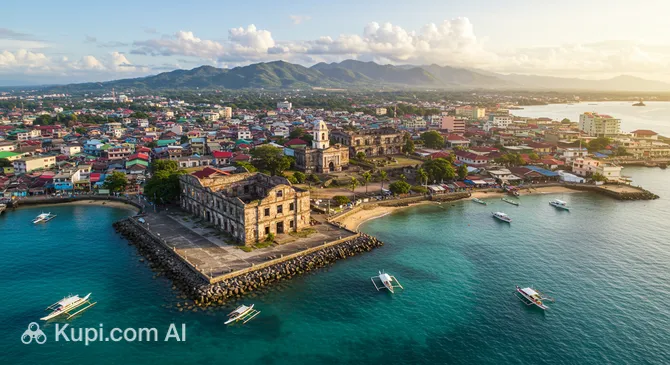
Talisay is a dynamically developing coastal city located in the province of Cebu in the Philippines. As part of a major metropolitan area, it harmoniously blends the features of an industrial center with the cozy atmosphere of a "residential" district where city dwellers often move in search of a quieter life. Here, you will feel the true pulse of a modern Philippine province, where traditions coexist with rapid urbanization.
Talisay City. Illustration.
Source: Kupi.com AI
Geographically, the city stretches south of Cebu City, occupying a relatively small territory but boasting an impressive population density of over 260,000 people. The rich heritage of the region and its strategic seaside position have made Talisay an important transit hub. Although the city is not a classic tourist resort, its sincerity and proximity to the island's main attractions draw those who want to see the authentic life of the archipelago.
For travelers, Talisay is primarily interesting for its atmosphere and local sites, such as historical churches and unique nature centers. Visiting this city is an excellent opportunity to explore authentic markets, try famous local delicacies, and experience the hospitality of the residents. We invite you to discover this vital part of Cebu Island, which is sure to surprise you with its character.
Weather Overview
The climate in Talisay is typical for the central part of the Philippine archipelago and is characterized as tropical with high humidity. Two main weather phases dominate throughout the year: the wet season, lasting from June to December, and a relatively dry period from January to May. The average temperature stays consistently in the range of 27°C to 32°C, making the city a perpetually warm place.
Travelers should take into account that during the monsoon period, heavy tropical downpours are possible, and at the end of the year, the likelihood of typhoons increases. However, even during the rainy months, the sun often peeks through the clouds, creating ideal conditions for lush greenery. It is worth checking the current city climate in advance to properly plan walks and trips along the coast.
Average monthly temperature
Average monthly precipitation
Interesting Facts
Talisay is officially recognized as the most populous component city in the entire Visayas region, highlighting its status as a key demographic center.
The population density here reaches extreme levels — about 6,598 people per square kilometer, even though the city occupies less than one percent of Cebu Province's territory.
Despite its coastal location, the city has almost no traditional beach areas for relaxation, as the shoreline is actively used for industrial and residential purposes.
According to one version, the city's name comes from the "talisay" tree (Indian almond), which grew in abundance in the area before mass urban development began.
How to Get There
The transport accessibility of Talisay is due to its proximity to the region's main transport hub — Cebu City. Most tourists arrive via air or sea gateways and then use ground transport to complete their journey. You can find more detailed information on how to get to the city in specialized travel guides for the province.
The main international hub nearby is Mactan-Cebu International Airport (CEB). It is located on the neighboring island in Lapu-Lapu City, and the journey from there to Talisay by taxi or via the Grab service takes between 20 to 40 minutes, depending on traffic. This is a modern hub receiving flights from many Asian countries and major cities across the archipelago.
There is no rail service in this part of the country, so buses and minibuses remain the primary way to get around. From Cebu City toward Talisay, jeepneys and modern buses regularly run along the South Road. The trip takes about 30 minutes, although travel time can increase significantly during peak hours due to congestion.
Main Attractions
Despite its reputation as a residential suburb, Talisay offers guests several interesting places to visit. One of the main architectural landmarks is the St. Teresa of Avila Church. This majestic temple attracts not only believers but also fans of colonial architecture, serving as the spiritual heart of the city and its historical landmark.
For those traveling with family or interested in exotic fauna, Crocolandia is a must-visit. This unique sanctuary and nature park allows visitors to see various species of crocodiles as well as other representatives of Philippine wildlife, such as birds of prey and reptiles. The park is actively involved in the conservation of rare species and educational programs.
Along the coast and in the central barangays, you can find local monuments and squares that come alive during local festivals. While the city is not overloaded with classic tourist attractions, its charm lies in the everyday details and the chance to see the real lifestyle of Cebu residents outside the capital's tourist center.
Local Cuisine
The culinary scene in Talisay is closely tied to the traditions of the Visayas region. The main hit here is undoubtedly Lechon — a spit-roasted pig with crispy skin, which in Cebu is considered the best in the country. It is also worth trying unique seafood: leb-leb (small oysters) and sua-sua (sea snails), prepared with local spices.
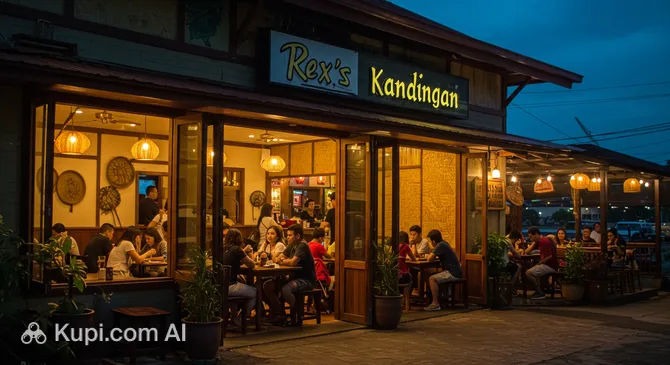
For those who want to experience authentic flavors in a more comfortable setting, Rex's Kandingan on SRP is a great choice. They specialize in goat meat dishes and traditional regional recipes. If you are looking for something more familiar and quick, branches of the popular Jollibee chain are found throughout the city, offering a Filipino take on fast food.
Rex's Kandingan at SRP. Illustration.
Source: Kupi.com AI
Traveler photos:
Street food culture thrives in local markets, where you can taste fresh fruit, coconut juice (buko juice), and the famous puso — rice boiled in woven coconut leaves. For a drink, locals often choose tuba — fermented palm sap with a specific flavor and a slight kick — or a classic San Miguel beer.
Travel Tips
A trip to Talisay will be much more pleasant and easier if you familiarize yourself with the local characteristics and rules of conduct in this dynamic Philippine city beforehand.
Clothing and Gear: Due to the tropical heat and high humidity, choose clothes made of light natural fabrics. Don't forget comfortable walking shoes and a power adapter (usually types A and B). When visiting churches, it is recommended to cover your shoulders and knees.
Transport Nuances: For getting around the city and trips to Cebu City, it's best to use the Grab app. It is safer and more convenient than trying to hail a taxi on the street. Jeepneys are a great experience for the adventurous, but they are often overcrowded.
Financial Matters: The local currency is the Philippine Peso (PHP). Cards are accepted in major shopping centers, but you must have cash for markets and small shops. ATMs are available in malls, but there is often a fee for withdrawals from foreign cards.
Safety and Health: Drink only bottled water and avoid ice in questionable establishments. Use mosquito repellent to protect against Dengue fever. At night, it's better to avoid walking in remote industrial areas.
Communication: The main language is Cebuano, but almost all residents speak English well. A few phrases in the local dialect, such as "Salamat" (thank you), will bring a genuine smile to the locals. A SIM card can be purchased right at the airport.
Local Etiquette: Filipinos are very friendly and polite. Greetings are often accompanied by a smile. Showing aggression or arguing loudly in public is considered very impolite and leads to "losing face."
What to Avoid: Do not criticize local customs or religion, as Filipinos are very devout. It is also not recommended to give money to children on the streets — this encourages begging instead of school attendance.
Useful Tip: Try to plan your trips outside of peak hours (7 to 9 AM and 5 to 8 PM) to avoid spending hours in traffic jams on the Cebu South Road.
By following these simple tips, you can fully focus on exploring the local culture and enjoying the hospitality of this vibrant region!
Entertainment & Nightlife
Nightlife in Talisay is more local and laid-back. You won't find the massive nightclubs or noisy discos that neighbor Cebu City is famous for. The city's evening life centers around karaoke bars, small pubs, and restaurants where locals gather after work to relax with friends to live music or hits from years past.
For those seeking large-scale entertainment, it is best to head to the major shopping complexes. For example, at Fiestamall or South Town Centre, you can find cinemas, gaming zones, and cozy cafes that stay open until late evening. These centers are the main gathering points for youth and families on weekends.
During the day, entertainment in the city involves visiting nature parks. You can head to Crocolandia to meet the inhabitants of the Philippine jungle or visit the historical St. Teresa of Avila Church. If you crave a real clubbing atmosphere, a taxi or Grab can quickly take you to the center of Cebu City, where the nightlife buzzes until dawn.
Parks & Museums
Talisay is a densely developed city, so there are few classic park areas. The main place for outdoor walks and nature experiences is Crocolandia. This center combines the functions of a zoo and a leisure park, offering visitors shaded green paths and the chance to see unique reptiles in conditions close to their natural habitat.
There are virtually no specialized museums within the city itself, as it has developed primarily as a modern residential and industrial cluster. The cultural and historical heritage here is best explored through the architecture of religious buildings, such as the St. Teresa of Avila Church, whose walls have held the community's history for decades.
For those craving a deeper dive into history and art, locals recommend taking a short trip to neighboring Cebu City, where the province's main museums are located. Nevertheless, Talisay itself offers tourists the charm of its coastal districts and cozy barangay squares, which become centers of cultural activity during folk festivals.
Getting Around
The transport system of Talisay is typical for Philippine satellite cities and relies entirely on ground transportation. The backbone of public transport is the jeepney — colorful, elongated jeeps that run along fixed routes. The fare is minimal, and payment is made in cash to the driver or passed through other passengers.
For longer distances, such as to Cebu City or the southern districts of the island, modern air-conditioned buses and minibuses (V-hire) are used, departing from major transport hubs and shopping centers. This is a more comfortable option, especially in hot weather, though it costs slightly more.
Tourists are strongly encouraged to use mobile apps for ordering taxis, such as Grab. This guarantees a fixed price and eliminates the need to haggle. It's worth considering that the roads in the city are quite narrow and traffic can be chaotic due to the abundance of motorcycles, so plan your movements with extra time, especially in the morning and evening.
Accommodation
The hotel sector in Talisay is primarily geared toward those looking for long-term stays or budget options near a major metropolis. You won't find large luxury resorts with private beaches here — for those, it is better to head to the neighboring Mactan Island. However, the city offers a decent selection of apartments, condominiums, and small guesthouses.
The most popular areas to stay are the central neighborhoods like Poblacion and new residential complexes along the highway. Many tourists choose rentals through popular services, which often provide more space for less money compared to hotels in Cebu City. Accommodation prices here start from 1,000-2,000 pesos per night for a comfortable room or small apartment.
When choosing a place to stay, look for proximity to shopping centers such as South Town Centre or Fiestamall. This will ensure quick access to restaurants, shops, and transport links. It is recommended to book your accommodation in advance, especially if your trip coincides with major holidays in Cebu Province.
Nearby Cities
Talisay serves as an excellent starting point for exploring the central part of Cebu Island thanks to its convenient location at the crossroads of major routes. From here, it is easy to reach the region's most interesting locations in just a few dozen minutes.
Only 9 kilometers to the north is Cebu City — the historical and economic capital of the region. Here you can visit Magellan's Cross, Fort San Pedro, and numerous shopping malls. Slightly further out lies Lapu-Lapu City on Mactan Island, famous for its beach resorts and diving spots. Heading south, you will quickly find yourself in the cozy town of Minglanilla, known for its vibrant festivals and local markets.
The region surrounding the city offers endless opportunities for discovery: from colonial architecture and modern amusement parks to picturesque mountain landscapes. Don't miss the chance to expand your travel geography, as each of these destinations will provide new impressions and a deeper understanding of Philippine culture.
Shopping & Souvenirs
Shopping in Talisay is a blend of modern shopping complexes and colorful local markets. The city is great for buying essentials, clothing, and electronics at prices that are often lower than those in the capital. Main shopping activities are concentrated along the city's major thoroughfares.
One of the key shopping destinations is Fiestamall. Here, many boutiques, supermarkets, and relaxation zones are gathered under one roof. Another notable site is South Town Centre, which attracts visitors with its convenient location and variety of local brands.
Fiestamall. Illustration.
Source: Kupi.com AI
Traveler photos:
For those looking for fresh produce and wanting to dive into a real Filipino atmosphere, a visit to the public markets (wet markets) is a must. There you can find exotic fruits, freshly caught fish, and local sweets. As souvenirs from this region, people usually bring back dried mangoes and handcrafted items made from shells and wood, which are sold in abundance in specialized mall departments.