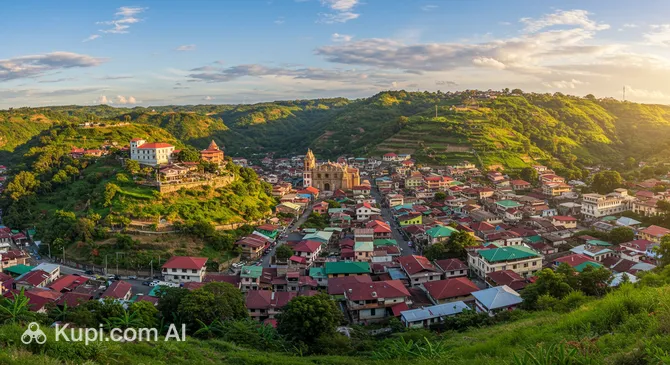
Located on the west coast of Cebu Island in the Philippines, the city of Toledo offers a unique blend of industrial rhythm and coastal tranquility. Known as the "Copper City," it serves as a major industrial hub for the region. Founded in the mid-19th century, Toledo evolved from the small settlement of Liloan into a key part of the province, with its history deeply intertwined with the country's largest copper deposits.
Toledo. Illustration.
Source: Kupi.com AI
Geographically, the city covers over 216 square kilometers, sprawling across picturesque hills and plains that overlook the Tañon Strait. The population of Toledo is approximately 207,000. Despite its industrial status, the city retains the charm of provincial life with its laid-back pace and the genuine hospitality of locals, who proudly call their home the "City with a Heart of Gold."
You can discover the rich heritage of this place through its architectural monuments, such as the majestic Toledo Cathedral, or by visiting districts associated with the city's mining glory. Toledo invites travelers who want to see the Philippines as they are, get a glimpse into the island's living economy, and enjoy the authentic atmosphere of a working coastal city.
Weather Overview
The city of Toledo is under the influence of a typical tropical climate characteristic of the central Philippines. Warm and humid weather prevails here year-round. Average temperatures range from 25°C to 32°C. The hottest months are from April to June, when humidity can make being outdoors less comfortable for unaccustomed tourists.
Seasonality in the region is defined by the amount of rainfall. The climate in Toledo has a wet season (June to December) and a relatively dry period (January to May). The heaviest rains and the potential for typhoons occur in the second half of the year, so tourists are advised to carry raincoats. January and February are considered the most favorable months to visit, as the heat subsides and rains become brief.
Expect warm summers with occasional tropical downpours and milder, drier winter months with comfortable temperatures around 26°C. Keep in mind that the city's industrial activity can slightly increase the feeling of heat in urbanized areas, so it's best to choose morning or pre-sunset hours for walks, when the sea breeze brings a welcome coolness.
Average monthly temperature
Average monthly precipitation
Interesting Facts
The city of Toledo got its modern name from the Spanish city of the same name, but until 1858, the settlement was known as Liloan.
It is home to the Toledo Mine—one of the largest copper mines not only in the Philippines but in all of Asia, earning the city its status as the industrial heart of Cebu.
Over recent decades, the city has shown impressive growth: while its population was less than 13,000 at the beginning of the 20th century, today it has surpassed 200,000.
Locals proudly refer to their home as the "Joyful City," highlighting the community's positive spirit despite the demands of industrial labor.
Administratively, the city is divided into 38 barangays, most of which retain a rural character, creating a unique contrast with the urbanized center.
How to Get There
The transport accessibility of Toledo is due to its strategic position on the west coast of the island. The main way to get here is by land from Cebu City. The distance is about 50 kilometers, and it can be covered by regular buses or vans departing from the South Bus Terminal. You can find more details on how to plan your journey to Toledo on specialized transport pages.
The city does not have its own airport. The nearest air hub is Mactan-Cebu International Airport, which receives flights from all over the world. After landing, travelers need to cross the island by taxi or public transport, which takes between 1.5 and 2.5 hours depending on traffic, which can be heavy during peak hours due to industrial trucks.
There is no rail service in this part of the Philippines, so the focus is on road and sea transport. The Port of Toledo plays a vital role in connecting with the neighboring island of Negros. Regular ferries and barges link the city to San Carlos Port, making Toledo an important transit point for those traveling between the islands of the archipelago.
Main Attractions
While Toledo is primarily known as an industrial center, it has several notable sites worth visiting. One of the main spiritual and architectural landmarks is the Toledo City Cathedral. This church, built in the tradition of Spanish colonial architecture, serves as a hub for the local community and an important historical landmark.
For those interested in history and cultural heritage in a more secluded setting, Capilla Sta. Ana is a true gem. This small but exquisite building combines classical style with cozy surrounding grounds. The chapel often attracts those seeking peace and aesthetic inspiration in the details of antique decor.
The city's industrial side is best seen in the area of the famous Toledo Mine. Although it is an active industrial site, the scale of the mining operations is impressive to any observer. Fans of modern urban environments should also check out the Fast food restaurant in Toledo City, which is a popular meeting point and landmark in the heart of the city.
Local Cuisine
The culinary scene in Toledo is a celebration of authentic Visayan flavors. The one dish you cannot miss is the famous Filipino Lechon (roasted pig). The local variation features crispy skin and flavorful meat seasoned with lemongrass and spices. You should also try Kinilaw—fresh fish marinated in vinegar with ginger, onions, and chili, which is the perfect dish for a hot coastal climate.
Dining culture in the city is closely linked to street markets and small eateries known as "carinderias." Here, you’ll find workers and locals enjoying simple yet hearty meals. For those who prefer a familiar format, there is a Fast food restaurant in Toledo City in the center, offering a standard menu in air-conditioned comfort.
As for drinks, be sure to try Buko Juice (fresh coconut water), which is sold on almost every corner. For those interested in more exotic flavors, Tuba—a traditional fermented palm sap—might be of interest. In the evening, local San Miguel beer is popular, perfectly complementing grilled seafood served at seaside establishments.
Travel Tips
Planning a trip to Toledo requires considering the specifics of this industrial city. To make your visit comfortable and safe, we have prepared a few practical tips.
Clothing and Gear: Choose lightweight cotton clothing, as it is humid and hot here. Be sure to bring comfortable closed-toe shoes if you plan to visit hilly areas. Don't forget a power adapter (usually Type A or B) and sunscreen.
Transportation: Use jeepneys for local flavor or Grab for comfort when moving around the city. Be prepared for traffic jams during peak hours due to trucks serving the mines.
Finances: Always carry Philippine pesos in cash. While malls accept cards, they are useless in markets and on public transport. ATMs are available in the center, but their number is limited.
Health and Safety: Drink only bottled water. The city has basic pharmacies and medical stations, but for serious health issues, it's better to go to clinics in Cebu City. Stick to well-lit central streets after dark.
Communication: The main language is Cebuano, but English is widely spoken, especially in shops and official institutions. You can buy a SIM card (Globe or Smart) at any major store.
Local Etiquette: Filipinos are very friendly. Greet people with a smile. When visiting churches like Toledo Cathedral, dress modestly: shoulders and knees should be covered.
What to Avoid: It is best not to criticize the local way of life or the environmental situation related to the industry. Also, avoid walking alone in the outlying barangays after sunset.
Extra Tip: Try the fresh seafood at the market near the port—it's cheaper and fresher here than in the major tourist hubs.
Following these simple rules will help you enjoy the authentic atmosphere of Cebu Island and make your stay in Toledo a pleasant and memorable adventure.
Entertainment & Nightlife
Nightlife in Toledo differs from the bright lights of major metropolises and has a more local, cozy character. You won't find massive nightclubs with world-famous DJs here; instead, the city center offers a range of karaoke bars (KTV) and small venues where locals gather after a day's work. Most activity is concentrated around the central market and shopping complexes, where open-air food courts operate in the evenings.
If you are looking for more dynamic entertainment, many residents head to Cebu City for the evening, which is about an hour's drive away. In Toledo itself, evening walks along the waterfront are popular, as is visiting spots like the Fast food restaurant in Toledo City, where you can grab a bite in a familiar setting and watch the city go by. The dress code in most places is casual and relaxed.
Daytime entertainment includes visiting cinemas in local malls or strolling through the central squares. During holidays, Toledo is transformed by local festivals dedicated to its mining heritage and religious dates. For safety during nighttime travel, it is recommended to use official taxis or ride-hailing apps, avoiding unlit outskirts.
Parks & Museums
Due to its industrial nature, Toledo does not have an extensive network of traditional museums, yet the city's historical memory is reflected in its architecture and public spaces. The main cultural and historical site is Capilla Sta. Ana—a private chapel and museum housing a collection of religious relics and antiques. This site is surrounded by well-kept green space, creating an atmosphere of calm in the heart of the city.
Green spaces in Toledo include small squares in the city's barangays and the cozy grounds around the central cathedral. The city's coastal areas are often used by locals as natural parks for relaxation and picnics, especially at sunset when the shore offers views of the Tañon Strait. While there are no large-scale amusement parks here, the proximity to the sea compensates with opportunities for seaside strolls.
For a deeper dive into the region's history, you can visit information centers at the mining enterprises, where exhibitions dedicated to the development of the "Copper City" are sometimes held. If you want to return to a modern setting after a cultural walk, the Fast food restaurant in Toledo City is always nearby, serving as a familiar resting spot for locals and tourists alike.
Getting Around
The public transport system in Toledo is typical for a Philippine city, relying on jeepneys and tricycles. Jeepneys run along the main routes, connecting the center with distant barangays. This is the most affordable way to get around, and the fare is usually passed to the driver through other passengers. Tricycles (motorcycles with sidecars) are ideal for short trips within neighborhoods where buses don't go.
For trips to other cities, such as Cebu City, residents and tourists use intercity buses and vans (minibuses). The bus terminal is located in the city center and is a busy hub. Fares are fixed and quite affordable, though keep in mind that transport can be very crowded during peak hours (morning and evening when mining shifts change).
In the central part of Toledo, taxi services are available, and you can also use the Grab app to book a private car, which offers fixed prices and air-conditioned comfort. In rural areas, scooters are a popular alternative among locals. It's important to remember that public transport significantly decreases after sunset, so evening trips are best planned in advance.
Accommodation
The accommodation market in Toledo is primarily geared towards business travelers, mining company employees, and transit tourists. While you won't find luxury five-star resorts here, you can find decent mid-range and budget options. Most hotels and guesthouses are concentrated in the central district, close to the port and administrative buildings.
For a comfortable stay, consider local hotels like the Toledo City Inn, which offer basic amenities, air conditioning, and Wi-Fi. If you're planning a long-term stay, apartments and furnished rooms for rent are available in the city, which are particularly popular among expats and specialists working at the local mine. It is recommended to book in advance, especially during local festivals when the demand for rooms increases sharply.
Price ranges in Toledo are very affordable: a standard room in a clean guesthouse will cost significantly less than in tourist centers like Mactan. When choosing accommodation, look for properties with generators (due to potential power outages) and proximity to major transport hubs like the bus terminal. In the city center, you can also find familiar dining spots, such as the Fast food restaurant in Toledo City, which is convenient if your accommodation doesn't include breakfast.
Nearby Cities
Thanks to its location on the west coast of Cebu, Toledo serves as a convenient base for exploring surrounding municipalities and natural beauty. Just 14 kilometers to the south lies Pinamungajan, known for its picturesque waterfalls and mangrove forests, making it an excellent destination for eco-tourism enthusiasts.
Heading north will take you to Balamban, often called the "Summer Capital of Cebu" because of its cool mountain climate and breathtaking views from the Transcentral Highway. Also nearby is the town of Minglanilla, which attracts travelers with its parks and cultural events.
City
Population
Distance
Pinamungajan
75 131
14 km
Balamban
95 136
17 km
Bugho
26 658
18 km
Minglanilla
151 002
22 km
Aloguinsan
34 466
24 km
Exploring the areas surrounding Toledo allows you to see the diversity of the Philippine countryside: from the industrial power of the city itself to untouched forests and cozy farming settlements. Short trips to neighboring towns will help you get a complete picture of life and culture in the Central Visayas.
Shopping & Souvenirs
Shopping in Toledo is primarily a practical experience centered on local markets and modern shopping malls. The main destination for shopping is the Gaisano Grand Mall Toledo. Here, you can find almost everything from clothing and electronics to groceries in a large supermarket. The mall also features food courts where you can rest between shopping stints.
For those who want to experience the local flavor, the central public market is a must-visit. You can always buy the freshest seafood, exotic fruits, and spices here. The market is the best place to find authentic Filipino sweets and snacks, which make great gifts for loved ones. Life is always bustling near the market stalls, and you can use the Fast food restaurant in Toledo City as a landmark.
Souvenirs often brought from Toledo include items made by local artisans, such as woven goods and accessories. Since the city is famous for metal mining, you can sometimes find commemorative souvenirs related to the industry. Most shops are open from 9:00 AM to 8:00 PM or 9:00 PM; credit cards are accepted in shopping centers, but you will definitely need cash pesos for the markets.