Support

Oliwa Park

About

On the border with the popular resort town of Sopot, in the picturesque historical district of Oliwa, lies Oliwa Park—one of the oldest and most beautiful green zones in all of Poland. Although administratively part of Gdańsk, its close proximity to Sopot makes it a favorite spot for walking. This historical park is known for its unique combination of landscape and formal garden design, attracting both tourists and locals.

The park's history dates back to the distant past—it was founded by Cistercian monks in the 12th–13th centuries. Initially, the area was used for economic and utilitarian needs, but over time it transformed into a true cultural center and an oasis for relaxation and inspiration. The park acquired its modern layout in the 18th century when its famous French and English sections were created.

Today, Oliwa Park delights visitors with well-kept paths, picturesque ponds with swans, and a rich collection of plants from around the world. Here you can find quiet, secluded corners for reflection as well as architectural monuments, including the famous Oliwa Cathedral and the Abbot’s Palace, which now houses the Department of Modern Art of the National Museum. The grounds also feature a palm house, an alpine garden, and even a small waterfall.
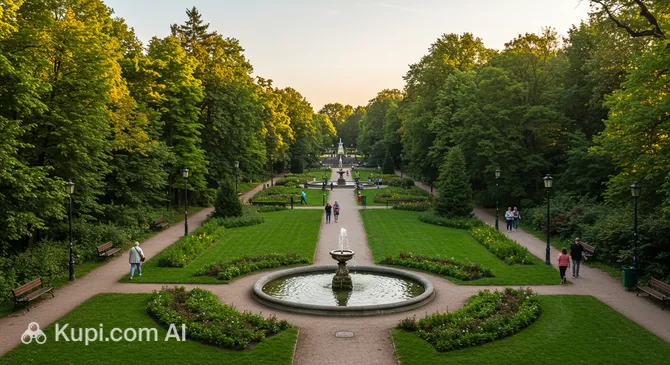
Oliwa Park. Illustration.
Source: Kupi.com AI

Traveler photos:

A stroll through the park is a wonderful opportunity to touch history, enjoy the harmony of nature, and take a break from the hustle and bustle of the city. This place is a must-visit to experience its special atmosphere of peace and beauty, which charms visitors at any time of year.

Contacts

Since Oliwa Park is a public city space, it does not have a single contact center for visitors. Admission to the park is free, and opening hours vary by season: from May to September it is open from 5:00 to 23:00, and from October to April from 5:00 to 20:00. You can conveniently reach the park from Sopot or the center of Gdańsk using public transport—trams and city trains (SKM) stop within walking distance.

How to contactContact
AddressOpata Jacka Rybińskiego, 80-320 Gdańsk, Poland
Phone number+48 58 558 95 68
Websitewww.parkoliwski.gdansk.pl

What to Do

A visit to Oliwa Park is an immersion into an atmosphere of tranquility and natural beauty. Guests can spend hours strolling through the picturesque paths, enjoying the shade of ancient trees and admiring the well-kept lawns and vibrant flower beds. Decorative bridges and ponds where swans and other waterfowl gracefully swim add a special charm to the park, creating ideal conditions for slow relaxation and contemplation.

Among the main points of interest are the famous palm house, where you can see exotic plants, and the formal French garden, designed in the strict Baroque style. These parts of the park allow you to take a small journey: from a temperate climate to the tropics, and from a natural landscape to a world of perfect geometric shapes and symmetry. You can also find an alpine garden, grottoes, and even a small waterfall on the park grounds.

Oliwa Park offers activities for every taste. For families with children, there are playgrounds, while culture lovers can enjoy exhibitions, classical music concerts, and other events frequently held on its grounds. Nature enthusiasts will appreciate the variety of flora, including rare plant species from all over the world. Additionally, the park is a perfect place for photo shoots, picnics, or simply relaxing with a book on one of the many benches.

Getting There

Oliwa Park is conveniently located on the border between Gdańsk and Sopot, making it easily accessible from both the resort center and the neighboring major city. Thanks to its well-developed transport infrastructure, reaching this green oasis is effortless, regardless of your chosen mode of travel. Excellent transport links allow you to get to the park quickly and enjoy its beauty.

The easiest and most popular way to reach the park is by public transport. The nearest railway station, Gdańsk Oliwa, is just a 10–15 minute walk away. SKM trains from Sopot, Gdańsk, and other cities in the Tricity area arrive here regularly. Additionally, numerous city buses and trams stop right at the park entrances, allowing you to plan a route from almost anywhere.

If you prefer traveling by car, there are parking areas near the park. However, keep in mind that finding a free space can be difficult during the peak tourist season or on weekends. For active travelers, cycling is a great option—convenient and scenic bike paths lead to the park, connecting it with various city districts and the coast.

Nearest city: Sopot

History & Facts

The history of Oliwa Park is inextricably linked to the Cistercian Abbey, founded here in 1186. It was the monks who first began transforming the surrounding wild forests and marshes, laying the foundation for the future garden and park ensemble. Initially, these lands served economic purposes, but over time they became an important cultural and spiritual center of the region, attracting the attention of nobility.

Throughout its centuries-long history, the park has witnessed many landmark events. It was visited by Polish kings, which underscored the high status of the site. However, the most famous event in the history of Poland and Europe was the signing of the Peace of Oliwa here in 1660. This treaty ended the long-standing conflict between Sweden and the Polish-Lithuanian Commonwealth, making Oliwa a symbol of peace and diplomacy.

The park began to take on its modern appearance, combining elements of French and English styles, in the 18th century. This was initiated by the active Abbot Jacek Józef Rybiński, under whom a magnificent Rococo palace was built and an elegant geometric garden was laid out. The gardener Hentschel worked on the park's layout, and Kazimierz Dembiński brought his ideas to life, giving the ensemble the harmony that visitors admire today.

Having survived numerous historical challenges, destructive fires, and epidemics throughout its long history, Oliwa Park has managed to preserve its unique atmosphere and historical value. Every path and every ancient tree here holds the memory of the past, making a walk through the park not just a rest in nature, but a true journey through time.

Time Needed

When planning a visit to Oliwa Park, you should aim for a duration of 1.5 to 3 hours. This time is usually enough for a full exploration of its main territory. During this period, you can leisurely stroll along the main avenues, enjoy the beauty of the French and English parts of the park, visit the famous palm house, take photos by the picturesque ponds and waterfall, and simply relax on one of the benches in the shade of ancient trees.

However, the length of the visit can vary depending on your interests. If you only want to quickly see the most iconic spots, one hour might be enough. But if you plan a deeper immersion—for example, visiting the modern art department in the Abbot's Palace, listening to an organ concert at the nearby Oliwa Cathedral, or having a small picnic on the lawn—you can happily spend half a day in the park. In any case, this place encourages slow relaxation and contemplation.

Working Hours

Oliwa Park warmly welcomes guests year-round, and what is especially pleasant is that entry to its territory is completely free. However, when planning a visit, it's worth considering an important detail: while the park itself is open for walks from early morning until late evening, the facilities located within it operate on their own, shorter schedules.

This primarily concerns the Abbot's Palace, which houses the Modern Art Department of the National Museum, and the exotic palm house. Visiting these attractions usually requires a fee and is only possible during specific hours, which may change depending on the season. They also have days off that may not coincide with the general access to the park.

To avoid misunderstandings and fully enjoy all the beauties of this historical site, it is highly recommended to check the current opening hours and ticket prices for the museum and the palm house on the official Gdańsk tourism portals before your trip. This will allow you to plan your day accurately and ensure you can get inside.

5:00 – 20:00

Nearby

Visiting Oliwa Park is a wonderful adventure in itself, but exploring its surroundings can make your travel experience even richer and more diverse. The Oliwa district and adjacent parts of Sopot and Gdańsk are full of interesting places, from cultural sites to modern entertainment spots. A stroll through the neighboring streets will allow you to better understand the unique atmosphere of this region of Poland and discover something new.

In the immediate vicinity of the park, there are many attractions that can be easily reached on foot. This provides a great opportunity to combine a holiday in nature with the study of cultural and historical heritage. Below is a list of interesting places located very close by.

NameDistance
Department of Modern Art, National Museum in Gdansk0.1 km
AWFiS Sports Hall0.6 km
Olivia Star1 km
Palec do Budki1.2 km
Oliwa Forests1.4 km
Gdańsk Zoo1.8 km
Przymorze Gallery2 km

Have you reached the end of the page?

So the route has been studied inside and out