Support

Palanga Pier

About

Palanga Pier (known to locals as Palangos tiltas) is a legendary symbol of the resort town of Palanga and one of the most recognizable landmarks in all of Lithuania. A monumental L-shaped pedestrian bridge, it extends 480 meters into the Baltic Sea, offering tourists a unique opportunity to literally walk "on the water."

The history of this site began in the late 19th century when Count Jozef Tyszkiewicz decided to build a wharf for the needs of the local port. Over time, the pier's technical purpose gave way to an aesthetic one: today, it is the main point of attraction for romantics, photographers, and lovers of seascapes. The bridge begins at the end of a bustling pedestrian street, creating a harmonious transition from urban bustle to the serenity of the sea horizon.
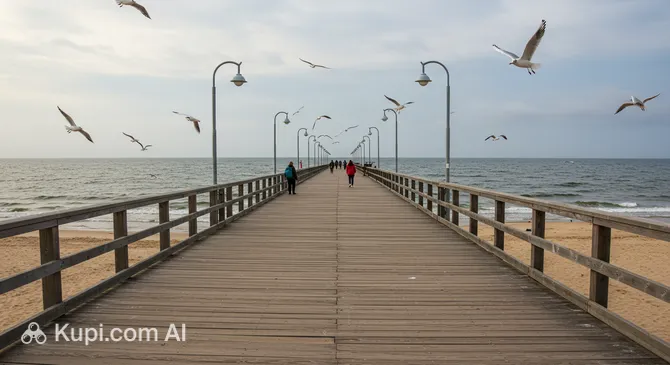
Palanga Pier. Illustration.
Source: Kupi.com AI

Traveler photos:

Restored in the late 90s, the pier has become a modern and safe space for relaxation. The site's high rating and hundreds of positive reviews confirm its status as a must-visit location. Here, you can not only enjoy stunning sunsets but also feel the true character of the Baltic with its changing moods and fresh, salty wind.

Contacts

When planning a stroll to the Palanga Pier, keep in mind that it is an open public site with no strict visiting regulations. However, before visiting Palanga, it is recommended to check the latest weather conditions or potential cultural events on the city's official tourism resources.

Since the pier is part of the beach infrastructure, it does not have a traditional office or administration phone number. All necessary information for tourists is usually available at the city information center or through popular navigation services.

How to contactContact
AddressAkmenų grandinė, Palangos tiltas, 00216 Palanga, Литва

What to Do

At Palanga Pier, the main activity is a leisurely stroll. The length of the structure allows for a proper promenade, during which you can breathe in the healing sea air and admire the panorama of endless sand dunes. It becomes especially crowded during the sunset hours, when the sky is painted in incredible shades, turning the pier into an ideal setting for romantic dates and professional photo shoots.

For lovers of more grounded leisure, the pier offers an excellent opportunity for fishing. Local amateur fishermen are permanent residents of the pier, and watching their quiet pursuit adds a special local color to the place. You can also join them by bringing a fishing rod and trying your luck at catching Baltic fish right from the edge of the L-shaped platform.

A visit to the pier is easily combined with active recreation on the shore. Since it is an extension of the main street, after walking over the waves, you can immediately head to cozy restaurants or souvenir shops. It is important to note that the space is open 24/7 and free of charge, allowing you to meet the first rays of the sun here or enjoy the sound of the sea under a starry sky.

Getting There

Palanga Pier is located in the heart of the resort zone and serves as the natural terminus of the city's main pedestrian artery — Jonas Basanavičius Street. The address is Akmenų grandinė, Palangos tiltas. If you are already in the center of Palanga, the walk to the sea will take no more than 10–20 minutes along scenic alleys.

For those traveling from other cities in Lithuania, it is most convenient to use intercity buses to the Palanga bus station. From the station to the coast, you can take a local shuttle or a taxi (the ride will cost approximately 5–10 euros). Public transport regularly runs from Klaipėda or Liepāja, stopping within walking distance of the beach.

Travelers by private car should look for parking near Basanavičius Street or adjacent side streets. In the summer season, traffic may be restricted, so many prefer to leave their cars further from the shore and switch to bicycles — the city has a well-developed network of bike paths and rental points.

Nearest city: Palanga

History & Facts

The history of Palanga Pier is inextricably linked with the name of Count Jozef Tyszkiewicz. It was on his initiative that the first wooden pier was built between 1884 and 1888. Originally, the site was intended as a purely functional wharf for ships plying between Palanga and Liepāja, ensuring the transport of goods and passengers.

Over time, maritime trade lost its relevance as the coastal waters became silted with sand. However, the pier was not abandoned: it became a favorite spot for locals and vacationers alike as an ideal place for walks over the sea waves. Thus, a technical structure was transformed into an aesthetic symbol of Palanga, without which the city's image is impossible to imagine today.

The pier acquired its modern appearance after a major reconstruction in 1997–1998. Powerful Baltic storms had repeatedly damaged the structure, requiring a virtually complete rebuild. Today, it is a sturdy 480-meter-long structure extending far into the sea, allowing everyone to feel the power of the marine elements.

Interestingly, the territory of Lithuania in this area has been inhabited since the Neolithic era. In the Middle Ages, a large Curonian settlement was located here, and the city developed as an important point on the famous "Amber Road." The pier itself became a monument to the "Golden Age" of Palanga as an aristocratic resort of the late 19th century.

Time Needed

For a standard visit to Palanga Pier, tourists usually need 1 to 2 hours. This is quite enough time to leisurely walk all 480 meters to the end of the pier, enjoy the sea breeze, take commemorative photos, and watch the local fishermen who have made this spot their own.

If your goal is to catch the perfect shot at sunset, or if you plan to combine your walk with relaxation on the adjacent beach and a visit to the cafes on Basanavičius Street, you should set aside about 3 hours. The evening hours are particularly popular here, so time flies by in an atmosphere of romance and tranquility.

Working Hours

Palanga Pier is an open public space and is accessible 24 hours a day. The site has no official gates, ticket offices, or time restrictions, making it an ideal place for both early morning runs and night walks to the sound of the surf.

In exceptional cases, access to the pier may be restricted by municipal services solely for safety reasons — for example, during extreme storms or scheduled maintenance work. At all other times, you are free to plan your visit for any day of the week.

Nearby

A walk along the Palanga Pier is just one part of a larger tourist route. The surroundings of the pier are filled with interesting locations that help you feel the atmosphere of the Lithuanian resort more deeply. Just a couple of hundred meters from the start of the pier is the famous sculptural composition Jūratė and Kastytis, dedicated to the beautiful and tragic legend of the love between a sea goddess and a simple fisherman.

For those seeking thrills or vacationing with family, the modern Palanga Ferris Wheel is within walking distance, offering panoramic views of pine forests and the endless Baltic. It is also worth visiting Summer Park or the Palanga Resort Museum to learn more about the history of how a fishing village transformed into an elite vacation zone.

NameDistance
Palanga Pier0 km
Jūratė and Kastytis0.2 km
Palanga Summer Park0.3 km
Palanga Ferris Wheel0.3 km
Palanga Resort Museum0.5 km
Sculpture Park1.1 km
Church of the Assumption of the Virgin Mary1.1 km

Reached the end of the page?

That means the route is fully explored