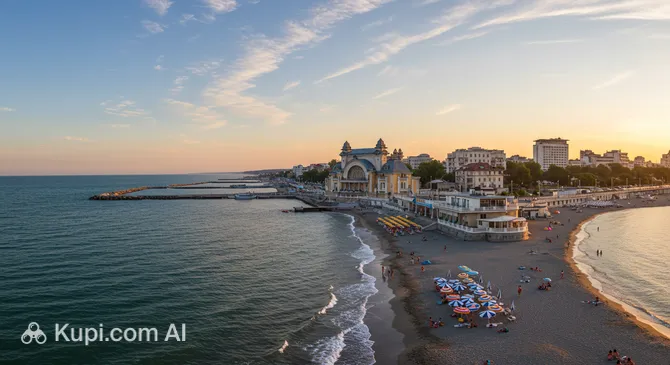
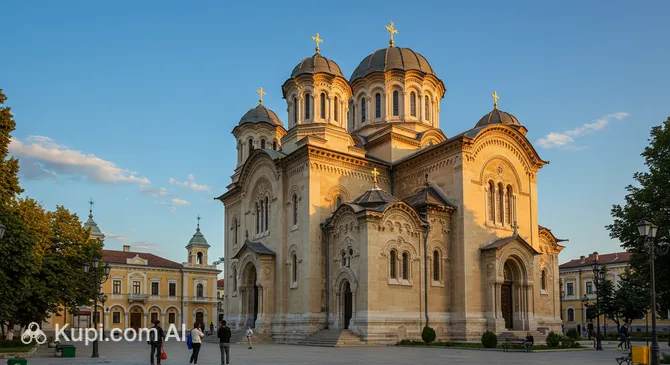
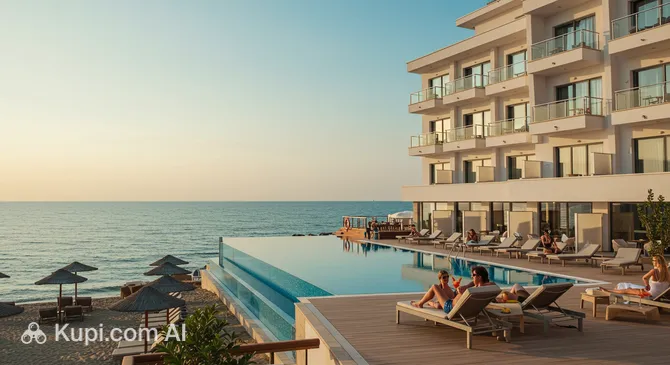
Constanta is one of the most vibrant and historically significant cities in Romania. Situated on the western coast of the Black Sea, it serves as the country's principal port and a major economic hub within Constanta County. With a population of approximately 280,000 residents, the city offers a lively urban atmosphere balanced by the relaxing rhythm of coastal life.
Constanta. Illustration.
Source: Kupi.com AI
As the oldest continuously inhabited city in the country, the area is steeped in stories from antiquity. Originally founded as the Greek colony of Tomis around 600 BC, it has been shaped by Roman, Byzantine, and Ottoman influences. Travelers can uncover the layers of the past by exploring the history of Constanta, visible in its archaeological museums and ancient ruins scattered throughout the town.
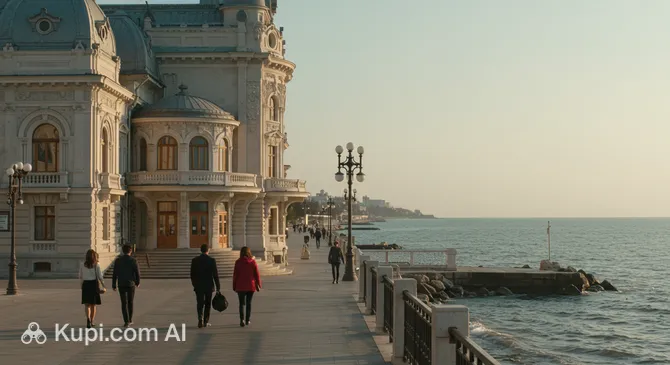
Modern visitors are drawn to the city's unique mix of architectural heritage and seaside leisure. The iconic Constanta Casino, an Art Nouveau masterpiece on the promenade, is a must-see landmark, while the Great Mahmudiye Mosque offers stunning views over the harbor. Whether you are looking to enjoy the sandy beaches of the nearby Mamaia resort or discover cultural treasures, Constanta provides an inviting destination for a memorable holiday.
Weather Overview
The climate in this coastal region is characterized by distinct seasons, influenced significantly by the Black Sea. To help plan your itinerary, it is useful to check the weather in Constanta before your arrival. Generally, the city enjoys long, warm summers and chilly winters, making it a viable destination year-round depending on your travel preferences.
During the peak summer months, the weather is ideal for seaside leisure. July and August are the warmest times of the year, with average temperatures hovering around 24°C and daily highs reaching up to 29.1°C. August is also typically the driest month, recording only about 4 wet days, which ensures plenty of sunshine for beach activities.
In contrast, the winter season brings colder temperatures, with January averages dropping to 3.3°C and minimums near freezing. The transitional months of May and September offer a pleasant compromise, with averages between 16°C and 20°C. Overall, visitors can expect warm summers with occasional showers, particularly in June, and cold winters with slightly more frequent precipitation.
Average monthly temperature
Average monthly precipitation
Interesting Facts
Beyond the main attractions, Constanta holds many fascinating secrets that reveal its depth as an ancient metropolis. Exploring the city uncovers layers of history, from Roman legends to engineering firsts that shaped the region.
Constanța Casino. Illustration.
Source: Kupi.com AI
Traveler photos:
The city was the final home of the renowned Roman poet Ovid, who was exiled to ancient Tomis by Emperor Augustus in 8 AD. A statue commemorating his life and work stands in Ovid Square, marking the location where he wrote his sorrowful epistles.
The Grand Mosque of Constanța serves as a significant architectural milestone, as it was the first building in Romania constructed using reinforced concrete. Built in 1910, its minaret offers a stunning perspective of the city after a climb of 140 spiral steps.
Hidden within the Museum of National History and Archaeology is a singular artifact known as the Glykon Snake. This marble statue from the 2nd century AD depicts a snake deity with a sheep's head and human hair, and it is the only cult representation of its kind found in the world.
The iconic Constanța Casino, an Art Nouveau jewel facing the Black Sea, shares a surprising connection with royalty. It was commissioned by King Carol I to rival the great casinos of the French Riviera and served as a glamorous meeting point for Europe's elite in the early 20th century.
Constanta sits atop a vast archaeological treasure, including the Roman Mosaic Edifice. This ancient commercial complex once featured a mosaic floor spanning over 2,000 square meters, making it one of the largest of its kind in Eastern Europe.
How to Get There
Reaching the Romanian coast is straightforward, with several transport options available depending on your starting point. For a detailed overview of all routes and travel tips, you can read more about how to get to Constanta. The city is well-connected to the rest of the country and neighboring regions, making it an accessible destination for summer vacations and cultural trips alike.
The most convenient entry point is the local Kogalniceanu Airport (CND), situated approximately 25 km from the city center. It is a smaller regional hub, so the flight options might be limited compared to larger airports, but the transfer to the city takes only about 30 minutes by taxi or bus. For a wider selection of international connections, many travelers choose Bucharest Henri Coanda International Airport (OTP). Located in Bucharest, about 208 km from Constanta, it is the country's primary airport. From there, you can reach the coast in approximately 2.5 to 3 hours via the A2 motorway. Additionally, Varna Airport (VAR) in Varna, Bulgaria, is roughly 124 km away and serves as a viable alternative, with a travel time of about 2 to 2.5 hours depending on border traffic.
For clarity, here is a summary of the main airports:
If you prefer traveling by train, the region is served by the national railway network. While Constanta has its own station, a key hub for connections is Bucharest North Station (Gara de Nord) in Bucharest, located approximately 208 km away. As the largest railway station in Romania, it handles millions of passengers annually and offers frequent direct trains to the seaside, especially during the summer season. The journey from Bucharest to the coast typically takes around 2 to 2.5 hours on the fastest intercity trains.
Below is a list of significant railway stations in the wider region:
Station
Passenger traffic
Distance
Izmail Railway Station
—
131 km
Buzau Railway Station
—
180 km
Focșani Railway Station
—
206 km
Bucharest North Station
10 mln
208 km
Mărășești Railway Station
—
220 km
Main Attractions
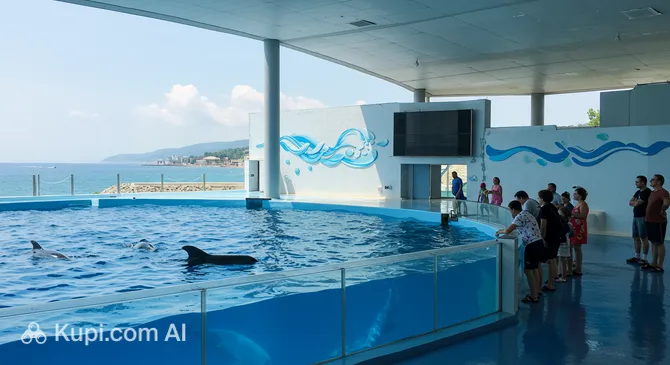
A visit to the coast would be incomplete without spending time at the Constanța Dolphinarium. Located within the larger Natural Sciences Museum Complex, this attraction is a favorite for families and nature enthusiasts. It hosts captivating demonstration shows where visitors can watch dolphins and sea lions perform, highlighting their intelligence and agility. Beyond the entertainment, the facility plays a crucial role in education and marine conservation, making it a meaningful stop for those wanting to learn more about Black Sea marine life.
Constanța Dolphinarium. Illustration.
Source: Kupi.com AI
Traveler photos:
For those interested in the region's maritime heritage, the Museum of the Romanian Navy is an essential stop. As the largest institution of its kind in the country, it offers a comprehensive overview of naval history, from ancient navigation to modern times. The collection features impressive exhibits, including model ships, navigation instruments, anchors, and naval artillery, providing a deep insight into the development of both military and civil seafaring in the Black Sea.
Situated right on the iconic promenade near the Casino, the Constanta Aquarium offers a fascinating glimpse into the underwater world. As one of the oldest institutions of its kind in the country, it houses a diverse collection of aquatic species from the Black Sea, the Danube Delta, and tropical regions. It is an excellent place to observe sturgeons, exotic fish, and other marine creatures up close, providing a relaxing and educational break from walking along the waterfront.
Constanta Aquarium. Illustration.
Source: Kupi.com AI
Traveler photos:
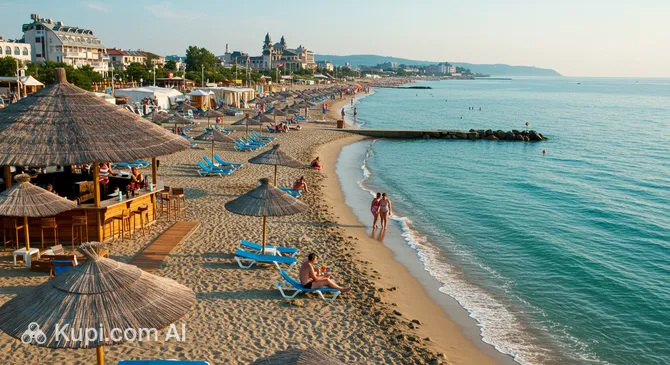
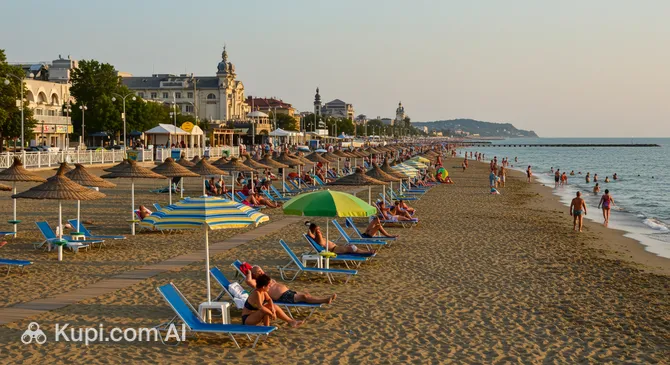
If you are looking to enjoy the sun and sand without leaving the city, Modern Beach is the ideal destination. This expansive stretch of fine sand is easily accessible from the city center and is renowned for its width, allowing plenty of space even on busy days. The water here is typically calm and shallow near the shore, making it safe for swimming. With numerous beach bars, sunbeds, and a vibrant atmosphere, it serves as a lively hub for summer relaxation and social activities.
Modern Beach. Illustration.
Source: Kupi.com AI
Traveler photos:
Art lovers should not miss the opportunity to visit the Constanța Art Museum. Located in the heart of the city, this cultural venue houses a valuable collection of paintings, sculptures, and graphics, focusing primarily on modern Romanian art. Visitors can admire masterpieces by renowned artists such as Nicolae Grigorescu, Ștefan Luchian, and Nicolae Tonitza, whose works capture the unique light and atmosphere of the Dobrogea region and the coast.
Local Cuisine
The culinary landscape of Constanta is a delicious reflection of its multicultural history and coastal location. As the gateway to the Dobrogea region, the local food scene offers a unique fusion where traditional Romanian flavors blend seamlessly with Turkish, Tatar, and Greek influences. Visitors can expect a gastronomic journey that ranges from fresh catches of the day to hearty savory pastries that define the area's street food culture.
Given its position on the Black Sea, seafood plays a starring role on nearly every menu. A signature dish you must try is saramură de pește, a rustic preparation where grilled fish (often carp or mackerel) is soaked in a spicy brine made with tomatoes, peppers, and garlic. Fresh mussels, harvested directly from the local waters, are another highlight, typically served simply with wine sauce or fried in breadcrumbs. For a true taste of the sea, many travelers head to the restaurants near the port or the promenade to enjoy these delicacies with a view.
Konak Restaurant. Illustration.
Source: Kupi.com AI
Traveler photos:
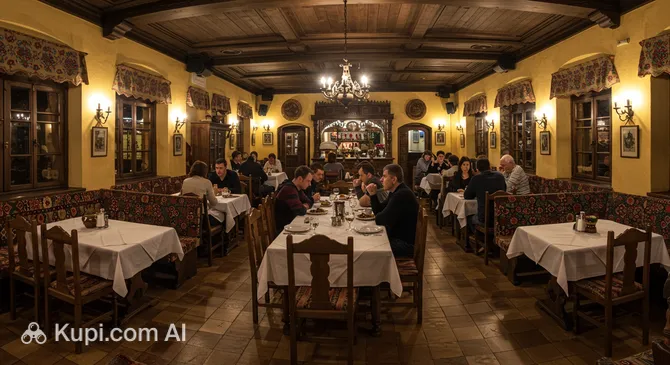
The city's diverse heritage is best tasted through its famous savory pies. The plăcintă dobrogeană is a local icon, a flaky pastry filled with salty cheese and dill, often enjoyed as a breakfast or a snack. Another must-try is the șuberec (suberek), a fried Tatar meat pie that is incredibly popular in this region. For those looking to experience authentic Turkish and Tatar cuisine in a sit-down setting, the Konak Restaurant is a well-regarded spot where you can savor these traditional flavors in a welcoming atmosphere.
When it comes to drinks, the region is famous for its viticulture. The nearby Murfatlar vineyards produce some of Romania's best wines, particularly sweet and semi-sweet varieties that pair perfectly with summer evenings. If you prefer a more casual vibe for a drink, the city offers numerous pubs and cafes. Places like The Couch Bistro Pub provide a relaxed environment to enjoy a cold beer or a cocktail after a day of sightseeing.
For those with a sweet tooth or looking for a quick bite between visiting attractions, the city's bakeries are a delight. You can stop by Lulu Bakeru – Focacceria & Sweets to try artisan breads, focaccia, or delicious pastries. Whether you are dining in an elegant restaurant or grabbing a hot pastry from a street vendor, the food in Constanta is sure to be a highlight of your trip.
Travel Tips
Welcome to the gateway of the Black Sea! To ensure your visit to Constanta is as relaxing as the sea breeze, here are some practical tips to help you navigate the city like a local and make the most of your stay.
Clothing and Gear: Summers are hot and sunny, so pack breathable fabrics, a hat, and high-SPF sunscreen; however, the coastal wind can be cool in the evenings, so bringing a light jacket is smart. If you plan to visit religious sites like the Grand Mosque, remember to dress modestly by covering your shoulders and knees. Comfortable walking shoes are a must for exploring the cobblestone streets of the Old Town and the long promenade.
Transportation: The city is well-connected by the CT Bus network, which covers most tourist areas and the nearby resort of Mamaia; tickets can be purchased via SMS or contactless card on the bus. Ride-hailing apps like Uber and Bolt are widely available and often more reliable and transparent than hailing traditional taxis on the street. Unless you plan to explore the wider Dobrogea region, a rental car might be unnecessary and difficult to park during the peak season.
Finances: The local currency is the Romanian Leu (RON). While credit and debit cards are accepted in most hotels, restaurants, and supermarkets, it is essential to carry some cash for small souvenir shops, beach vendors, or local markets. ATMs are plentiful throughout the city. Tipping around 10% of the bill is standard practice in restaurants and cafes if you are happy with the service.
Health and Safety: Constanta is generally a safe destination, but standard precautions against pickpocketing should be taken in crowded areas like markets and busy beaches. Pharmacies, marked as Farmacia, are easy to find, and some operate 24/7 for urgent needs. In case of any serious emergency, dial 112, which is the universal number for police, ambulance, and fire services.
Communication: The official language is Romanian, but English is widely spoken, especially by younger generations and those working in tourism. To stay connected, you can purchase a prepaid SIM card from major providers like Orange, Vodafone, or Digi at shops around the city. While many cafes offer free Wi-Fi, having your own mobile data is useful for maps and translation apps.
Local Etiquette: Romanians are hospitable and polite; a simple greeting of "Bună ziua" (Good day) when entering a shop or restaurant is appreciated. It is respectful to wait for people to exit public transport before boarding. If you are invited to a local's home, removing your shoes at the door is a common custom unless the host insists otherwise.
What to Avoid: Do not walk around the city center, shops, or restaurants wearing only swimwear; this behavior is considered disrespectful and is strictly reserved for the beach. Additionally, avoid exchanging money with individuals on the street; always use official exchange offices (Case de Schimb) or banks to ensure you receive a fair rate and avoid scams.
Seasonal Insight: If you are visiting during the summer, take advantage of the Constanta City Tour double-decker buses. This hop-on-hop-off service connects the Railway Station with the Port and the Mamaia resort, offering a scenic and affordable way to see the main landmarks without the fatigue of walking in the midday heat.
With these practical insights in hand, you are fully prepared to embrace the unique charm of Romania's coastal capital. Whether you are here for the ancient history or the sunny beaches, a little preparation will ensure your Constanta adventure is smooth, safe, and truly memorable.
Entertainment & Nightlife
As the sun sets over the Black Sea, Constanta transforms into a lively hub of entertainment, offering a diverse nightlife scene that caters to all tastes. The city's energy shifts from the relaxing beaches to the vibrant streets, particularly in the historic center and along the coast. While the nearby resort of Mamaia is famous internationally for its high-end clubbing and luxury venues, the city of Constanta itself maintains a more relaxed, bohemian atmosphere perfect for bar-hopping and casual evenings out.
The heart of the local nightlife beats strongest in the Old Town (Centrul Vechi), specifically around Ovid Square. This area is a labyrinth of narrow streets packed with pubs, bistros, and terraces that stay open late into the night. It attracts a mixed crowd of locals and tourists who enjoy a friendly vibe, acoustic music, and craft drinks. During the summer months, the atmosphere here is electric, with people spilling out onto the cobblestones to socialize under the stars.
For those who appreciate live music and a legendary setting, Phoenix is a staple of the city's cultural scene. Known for its rock and folk concerts, this club has a distinct character and has been a gathering place for music lovers for decades. If you prefer a more modern and intimate setting for a cocktail, Botanica offers a beautifully designed space with a garden atmosphere, making it an excellent spot to start your evening with friends.
Since Constanta is a coastal city, the nightlife naturally extends to the beach. Many beach bars transition from daytime relaxation spots to energetic party venues as the evening progresses. Zoom Beach is one such popular location where the music volume goes up as the sun goes down, offering a perfect blend of sea breeze and dance beats right on the sand.
Zoom Beach. Illustration.
Source: Kupi.com AI
Traveler photos:
When planning a night out, keep in mind that the party starts relatively late in Romania. Bars begin to fill up around 9:00 PM, while clubs typically get busy after midnight. The dress code in Constanta's Old Town is generally casual to smart-casual, but if you venture into the high-end clubs of Mamaia, expect a stricter "dress to impress" policy. Prices in the city center are moderate and affordable, whereas the exclusive venues in the northern resorts can be significantly more expensive.
Safety is generally not a major concern for night walks in the main tourist areas like the Old Town and the promenade, which are well-lit and populated. However, it is always wise to stay in groups and avoid unlit backstreets. For getting around at night, ride-sharing apps like Uber or Bolt are highly recommended over hailing random taxis on the street, as they offer transparent pricing and reliable service.
Before the night begins, there are plenty of ways to entertain yourself during the day. Beyond the museums and beaches, families and thrill-seekers can visit Luna Park, situated near the entrance to the Mamaia resort. This amusement park offers a variety of rides and games, providing a fun, nostalgic atmosphere that complements the city's more modern attractions.
Parks & Museums
While Constanta is primarily celebrated for its coastline, the city also boasts refreshing green spaces and a wealth of cultural institutions that preserve its millennia-old heritage. Beyond the sandy beaches, visitors can discover lush parks perfect for relaxation and museums that narrate the fascinating story of the ancient city of Tomis.
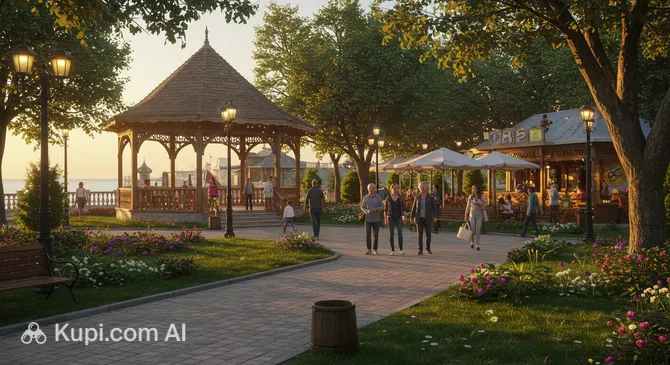
The city's largest green oasis is Tăbăcărie Park, a vast area surrounding a natural lake. It serves as the "green lung" of Constanta, offering scenic walking paths, playgrounds, and quiet spots for picnics away from the urban bustle. It is an excellent place to observe local flora and enjoy a leisurely afternoon stroll connecting the city center to the holiday resort area.
Tăbăcărie Park. Illustration.
Source: Kupi.com AI
Traveler photos:
Nature enthusiasts should also explore the Microreservation of Constanța. Located within the Natural Sciences Museum Complex, this area functions as a rescue center and a sanctuary for the Dobrogea region's fauna. Unlike a traditional zoo, it focuses on conservation, allowing visitors to see pelicans, deer, and other local species in a habitat that closely mimics their natural environment.
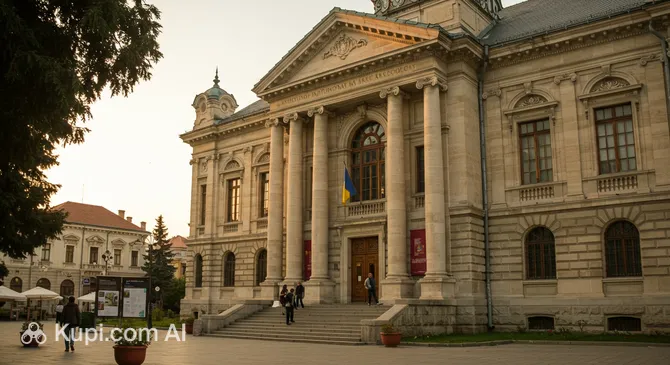
For a deep dive into the region's past, the Museum of National History and Archaeology is the premier cultural landmark. Dominating Ovid Square, this imposing building houses an impressive collection of artifacts ranging from the Paleolithic era to modern times. Tourists are particularly drawn to its Roman and Greek collections, which include statues, coins, and jewelry that testify to the city's importance as an ancient port.
Museum of National History and Archaeology. Illustration.
Source: Kupi.com AI
Traveler photos:
To understand the diverse cultural tapestry of the region, a visit to the Museum of Folk Art is highly recommended. The museum displays traditional costumes, textiles, and household objects that reflect the unique mix of Romanian, Turkish, and Tatar influences in Dobrogea. It provides a colorful and intimate look at the daily lives and artistic expressions of the local people throughout the centuries.
Constanta's streets are also lined with significant architectural and historical monuments. The Saints Peter and Paul Cathedral is a stunning example of Romanian Orthodox architecture, built in the Greco-Roman style with intricate frescoes that captivate visitors. Nearby, you can find the Capitoline Wolf of Tomis, a replica of the famous Roman statue, symbolizing the enduring Latin roots of the Romanian people.
Saints Peter and Paul Cathedral. Illustration.
Source: Kupi.com AI
Traveler photos:
For a truly authentic experience, take a walk through the side streets of the Old Town early in the morning before the cafes open. You might stumble upon the archaeological park near the City Hall, where fragments of the ancient city walls and columns lie in an open-air setting, allowing you to touch history without a ticket.
Getting Around
The public transport system in Constanta is straightforward and relies primarily on a comprehensive bus network operated by CT Bus. Unlike some larger European cities, there is no metro, and the former tram and trolleybus lines have been replaced entirely by a modern fleet of buses. These vehicles efficiently connect the historic city center, the railway station, and residential neighborhoods with the popular northern resort area of Mamaia, making it easy for visitors to navigate between the main attractions and the beach.
A highlight for tourists during the summer season is the special City Tour line. These double-decker buses run on a scenic route that stretches from the railway station to the port and all the way to the end of the Mamaia strip. Operating on a hop-on-hop-off basis, this service offers an excellent vantage point from the open-air upper deck, allowing you to see the Casino, the port, and the coastline while traveling between landmarks.
Paying for your journey is convenient, with several modern options available. You can purchase physical tickets at kiosks or vending machines located near major bus stops, but digital methods are often easier for travelers. Most buses are equipped with validators that accept contactless bank cards (Visa or Mastercard) directly on board. Alternatively, you can pay via SMS if you have a local SIM card, or use the 24Pay mobile app, which allows you to buy tickets and passes securely with your phone. Fares are generally very affordable and are typically valid for a set duration, such as 60 or 75 minutes.
Buses usually operate from around 05:00 to 23:00, though schedules can vary slightly depending on the line and the day of the week. During the peak summer months, the frequency increases to accommodate the influx of visitors, and special night lines are often introduced to facilitate travel between the city and the nightlife hubs in Mamaia. If you are using a paper ticket, ensure you validate it immediately upon boarding to avoid any potential fines from ticket inspectors.
For those preferring more direct or private transport, ride-sharing apps like Uber and Bolt are widely available and highly recommended. They offer transparent pricing and eliminate the need for cash or language skills. Traditional yellow taxis are also plentiful; however, if you hail one from the street, always verify that the driver turns on the meter at the start of the ride. Additionally, for a unique perspective, the Telegondola (Cable Car) in Mamaia offers a spectacular aerial ride over the resort, serving as both a transport link and a sightseeing attraction.
Accommodation
Where to Stay:
Finding the perfect place to stay in Constanta is easy, as the city offers a diverse range of accommodation options to suit every budget and travel style. From luxurious seaside resorts with panoramic views of the Black Sea to charming boutique hotels nestled in the historic peninsula, visitors can choose between a relaxing beach holiday or a culturally immersive city break.
For travelers who want to be close to the sand and the vibrant summer energy, the area connecting the city to the Mamaia resort strip is a top choice. Here, you will find modern facilities designed for leisure and comfort. A prominent option in this area is the Malibu Hotel, situated right at the entrance to the resort. It provides a strategic location that offers the best of both worlds: immediate access to the beach and a short distance to the city's main landmarks.
Malibu Hotel. Illustration.
Source: Kupi.com AI
Traveler photos:
If you prefer a quieter, more atmospheric setting, the Old Town (Centrul Vechi) is the ideal neighborhood. Staying here places you within walking distance of Ovid Square, the iconic Casino, and the main museums. The hotels in this area are often housed in beautifully restored historic buildings, offering a unique character and easy access to the city's best restaurants and evening promenades.
Beyond traditional hotels, Constanta has a wide selection of private apartments and aparthotels, which are particularly popular among families and groups planning longer stays. These rentals often provide excellent value and the convenience of self-catering facilities. For budget-conscious travelers, there are also several hostels and guesthouses located in the residential districts, offering affordable rates without compromising on cleanliness or safety.
Travel Tip: As a major summer destination, accommodation prices in Constanta can rise significantly during July and August. To secure the best rates and your preferred location, it is highly recommended to book your stay several months in advance. Visiting during the shoulder seasons, such as late May or September, can offer a more relaxed experience with more competitive pricing.
Nearby Cities
For those looking to explore the surroundings, Constanta serves as an excellent base for day trips to several interesting nearby locations:
One of the most compelling destinations is Tulcea, situated approximately 111 km to the north. Known primarily as the gateway to the Danube Delta Biosphere Reserve, it is the perfect starting point for nature enthusiasts. From here, visitors can embark on boat tours to explore the vast network of waterways, observe diverse bird species, and experience the unique ecosystem of Europe's best-preserved delta. The city itself features the Danube Delta Eco-Tourism Museum Center, which offers a fascinating aquarium and exhibits about the region's biodiversity.
Another historically rich option is Braila, located about 133 km west of the coast. Once a flourishing trading hub, the city retains a charming atmosphere with its well-preserved 19th-century architecture and the beautiful Old Town. A walk along the Danube promenade reveals elegant buildings that whisper tales of its prosperous past as a major grain port. Key sights include the Maria Filotti Theatre and the grand Trajan Square, making it a delightful spot for those who appreciate urban history and architectural heritage.
For a mix of urban life and riverside relaxation, Galati is a worthwhile stop. As the largest port city on the Danube in Romania, it boasts a spectacular cliff-side promenade known as the Faleza, which is lined with modern sculptures and offers panoramic views of the river. The city is also home to a lovely Botanical Garden, which features a planetarium and a sensory garden, providing a peaceful escape within the urban environment.
City
Population
Distance
Cumpana
12 333
10 km
Ovidiu
13 968
12 km
Valu lui Traian
12 376
15 km
Navodari
34 398
17 km
Murfatlar
10 216
19 km
These nearby destinations offer a glimpse into the diverse culture and landscapes of the region.
Shopping & Souvenirs
Shopping in Constanta offers a diverse experience that ranges from modern retail therapy to hunting for local treasures in historic districts. As the largest city on the Romanian coast, it serves as a major commercial hub where visitors can find everything from international fashion brands to traditional artisanal crafts. Whether you are looking to update your summer wardrobe or find a unique memento, the city provides ample options to suit various tastes and budgets.
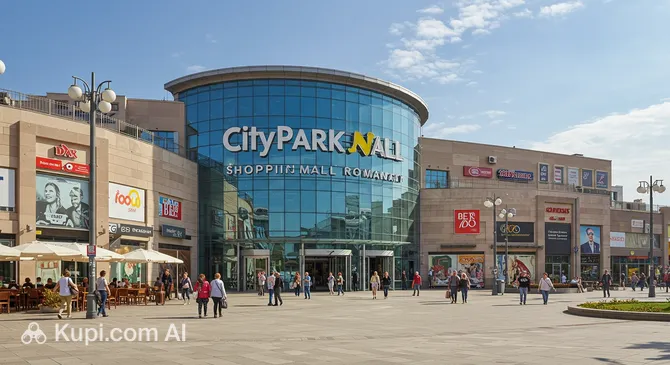
The most popular destinations for a comprehensive shopping spree are the city's large modern shopping centers. City Park Mall is a favorite among both locals and tourists, largely due to its scenic location within Tăbăcărie Park. It hosts a wide array of clothing stores, a cinema, and numerous dining options, making it a perfect spot for a full day of entertainment.
City Park Mall. Illustration.
Source: Kupi.com AI
Traveler photos:
Another major retail destination is VIVO! Constanța, situated on the outskirts of the city towards the exit to Bucharest. This spacious complex features a vast selection of high-street brands, a hypermarket, and electronics stores. It is easily accessible by public transport and offers a convenient one-stop solution for travelers needing supplies or looking for familiar international labels.
VIVO! Constanța. Illustration.
Source: Kupi.com AI
Traveler photos:
For a more atmospheric experience, the Old Town and the area around Ovid Square are the places to go. Here, narrow streets are lined with small boutiques, antique shops, and art galleries. This district is particularly vibrant during the summer season when street vendors set up stalls selling handmade jewelry, paintings, and maritime-themed crafts. It is a stark contrast to the polished malls, offering a glimpse into the city's bohemian side.
When it comes to markets, the Grivița Market (Piața Grivița) is a central spot for fresh local produce. It is an excellent place to experience the daily life of residents and taste seasonal fruits, vegetables, and local cheeses. If you are interested in artisanal goods, look out for seasonal fairs often held near the Casino or in the main squares during holidays and the peak summer months.
Souvenir hunting in Constanta naturally revolves around its coastal identity. Popular items to bring back include handcrafted items made from seashells, model ships, and other nautical decorations. Additionally, the region is famous for its vineyards, so a bottle of Murfatlar wine is a classic and appreciated gift. Traditional Romanian folk items, such as embroidered blouses (ie) and painted ceramics, can also be found in specialized souvenir shops in the city center.
Most shops in shopping malls operate daily from 10:00 AM to 10:00 PM, providing flexibility for evening visits. Independent street shops typically open around 9:00 AM or 10:00 AM and close by 6:00 PM to 8:00 PM, with reduced hours or closures on Sundays. Payment methods are modern, with credit and debit cards widely accepted in malls, supermarkets, and most restaurants. However, it is advisable to carry some cash (Romanian Leu) for small purchases in markets, souvenir stalls, or smaller kiosks.
For tourists visiting from outside the European Union, tax-free shopping is available at participating stores. If your purchase exceeds a certain value, you may be eligible for a VAT refund. Look for the "Tax Free" signage in shop windows and ask for the necessary forms at the checkout to claim your refund upon leaving the country.