Support

Ad Diriyah

About

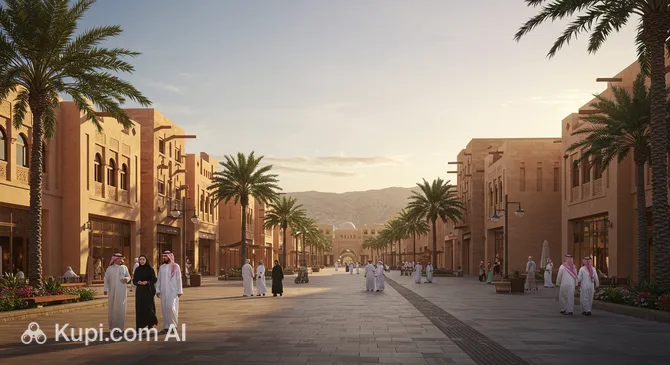
Diriyah is a true historical gem of Saudi Arabia, nestled just a few kilometers northwest of the capital, Riyadh. The city stretches along the banks of the picturesque Wadi Hanifa valley, amidst sandy hills and palm groves, creating an atmosphere where history literally floats in the air, and every corner recalls the grandeur of Arabian civilization.
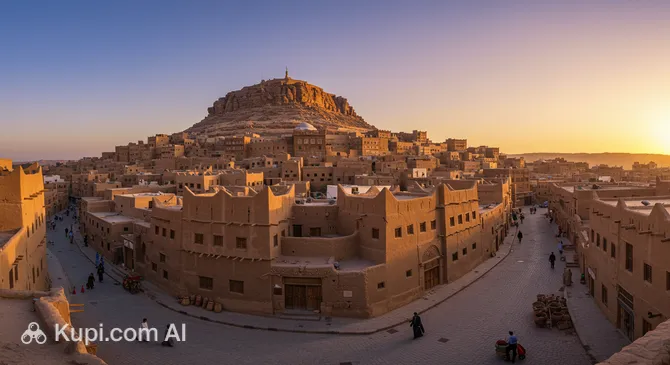
Ad Diriyah. Illustration.
Source: Kupi.com AI

With a population of about 19,000, Diriyah retains the charm of a small town while holding immense historical and cultural significance. This city was the first capital of the Saudi dynasty and is rightfully considered the cradle of the modern Saudi state. The heart of Diriyah, the historical At-Turaif district, is a UNESCO World Heritage site and the main focal point for history enthusiasts.

Strolling through the ancient streets of Diriyah, you can see unique traditional mud-brick architecture firsthand, explore majestic palaces, and visit cozy courtyards. The city harmoniously blends the past and the present, offering visitors not only historical monuments but also modern art spaces. Diriyah is the perfect place for those seeking to immerse themselves in authentic Arabian culture, enjoy the hospitality of the locals, and discover the rich history of the Middle East. Don't miss the chance to visit this amazing city!

You can find more interesting facts on the history of Diriyah page.
Weather Overview

The weather in Diriyah is characterized by a hot desert climate. Summer here is very sweltering and dry: the average temperature in June-August stays around 35-36°C, with maximum values potentially reaching 42-43°C. Winters are mild, with an average temperature in January around 14.4°C, while nighttime temperatures can drop to 8-9°C. Regarding precipitation, the measurable amount in Diriyah is 0 mm in all months of the year, although during some periods, such as January or April, a few days with trace precipitation may be recorded.

Expect a very hot and arid summer and a mild, predominantly dry winter. For more detailed information, please check the Climate in Diriyah page.

Average monthly temperature

Average monthly precipitation

Interesting Facts

Diriyah is not just a historical gem of Saudi Arabia, but a city full of amazing stories and little-known details. Here are a few facts that will let you see it in a new light:

  • Cradle of a Nation: Many know Diriyah as a historical site, but not everyone realizes that it was from here, from this seemingly small settlement, that the formation of the First Saudi State began in the 18th century, laying the foundations for modern Saudi Arabia.

  • UNESCO Mud-brick Heritage: The At-Turaif district, the heart of old Diriyah, is included in the UNESCO World Heritage list for a reason. Its unique mud-brick palaces and houses, built in the traditional Najdi style, demonstrate not only the skill of ancient architects but also their ability to adapt dwellings to the harsh desert climate, ensuring they stay cool.

  • Crossroads of Ancient Paths: Long before its political rise, Diriyah flourished as an important hub on ancient trade and pilgrimage routes connecting various corners of the Arabian Peninsula. This contributed to cultural exchange and the formation of the city's uniquely hospitable character.

  • Symbol of Rebirth: Despite periods of decline and destruction in its history, Diriyah has managed to experience a revival, becoming not only a historical monument but also a dynamically developing cultural center. This process symbolizes a deep respect for the past and a confident look toward the country's future.

Diriyah New District (JAX). Illustration.
Source: Kupi.com AI

Traveler photos:

How to Get There

Since Diriyah is effectively a historical suburb of the capital, getting here is quite simple. The main flow of tourists arrives through Riyadh's transport hubs. You can find out more details on how to get to Diriyah on a dedicated page, and below we will look at the key routes.

There is no airport in the city of Diriyah itself, but you can fly into King Khalid International Airport (RUH) in Riyadh, which is located about 28 km from Diriyah. This is one of the largest aviation hubs in the region, serving many international and domestic flights. The journey from the terminal to the historical center by taxi or transfer usually takes about 40–50 minutes, depending on traffic.

For convenience, here is a summary of the main airports:

AirportPassenger trafficDistance
King Khaled International Airport37 mln28 km
Dawadmi Airport35 000246 km

There is no direct rail connection to Diriyah. However, travelers can use Saudi Arabia's well-developed railway network to reach Riyadh. The capital's station receives modern high-speed trains from other major cities, such as Dammam or Al-Hofuf. After arriving at the Riyadh train station, you can reach Diriyah by taxi or rented car, which will take no more than an hour.

Main Attractions

Diriyah, the historical pearl of Saudi Arabia, offers travelers a unique blend of antiquity and modernity. This city, the cradle of the first Saudi state, carefully preserves its heritage while developing as a cultural hub. Here are a few key attractions you shouldn't miss when visiting Diriyah.

The main historical attraction of Diriyah is the At-Turaif district. This UNESCO World Heritage site was founded in the 15th century and served as the first capital of the Al Saud dynasty. A walk through its restored mud-brick palaces, mosques, and narrow streets allows you to immerse yourself in the atmosphere of the past and learn about the birth of the modern Saudi state. At-Turaif is fascinating for its unique Najdi-style architecture and rich history, which comes to life in numerous museums and exhibitions on its grounds.

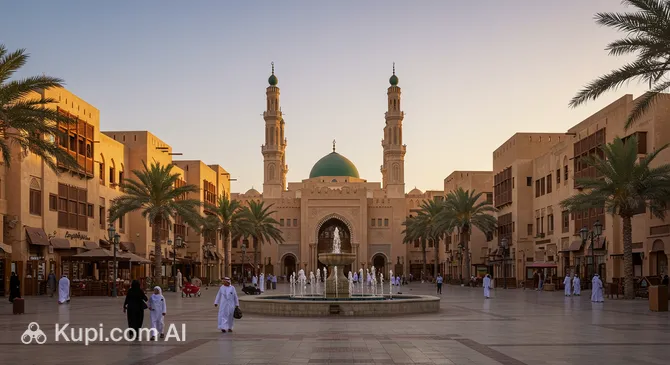
A completely different side of the city is revealed in the New Diriyah District (JAX). This rapidly developing quarter has become a center for contemporary art and culture. It is home to numerous art galleries, creative studios, designer shops, and event spaces. A visit to the JAX district is interesting for those who want to see the works of Saudi and international artists and observe how Diriyah integrates modern trends while maintaining its historical identity.

Diriyah New District (JAX). Illustration.
Source: Kupi.com AI

Traveler photos:

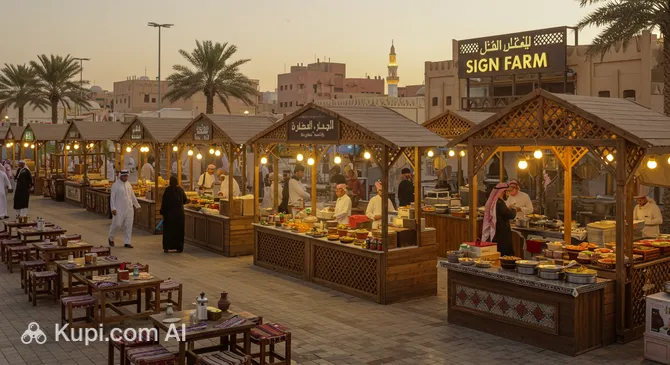
For those who want to combine cultural impressions with gastronomic ones, the restaurant Sign Farm is well worth a visit. It’s not just a place to enjoy a good meal, but a popular establishment with a unique concept and atmosphere. The restaurant attracts visitors with its original design and high-quality cuisine, offering guests an unforgettable experience. It is a great example of how Diriyah combines traditions of hospitality with modern approaches to leisure and entertainment.

Sign Farm. Illustration.
Source: Kupi.com AI

Traveler photos:

Local Cuisine

The gastronomy of Diriyah is a true immersion into the world of traditional Saudi cuisine, where every recipe holds centuries of history and culinary secrets. Travelers can expect a feast of flavors, from hearty main courses to exquisite desserts and aromatic drinks that reflect the rich cultural heritage of Saudi Arabia.

Among the dishes that you should definitely try in Diriyah are kabsa — fragrant rice with tender meat (usually chicken or lamb) and a rich set of spices, matboukh — a delicious stew of vegetables with meat, and margoog — a thick, rich soup, also with meat and vegetables, often cooked in clay pots. Of course, no meal is complete without the famous hummus, which is served here in various versions, showcasing the skill of local chefs.

Those with a sweet tooth will enjoy local desserts: date pastries, melt-in-your-mouth baklava, and various sesame treats. These sweets pair perfectly with traditional drinks — strong Arabic coffee with cardamom, which is a symbol of hospitality, or aromatic tea. It is important to note that in accordance with local traditions and laws, alcoholic beverages are not offered in Diriyah, allowing guests to fully focus on the rich palette of non-alcoholic treats and authentic flavors.

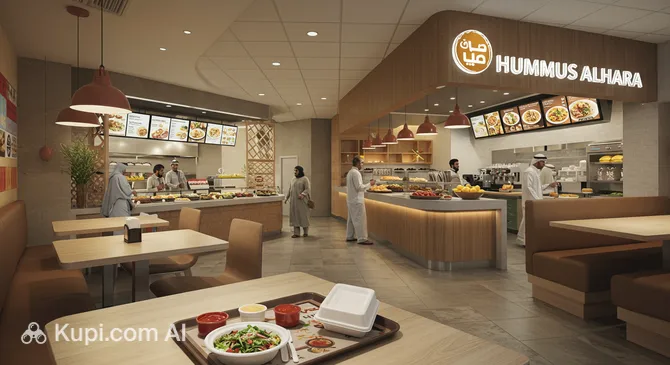
The food culture in Diriyah is diverse and colorful. Residents and tourists can enjoy authentic dishes in numerous family-run restaurants and cozy cafes where ancient recipes passed down through generations are carefully preserved. One such place to taste excellent hummus and other traditional fare is the Hummus Alhara restaurant. Street food lovers will appreciate local flatbreads with various fillings, juicy kebabs, and dishes grilled right before your eyes. In the evening, city squares often transform into lively gastronomic fairs offering a wide selection of local delicacies.

Hummus Alhara. Illustration.
Source: Kupi.com AI

Traveler photos:

The gastronomic scene of Diriyah attracts tourists with its authenticity and the opportunity to touch living culinary traditions. A visit to the local markets, where high-quality fresh dates, nuts, and fragrant spices are sold, will complement your gastronomic experience and allow you to take home a piece of oriental flavor. This is a city where food is not just about satisfying hunger, but an important part of culture and socializing.

Travel Tips

Planning a trip to Diriyah, the historical gem of Saudi Arabia? These practical tips will help make your journey as comfortable and rewarding as possible, allowing you to dive deeper into the unique atmosphere of this ancient city.

  1. Clothing and Essentials: A conservative style of dress is expected in Saudi Arabia. Women are advised to wear an abaya (a traditional long dress) and cover their heads, especially when visiting public and religious places. Men should avoid shorts above the knee and sleeveless shirts. Choose light, breathable clothing made of natural fabrics, as the climate here is hot and dry. Be sure to bring comfortable closed-toe shoes for long walks through historical districts, sunglasses, a hat, and high SPF sunscreen. Don't forget a universal power adapter for your electronics.

  2. Getting Around: The main ways to get around Diriyah and its surroundings are taxis and cars ordered through mobile apps (like Uber or Careem). Public transport is limited. Renting a car can be a good option if you plan to explore the region on your own, but be mindful of local traffic conditions. For visiting the historical district of At-Turaif, special shuttles or golf carts are often provided.

  3. Financial Matters: The local currency is the Saudi Riyal (SAR). You can exchange currency at banks or exchange offices at the airport and large shopping malls. Credit and debit cards (Visa, Mastercard) are widely accepted in hotels, restaurants, and shops. ATMs are easily available. International cards generally work, but it's best to check with your bank before traveling. Tipping is not mandatory but welcomed for good service (usually 5-10%). An approximate daily budget (excluding accommodation) can range from 200-300 SAR depending on your plans.

  4. Health and Safety: Diriyah, and Saudi Arabia as a whole, is considered a safe place for tourists. Follow standard precautions: keep an eye on your belongings and don't leave valuables unattended. Pharmacies are available, and some are open 24/7. For medical assistance, it’s best for tourists to go to large hospitals or clinics; having travel insurance is advisable. Drink plenty of bottled water, especially during the hot season.

  5. Language and Connectivity: The official language is Arabic. In tourist areas, hotels, and large shops, staff often speak English. Learning a few basic phrases in Arabic (e.g., "As-salamu alaykum" — hello, "Shukran" — thank you) will be appreciated. A local SIM card with internet access can be purchased at the airport or mobile phone shops. Wi-Fi is available in most hotels and many cafes.

  6. Local Etiquette and Traditions: Respect local customs and traditions. Greetings are usually reserved, especially between men and women. Be modest in public places. It is not customary to photograph people without their permission. During prayer times (five times a day), many shops and establishments may temporarily close. Show respect for religious traditions.

  7. Things to Avoid: Categorically avoid public displays of affection between men and women. It is also not recommended to photograph government buildings and military sites. The consumption of alcohol and its importation into the country are strictly prohibited.

  8. Special Tip — At-Turaif: The historical district of At-Turaif, a UNESCO World Heritage site, is the heart of Diriyah. Plan enough time for your visit, preferably in the late afternoon when the heat subsides. In the evening, light shows and cultural events are often held here, which should not be missed.

We hope these tips help you better prepare for your trip to Diriyah and enjoy every moment of your stay in this amazing place rich in history and culture!

Entertainment & Nightlife

Diriyah, the historical gem of Saudi Arabia, offers its guests a special evening leisure experience that differs from the typical nightlife of many metropolises. There are no noisy nightclubs or bars in the traditional sense; however, the city comes alive at sunset, offering sophisticated entertainment, cozy restaurants, and atmospheric walks through renovated historical quarters.

The impressive New Diriyah District (JAX) becomes the main hub for evening activities. This is a modern cultural space where history meets modernity. In the evening, it is particularly pleasant to stroll through the illuminated streets, admire art objects, visit galleries (if open late), browse conceptual boutiques, or sit in one of the many cafes. The atmosphere here is calm and respectable, perfect for a leisurely rest. Both locals and tourists come here to enjoy the evening cool and any cultural programs being held.

Dining at one of the fine restaurants is an essential part of the evening program in Diriyah. The city offers diverse gastronomic experiences. For instance, the Sign Farm restaurant can be an excellent choice for those seeking a unique atmosphere and quality cuisine. It is also worth checking out establishments offering traditional dishes, such as the Hummus Alhara restaurant. Many restaurants stay open until late evening, allowing you to enjoy your meal without rushing.

When planning an evening out, it’s important to keep the local culture in mind. The dress code is generally modest and conservative, especially for women. The best time for walks and dinners is after sunset when the daytime heat subsides. You can reach your destination by taxi or through popular ride-hailing apps; public transport may be less convenient in the evenings. The average bill in restaurants varies but generally corresponds to the level of a major tourist center.

In terms of safety, Diriyah, especially its tourist zones, is considered a very safe city. Evening walks here are comfortable, though it is always wise to follow general precautions. Hailing a taxi at night is not difficult, and most hotels can also assist with arranging transfers.

During the day, Diriyah offers equally engaging activities. The main attraction is the At-Turaif historical district, a UNESCO World Heritage site, where you can spend hours exploring ancient mud-brick buildings and learning about the origins of the first Saudi state. The city and its surroundings also feature museums and parks that offer cultural and relaxing breaks before the lively evening begins.

Parks & Museums

Diriyah, the cradle of the first Saudi state, offers a unique immersion into history and culture, where ancient ruins stand alongside modern cultural initiatives. The city is famous for its historical At-Turaif district, a UNESCO World Heritage site, which is in itself a massive open-air museum, complemented by developing green zones and new art spaces.

While Diriyah is primarily known for its historical monuments, its location in the Wadi Hanifa oasis provides picturesque natural landscapes. Walks through the surrounding areas can reveal traditional farms and palm groves, offering a refreshing contrast to the historical buildings. As part of the large-scale Diriyah development project, significant attention is also being paid to creating modern park zones and public spaces designed for the rest and leisure of both locals and tourists.

The main cultural treasure of Diriyah is, without a doubt, the At-Turaif district. This UNESCO World Heritage site, built from mud-brick, was the capital of the first Saudi state. Today it has been meticulously restored and serves as an extensive open-air museum complex. You can spend hours wandering through the narrow streets, exploring palaces, mosques, and residential houses that tell the story of the birth of modern Saudi Arabia. Various pavilions within At-Turaif are dedicated to military history, social life, Arabian horses, and other aspects of the region's rich heritage.

In addition to its historical heart, Diriyah is actively developing as a modern cultural center. Projects such as the New Diriyah District (JAX) and JAX District deserve special attention. These areas are becoming magnets for contemporary art and culture, hosting galleries, creative studios, and various events. They offer a unique opportunity to see how historical heritage harmoniously blends with the latest creative initiatives and modern design.

Diriyah New District (JAX). Illustration.
Source: Kupi.com AI

Traveler photos:

The entire old part of Diriyah, beyond the famous At-Turaif, is rich with examples of traditional Najdi architecture. Characteristic mud-brick walls decorated with geometric patterns and narrow alleys allow for a deeper immersion into the atmosphere of the past and an understanding of the unique way of life that has existed in this oasis for centuries. Exploring these historical quarters is a true journey back in time.

For a more authentic experience and to see daily life beyond the main tourist routes, take a walk through the farmlands adjacent to the historical center of Diriyah. Also, visit local markets where you can find unique handicrafts and fresh dates, and feel the local character that is not always accessible in large tourist zones.

Getting Around

Getting around Diriyah, especially its historical heart, the At-Turaif district, is most convenient on foot. This allows you to fully enjoy the atmosphere of this UNESCO World Heritage site. For trips over longer distances or to reach Diriyah from other parts of Riyadh, several transport options are available to tourists.

The most common and convenient way for tourists to travel in Diriyah and its surroundings is by taxi. They can be found near hotels and popular tourist spots. In addition, ride-hailing mobile apps like Uber or Careem are widely used in the region, offering a comfortable and often more predictable cost option. Payment in such services is usually made by card via the app.

The public bus system directly within Diriyah may be limited, as it is primarily a historical zone. However, there may be bus routes connecting Diriyah with the central districts of Riyadh. The operator for such routes is usually SAPTCO. Information about routes, schedules, and payment methods (usually buying a ticket at the station or from the driver) is best checked on-site or on the transport companies' official websites.

For those who prefer independence and plan to actively explore not only Diriyah but also the surrounding areas, renting a car is a good option. Numerous international and local rental companies are represented at Riyadh International Airport and within the city itself. Keep in mind that in popular tourist areas of Diriyah, there may be restrictions on movement and parking, so familiarize yourself with the rules in advance.

Within large tourist complexes, such as the developing Diriyah Gate project, internal shuttles or electric cars may be organized for the convenience of visitors moving between different sites. Bicycle rental is not yet a widely available public option in this area. In the main historical core, walking remains the best way to see the sights.

When using a taxi, if the trip is not via a fixed-price app, it is recommended to agree on the cost in advance or ensure the driver has turned on the meter. Cash (Saudi Riyals) is usually accepted for taxi payments. In ride-hailing apps, payment is typically automatic from a linked bank card. Public transport, if available, has its own operating hours, which are best checked in advance.

Accommodation

Diriyah, the historical gem of Saudi Arabia, offers tourists an increasingly wide range of accommodation options to suit various preferences and budgets. Travelers can find mostly modern hotels here, some of which may offer designs inspired by local heritage, as well as comfortable apartments for rent. Due to the active development of tourism infrastructure as part of the Diriyah Gate project, the choice of housing is constantly expanding, offering both luxury and more affordable options.

When choosing a place to stay in Diriyah, it is worth looking at areas located in close proximity to the main historical attractions, such as the At-Turaif district, a UNESCO World Heritage site. Staying here will allow you to easily immerse yourself in the atmosphere of the past. It can also be convenient to live in new developing zones, for example, near the New Diriyah District (JAX), where modern hotels and infrastructure are appearing. Proximity to the highways connecting Diriyah with Riyadh is also an advantage if you plan to explore the capital as well.

Diriyah New District (JAX). Illustration.
Source: Kupi.com AI

Traveler photos:

Although specific hotels are not listed in the attractions list provided, it is safe to say that various categories of hotels are being actively built and are already operating in Diriyah and adjacent areas. Expect the appearance of world-famous luxury hotel brands as well as boutique hotels offering a unique experience. The selection will range from mid-range hotels to exclusive resorts, many of which will be integrated into the historical and cultural landscape.

When planning a trip to Diriyah, especially during the peak tourist season or during cultural festivals and events, it is highly recommended to book accommodation in advance. This not only guarantees availability but often allows you to secure better rates. The main booking methods are popular international online platforms and travel aggregators, as well as direct booking through official hotel websites. The price range for accommodation can be quite wide: from moderate prices in standard hotels to premium rates in luxury complexes.

Nearby Cities

For those who want to explore the surrounding area, Diriyah serves as an excellent starting point for day trips to several interesting nearby locations:

CityPopulationDistance
Al Aqiq35 62910 km
Riyadh7 237 00015 km
Al Hilla District594 60522 km
Al Hair13 47349 km
Al Kharj376 325103 km

These nearby destinations provide an insight into the diverse culture and landscapes of the region.

Shopping & Souvenirs

Shopping in Diriyah is an immersion into the world of traditional crafts and modern trends, where history meets the present. The city, which is the cradle of the first Saudi state, offers unique opportunities to purchase authentic souvenirs and products from local artisans. Here you won't find giant malls like in the capital, but you can enjoy searching for special items that reflect the rich culture of Saudi Arabia.

The main shopping spots in Diriyah are concentrated around historical districts and new cultural spaces. Walking through the restored streets, you will discover small shops and boutiques. Special attention should be paid to developing zones such as the New Diriyah District (JAX), where contemporary art galleries and designer shops offering unique items can be found. The JAX District is also interesting for walks and potential shopping.

Jax District. Illustration.
Source: Kupi.com AI

Traveler photos:

While Diriyah is not famous for large shopping centers in the conventional sense, the charm of local shopping lies precisely in its intimacy and authenticity. For large-scale brand shopping, it’s better to head to nearby Riyadh. In Diriyah, the emphasis is shifted to cultural and craft goods.

Traditional markets or "souks" are an integral part of Arab culture. In Diriyah, you can find areas styled as ancient bazaars, especially near tourist attractions. They sell spices, incense (such as oud), traditional clothing, handmade rugs, and camel wool products. Such markets offer not just goods, but an unforgettable atmosphere of the East.

As souvenirs from Diriyah, it is worth bringing back high-quality dates, Arabic coffee and coffee pots (dallahs), traditional jewelry, miniature models of ancient Diriyah buildings, as well as products from local craftsmen — ceramics, woven items with geometric patterns (sadu), or calligraphy. Aromatic oils and bakhoor (traditional incense) are also popular.

Shops in Diriyah, as in all of Saudi Arabia, usually operate from morning until late evening, but close during prayer times (several times a day). Friday is a day off, and many shops only start working after the midday prayer. Both cash (Saudi Riyals) and bank cards are accepted, especially in larger stores and tourist zones. In markets and small shops, it is preferable to have cash on hand.

For tourists in Saudi Arabia, there is a VAT refund system on certain goods. If you make large purchases, check with the seller about the possibility of issuing Tax Free documents. Usually, this is possible in participating stores, and the tax refund can be obtained at the airport when leaving the country.

Reached the end of the page?

That means the route is fully explored