Support

Jubail

About

Situated on the picturesque coast of the Persian Gulf, Jubail represents a unique blend of industrial prowess and modern urban comfort. Located in the Eastern Province of Saudi Arabia, this city has transformed over several decades from a small fishing village into the world's largest industrial center. Its atmosphere is imbued with the energy of creation and rationalism, making it an interesting destination for those who want to see the "new" Saudi Arabia.

Geographically, Jubail occupies a strategic position in the east of the country, and its population of nearly 393,000 is made up of representatives from many different cultures. Despite its status as an industrial giant, the city surprises tourists with its well-maintained lagoons and spacious embankments. The history of the city's development is inextricably linked to the oil boom, which turned sandy shores into a world-renowned high-tech hub.
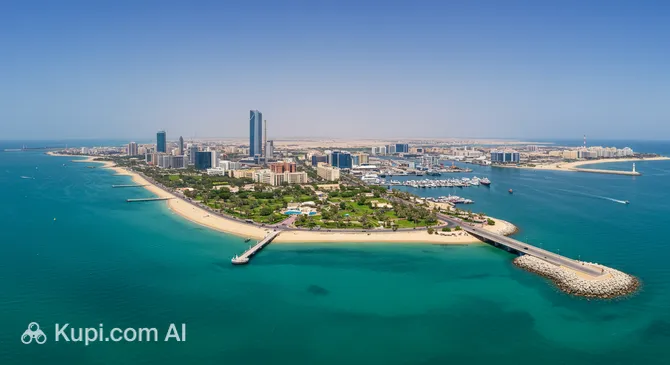
Jubail. Illustration.
Source: Kupi.com AI

The city's main features are its grandiose industrial complexes, which possess their own aesthetic under night illumination, as well as popular recreation areas such as Al Fanateer Beach. Jubail is a place where the pragmatism of production coexists with the coziness of residential neighborhoods, creating the image of a thriving oasis in the desert. We invite you to discover this dynamic metropolis, which serves as the heart of the kingdom's economy.

Weather Overview

Jubail is characterized by a typical desert climate with extremely hot summers and mild, pleasant winters. Proximity to the Persian Gulf causes high humidity, which can make the heat feel particularly intense during the summer months. In winter, daytime air temperatures stay around +20°C, making this period ideal for a visit.

Expect an extremely hot summer with temperatures often exceeding +40°C and a near-total absence of precipitation. In the winter months, rains occur rarely but can be intense. Before your trip, it is recommended to study the detailed climate of the city to choose the right wardrobe and plan outdoor activities.

Average monthly temperature

Average monthly precipitation

Interesting Facts

  • Industrial Record Holder: Jubail is officially recognized as the world's largest single industrial city specializing in petrochemicals.

  • Ancient Heritage: In 1986, the remains of one of the oldest churches in the world, dating back to the 4th century AD, were discovered within the city limits.

  • Business Paradise: The city offers unprecedented incentives for companies, including multi-decade tax holidays and exemptions from customs duties on equipment.

  • Precise Navigation: The city is divided into clearly planned zones with high-speed highways, and its primary postal code is 31961.

  • Artificial Lagoons: Despite the desert climate, large-scale artificial lagoons have been created in Jubail, serving as the main recreation areas for its 400,000 residents.

How to Get There

Jubail is an important transport hub, although its accessibility is mainly oriented toward road travel. The city is connected to other regions of the country by a network of high-quality expressways, making travel by car the most convenient option for tourists and business travelers. Information about various routes to the city should be studied in advance to plan your travel time.

The nearest major international air hub is King Fahd International Airport (DMM), located in neighboring Dammam. The trip from the airport to Jubail by taxi or rental car takes about one hour. Jubail's own local airport is primarily used for corporate and freight needs, so scheduled passenger flights arrive here very rarely.

AirportPassenger trafficDistance
King Fahd International Airport12 mln59 km
Bahrain International Airport9.4 mln131 km
Sakhir Airbase140 km
Isa Airbase154 km
Al-Ahsa Airport1 mln186 km

Railway communication in the region is represented mainly by freight lines serving the needs of industrial giants. There are no passenger stations in the city itself, but you can take a train to neighboring Dammam and then transfer to a bus or taxi to Jubail.

Main Attractions

While Jubail is primarily known as an industrial giant, there is plenty for tourists to see, especially for those who appreciate modern architecture and well-maintained recreation areas. One of the main points of attraction is Al Fanateer Beach. This is a spacious promenade with park areas where locals and visitors love to stroll in the evenings, enjoying the sea breeze and views of the Persian Gulf.

For lovers of shopping and modern urban life, the Galleria Mall and Jubail Mall are must-visits. These are not just stores, but true leisure centers with cinemas and food courts, which, in the hot climate, become the main places for meetings and walks. Here, you can feel the rhythm of life in a modern Saudi city and purchase goods from world brands.

The Local Market (Jubail Souq) deserves special mention, where you can immerse yourself in an authentic Eastern atmosphere. Unlike the modern malls, they sell the freshest fish, seafood, aromatic spices, and traditional fabrics here. It is an excellent place to see the daily life of the townspeople and try local delicacies.

An interesting, though often hard-to-access site, are the ruins of an ancient 4th-century Christian church, discovered on the outskirts of the city in 1986. Although access is often restricted, the presence of such an ancient monument adds historical depth to Jubail, serving as a reminder of the times when this region was an important crossroads of civilizations.

Local Cuisine

The culinary scene in Jubail is a vibrant mix of traditional Arabian cuisine and international gastronomic trends. The main focus here is on the freshest seafood, which is delivered daily from the local market. Be sure to try Kabsa—an aromatic rice dish with meat or fish, generously seasoned with local spices.

In addition to traditional Arabic restaurants, international cuisine establishments are popular in the city. Restaurants such as Napoli or Fuddruckers are successful with both expats and locals, offering familiar dishes in high-quality execution. The city's gastronomic life is concentrated around shopping centers and embankments, where you can find both a quick snack and places for a leisurely dinner.

As for drinks, a cult of coffee and tea reigns in Jubail. Be sure to try traditional Saudi coffee with cardamom, which is often served with dates—this is an important part of local hospitality. Freshly squeezed juices and fruit cocktails are also extremely popular and available in almost any cafe. Remember that alcohol is completely absent from the menus of establishments in the city and throughout the country.

Travel Tips

Preparing for a trip to Jubail requires taking local specifics into account to ensure your journey is comfortable and leaves only pleasant impressions.

  1. Clothing: Choose light, natural fabrics. Despite liberalization, a modest dress code is recommended in public places: shoulders and knees should be covered for both women and men.
  2. Transport: Public transport is poorly developed, so renting a car is the most practical option. If you don't drive, use the Uber or Careem apps.
  3. Finances: The official currency is the Saudi Riyal (SAR). Cards are accepted almost everywhere, but it's better to have some cash for the markets.
  4. Health: Always carry water with you and use sunscreen. Pharmacies are frequent and usually located in shopping centers.
  5. Language: The official language is Arabic, but there are many expats in Jubail, so English is widely spoken in hotels and shops.
  6. Etiquette: Avoid public displays of affection. During Ramadan, eating and drinking in public places during daylight hours is prohibited.
  7. What to avoid: Do not photograph government buildings, industrial facilities, or locals without their explicit consent.
  8. Seasonality: The best time to visit is from November to March, when the air temperature is most comfortable for walking.

Following these simple rules will help you feel the city's hospitality and enjoy its unique atmosphere to the fullest.

Entertainment & Nightlife

Nightlife in Jubail differs significantly from European or Asian metropolises due to the conservative traditions of Saudi Arabia. You will not find typical nightclubs or bars serving alcohol here, as it is completely prohibited in the country. However, the city does not go to sleep at sunset: the main activity moves to the shopping centers and the embankments.

The main centers for evening entertainment are Galleria Mall and Jubail Mall. As it gets cooler, families and young people head there to dine in restaurants, go to the cinema, or simply socialize. Most establishments are open until late at night, offering an atmosphere of calm and safe relaxation. Coffee shops are particularly popular, where the culture of coffee consumption is elevated to an art form.

For those who prefer to spend time outdoors, the Al Fanateer Beach area becomes the center of nighttime life. Waterfront cafes offering hookahs and light snacks operate here, and the promenade is lit with bright lights, creating a pleasant atmosphere for walks. In terms of safety, the city is considered exemplary: you can safely walk through residential areas and coastal zones at any time of day, and taxis are easily summoned via the Uber or Careem apps.

Parks & Museums

Despite its industrial status, Jubail offers residents and visitors several green oases. The main "green" zone of the city is considered the coastal strip at Al Fanateer Beach. Neatly trimmed lawns and palm trees are planted here, creating a pleasant contrast to the harsh desert landscapes. It is an ideal place for family picnics and evening walks when the heat subsides.

There are few specialized museums in the classic sense in the city. The primary focus is on the industrial heritage and development of the region. However, for those interested in history, the ancient church ruins are a real "open-air museum" (albeit with limited access). This is evidence of the region's pre-Islamic history, which attracts the attention of researchers from all over the world.

For cultural leisure, residents also use the spaces of large shopping centers, where temporary exhibitions and cultural events dedicated to the traditions of Saudi Arabia are often held. The landscaped embankments of the lagoons also play the role of parks, offering peaceful relaxation by the water surrounded by modern urban architecture.

Getting Around

The public transport system in Jubail is underdeveloped, as the city was designed with a focus on the mass use of private cars. Bus service exists, but routes are mainly oriented toward transporting workers to industrial zones, making them inconvenient for regular tourists.

The main way for visitors to get around remains taxis or rental cars. International services Uber and Careem operate in the city, allowing you to call a car via an app with a fixed price. This is the most reliable and safe way to reach your destination, considering that distances between districts can be significant.

If you plan to move around a lot, the best solution would be to rent a car. The roads in the city are of excellent quality, navigation is intuitive, and fuel costs remain among the lowest in the world. Pedestrian infrastructure is developed mainly in recreation areas and near shopping centers; otherwise, the city is not conducive to long walks, especially during the hot season.

Accommodation

The housing market in Jubail has a distinct character: most accommodation facilities are oriented toward business travelers and specialists coming for long-term assignments. Nevertheless, tourists can find high-quality options here—from modern hotels of famous international chains to comfortable apartments.

The most convenient area to stay is considered the coastal zone near Al Fanateer Beach and the vicinity of large shopping centers. Mid-range and high-end hotels are concentrated here, offering good service and proximity to walking areas. If you are planning a visit, it is recommended to book accommodation in advance, as rooms can be in short supply during major industrial forums or holidays.

The price range in the city is quite stable, but Jubail can hardly be called a budget destination. The main emphasis is on serviced apartments with their own kitchens, which is very convenient for those planning to stay in the city for more than a few days. Booking is most often done through international services that offer a wide selection of verified options.

Nearby Cities

Jubail serves as an excellent starting point for exploring the kingdom's east coast, offering travelers the opportunity to see the region's diversity just a couple of hours' drive away. Neighboring cities differ in character—from port hubs to historical centers with a rich past.

Just 47 kilometers away is the city of Ras Tanura, known for its important role in the oil industry and beautiful coastal views. Another interesting destination is the ancient city of Qatif, located 60 kilometers away. It is famous for its agricultural oases and historical markets, which differ starkly from the modern development of Jubail.

For those looking for the scale and entertainment of a large metropolis, a trip to Dammam is the perfect option. This is the administrative center of the Eastern Province, where you can visit interesting museums, huge parks, and modern embankments. You can get there via a direct expressway in about an hour.

CityPopulationDistance
Ras Tanura153 93347 km
Al Awjam25 50058 km
Qatif524 18260 km
Saihat115 00069 km
Dammam903 31279 km

Exploring the surroundings will allow you to better understand the contrasts of Saudi Arabia, where futuristic industrial landscapes coexist with centuries-old traditions and the natural beauty of the Gulf. Each such trip will complement your impressions of visiting this dynamic region.

Shopping & Souvenirs

Shopping in Jubail is primarily about visiting large-scale shopping malls, which are the centers of the city's social life. Galleria Mall stands out for its modern architecture and wide selection of brands, offering comfortable shopping conditions in air-conditioned premises. Jubail Mall and Fanateer Mall are also popular with townspeople thanks to the variety of electronics, clothing, and perfume stores.

For a more traditional experience, head to the Central Market. Here, shopping turns into a real adventure: you can find unique Arabic spices, high-quality fabrics, and gold jewelry. Special attention should be paid to the fish market—it is a noisy and colorful place where the entire catch of the Persian Gulf is represented, from king prawns to exotic fish species.

As souvenirs from Jubail, people most often bring back high-quality dates, oil-based Arabic perfume (oud), as well as traditional coffee pots and copperware. Stores usually operate from morning until noon and reopen after evening prayer, staying open until late evening. Remember that during prayers (5 times a day), all retail outlets close for 20-30 minutes.

Reached the end of the page?

That means the route is fully explored