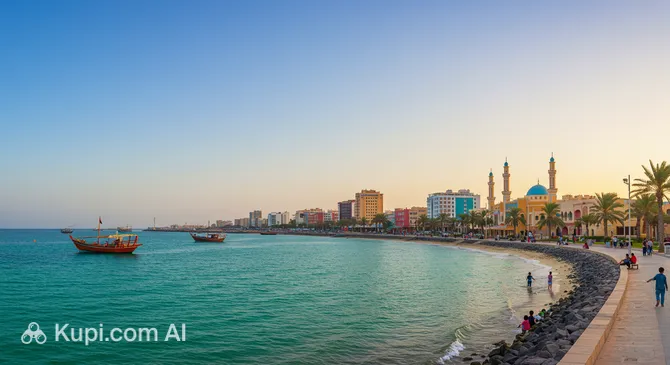
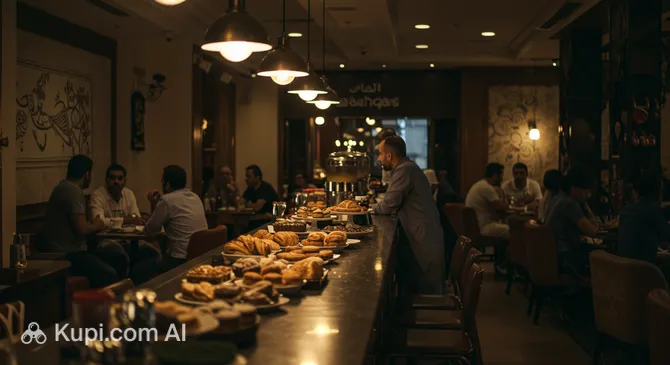
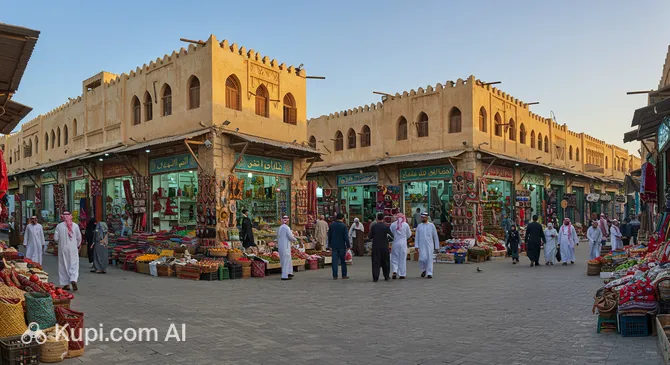
Qatif is a unique city in Saudi Arabia, representing one of the oldest inhabited oases on the entire Arabian Peninsula. Situated on the western shore of the Persian Gulf, this city harmoniously combines a deep historical heritage with the powerful industrial rhythm of modern life. Qatif. Illustration.
Source: Kupi.com AI
The rich history of Qatif dates back to 3500 BC, when these lands were known to the ancient Greeks and served as an important center for the pearl trade. An abundance of freshwater springs allowed the region to transform into a prosperous agricultural hub, where thousands of date palms still rustle today, creating a striking contrast with the industrial landscapes of the Eastern Province.
Today, the city, with a population of over 520,000, attracts attention with its famous fish market and the authentic atmosphere of an Arabian oasis. Although Qatif is an important oil production center due to the activities of Saudi Aramco, it maintains its cultural identity through traditional markets and coastal promenades. A visit to this city is a chance to see the real, non-touristy Arabia, where the centuries-old traditions of seafarers and farmers meet the energy of the global economy.
Weather Overview
In Qatif, a hot climate typical of desert regions prevails. Its location on the shores of the Persian Gulf brings its own adjustments: the sea slightly mitigates the summer heat with daytime breezes, but at the same time significantly increases the humidity level, which makes the heat more noticeable. More detailed information can be found on the weather in Qatif page.
Summer in the city is extremely hot and dry: from June to September, the temperature often rises above +40°C, and in July and August it can reach +43°C. Winter, by contrast, is very mild and pleasant: average daytime values range between +19°C...+23°C, and nights bring coolness down to +12°C. Precipitation is extremely rare, occurring mainly from November to May, and does not exceed 100 mm for the entire year.
Average monthly temperature
Average monthly precipitation
Interesting Facts
Archaeological research shows that the oasis was inhabited as early as 3500 BC, placing it among the oldest settlements in the region.
In ancient times, the city was a key hub for the extraction and sale of pearls, which were considered among the best in the Persian Gulf.
The local oil and gas field, discovered in 1946, possesses colossal reserves—about 1.5 billion tons of oil.
The Qatif fish market maintains its status as one of the most large-scale seafood markets in the entire Middle East.
The province received its modern status in 1932, when by decree of King Abdulaziz, Qatif officially became part of the unified Kingdom of Saudi Arabia.
How to Get There
Qatif is conveniently located in the eastern part of the country, ensuring good transport links with the region's key hubs. Most travelers arrive through the air gates, and a developed network of highways makes it easy to reach the city from anywhere in the province. You can find more details by studying the ways to get to Qatif.
The main air hub for the city is King Fahd International Airport (DMM). It is located approximately 40–50 kilometers west of the center. A trip by taxi or rental car along Route 95 will take about 30–45 minutes. The airport receives flights from many international and domestic airlines, connecting Qatif with the whole world.
There is currently no rail service within the city itself; however, the nearest major station is in neighboring Dammam. From there, you can quickly reach Qatif by taxi or regular bus, making a train journey from Riyadh a quite comfortable travel option.
Station
Passenger traffic
Distance
Dammam railway station
4
22 km
SAPTCO buses are also popular for traveling between cities in the Eastern Province. However, the most practical and fastest way to move around remains using taxi services and popular apps (Uber, Careem), as well as renting a private vehicle for complete freedom of movement on the high-speed highways.
Main Attractions
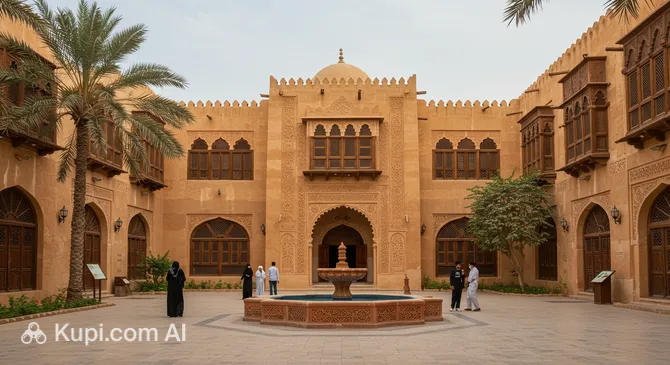
Although Qatif is primarily known as an industrial center, it has preserved places that allow you to touch the region's rich past. One of the gems of local culture is the Abood Heritage House, where household items and artifacts telling the story of life in the oasis before the oil era are carefully preserved.
Abood Group Heritage House. Illustration.
Source: Kupi.com AI
Traveler photos:
For those who want to see modern changes in the city's appearance, Downtown Awamiya is a must-visit. This area has been transformed into a cultural space where modern architecture sits alongside elements of traditional design, creating an attractive environment for strolling and getting to know local social life.
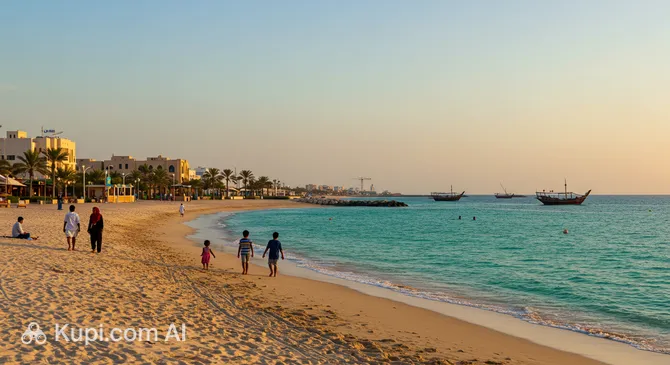
Lovers of sea air and leisurely walks should head to Corniche Al-Mishari. This coastal recreation area is popular among city residents: it offers beautiful views of the Persian Gulf, and the fresh breeze helps you relax from the city bustle.
Al-Mishari Corniche. Illustration.
Source: Kupi.com AI
Traveler photos:
One cannot overlook the famous Qatif fish market—one of the largest in the Middle East. It is a living attraction where real trading dramas unfold every morning, and the stalls are overflowing with the freshest catch, reflecting the city's centuries-old connection with the sea.
Local Cuisine
The culinary traditions of Qatif are a true feast for seafood lovers. Proximity to the Persian Gulf has defined the basis of the local diet: you should definitely try grilled hammour or machbous—aromatic spiced rice with fish or meat. A local delicacy is also samak mesfouh—fried fish prepared with juicy tomatoes and traditional spices.
Dates are an integral part of the oasis gastronomy. Local plantations supply dozens of varieties of this fruit, which is served as a standalone dessert or used to prepare sweets. Accompany your meal with a cup of traditional Arabic coffee, gahwa, with the aroma of cardamom, or a refreshing pomegranate juice.
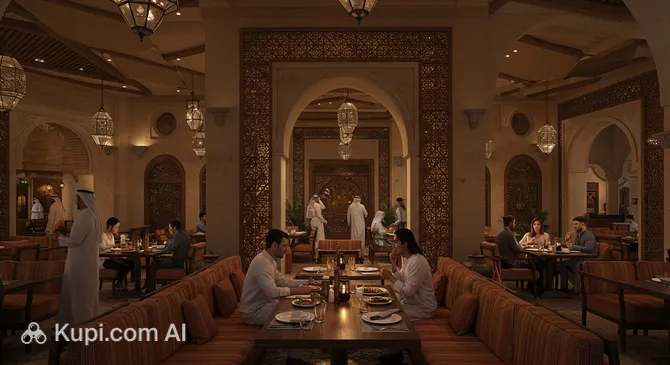
The city features an interesting mix of establishments. For example, lovers of oriental spices can visit the Asia Yaar restaurant, which specializes in Indian cuisine. If you crave European flavors, the Italian restaurant Brava is an excellent choice.
Asia Yaar. Illustration.
Source: Kupi.com AI
Traveler photos:
The most authentic gastronomic experience can be found in small restaurants near the fish market, where chefs prepare the morning catch right in front of you. The street food here is simple but incredibly fresh, and the atmosphere allows you to feel the true flavor of an Eastern port city.
Travel Tips
Preparing for a trip to Qatif requires taking into account the cultural and climatic characteristics of the region. These tips will help you feel comfortable and confident in one of Saudi Arabia's oldest oases.
Clothing and Dress Code: Choose modest clothing made of natural fabrics. Women are recommended to have an abaya with them for visiting public places, and men should avoid short shorts in official institutions.
Transport: The most reliable way to get around is by taxi through the Uber or Careem apps. If you plan to travel a lot around the province, renting a car will be the most economical solution.
Climate and Health: In summer, temperatures often exceed +40°C, so plan activities for early morning or evening. Always carry water with you and use sunscreen.
Finances: The official currency is the Saudi Riyal (SAR). Cards are accepted almost everywhere, but for markets and small shops, be sure to have cash.
Communication: The main language is Arabic, but staff in hotels and large stores usually speak English. Learn a few basic phrases: "As-salamu alaykum" (hello)—this always predisposes the locals.
Local Etiquette: Show respect for traditions and prayer times. Do not take photos of local residents without their explicit consent, especially women and government facilities.
What to Avoid: Do not attempt to enter the territory of Saudi Aramco industrial facilities without a pass—these are protected areas with strict control.
A trip to Qatif will reveal a hospitable and authentic side of the country. Respect local customs, and this city will give you many bright impressions!
Entertainment & Nightlife
Entertainment in Qatif is of a calm and traditional nature, oriented towards family vacations and friendly gatherings in cafes. There are no noisy nightclubs or bars in the city, which is typical for conservative regions of the kingdom; however, evening life is bustling on the embankments and in cozy lounge areas where locals gather to discuss news over a cup of aromatic coffee.
One of the popular places for evening pastime is Paraguas Café, which offers a pleasant atmosphere for brunches and dinners. If you are looking for a more secluded setting, it is worth visiting places like Sparkles Lounge or At the Fireplace, which provide comfort and quality service in the evening.
Paraguas Café. Illustration.
Source: Kupi.com AI
Traveler photos:
During the day, leisure is often centered around walks along the coast or visits to local markets, which become especially lively towards the evening. For large-scale entertainment, such as major cinemas or huge gaming centers, residents and guests of the city most often head to neighboring Dammam, located just a half-hour drive away.
Parks & Museums
The cultural and natural components of Qatif are closely intertwined with its status as an ancient oasis. There are no classic art galleries in the city, but the historical space itself serves as an open-air museum. The most important cultural heritage site is the Abood Heritage House, which serves as a private museum, demonstrating traditional architecture and the daily life of local residents.
The city's green zones are primarily represented by date groves, which have created a special microclimate over the centuries. A walk through the Downtown Awamiya project will allow you to see how modern landscaping solutions are integrated into the historical environment, creating pleasant places for residents to relax.
For walks by the water, Corniche Al-Mishari is ideal. This is a spacious embankment where you can enjoy the seascape and the fresh air of the Persian Gulf. Although the city lacks classic organized parks, its coastal areas and preserved sections of the oasis remain the main points of attraction for those seeking a peaceful holiday in nature.
Getting Around
The public transport system in Qatif is in the development stage and is mainly focused on connections with neighboring cities. Within the city itself, there is no extensive network of buses or trams, so personal cars and taxis remain the main mode of transport for locals and tourists.
For trips between cities in the Eastern Province, such as to Dammam or the airport, SAPTCO buses are used. They run on a schedule, but it is more convenient for tourists to use ride-hailing apps like Uber or Careem. A trip between districts within the city usually takes from 10 to 30 minutes.
If you plan to actively explore the surroundings and oases, the best solution would be to rent a car. The road network here is excellent, and the cost of fuel is low. However, it is worth considering that during peak hours in industrial zones and near large markets, traffic jams can occur, so it is better to plan trips for the morning or evening hours.
Accommodation
The hotel infrastructure of Qatif is primarily oriented towards business travelers and specialists working in the oil industry. Apart-hotels and guesthouses predominate here, offering comfortable conditions for long stays, including kitchen areas and necessary household amenities.
In central areas and near the embankments, you can find classic 3* and 4* category hotels, such as Golden Tulip, as well as decent options from local chains. Accommodation prices usually start from 200–400 Saudi riyals per night, making a stay here quite affordable compared to megacities.
Since Qatif is not a mass tourist destination, the choice of hotels may be limited. Experienced travelers recommend booking accommodation in advance, especially if your trip coincides with important industrial forums or holiday periods. If you require a luxury five-star resort, such options should be sought in neighboring Dammam or Al Khobar.
Nearby Cities
Qatif serves as an excellent starting point for exploring the kingdom's east coast, offering travelers easy access to major metropolises and industrial centers. Thanks to a developed network of highways, you can quickly change the atmosphere of an ancient oasis for the rhythm of a modern port or trade hub.
Just 19 kilometers to the south is Dammam—the region's most important administrative and commercial center. It is a city of contrasts with huge shopping malls, modern embankments, and developed entertainment infrastructure, where Qatif residents often go for shopping.
For those interested in the industrial power of Saudi Arabia, a trip to the city of Ras Tanura is ideal. Located 22 kilometers to the north, it is one of the world's key oil ports. It is also worth noting the small and cozy Saihat, which is located almost on the border with Qatif and is famous for its coastal views.
Exploring the surroundings of Qatif will allow you to better understand the diversity of the Eastern Province—from quiet agricultural areas to the giant industrial complexes that define the global economy.
Shopping & Souvenirs
Shopping in Qatif is primarily a journey through colorful traditional markets called "souqs." The city is famous for its freshest seafood and, of course, top-quality dates grown in the local oasis. You can also find pearl products and traditional Arabian spices that have preserved the aromas of ancient trade routes.
One of the liveliest places is Al-Khamis Market, where you can experience the true atmosphere of Eastern trade. Everything is sold here: from everyday clothing to authentic souvenirs. Another important trading hub is Mayas Market, popular among locals due to its wide range of goods.
Al Khamis Market. Illustration.
Source: Kupi.com AI
Traveler photos:
For large-scale shopping in modern shopping centers with world brands, city residents usually head to neighboring Dammam. In Qatif itself, shops operate according to a traditional schedule with a break for lunch and prayers, and card payments are accepted in most large outlets, although in markets, cash still remains in high regard.