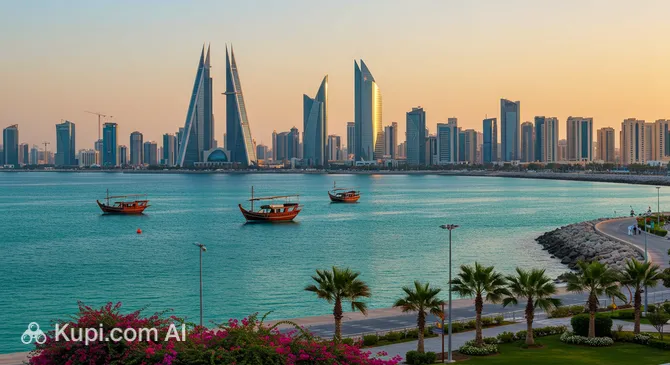
Manama, the vibrant capital of Bahrain, is a fascinating city where shimmering skyscrapers stand alongside ancient traditions. As the country's largest city and financial hub, it offers a unique atmosphere that perfectly blends the energy of a modern metropolis with the warmth of traditional Arabian hospitality. Whether you are visiting for business or leisure, the city's dynamic character is sure to leave a lasting impression.
Located on the northeastern tip of the main island, Manama is home to a diverse population of approximately 436,000 people. The city enjoys a coastal setting on the Persian Gulf, which deeply influences its culture and lifestyle. Visitors can generally expect a warm, desert climate, making it a popular destination for those seeking year-round sunshine and coastal breezes.
Manama. Illustration.
Source: Kupi.com AI
The city is not just about modern development; it is deeply rooted in a rich past. Exploring the history of Manama reveals its significant role as a major trading port and a center for pearl diving long before the oil era. This heritage is best experienced in the bustling Manama Souq, a traditional marketplace where the scent of exotic spices and the glitter of gold shops create an immersive sensory experience.
Among the city's top attractions is the iconic Bab Al Bahrain, a historical building that marks the entrance to the market district and serves as a symbol of the city. For those interested in art and archaeology, the Bahrain National Museum is a must-visit, housing artifacts that date back thousands of years. From its lively streets to its serene waterfronts, Manama invites you to discover the many layers of its charm.
Weather Overview
Manama experiences a hot desert climate, defined by scorching summers and mild, pleasant winters. To help you pack the right clothing for your trip, it is useful to review the detailed weather in Manama before you travel.
The summer months, particularly from June through September, are intensely warm, with average temperatures consistently rising above 32°C and peaking around 34.1°C in August. Conversely, the winter season from December to February provides a welcome respite, offering comfortable average temperatures between 17.9°C and 20.3°C.
Rainfall is exceptionally rare in this region, ensuring sunny skies for the vast majority of your visit. Expect intense heat during the summer and mild, mostly dry conditions in winter. While January sees the most activity with about 3 wet days, the period from May through September is typically completely rain-free.
Average monthly temperature
Average monthly precipitation
Interesting Facts
Beyond the shimmering skyline and bustling souqs, Manama holds fascinating secrets that reveal its depth as a historical crossroads. Here are a few intriguing details that make this city truly unique.
The name "Manama" is derived from an Arabic word meaning "The Place of Rest" or "The Place of Dreams." Historically, the city was viewed as a peaceful sanctuary where travelers and sailors would seek respite after long journeys across the waters of the Gulf.
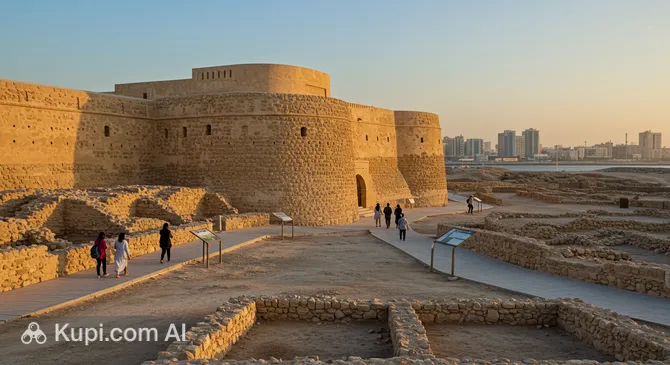
The area served as the capital of the ancient Dilmun civilization, which dates back over 4,000 years and was once described in Sumerian texts as a paradise. This rich legacy is best preserved at Qal'at al-Bahrain (Bahrain Fort), a UNESCO World Heritage site that uncovers layers of human settlement from various historical eras.
Manama is home to one of the oldest Islamic landmarks in the region, the Al Khamis Mosque. Believed to have been founded as early as 692 AD, this historical site is instantly recognizable by its unique twin minarets, which were added during a later restoration in the 14th or 15th century.
Before the discovery of oil transformed the economy, the city was the global center for natural pearl diving. This maritime heritage is extensively documented at the Bahrain National Museum, where you can explore the traditions and tools of the divers who once harvested the world's most prized pearls.
Qal'at al-Bahrain (Bahrain Fort). Illustration.
Source: Kupi.com AI
Traveler photos:
How to Get There
Reaching the vibrant capital of Bahrain is a straightforward experience, thanks to its status as a major financial and tourism hub in the Gulf. Most international travelers arrive by air, landing directly on the island, while those coming from neighboring Saudi Arabia often choose the scenic drive across the King Fahd Causeway. For a complete guide on all available transport options and routes, you can read more about how to get to Manama.
The primary gateway to the city is Bahrain International Airport (IATA: BAH). Located on the island of Muharraq, it is situated just 7 km from downtown Manama. This modern facility serves as the main entry point for visitors from around the globe. The journey to the city center is quick and convenient; a taxi ride typically takes around 30 minutes, depending on traffic conditions. With an annual passenger traffic of approximately 9.4 million, it is a bustling hub that offers a wide range of services and connections.
For travelers exploring the wider region, King Fahd International Airport (IATA: DMM) is another viable option, although it is located in the city of Dammam, Saudi Arabia. This airport is about 83.5 km away from Manama. Traveling from here involves crossing the King Fahd Causeway, a series of bridges and causeways connecting Bahrain and Saudi Arabia. The trip by car or taxi usually takes about 2 hours and 30 minutes, factoring in the distance and border crossing procedures. It is a large regional hub handling around 12 million passengers annually.
For clarity, here is a summary of the main airports near Manama:
Currently, Manama does not have a railway station, and there are no international train services connecting Bahrain to other countries. The primary method of land transport for those not flying is via the road network connecting to Saudi Arabia. Visitors are advised to rely on taxis, rental cars, or buses for getting around the city and arriving from nearby regions.
Main Attractions
Manama is a city where history and modernity coexist seamlessly, offering travelers a rich tapestry of experiences. From spiritual sanctuaries to bustling markets and modern architectural marvels, the city's landmarks provide a deep dive into the culture and heritage of the region. Exploring these sites is the best way to understand the unique character of the Bahraini capital.
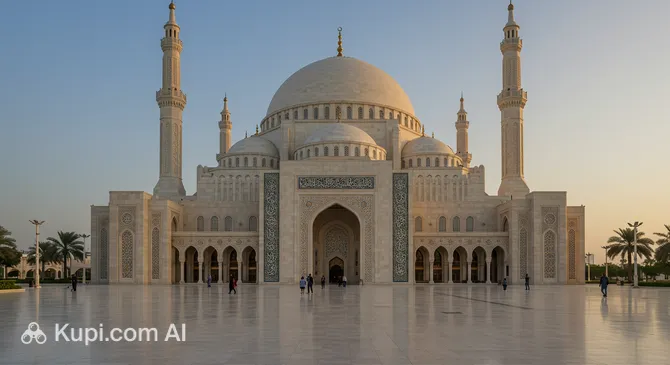
One of the most magnificent landmarks in the city is the Al Fateh Grand Mosque. Capable of accommodating over 7,000 worshippers, it is renowned for its massive fiberglass dome and exquisite interior design featuring Italian marble and Austrian glass. Unlike many other mosques in the region, it is open to non-Muslim visitors, offering guided tours that provide fascinating insights into Islamic architecture and traditions.
Al Fateh Grand Mosque. Illustration.
Source: Kupi.com AI
Traveler photos:
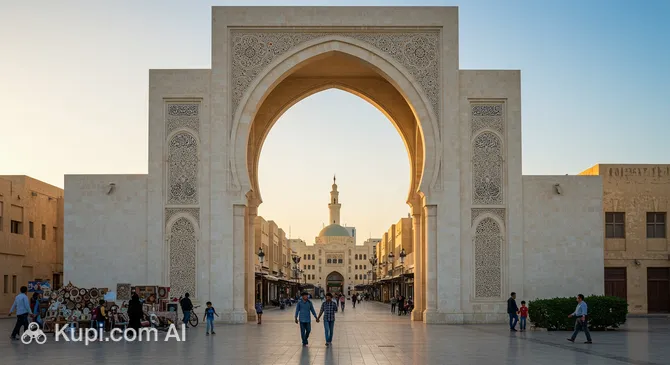
Standing as a testament to the city's trading history, Bab Al Bahrain is an essential stop for any traveler. This historical building, whose name translates to "Gateway to Bahrain," marks the entrance to the vibrant Manama Souq. Walking through its archway transports you from the modern business district into a maze of narrow streets filled with the scents of spices, colorful textiles, and traditional crafts.
Bab Al Bahrain. Illustration.
Source: Kupi.com AI
Traveler photos:
For those interested in Islamic art and history, Beit Al Quran is a truly unique institution. This complex is dedicated to the Islamic arts and houses an impressive collection of Quranic manuscripts from various periods and regions. The museum's architecture is as captivating as its exhibits, featuring distinctive engravings of Arabic script on its exterior walls, making it a masterpiece of modern Islamic design.
A visit to the Royal Camel Farm offers a delightful change of pace and a chance to interact with animals that are central to Arabian heritage. Located on the outskirts of the city, this farm allows visitors to observe hundreds of camels, including young calves, in a relaxed environment. It is a favorite spot for families and provides excellent photo opportunities with these gentle giants.
To witness the modern evolution of Manama, look no further than the Bahrain Financial Harbour. Dominating the skyline with its iconic twin towers, this commercial development represents the city's status as a regional financial hub. The area is also a leisure destination, featuring waterfront promenades and high-end dining options where visitors can enjoy spectacular views of the sea and the city's contemporary architecture.
Local Cuisine
The culinary landscape of Manama is a delightful reflection of its history as a trading port, blending traditional Arabian flavors with Persian, Indian, and international influences. Food is central to the local culture, and visitors can expect a warm welcome accompanied by generous portions. The city's dining scene ranges from humble street stalls in the souqs serving fresh shawarma and falafel to upscale establishments in the lively Adliya district, known as the heart of Bahrain's restaurant culture.
When it comes to main dishes, the undisputed star is Machboos. Often considered the national dish, it consists of rice cooked with meat (usually chicken or lamb) and a fragrant blend of spices like cardamom, cloves, and dried lime. Given the island location, seafood plays a massive role in the local diet. You should try Hamour (grouper), which is often grilled or fried, and for a truly unique Bahraini experience, taste Muhammar, a sweet rice dish traditionally served alongside salty fish to create a distinct sweet and savory contrast.
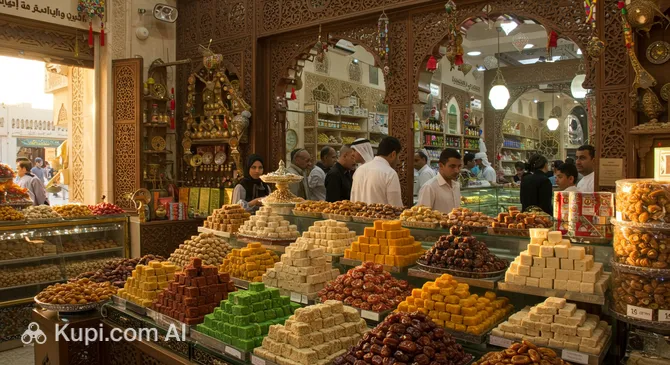
No culinary journey in Manama is complete without indulging in sweets. The most famous treat is Bahraini Halwa, a gelatinous confection made with cornstarch, saffron, cardamom, and nuts. It is distinct from the sesame-based halva found elsewhere in the region. For those looking to sample authentic local desserts, Zuhoor Al Muharraq Sweets is a renowned spot where you can taste these traditional delicacies fresh from the source.
Zuhoor Al Muharraq Sweets. Illustration.
Source: Kupi.com AI
Traveler photos:
Breakfast is also a celebrated meal here, often featuring Balaleet—sweet vermicelli noodles topped with a savory omelet. For a modern take on dining or a relaxed evening, the city offers numerous high-quality venues. You might enjoy a meal at Bagh Restaurant & Café, which offers a pleasant atmosphere for enjoying food and conversation. For those seeking contemporary Japanese cuisine in a chic setting, Roka is a popular destination among both locals and tourists.
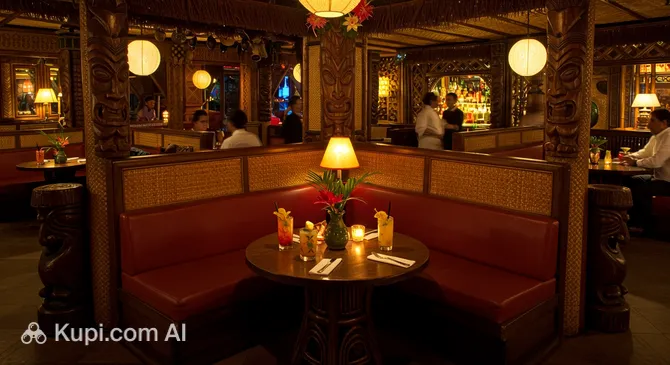
Regarding beverages, Gahwa (Arabic coffee) is the traditional sign of hospitality, usually served with dates. It is lightly spiced with cardamom and saffron. While Bahrain is an Islamic country, it is relatively liberal regarding alcohol, which is available in licensed hotels, bars, and restaurants. If you are looking for a vibrant spot to enjoy a drink and island vibes, Trader Vic's is a classic favorite known for its tropical cocktails and lively ambiance.
Trader Vic's. Illustration.
Source: Kupi.com AI
Traveler photos:
Travel Tips
Welcome to Manama! To ensure your journey through this pearl of the Gulf is as smooth as it is memorable, we have compiled a set of essential practical tips. These guidelines will help you navigate the local customs and logistics with ease, allowing you to focus entirely on enjoying your trip.
Clothing and Gear: Given the hot desert climate, pack lightweight, breathable fabrics like cotton or linen. However, air conditioning in malls and hotels can be quite strong, so bringing a light jacket or cardigan is smart. While Manama is relatively liberal, it is respectful to dress modestly in public places; covering shoulders and knees is recommended for both men and women. For visiting religious sites like the Al Fateh Grand Mosque, women must cover their heads and wear loose-fitting clothing that covers the arms and legs (abayas are often provided at the entrance). Don't forget to bring a Type G power adapter (the same as in the UK).
Transportation: The most convenient way to get around Manama is by car. While there is a public bus system (the red buses), it may not always be the most efficient option for reaching all tourist spots quickly. Taxis are plentiful, and ride-hailing apps like Uber and Careem are widely used, reliable, and offer transparent pricing. If you plan to explore beyond the city center, renting a car is a popular and affordable choice, as the road network is excellent.
Finances: The local currency is the Bahraini Dinar (BHD), which is divided into 1,000 fils. Credit and debit cards are accepted almost everywhere, including most restaurants, hotels, and malls. However, it is advisable to carry some cash for small purchases in the traditional souqs or for tipping. ATMs are abundant throughout the city. Tipping is not mandatory but is appreciated; leaving about 10% at restaurants or rounding up taxi fares is a common gesture.
Health and Safety: Manama is generally a very safe city for tourists with low crime rates. Pharmacies are easy to find, and many major chains operate 24/7 branches. The emergency number for police, ambulance, and fire services is 999. The sun can be intense, so always carry water, wear sunscreen, and try to avoid direct exposure during the midday heat.
Communication: English is widely spoken and serves as the primary language for business and tourism, so you will have no trouble communicating. The official language is Arabic; learning a few basic words like Shukran (Thank you) or Salam (Hello) is a nice gesture appreciated by locals. You can easily purchase a prepaid SIM card from providers like Batelco, Zain, or stc directly at the airport upon arrival. Free Wi-Fi is available in most hotels, malls, and cafes.
Local Etiquette: Bahrainis are known for their warm hospitality. When greeting someone, a handshake is common, but always wait for a person of the opposite sex to extend their hand first. Use your right hand for eating, shaking hands, or handing over money, as the left hand is traditionally considered unclean. Public displays of affection, such as kissing or hugging, should be avoided as they are culturally frowned upon.
What to Avoid: Do not drink alcohol in public places outside of licensed bars, hotels, or restaurants, as public intoxication is a serious offense. Also, be mindful during the holy month of Ramadan; eating, drinking, or smoking in public during daylight hours is prohibited and can result in fines.
Weekend Dynamics: Keep in mind that the weekend in Bahrain falls on Friday and Saturday. Friday mornings are typically quiet with many businesses closed until the afternoon prayer is finished. Conversely, Thursday and Friday nights are very lively, especially in dining districts like Block 338 in Adliya, so booking restaurant reservations in advance for these evenings is highly recommended.
By keeping these practical tips in mind, you will be well-prepared to experience the best of Manama's culture and attractions. Whether you are haggling in the souq or dining in a high-rise restaurant, a little local knowledge goes a long way in making your stay truly unforgettable.
Entertainment & Nightlife
Entertainment and Nightlife:
Manama is widely recognized as the entertainment capital of the Gulf, offering a nightlife scene that is significantly more vibrant and liberal than many of its neighbors. As the sun sets, the city transforms into a lively hub of activity, drawing locals, expatriates, and weekend visitors from across the region. The atmosphere ranges from sophisticated rooftop lounges to energetic dance clubs, ensuring there is something for every taste.
The beating heart of Manama's social scene is undoubtedly the Adliya district, specifically the pedestrian-friendly area known as Block 338. This bohemian quarter is packed with art galleries, boutique restaurants, and bars that spill out onto the streets. It is the perfect place for an evening stroll, dinner, and drinks in a relaxed, upscale environment. Another key nightlife destination is Juffair, a modern district famous for its high concentration of hotels, sports bars, and nightclubs, often catering to a younger, more energetic crowd.
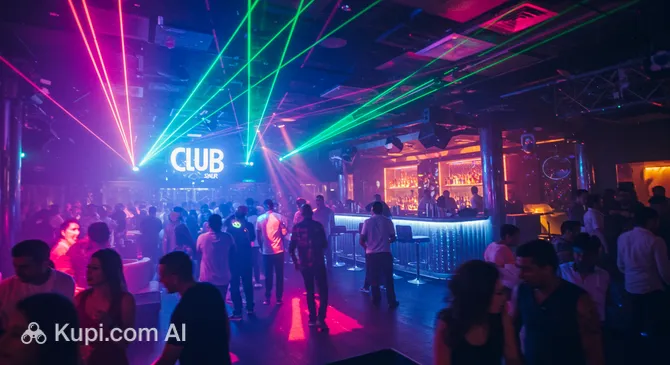
For those seeking a high-energy experience, Club Wrangler in Juffair is a legendary spot on the island. Known for its western-style atmosphere, it has been a staple of Bahrain's nightlife for years, featuring resident DJs and a lively dance floor that stays busy until the early hours. It is a popular choice for those looking to dance the night away in an unpretentious setting.
Club Wrangler. Illustration.
Source: Kupi.com AI
Traveler photos:
If you prefer a more laid-back vibe with excellent cocktails, the Iguana Lounge in Adliya offers a refreshing change of pace. With its chic decor and garden terrace, it provides a sophisticated backdrop for socializing and enjoying music that allows for conversation. It is an ideal venue for starting your evening or winding down with friends.
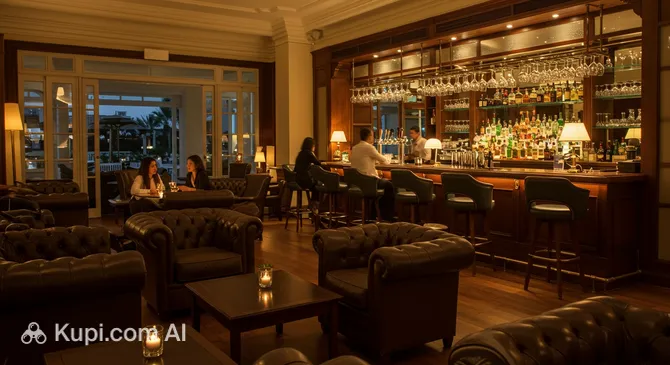
For a taste of traditional expatriate social life, the British Club is a well-established institution. While it is a membership club, it often welcomes guests and hosts various events, offering a familiar pub-like atmosphere, live sports screenings, and regular social nights. It serves as a comforting "home away from home" for many visitors from the UK and beyond.
British Club. Illustration.
Source: Kupi.com AI
Traveler photos:
Practical Nightlife Tips: Most bars and clubs are located within 4-star and 5-star hotels due to licensing regulations. The action typically kicks off late, with clubs filling up after 11:00 PM. The weekend in Bahrain is Friday and Saturday, but Thursday nights are often the busiest for nightlife. Dress codes are generally smart casual; men should avoid shorts and open shoes in clubs, while women can dress fashionably but should bring a wrap for transit. Alcohol can be expensive, so look out for "Happy Hour" deals which are common in the early evening.
Safety is rarely an issue in Manama's entertainment districts, which are well-policed and brightly lit. However, it is always wise to stay in groups and avoid walking alone in unlit areas late at night. Public transport is scarce at night, so rely on apps like Uber or Careem, or use official hotel taxis to get around safely and conveniently.
During the day, the entertainment options are equally diverse. Families will love Kids Kingdom, an amusement park offering rides and games suitable for younger children. For a more immersive experience, the Marassi Aquarium & Underwater Zoo allows visitors to explore marine life up close. Shoppers can lose themselves in the massive City Centre Bahrain, which is not just a mall but a comprehensive entertainment complex featuring a water park and cinema.
Parks & Museums
Manama serves as a gateway to Bahrain's rich cultural tapestry and scenic outdoor spaces. The city and its surrounding areas offer a compelling mix of historical institutions that preserve the nation's heritage and beautifully landscaped parks where visitors can unwind. Whether you are a history buff or a nature lover, there are plenty of locations to explore beyond the bustling souqs and high-rise districts.
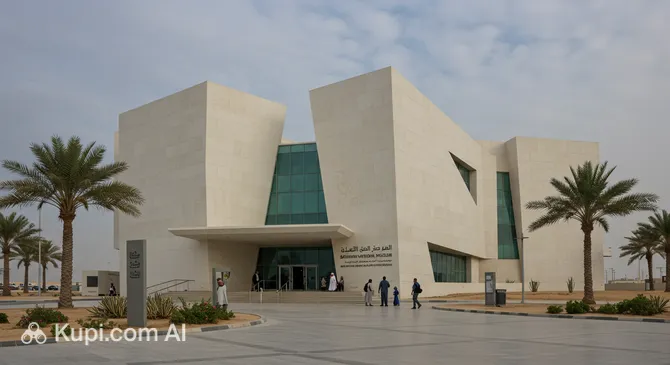
The Bahrain National Museum is the premier cultural landmark of the country. Situated on the waterfront, its striking modern architecture houses a vast collection that chronicles 6,000 years of history. Visitors can walk through immersive halls dedicated to the ancient Dilmun civilization, traditional trades, and customs. The museum also features a Hall of Graves, which transports you back to the burial mounds era, and regularly hosts contemporary art exhibitions.
Bahrain National Museum. Illustration.
Source: Kupi.com AI
Traveler photos:
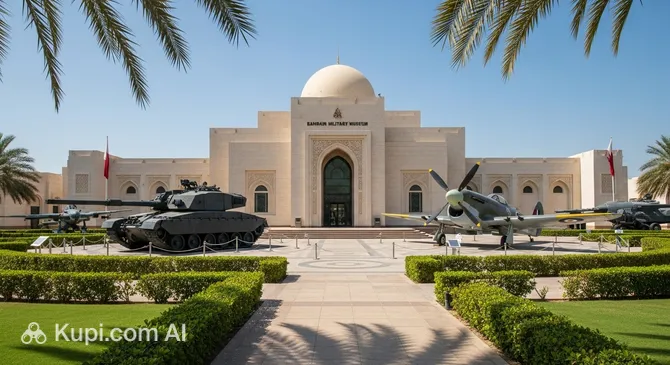
For a deeper look into the nation's defense history, the Bahrain Military Museum is an impressive destination. Located in the Riffa area, easily accessible from Manama, it displays a comprehensive array of weapons, uniforms, and historical documents. The exhibits are well-curated, tracing the evolution of the country's military forces from ancient times to the modern era, often featuring outdoor displays of tanks and aircraft.
Bahrain Military Museum. Illustration.
Source: Kupi.com AI
Traveler photos:
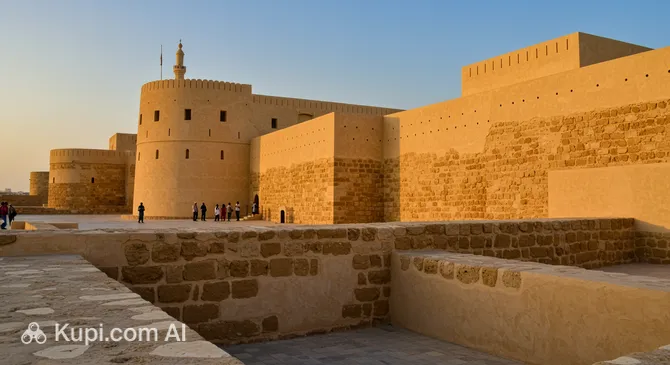
History enthusiasts should not miss Arad Fort. Located just across the water near the airport, this 15th-century fortress is a classic example of Islamic military architecture. Unlike the larger Bahrain Fort, Arad Fort is known for its compact, square design and strategic position overlooking the sea. It is beautifully illuminated at night, making it a picturesque spot for an evening visit and a tangible link to the island's strategic maritime past.
Arad Fort. Illustration.
Source: Kupi.com AI
Traveler photos:
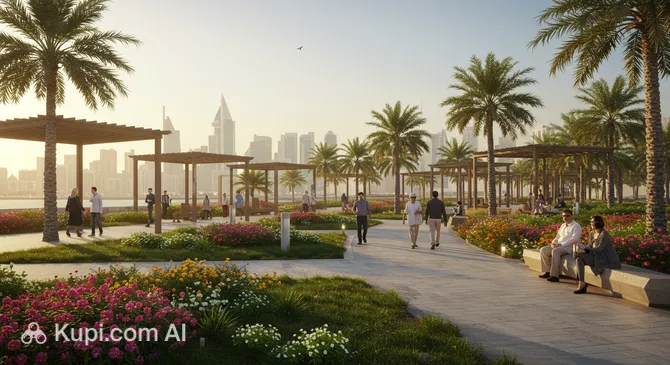
When it comes to green spaces, Prince Khalifa Bin Salman Park stands out as one of the most popular recreational areas. Situated in Hidd, a short drive from the capital, this expansive park features a large man-made lake, long walking paths, and open green lawns. It offers stunning panoramic views of the Manama skyline and the bridge connecting to Muharraq, making it a favorite location for family picnics and sunset walks.
Prince Khalifa Bin Salman Park. Illustration.
Source: Kupi.com AI
Traveler photos:
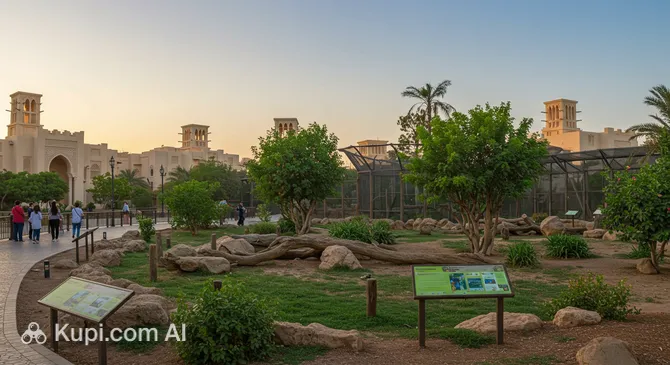
Families with children might enjoy a trip to Tasneem Zoo. This attraction combines a lush garden setting with a small zoo, allowing visitors to interact with domestic and exotic animals in a relaxed environment. For those seeking a quiet retreat within the city limits, Andalus Garden offers a traditional park atmosphere with palm trees and shaded benches, perfect for a peaceful break from sightseeing.
Tasneem Zoo. Illustration.
Source: Kupi.com AI
Traveler photos:
Getting Around
Navigating Manama is relatively straightforward, although the city is heavily oriented towards car travel. While there is no metro or tram system currently in operation, the public transport network has improved significantly in recent years with the introduction of a modern bus service. For most tourists, a combination of these buses, taxis, and ride-hailing apps provides the most efficient way to explore the city and its surroundings.
The primary form of public transportation is the bus network operated by the Bahrain Public Transport Company. These distinctive red buses connect the capital with major residential areas, commercial districts, and tourist attractions. The fleet is modern, fully air-conditioned, and equipped with Wi-Fi, making the journey comfortable even during the hottest months. The network covers most key locations, including the old souq, the diplomatic area, and the airport.
To travel by bus, the most convenient payment method is the GO Card. This is a reloadable smart card that offers cheaper fares compared to single-trip paper tickets. A single journey using the card typically costs around 250 fils, while a daily cap of 600 fils allows for unlimited travel, making it an extremely budget-friendly option for tourists. You can purchase and top up these cards at the main bus terminals in Manama, Isa Town, and Muharraq, or at authorized machines.
For those planning to use the bus frequently, it is highly recommended to download the official "Bahrain Bus" mobile app. This tool is invaluable for visitors as it provides real-time route planning, timetables, and bus tracking. When boarding, you must tap your GO Card on the reader, and it is equally important to tap out when you exit to ensure the correct fare is calculated. Buses generally operate from early morning, around 5:00 AM, until midnight, with frequencies varying between 15 to 30 minutes depending on the route.
A unique and highly practical feature of the local transport infrastructure is the presence of air-conditioned bus shelters at many stops. Given the intense desert heat, these enclosed, climate-controlled waiting areas are a significant relief for passengers. They allow you to wait for your connection in comfort, protected from the sun and humidity.
Despite the availability of buses, many tourists find that taxis or ride-hailing services offer more flexibility and speed. Official taxis are easily recognizable by their orange and white, or completely white, color scheme. They operate on a meter system, but it is often easier for visitors to use apps like Uber or Careem. These apps eliminate language barriers, provide upfront pricing, and allow for cashless payments, which can be particularly convenient if you are unfamiliar with the local currency.
Car rental is another popular alternative and is perhaps the best way to see the city if you are comfortable driving abroad. The road network is excellent, with wide highways and clear signage in both Arabic and English. Having your own vehicle allows you to visit attractions on the outskirts of the city at your own pace. However, be prepared for heavy traffic during peak hours, especially on the main causeways connecting different parts of the island.
Accommodation
Accommodation in Manama caters to a diverse array of preferences and budgets, reflecting the city's status as a cosmopolitan hub. Visitors can choose from ultra-modern skyscrapers offering world-class luxury, comfortable mid-range hotels perfect for families, and economical serviced apartments. The hospitality sector here is renowned for its high standards, often blending contemporary amenities with traditional Arabian generosity.
When selecting a location, the neighborhood of Juffair is a top choice for many tourists, known for its vibrant nightlife, dining options, and proximity to major landmarks. For those who prefer a shopping-centric stay, the Seef District is ideal, surrounded by major malls and entertainment centers. Alternatively, the Diplomatic Area and Bahrain Bay offer stunning waterfront views and easy access to the financial district, making them popular among business travelers and luxury seekers.
For a truly upscale experience, the Bahrain Bay Hotel stands out as a prime example of the city's sophisticated accommodation offerings, providing guests with exceptional service and panoramic vistas.
Bahrain Bay Hotel. Illustration.
Source: Kupi.com AI
Traveler photos:
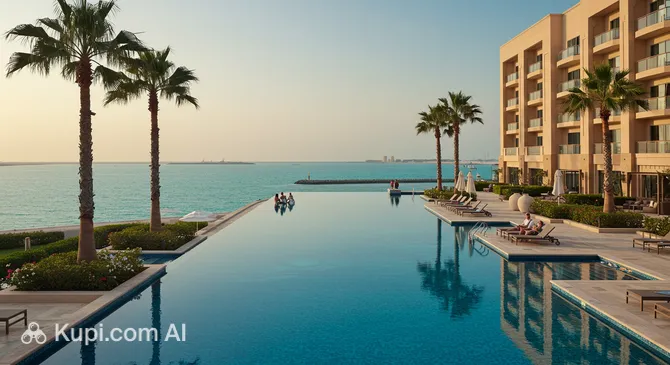
Another excellent option for those looking to unwind by the water is the Beach Resort Bahrain, which combines the convenience of city access with a relaxing resort atmosphere.
Price ranges in Manama can vary significantly. Five-star luxury resorts command premium rates, while the city center and older districts offer more budget-friendly guest houses and three-star hotels. It is highly recommended to book your accommodation in advance, especially during the cooler winter months or during major events like the Formula 1 Grand Prix, when demand spikes. Most bookings can be easily managed through major online travel platforms or by contacting hotels directly.
Nearby Cities
While Manama offers a wealth of attractions, the compact nature of Bahrain makes it incredibly easy to explore neighboring cities. Just a short drive away, you can discover historic capitals, residential hubs, and industrial centers, each adding a different perspective to your visit. The excellent road network ensures that even the farthest points of interest are within easy reach.
Here are some of the closest cities to Manama that are worth considering for a quick visit:
City
Population
Distance
Muharraq
75 000
4 km
Jidd Hafs
44 769
5 km
Madinat Isa
40 000
7 km
Sitrah
20 000
7 km
Karranah
12 000
8 km
Shopping & Souvenirs
Shopping in Manama is a delightful experience that seamlessly blends the old with the new. The city is a retail paradise where visitors can transition from wandering through ancient, aromatic alleyways to strolling down the polished corridors of ultra-modern complexes. Whether you are looking for high-end international luxury brands, handcrafted local artifacts, or traditional Bahraini spices, the capital offers a diverse range of options to satisfy every style and budget.
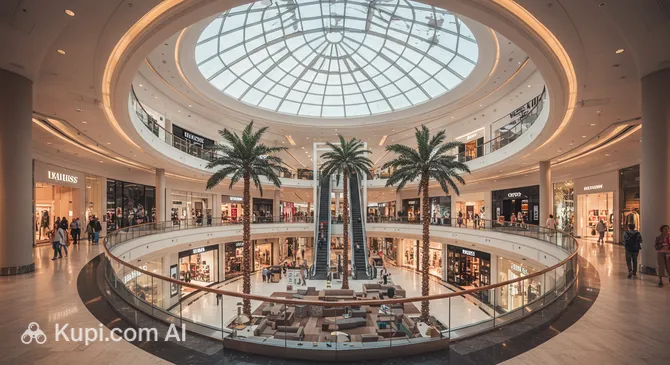
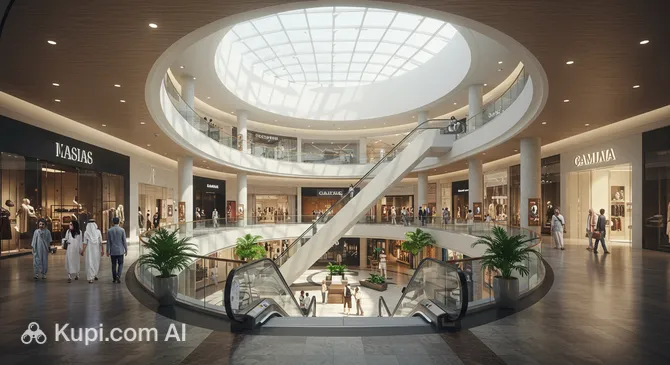
For those who prefer a contemporary shopping environment, the city boasts several world-class malls that are destinations in themselves. The most prominent among them is City Centre Bahrain. This massive complex is the largest shopping, leisure, and entertainment destination in the kingdom, featuring over 340 brands, a water park, and a cinema. It is the go-to spot for fashion, electronics, and dining, offering a cool retreat from the outdoor heat.
City Centre Bahrain. Illustration.
Source: Kupi.com AI
Traveler photos:
For a different kind of modern experience, Al Liwan in the Hamala area offers a unique open-air lifestyle destination. Its architecture reflects Bahrain’s heritage while hosting trendy cafes, restaurants, and retail outlets. It is a perfect place to enjoy a relaxed evening of shopping followed by a meal under the stars, providing a stark contrast to the enclosed mega-malls.
Al Liwan. Illustration.
Source: Kupi.com AI
Traveler photos:
To truly understand the trading heart of the city, you must visit the traditional markets. The journey typically begins at Bab Al Bahrain, the historical gateway that leads directly into the bustling Manama Souq. Here, the atmosphere is vibrant and authentic. Narrow streets are lined with small shops selling everything from colorful textiles and electronic goods to exotic perfumes. It is the best place to practice your bargaining skills and interact with local merchants.
When it comes to souvenirs, Manama offers high-quality local goods that make for perfect gifts. Bahrain is historically famous for its natural pearls, which are celebrated for their purity and luster; you can find certified pearl jewelry in the Gold City complex or reputable shops within the souq. Other popular items include intricate gold jewelry, red clay pottery, and box sets of traditional sweets like Halwa. Spices such as saffron and black lemon are also lightweight and aromatic reminders of your trip.
Shopping hours in Manama are generally tourist-friendly. Major malls are typically open from 10:00 AM to 10:00 PM on weekdays, extending until midnight on weekends (Thursdays and Fridays). Traditional souq shops often close for a midday break between 1:00 PM and 4:00 PM and may remain closed on Friday mornings. Payment methods are convenient, with credit and debit cards accepted almost everywhere, though carrying some cash is advisable for small purchases in the souq.
Tourists visiting Bahrain can also benefit from the local tax-free shopping scheme. The Value Added Tax (VAT) is currently set at 10%, and visitors are eligible for a refund on purchases made at registered stores. Look for the "Tax Free" signage in shop windows, and remember to ask for a tax-free tag or receipt, which can be validated at the dedicated counters at Bahrain International Airport before you depart.