Support

Kaolack

About

Kaolack is the vibrant heart of the central region, situated on the banks of the Saloum River, approximately 190 kilometers southeast of Dakar. Often referred to as the "peanut capital" due to the endless fields surrounding it, the city plays a key role as a major trade and transport hub. A journey here offers a glimpse into the real, off-the-beaten-path Senegal, with its unique character and steady rhythm of life.

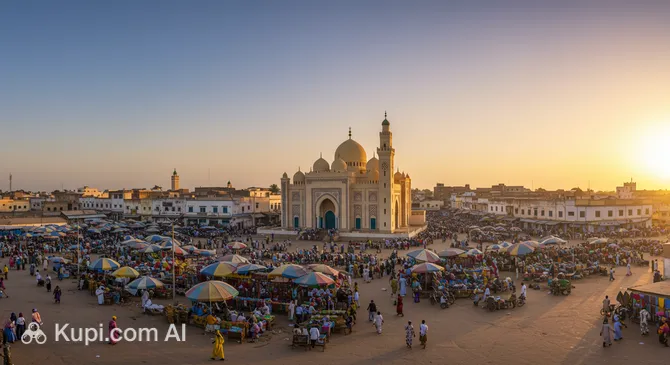
Kaolack. Illustration.
Source: Kupi.com AI

The city's atmosphere combines the dynamics of a major center with the charm of a provincial town. With over 170,000 residents, the streets are always full of movement. Travelers are drawn by the opportunity to immerse themselves in an authentic environment: wandering through bustling markets filled with the aromas of spices and fresh bread, or relaxing in street cafes while watching local life unfold. The unique history of Kaolack, closely tied to the traditions of Sufi brotherhoods, is reflected in its majestic Islamic architecture and historic quarters.

Among the main points of interest are the impressive mosques, which serve as both religious symbols and architectural landmarks of the city. Furthermore, its proximity to the Saloum River offers opportunities for scenic walks and exploring the region's nature. Kaolack is the perfect destination for those seeking a deep dive into West African culture and wishing to experience the genuine hospitality of the local people.

Weather Overview

The climate in this region can be described as hot and predominantly dry, making the city accessible for visits year-round, though conditions can vary significantly depending on the month. From November to May, a distinct dry season prevails: there is virtually no precipitation, and the number of rainy days is zero. This is the ideal time for those who want guaranteed clear skies. Before your trip, we recommend checking the current weather in Kaolack to pack your luggage correctly.

Temperatures remain high throughout the year: average values range from a comfortable +26°C in winter to +29.7°C in April. April is usually the hottest month, when the daytime maximum can reach +38.2°C, while "coolness" is felt in January with nightly minimums around +18.4°C. Expect scorching sun for most of the year, followed by a wet season from July to September, when the number of rainy days in August can reach nineteen.

Average monthly temperature

Average monthly precipitation

Interesting Facts

Beyond its main attractions, Kaolack holds many fascinating secrets and cultural features that make it a unique spot on the country's map.

  • Spiritual Hub. Kaolack is one of the few cities where you can see unique examples of Islamic architecture, such as the Tijaniyya brotherhood mosque. This site serves as an important pilgrimage center and spiritual gathering point for believers from across West Africa.

  • Witness to History. While ruins of the ancient capital of the Kingdom of Saloum remain in the city's outskirts, the "Guye-Ndiouli" baobab is considered a true legend. This tree symbolizes strength and longevity; it is said that in the past, life-altering decisions for the entire region were made beneath its shade.

  • The "Peanut Nation." Locals use this name with pride and humor, highlighting the city's status as a leader in the peanut industry. Every year, colorful fairs and festivals are held here to celebrate the harvest, which is then exported worldwide.

  • Sabar Rhythms. The city's cultural mosaic is unthinkable without the Sabar dance. Different ethnic groups carefully preserve their traditions, and this expressive dance, accompanied by drums, becomes the highlight of family celebrations and holidays.

How to Get There

Kaolack is a vital transport hub in Senegal, but there is no direct air service to the city. Travelers will need to combine a flight with a trip by car or bus. You can find more details on how to get to Kaolack by exploring all available routes and modes of transport.

Most tourists arrive in the country via Blaise Diagne International Airport (IATA: DSS). It is located in Dakar, about 120 km from Kaolack. This is the country's largest aviation hub, receiving flights from all over the world. The journey from the airport to the center of Kaolack by taxi or rental car takes about 3 hours and 20 minutes, depending on traffic.

An alternative option is Yundum International Airport (IATA: BJL), located in Banjul. The distance to Kaolack is about 110 km, making it geographically even closer than the Dakar airport. A car trip from here takes approximately 3 hours. However, keep in mind that this route involves crossing an international border, as Banjul is the capital of the Gambia.

For convenience, here is summary information on the main airports located relatively close to the region:

AirportPassenger trafficDistance
Yundum International Airport418 807111 km
Blaise Diagne International Airport2.9 mln121 km
Ziguinchor60 000179 km
Cap Skirring111 771209 km
Osvaldo Vieira Airport100 000255 km

Rail service in this direction is currently not used for passenger travel, so roads remain the primary way to travel overland. Buses and the popular "sept-place" (seven-seater) taxis depart regularly for Kaolack from Dakar and other major cities. This is an inexpensive and authentic way to reach the "peanut capital," allowing you to enjoy the savanna landscapes along the way.

Main Attractions

While Kaolack is often seen as a transit point, it boasts several iconic sites that provide a glimpse into the region's culture and history. The city may not be brimming with classic tourist attractions, but its architecture and atmosphere are well worth the attention of travelers seeking to experience the authentic Senegal.

The Central Market (Marché Central) is perhaps the city's most recognizable landmark and one of the largest covered markets in Africa. Built in the 1930s, this massive complex is a striking example of Neo-Sudanese architectural style. The market is famous for its numerous arches and arcades, which create a unique play of light and shadow. For visitors, it is more than just a place to shop for vibrant African fabrics, spices, and handicrafts; it is an opportunity to feel the pulse of local commerce.

The Medina Baye Grand Mosque is the spiritual heart of the city and an international center for followers of the Tijaniyya Sufi brotherhood. This majestic structure, with its tall minarets and beautiful blue-and-white dome, can be seen from afar. The mosque plays an enormous role in the religious life of all West Africa. Travelers will find it interesting to appreciate the scale of the building and observe the solemn atmosphere surrounding this sacred site.

The Saloum River Embankment offers a great opportunity to escape the city's hustle and dust. The river, which gives its name to the entire region, is a vital artery for the city. From here, you can take a trip on a traditional pirogue boat to see mangroves and a variety of birds. This is an ideal way to discover the natural beauty of the Saloum Delta without straying far from civilization.

Local Cuisine

Kaolack is often called the "peanut bowl" of Senegal, and this prestigious status is vividly reflected in the local cuisine. The main gastronomic discovery for travelers here will be mafé. This is a thick, hearty meat or fish stew simmered for a long time in a sauce made from fresh peanut paste, tomatoes, and vegetables. In this region, surrounded by vast peanut fields, the taste of mafé is considered the benchmark—rich, buttery, and spicy.

An equally important dish is the legendary thieboudienne, which is rightfully considered the signature dish of the entire country. It is a complex composition of rice, fish (often caught in the local Saloum River), and various vegetables: carrots, cassava, and eggplant. Also worth trying is yassa—chicken or fish marinated in lemon juice and stewed with plenty of caramelized onions, giving the dish a unique sweet-and-sour flavor.

Street food in Kaolack is a separate adventure for gourmets. In the busy markets, you can snack on fried plantains or buy fataya—crispy deep-fried pastries filled with fish and spicy sauce. Those with a sweet tooth will enjoy desserts made from local fruits, especially mango and coconut treats, as well as fresh peanut butter, which is often made right in front of the customers here.

Among the drinks, the absolute favorite is bissap—a refreshing dark burgundy infusion made from hibiscus petals with a hint of mint. Given the presence of baobabs in the region, be sure to try bouye—a thick, nutritious juice made from the fruit of this tree, which has a consistency similar to drinking yogurt. Although alcohol is not part of everyday culture due to religious traditions, popular local beers like Gazelle or Flag can be found in tourist spots and hotel restaurants.

The food culture here is steeped in the spirit of hospitality known as "Teranga." Locals often eat with their hands from one large shared plate while sitting on mats, symbolizing unity and friendship. Tourists can immerse themselves in this atmosphere at the famous farmers' markets or during gastronomic festivals, where chefs from across the region present their interpretations of classic recipes.

Travel Tips

Preparing for a trip to Kaolack requires attention to detail, as it is a city with a hot climate and deep-seated traditions. To make your introduction to the "peanut capital" and the culture of Senegal as comfortable as possible, we have gathered a list of the most important recommendations.

  1. Clothing and Dress Code. Given the high temperatures and conservative lifestyle (the city is a religious center), prefer loose clothing made of natural breathable fabrics like cotton or linen. Shoulders and knees should be covered, especially when visiting the Medina Baye district. Be sure to bring a light scarf or wrap—it will protect you from the sun and the street dust, which can be plentiful here.

  2. Transport Nuances. There is no public transport in the usual sense (metro, trams). The most common way to get around is yellow-and-black taxis. Important: they lack meters, so the price of the trip must be negotiated and fixed with the driver strictly before boarding. "Jakarta" moto-taxis are also popular, but tourists should use them with caution due to the chaotic traffic.

  3. Cash is King. Bank cards are only accepted in a few large hotels. In shops, markets, and cafes, payment is made exclusively in cash CFA francs. There are ATMs in the city, but they may not work or may not accept foreign cards, so it's better to withdraw or exchange money in advance in Dakar or have a supply of cash (Euros or Dollars) to exchange at a bank.

  4. Health and Hygiene. Kaolack is in a malaria risk zone, so be sure to use repellents and wear covered clothing in the evening. Drink only bottled water and avoid ice in drinks at street cafes. There are pharmacies in the city center marked with a green cross, but it's better to bring specific medications with you.

  5. Language Barrier. Few people here know English. The official language is French, but on the streets and in markets, everyone speaks Wolof. Download an offline French translator. Knowing a few phrases in Wolof, such as the greeting "Nanga def?" (How are you?), will immediately endear you to locals and help you get a discount at the market.

  6. The Right-Hand Rule. In local culture, the left hand is considered "unclean." You should greet people, hand over money, take goods, or eat (if trying food from a shared dish) strictly with your right hand. Using the left hand can be perceived as a sign of disrespect.

  7. What to Avoid. It is strongly discouraged to photograph people, especially women and religious figures, without their explicit permission—this can cause conflict. Also, refrain from public displays of affection (kissing and hugging), as local society adheres to strict moral norms.

  8. Gourmet Tip. While in Kaolack, don't miss the chance to buy fresh homemade peanut paste at the Central Market. Its taste and aroma are fundamentally different from store-bought versions. It is not only a great snack but also the best gastronomic souvenir from this region.

By following these simple rules, you can safely immerse yourself in the city's unique atmosphere and experience the famous Senegalese hospitality—"Teranga." Kaolack reveals itself to those who respect its traditions and are ready for new, vibrant impressions.

Entertainment & Nightlife

The nightlife in Kaolack has its own unique character, shaped by the city's status as an important religious center. Unlike bustling Dakar or the tourist-heavy coast, you won't find an endless line of neon signs here. Evening leisure in the "peanut capital" is more intimate and relaxed, centered mainly around restaurants in large hotels or a few colorful local clubs. This is an excellent opportunity to experience the musical culture of Senegal without the usual crowds.

In the evenings, venues featuring live music—especially the popular local genre mbalax—often become the main gathering points. The local crowd prefers spending time in long conversations, enjoying the cool air after a hot day. While the dress code in most places is casual, it is recommended to avoid overly revealing outfits given the city's conservative nature. A "smart casual" style is appropriate everywhere, from hotel dinners to the dance floor.

If you're looking for an evening out, several well-known locations are worth checking out. One of the most popular spots for dancing is the Le Blue Bird nightclub. This is a classic establishment for the region, where you can hear a mix of Western hits and modern African pop. People come here to dance and feel the rhythm of a modern Senegalese city. The atmosphere livens up closer to midnight, with a crowd consisting of both local youth and visitors.

For a more laid-back experience, the bar-restaurant at the Le Relais hotel is a good choice. It is one of the primary meeting spots for expats and tourists. Here, you can dine in a pleasant poolside setting, order a beer or a cocktail, and enjoy music in a more relaxed format. Also worth mentioning is the Arc-en-Ciel complex, known for its hospitable atmosphere and frequent evening gatherings with good food and drinks.

Practical Tips and Safety:

  • Transport: Walking at night is strongly discouraged, especially outside the well-lit center. The best way to get to a club or back to your hotel is by official taxi. Arrange for the driver to pick you up at a set time or ask the venue staff to call a car for you.
  • Opening Hours: Action in the clubs starts late, after 11:00 PM, while hotel bars are open from early evening.
  • Safety: Kaolack is a friendly city, but as with anywhere, you should watch your belongings and avoid dark alleys. Inside venues, the environment is generally safe and comfortable.

As for daytime entertainment, it leans toward cultural and educational experiences. The city lacks large amusement parks, but it is worth visiting the Regional Cultural Center (Centre Culturel Régional), which periodically hosts exhibitions, theatrical performances, and traditional music concerts. This is a wonderful place for those wishing to gain a deeper understanding of the art and traditions of the Saloum region during the day.

Parks & Museums

Kaolack is a city where culture and nature intertwine not in the silence of museum halls or manicured alleys, but in the living rhythm of the streets and the wild landscapes of the river delta. Here you won't find classic European parks or massive national galleries, but the city offers travelers unique natural areas and cultural venues that allow for a deep sense of the Saloum region's atmosphere.

Natural Areas and Embankments

The city's main natural treasure is the Saloum River Embankment. This is more than just a place by the water; it is the vital artery of the region. A stroll here is the best way to escape the urban heat. Tourists will find this spot interesting for the chance to see the unique mangrove ecosystem lining the river. Here you can observe pelicans and flamingos in their natural habitat or rent a pirogue for a mini-cruise through the delta's channels.

Another impressive natural, albeit man-made, zone is the salt fields (Les Salins). Located on the outskirts of the city, these vast territories present a surreal landscape. The water in the salt evaporation ponds often takes on shades from soft pink to deep purple due to the presence of specific microorganisms. This site attracts photography enthusiasts with its "Martian" views and allows visitors to see the salt extraction process for which the region is famous.

Cultural Centers and Exhibition Spaces

Since Kaolack lacks large state museums, cultural centers take on the role of art guardians. The Alliance Française (Alliance Franco-Sénégalaise) in Kaolack is an important cultural hub. It regularly hosts temporary art exhibitions, photography displays, and creative meetings. For tourists, this is a great opportunity to get acquainted with modern Senegalese art and the works of local artists in a comfortable, intimate setting.

It's also worth stopping by the Regional Cultural Center. Although this institution functions more as an event venue than a museum, items of traditional life and crafts from the Serer and Wolof peoples are often displayed here. This place will be of interest to those who want to understand the ethnographic features of the region and see authentic musical instruments or ritual masks.

Architectural Heritage

History buffs should pay attention to the colonial architecture in the city center. Administrative buildings, such as the Palace of Justice or the old trading houses near the port, preserve the spirit of the early 20th century. Special mention goes to the St. Theophile Cathedral. Its architecture contrasts interestingly with the city's numerous mosques, symbolizing the country's religious tolerance.

Insider Tip

For those looking for a "living museum" atmosphere, we recommend visiting the Artisans' Village (Village Artisanal). This is not just a souvenir market, but an open workshop where leather, wood, and fabric items are created before your eyes. Watching the masters at work provides a much greater understanding of the city's culture than any static display.

Getting Around

The public transport system in Kaolack differs significantly from the standard European model. You won't find a metro, trams, or strict city bus schedules here. The city's transport network is informal and chaotic, yet surprisingly functional and covers all districts. For a tourist, moving around the city is not just a way to get from point A to point B, but a true immersion into local life.

The most popular and fastest way to get around is by moto-taxis, which locals call "Jakarta". These light motorcycles literally flood the streets and can navigate even where cars get stuck. A ride on a "Jakarta" is very cheap but requires a certain amount of courage. It is an ideal option for solo travelers wanting to save time; however, helmets are rarely offered to passengers, so you should assess the risks realistically.

A more comfortable and safer alternative is the classic yellow-and-black taxi. Unlike in Dakar, they are more frequently used here for trips between distant neighborhoods or for transfers with luggage. There are no meters in the cars, so the payment principle is simple: the fare must be agreed upon with the driver strictly before getting in. Haggling here is not just appropriate, but expected—the starting price for a tourist can be double the actual rate.

A unique feature of Kaolack that highlights its provincial charm is the horse-drawn or donkey-drawn carts—calèches or charrettes. While locals primarily use them for transporting goods or trips to the market, for tourists, they are an exotic way to slowly tour the city center. This is the most eco-friendly and authentic transport, allowing you to feel the rhythm of life in the region.

Payment everywhere is strictly in cash. Bank cards, transit passes, or ride-hailing apps (like Uber) do not work in Kaolack. You will need small bills and coins in CFA francs, as drivers often "don't have change" for large banknotes. Payment is made at the end of the trip, handing the money directly to the driver (remember the right-hand rule).

For intercity travel or trips to the suburbs, the city's main transport artery is the Gare Routière (bus station). Seven-seater "sept-place" taxis and minibuses depart from here. This is a noisy and bustling place where tickets are bought at ticket booths or directly from "coxeurs" (touts). Tourists are advised to arrive early, as transport departs not by the clock, but as soon as the vehicle is full.

Accommodation

The choice of accommodation in Kaolack reflects its status as an important trade crossroads and regional center. You won't find luxury five-star world-class resorts typical of the coast here; however, the city offers a decent selection of functional and cozy options. The bulk of the hotel stock consists of mid-range hotels catering to business travelers and transit tourists, as well as small guesthouses (auberges) and camps (campements) that provide budget-friendly stays with local flair.

When choosing a place to stay, it is important to consider the location relative to the noisy center. Travelers who value peace and nature usually choose hotels located along the Saloum River or in the Ndangane area. These locations offer a more relaxed atmosphere, fresh river breezes, and distance from the dusty market streets. If proximity to the bus station and shops is important to you, consider options in the central part of the city, but be prepared for early morning noise and bustle.

Among the most famous and time-tested accommodation options is the Le Relais hotel. It is something of a local legend and a hub for the city's social life, offering guests a pool, a restaurant, and reliable service. Another popular spot is the Arc-en-Ciel complex, which attracts travelers with its green grounds and cozy setting. These places often host employees of international organizations and tourist groups.

The price range in Kaolack can be described as moderate. Budget accommodation will cost a small amount accessible to any backpacker, while rooms in the city's best hotels with air conditioning and breakfast will cost about as much as a mid-range hotel in Europe. Booking has its nuances: while large hotels are listed on international online platforms, many small guesthouses do not have pages there.

Booking Tip: If you plan to travel during major religious holidays (such as Gammu) or trade fairs, you should look for accommodation several weeks in advance, as the city fills up with pilgrims and merchants. At other times, you can often find a free room upon arrival, but to guarantee comfort, it's better to contact the hotel directly via phone or WhatsApp beforehand. Note that credit cards are not accepted everywhere, so always carry a sufficient supply of cash.

Nearby Cities

For those looking to explore the surroundings, Kaolack serves as an excellent starting point for day trips to several interesting nearby locations. The city's convenient location in the center of the country makes it easy to reach religious shrines, historical monuments, and unique natural sites.

One of the most impressive destinations is Touba—the holy city and spiritual center of the Murid brotherhood. The main draw here is the Great Mosque, one of the largest and most beautiful in sub-Saharan Africa. The place is striking for its architecture and atmosphere of reverence, but tourists should remember strict rules of conduct: smoking and alcohol are prohibited, and clothing must be as modest as possible.

Lovers of unusual landscapes and culture should head to Joal-Fadiouth. This is a unique village consisting of two parts: mainland Joal and the island of Fadiouth, which is built entirely of seashells. The island is connected to the shore by a long wooden bridge. Here you can see an amazing cemetery, also located on a shell island, where Christians and Muslims are buried side by side, symbolizing the religious tolerance of Senegal.

Another interesting option for a short trip is Diourbel. This city is quite close and is interesting for its colonial architecture and its own majestic mosque, which, while smaller than the one in Touba, is an important historical monument. A trip here allows you to see the calmer, more provincial life of the region.

CityPopulationDistance
Guinguineo15 62719 km
Fatick24 24341 km
Sokone14 50045 km
Diamniadio12 32655 km
Kaffrine39 35757 km

These nearby destinations provide an insight into the diverse culture and landscapes of the region, making your stay in Kaolack even more enriching.

Shopping & Souvenirs

Shopping in Kaolack is fundamentally different from the familiar strolls through air-conditioned malls in Europe or Asia. Since the city is a major trade hub in Senegal, the buying process here turns into a true adventure and cultural exploration. Kaolack is not famous for trendy boutiques of global brands; its strength lies in authenticity, handicrafts, and fresh local products. Here, you buy what the region lives and breathes: from its famous peanuts to vibrant African fabrics.

Main Shopping Districts and Streets

The city's commercial life is concentrated in its historic center, around the intersection of major transport arteries. The streets adjacent to the Central Market are essentially one continuous open-air shopping row. Here you can find small shops selling everything from household chemicals to electronics. A walk through these quarters allows you to feel the pulse of a city where trade never stops for a minute.

Shopping Centers

Fans of large malls should lower their expectations: Kaolack is a city of traditional trade. There are no massive entertainment and shopping complexes here. However, for familiar groceries, water, or hygiene products, you can visit chain supermarkets like Auchan, which have begun appearing in the country's major cities. They have fixed prices, air conditioning, and accept cards, which is a rarity for other retail outlets in the city.

Markets

The absolute center of attraction for any shopper is the Central Market (Marché Central). This is not just a marketplace, but a city within a city. Under its famous arches and in its labyrinthine aisles, you can find absolutely everything. Of particular interest are the sections selling fabrics: bright wax prints and rich bazin. Local tailors working right at the market can sew an outfit for you from your purchased fabric in just a couple of hours. It is also worth visiting the spice and incense rows, where the aromas characteristic of West Africa fill the air.

Souvenirs: What to Bring Back

The choice of souvenirs in Kaolack is directly related to its specialty. Here are the top items to consider:

  • Peanut products. Don't leave the "peanut capital" without a jar of natural peanut butter (beurre de cacahuète) or aromatic oil. It is the best gastronomic souvenir.
  • Salt. The region is famous for salt mining. A bag of local salt, sometimes with added spices, makes an excellent and inexpensive gift.
  • Fabrics and clothing. Cuts of high-quality textiles or ready-made "boubou" tunics will be a bright reminder of your trip.
  • Musical instruments. From local craftsmen, you can find miniature or full-sized instruments like the kora or djembe.
  • Gri-gri. Traditional leather amulets, sold in specialized shops at the market, are interesting as ethnographic souvenirs.

Opening Hours and Payment

Most shops and market stalls open early, around 8:00–9:00 AM, and work until sunset (approximately 7:00 PM). It is important to remember that in the middle of the day, when the heat peaks, many traders may take a break for lunch or prayer. On Fridays, the holy day for Muslims, many shops close during Jumu'ah prayer (roughly from 1:00 PM to 2:30 PM).

The primary and often only method of payment is cash in CFA francs. Credit cards are only accepted in Western-style supermarkets or large hotels. At markets and street stalls, haggling is mandatory. This is part of the culture: the initial price for a tourist may be inflated, so polite but firm price negotiation will help you save money and earn the seller's respect.

Tax Free

The tax refund system (Tax Free) practically does not function in Kaolack. Market trade and small private shops do not issue the relevant documents. You can only count on a VAT refund when making major purchases in specialized stores at the departure airport or in certain boutiques in the capital, but not in the provinces.
Reached the end of the page?

That means the route is fully explored