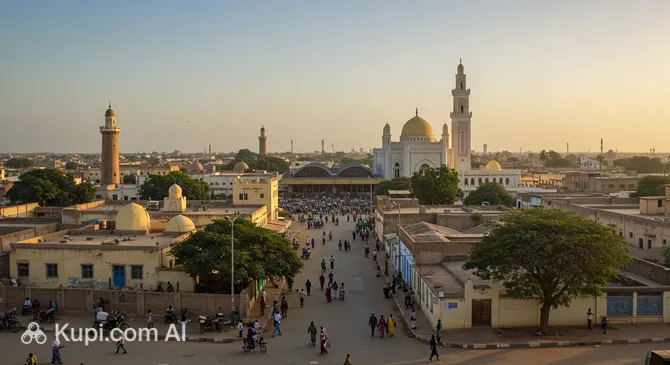
Thiès is one of the largest and most dynamically developing cities in Senegal, holding a proud third place in terms of population. Located just 60 kilometers east of the capital, Dakar, it serves as a vital transport and economic hub for the country. The city boasts a unique atmosphere of "working" Senegal, where modern industry harmoniously coexists with deep-rooted craft traditions.
Thiès. Illustration.
Source: Kupi.com AI
Geographically, Thiès is situated at a strategic crossroads connecting the capital with the inland regions. The climate is tropical, with distinct dry and wet seasons typical for this part of West Africa. The city is known as a major center for livestock and meat trade, as well as for its École Polytechnique de Thiès, considered one of the most prestigious educational institutions in the region. Exploring the history of the city's founding allows for a better understanding of how a 19th-century French fort transformed into a powerful industrial hub.
For tourists, Thiès is primarily interesting for its authentic crafts. The city is rightfully considered the capital of tapestry weaving—local products are famous throughout West Africa for their detail and vibrant patterns. Visiting the central bazaars and meeting local artisans will provide an unforgettable experience for those seeking a real, non-postcard Senegal. We invite you to discover this lively and energetic city, which has become the heart of Senegalese logistics and culture.
Weather Overview
The climate in Thiès is characterized as tropical savanna, with a distinct division into dry and wet seasons. For most of the year, hot and sunny weather prevails in the city. The dry season lasts from November to May, when there is practically no precipitation and humidity is minimal. During this period, daytime temperatures usually fluctuate around 30–33°C, while nights bring a pleasant coolness (about 19–20°C).
The rainy season arrives in June and continues through October, peaking in August and September. During these months, humidity increases significantly, and rain showers can be short but very intense. Traditionally, October is considered the hottest month, with an average temperature of around 28.6°C. If you want to learn more about the Thiès climate and choose the ideal time for your trip, these seasonal cycles should be taken into account.
Overall, the weather in the city is favorable for travel throughout most of the year; however, the most comfortable time to visit is considered to be from November to April. During this time, the dry Harmattan wind blows, which slightly tempers the heat, making walks through the city markets and attractions more pleasant.
Average monthly temperature
Average monthly precipitation
Interesting Facts
Railway Hub: Thiès was founded by the French in 1863 as a fort, but its rapid development began with the construction of the Dakar-Niger railway, making the city a key logistics point.
Tapestry Capital: The city is home to the famous decorative arts factory, whose carpets and tapestries adorn the interiors of many government buildings throughout Africa.
Unique Education: It hosts the École Polytechnique de Thiès, which is one of the oldest and most respected engineering universities in West Africa.
Trade Leadership: Thiès is considered the main center for livestock trade in the region, which directly influences local gastronomy and economic activity.
How to Get There
Thiès is one of the most accessible cities in Senegal due to its location at the intersection of key transport arteries. The primary way to get here from Dakar is via the modern Highway 2. The distance is only 60 kilometers, and by car or regular bus, the journey usually takes 1 to 1.5 hours. For those who value practicality, this page provides detailed information on routes to the city.
Although the city itself does not have its own major international airport, it is in close proximity to the country's main air gateways. Tourists usually fly into Dakar's international airport and then transfer to ground transport. Within the region, there are also intercity minibuses known as "car rapide," which connect Thiès with most major cities in the country.
Railway communication in Thiès has deep historical roots, as the city is situated on the important Dakar-Niger line. Trains run less frequently here than road transport, but the railway itself remains an important symbol of the city. To plan a train trip, it is advisable to check the current schedule in advance, as it may change depending on the season and technical conditions.
Station
Passenger traffic
Distance
Dakar station
5
55 km
Main Attractions
Although Thiès is primarily an industrial and transport hub, it has several places that deserve the attention of a curious traveler. One of its main "gems" is the Manufacture Sénégalaise des Arts Décoratifs (Senegalese Decorative Arts Factory). This establishment brought the city international fame through the production of exquisite hand-woven tapestries and rugs, which are often gifted to official delegations from around the world.
The city's cultural heritage is represented by the Thiès City Museum. Here, you can explore exhibitions dedicated to the history of the railway and its role in the region's development, as well as see archaeological finds and traditional household items of the local people. Architecture enthusiasts should note the building of the École Polytechnique and one of the oldest cinemas in the country, which preserve the spirit of past eras and reflect the evolution of the urban environment.
To feel the true rhythm of Senegalese life, a visit to the Central Market is a must. It is not just a place of trade, but a massive social organism where you can see the full variety of local goods: from spices and fabrics to leather goods. Although the markets of Thiès are oriented more toward locals than tourists, this is exactly where you can find the most authentic souvenirs and observe the traditional way of life of the Senegalese people.
Local Cuisine
The gastronomy of Thiès is a vibrant kaleidoscope of flavors where fresh products and traditional recipes play the leading role. Since the city is a major livestock trade center, meat dishes take a place of honor. Be sure to try mafe—a hearty meat stew in a thick peanut sauce, usually served with rice. This dish has a rich flavor and perfectly conveys the character of the local cuisine.
Of course, it is impossible to imagine a Senegalese table without Thieboudienne—the national treasure of the country, consisting of rice, fish, and vegetables stewed in tomato sauce. Street food is also popular in Thiès: in markets and on busy streets, you can find vendors offering grilled meat, freshly baked bread, and aromatic soups. Locals often eat in simple diners where portions are always generous and the atmosphere is incredibly friendly.
To refresh yourself on a hot day, try the traditional drinks: bissap (chilled hibiscus petal tea) or bouye (a drink made from baobab fruit pulp). These non-alcoholic drinks are not only tasty but also very healthy. Overall, the city's culinary scene will delight lovers of hearty food and those who want to experience the true tastes of West Africa without unnecessary frills.
Travel Tips
Planning a trip to Thiès requires considering its features as a regional hub. Here are a few practical tips to help make your visit as comfortable as possible.
Clothing and Items: Choose light clothing made from natural fabrics, as it is often hot in Thiès. Senegal is a country with a predominantly Muslim population, so it is better to stick to a conservative style (covered shoulders and knees), especially when visiting markets. Don't forget comfortable shoes for walking on dusty streets.
Transport: To get around the city, it is best to use official taxis. If you decide to try a "car rapide," be prepared for tight spaces. Always agree on the price before starting the journey.
Finance: The main currency is the CFA franc (XOF). Cards are only accepted in some large hotels, so always carry cash with you. It is best to exchange money in Dakar or at banks in Thiès.
Health and Safety: Drink only bottled water. In crowded places like markets, keep a close eye on your personal belongings. Overall, the city is safe, but walking in unlit areas at night should be avoided.
Communication: The official language is French, but most residents speak Wolof. Knowing basic French phrases will significantly simplify your communication. English is not widely spoken.
Local Etiquette: Senegalese people value politeness highly. Always start a conversation with a greeting. Asking permission before taking a photo of someone is an obligatory rule.
What to Avoid: Don't visit the livestock markets during peak hours if you don't like crowds and hustle. Also, try to avoid discussing sensitive social topics with strangers.
Best Time to Visit: The ideal period is from November to April, when the weather is dry and relatively mild.
May your experience in Thiès be filled with vibrant discoveries and pleasant encounters!
Entertainment & Nightlife
Entertainment in Thiès is of a quieter and more local nature compared to bustling Dakar. The city's nightlife is concentrated in small bars and nightclubs that come alive closer to the weekend. Most venues are located in the city center and offer a mix of modern African music and international hits. The main crowd here consists of locals and visiting professionals, creating a friendly but not overly touristy atmosphere.
Daytime leisure often revolves around visiting local cafes and traditional craft workshops. Travelers can stop by the city cinema to see the latest African releases or classic films, allowing for a deeper immersion into the cultural context of Senegal. Walking through the lively streets and watching textile artisans at work is also a unique form of daytime entertainment.
For those seeking larger-scale events, concerts, or big parties, locals often recommend a trip to Dakar, as the journey takes just over an hour. Nevertheless, Thiès remains a wonderful place for evening gatherings in cozy restaurants where you can enjoy local music in a relaxed setting away from the hustle of the metropolis.
Parks & Museums
Greenery in Thiès has a specific character determined by the arid climate of the Sahel zone. You won't find massive forest parks here, but the city and its surroundings offer interesting natural landscapes. In the city itself, walks are usually limited to the central squares and the landscaped grounds of major institutions, such as the École Polytechnique.
The main cultural site is the Thiès City Museum, located in a historical building. Its exhibition tells the story of the city's development, starting from colonial times and the founding of the railway hub. Visiting the museum is a great way to understand how Thiès became what it is today and what role local craftsmen and engineers played in its evolution.
For those seeking more nature, it is recommended to travel outside the urban area, where you can see majestic baobabs and typical Senegalese landscapes. Although recreational zones in the traditional sense are only just developing here, Thiès offers a unique opportunity to see the harmony of an industrial city and the natural environment of the African savanna.
Getting Around
Public transport in Thiès is a colorful mix of traditional and modern ways of getting around. The core of the city fleet is made up of the famous car rapide—minibuses painted in bright colors that ply the main streets. This is the most budget-friendly but often overcrowded mode of transport, requiring some skill from the tourist.
A more comfortable alternative is regular taxis and motorcycle taxis, known as bajaj. Motorcycle taxis are especially popular for quick trips over short distances; however, the price should always be agreed upon in advance. There is no fixed bus schedule in the city, so getting around often requires communicating with drivers or locals.
For those planning trips to neighboring cities, there are bus stations in Thiès from which intercity minibuses depart. The railway, although a historical symbol of the city, is currently used less frequently than road transport. Tourists are advised to use official taxis for evening trips and always carry small change in cash for fare payments.
Accommodation
The hotel infrastructure in Thiès is primarily oriented toward business travelers and those in transit. While you won't find massive beach resorts here, you can choose from various guest houses and mid-range hotels. Most accommodation options are concentrated in the central part of the city, which is convenient for access to markets and transport hubs.
For those who prefer a more home-like atmosphere, apartment rentals are popular in the city. This is an excellent choice for longer stays, especially if you plan to explore the surroundings in detail or are visiting on business. Hotels in Thiès usually offer a basic set of amenities: air conditioning, Wi-Fi, and often a breakfast with local flavor.
Given the city's status as an important trade hub, it is recommended to book accommodation in advance, especially during major fairs or business forums. Prices for accommodation here are significantly lower than in Dakar, making Thiès an attractive option for budget travelers who want to save on housing while maintaining mobility.
Nearby Cities
Thanks to its location in the heart of the country, Thiès serves as an excellent starting point for exploring nearby regions of Senegal. Just 14 kilometers away is the small town of Pout, famous for its fruit orchards. This is a great place for those who want to see rural life and buy the freshest mangoes or citrus fruits directly from the producers.
Another interesting destination for a trip is Tivaouane, located 22 kilometers away. This city has immense religious significance and is the spiritual center for one of the Sufi brotherhoods. For history and architecture buffs, it would also be interesting to visit Sébikotane, which lies on the way to the capital and retains the charm of a small regional settlement.
Don't forget Dakar, which can be reached in just over an hour. Trips to neighboring cities allow you to see the diversity of Senegalese landscapes—from arid plains to fertile valleys. Exploring the surroundings of Thiès will give you a more complete understanding of the culture and daily life of this amazing region.
Shopping & Souvenirs
Shopping in Thiès is primarily an immersion into the world of traditional markets and craft shops. The city is not famous for large Western-style shopping centers, but it offers something far more valuable—authenticity. The main pride of local artisans is textiles and, specifically, hand-woven carpets. Products from local factories make unique gifts that will remind you of your trip for years to come.
The heart of commercial life beats at the Central Bazaar. Here you can find almost everything: from vibrant African wax-print fabrics to leather sandals and bags. The markets of Thiès are also known for their spices and traditional medicinal herbs. If you are looking for souvenirs, pay attention to the wood carvings and woven baskets, which are made by local craftsmen with great skill.
Shops and stalls usually operate from early morning until sunset, with many closing for a break in the middle of the day. Payment in most places is made in cash in the local currency (West African CFA franc). It is customary to haggle in the markets—it is not just a way to lower the price, but an important element of the local communication culture. Don't miss the chance to bring home a piece of real Senegal from Thiès in the form of intricate embroidery or a traditional tapestry.