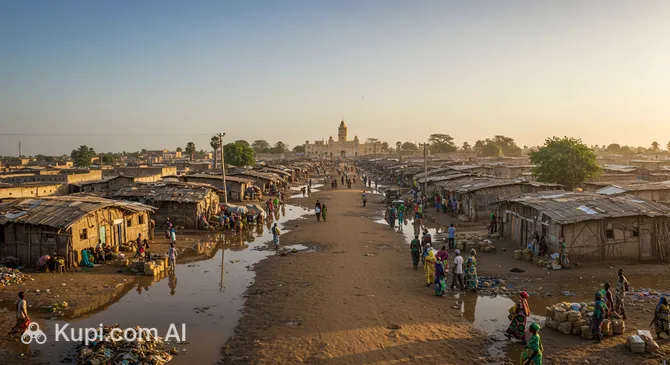
Pikine is the vibrant heart of Senegal's capital region, a city of incredible energy and authentic African flavor. Founded in 1952 as a satellite city for Dakar to relieve the overcrowded center, it has evolved into a self-sufficient and dynamic metropolis. Its name in the Wolof language poetically translates to "place of the baobab trees," a reminder of the city's close connection to the country's natural symbols.
Pikine. Illustration.
Source: Kupi.com AI
Covering an area of 87 square kilometers, Pikine is one of the most densely populated places in the country, home to over 1.17 million people. Geographically located in the western part of Senegal, it serves as a vital link in the Cape Verde Peninsula metropolitan area. The rich history of Pikine's formation has created a unique "melting pot" of ethnic groups, where the traditions of the Wolof and other peoples intertwine to form a vivid and bright culture.
For the traveler, Pikine is primarily interesting for its authenticity: here you can see Senegal as it truly is, without the tourist polish. Lively street life, the country's largest markets, and its status as the center of Senegalese hip-hop make the city a must-visit for those seeking genuine emotions. We invite you to plunge into this rhythmic flow of life, where every street corner reveals a new facet of African hospitality.
Weather Overview
In Pikine, a typical tropical climate prevails with a clear division between the dry and rainy seasons. If you are planning a visit, aim for the period from November to May—this is a time of ideal weather with warm, sunny days and a pleasant coolness in the evenings. You can check the current city climate on specialized resources to help you better prepare for your trip.
The average temperature throughout the year ranges within a comfortable 22°C to 28°C. In winter, the air warms up to a pleasant 23–25°C, and the sea remains warm. The rainy season arrives in June and lasts until October, peaking in August and September. During this time, humidity rises significantly, and short but intense downpours bring temporary freshness.
Spring and autumn in Pikine are periods of mild transitions, when the weather remains stable and favorable for long walks. The dry and windy season (Harmattan) can bring dust from the Sahara between December and February, so the sky may sometimes appear slightly hazy during these months. Overall, thanks to its proximity to the ocean, the heat in the city is easier to bear than in the inland regions of the country.
Average monthly temperature
Average monthly precipitation
Interesting Facts
Pikine is a city of contrasts and surprising records that can amaze even the seasoned traveler with several unique facts.
Explosive Growth: Founded in 1952 as a small settlement for 7,600 people, the city grew to giant proportions in just a few decades, welcoming over a million residents.
Symbolic Name: The word "Pikine" comes from the Wolof language and means "place of the baobab trees," highlighting the local respect for this sacred Senegalese tree.
Sports Capital: This is where the careers of many stars of Senegalese lamb wrestling began, a sport that is even more popular in Pikine than football.
Economic Giant: The city hosts the country's key enterprises, including Chemical Industries of Senegal (ICS) and the largest meat processing center, SOSEDAS.
Fish Abundance: The local central fish market is considered one of the most important seafood distribution points in all of West Africa.
How to Get There
Thanks to its location in close proximity to the capital, getting to Pikine is easy. The city is integrated into Dakar's general transport network and connected to other regions of Senegal by modern highways. More detailed information on routes and logistics can be found in the how to get to the city section.
For those arriving by air, the main point of entry is the international airport in Dakar (formerly Léopold Sédar Senghor; currently, most major flights arrive at the new Blaise Diagne Airport, located further out). The distance from the capital's air hubs to Pikine is about 20–30 kilometers, and this journey is most conveniently made by taxi or regular bus.
Rail service in the region is currently undergoing active modernization. At present, the focus is on bus services and shared taxis (sept-places) that run between the center of Dakar and Pikine almost around the clock. Traveling by car on national highways is also a comfortable and fast way to reach the city.
Station
Passenger traffic
Distance
Dakar station
5
10 km
Main Attractions
Exploring Pikine should begin with its main economic and cultural arteries. One of the most impressive spots is the Central Fish Market—a true giant where the treasures of the Atlantic arrive every morning. This is the ideal place for those who want to feel the dynamic pace of local trade and see hundreds of species of fresh fish while witnessing the spirited negotiations between sellers and buyers.
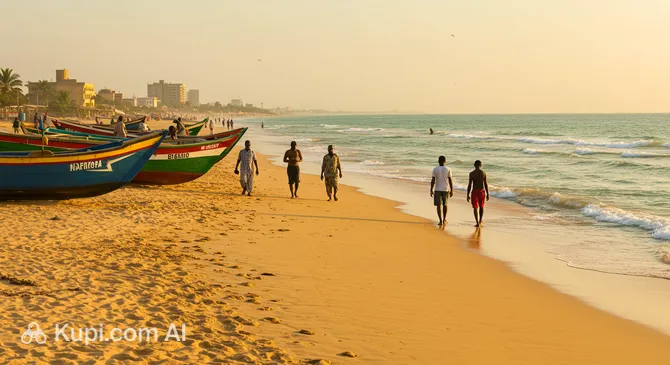
Malibu Beach. Illustration.
Source: Kupi.com AI
Traveller photos:
In the northwest of the city lies the picturesque Grande Niaye de Pikine area. This unique horticultural zone serves as the "green lungs" of the metropolis. Tourists will find it interesting to walk along the cultivated plots where vegetables and fruits are grown to supply the entire capital region. This place offers a rare opportunity to see traditional farming methods right in the heart of an urbanized zone.
For those seeking maritime freshness and relaxation by the water, Malibu Beach is an excellent option. Although Pikine is mainly associated with industry and trade, its access to the coast gives tourists the chance to enjoy the Atlantic breeze and watch local fishermen. This spot combines the natural beauty of the shoreline with a relaxed suburban leisure atmosphere.
Local Cuisine
A gastronomic journey through Pikine is a feast of flavors for seafood and meat lovers. Thanks to the presence of the central fish market and a large meat processing center, the products here are always fresh. The main dish every guest must try is thieboudienne—Senegal's national pride, consisting of aromatic rice cooked with fish, vegetables, and savory spices.
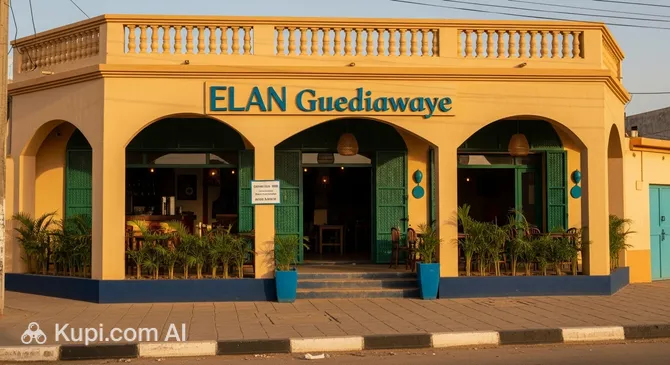
ELAN Guediawaye. Illustration.
Source: Kupi.com AI
Traveller photos:
The food culture in the city is closely linked to street food and bustling bazaars. In the markets of Pikine, you can find charcoal-grilled meat (dibi) and freshly baked flatbreads. To refresh on a hot day, locals choose baobab fruit juice or bissap—a cooling drink made from hibiscus flowers. The traditional "ataya" tea ceremony is also an important ritual symbolizing hospitality.
For those who prefer familiar formats, modern establishments like ELAN Guediawaye serve popular fast-food dishes. However, for a true culinary experience, it is worth stopping by small family restaurants where recipes are passed down through generations and the food is prepared with soul and a home-cooked feel.
Travel Tips
A trip to Pikine will be a bright and memorable event for you if you prepare in advance for the peculiarities of the local rhythm of life. These practical tips will help you feel confident and enjoy every moment of your journey.
Clothing and Essentials: Choose light clothing made from natural fabrics, as a hot climate prevails in Senegal. Don't forget comfortable shoes for walking through markets, sunglasses, and a high SPF sunscreen.
Transport: To move between Pikine and Dakar, use taxis—it's the fastest and safest way. Tip: Always agree on the fare before starting the trip.
Finances: The official currency is the West African CFA franc (XOF). Try to always carry small denominations of cash for markets and transport, as bank cards are only accepted in large centers.
Health and Safety: Drink only bottled water. Be mindful of your belongings in crowded places like the fish market, and avoid walking in unfamiliar, unlit neighborhoods late at night.
Communication: French is the official language, but knowing a few phrases in Wolof (for example, "Naammu de"—a greeting) will instantly win over the locals. A SIM card with mobile internet can be easily purchased at any kiosk.
Local Etiquette: Senegalese people highly value politeness. Always say hello before asking a question. When visiting religious sites or private homes, try to dress modestly.
What to Avoid: Do not take photos of people without their explicit consent—it can be offensive. Also, avoid publicly criticizing local traditions or engaging in political disputes.
Specific Tip: Visit Pikine during lamb wrestling competitions—it's the best way to see the city's true passion and energy.
May your introduction to Pikine be filled only with positive emotions and amazing discoveries in the very heart of Senegal!
Entertainment & Nightlife
The epicenter of entertainment in Pikine is found right on its streets, where new cultural trends are born. The city is rightfully considered the cradle of Senegalese hip-hop: rap battles and performances by young artists frequently take place here, filling the neighborhoods with rhythmic beats. An equally important part of local leisure is traditional Senegalese wrestling, known as lamb—a thrilling spectacle that combines sport and ancient rituals, drawing thousands of fans.
For lovers of modern cuisine and familiar comforts, the ELAN Guediawaye restaurant is open in the area, offering a place to grab a bite between walks. If you are looking for full-scale nightlife with international-standard clubs and bars, keep in mind that most such establishments are concentrated in neighboring Dakar, which is easily reached by taxi in just 15–20 minutes.
Evenings in the city are best spent in the lively squares or around Malibu Beach, where the daytime heat subsides and the atmosphere becomes more relaxed. For safe travel after dark, it is recommended to use official taxi services, which can be called via apps or found at designated stands. Pikine residents are very sociable, so evening relaxation often leads to interesting acquaintances and immersion in local folklore.
Parks & Museums
Despite its dense urban development, Pikine has its own green corners where you can take a break from the hustle and bustle. The most significant natural site is the horticultural district of Grande Niaye de Pikine. This vast area filled with vegetable gardens and orchards is a unique example of urban farming. A walk here allows you not only to see how local vegetables grow but also to enjoy the silence amidst lush greenery.
The city's cultural life is largely concentrated in open areas and public spaces. While there are few classic museums with galleries in Pikine, the city itself is an open-air museum where building walls are often decorated with bright graffiti in the style of Senegalese hip-hop. To visit major exhibitions, such as the Museum of Black Civilizations, residents and guests usually head to neighboring Dakar.
Fans of active recreation and waterside strolls should visit the coastal zone in the Malibu Beach area. This spot is perfect for watching the sunset over the Atlantic. For those interested in modern infrastructure and places for family leisure, the area around ELAN Guediawaye serves as a good landmark, where improved areas attract locals for evening gatherings.
Getting Around
The transport system of Pikine reflects the dynamic nature of this metropolis. The primary means of transportation for locals and tourists are buses and shared taxis (car rapide), which connect the city with all districts of Dakar. This is an affordable and colorful way to get around, allowing you to feel the true rhythm of the Senegalese capital.
For more comfortable and faster trips, it is recommended to use taxis. Both official services and private drivers operate in Pikine. It is customary to agree on the fare in advance before you get into the car. In recent years, mobile apps for hailing transport have been gaining popularity, making the process of moving around more transparent and convenient for international guests.
Within the neighborhoods, you can often find motor-rickshaws and bicycles, which are ideal for short trips through narrow streets. The city's road network is constantly developing, improving connections with the country's main highways. If you plan to move around a lot, it will be useful to learn a few basic phrases in French or Wolof to help navigate routes and stops.
Accommodation
Accommodation options in Pikine are primarily geared toward those who value authenticity and a budget-friendly approach. Here you can find small private guest houses and modest hotels that offer a basic level of comfort and the chance to live side-by-side with the local population. This is an excellent choice for explorers wishing to fully immerse themselves in the atmosphere of Senegalese life.
Most quality accommodation options are concentrated near transport hubs or close to the coast, for example, in the Malibu Beach area. It is worth noting that the choice of lodging within the city itself is limited, so experienced travelers often choose hotels in Dakar, making day trips to Pikine to explore its markets and attractions.
When planning a visit, it is recommended to book accommodation in advance, especially during the dry season (November to May) when the flow of tourists to Senegal increases. Prices here are significantly lower than in the capital, allowing for substantial budget savings. Modern establishments like ELAN Guediawaye and its surrounding neighborhoods offer Wi-Fi access and the basic services required by the modern tourist.
Nearby Cities
Pikine occupies a strategically advantageous position, making it a convenient starting point for exploring the entire Cape Verde Peninsula. Just 9 kilometers to the west lies Dakar—Senegal's vibrant capital with its world-class museums, the colonial architecture of Gorée Island, and endless promenades. This is a must-visit destination for those wanting to combine urban exploration with cultural relaxation.
Right nearby is the city of Guediawaye, which effectively merges with Pikine, forming a single space for strolls along the ocean coast. If you travel a bit further east, you can visit historic Rufisque, known for its old buildings and the atmosphere of a past-century trading port. Smaller towns like Bargny and Sebikotane are also of interest, offering a calmer pace of life.
We recommend not limiting yourself only to city blocks and making sure to set aside time for trips to neighboring regions. Transport connections between these points are excellent, whether by taxi or local buses, making it easy to plan day trips and return to Pikine by evening.
Shopping & Souvenirs
Shopping in Pikine is primarily an unforgettable experience of visiting African markets, where the informal sector of the economy is represented in all its diversity. The city's main trading point is the Central Fish Market, but in addition to it, there are dozens of street bazaars. You can find everything there: from bright fabrics with traditional patterns to handcrafted wood and leather products created by local artisans.
If you are looking for unusual souvenirs, look for items made from baobab—these can be either decorative objects or natural products. Pikine is also famous for its textile shops, where you can not only buy ready-made Senegalese-style clothing but also order a custom outfit from experienced tailors on the spot. Most shops are open from early morning until late evening, and polite bargaining is encouraged when dealing with sellers.
For those who prefer to shop in a more familiar setting, modern retail outlets are appearing in the city and its surroundings. For example, in the ELAN Guediawaye area, you can find establishments with fixed prices and modern service. The primary currency for transactions is the West African CFA franc (XOF), and while larger outlets are starting to accept cards, you will definitely need cash at the markets.