Support

Touba

About

Touba is not just a city, but the spiritual heart of Senegal, a place where centuries-old traditions intertwine with everyday life to create a unique atmosphere. Located in the central part of the country in the Diourbel Region, Touba is the second-largest city in Senegal, with a population of over half a million people. It is a significant center for the Mouride Sufi brotherhood and an important pilgrimage site for Muslims from across West Africa.
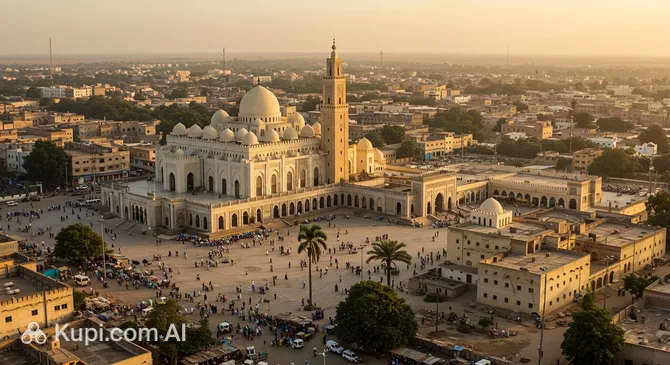
Touba. Illustration.
Source: Kupi.com AI

The city was founded in 1887 by Sheikh Amadu Bamba Mbacké, the founder of the Mouride brotherhood, and its development is inextricably linked to his legacy. The crown jewel of Touba is undoubtedly the Great Mosque — one of the largest and most impressive Islamic structures in Africa. Its majestic minarets and domes are visible from afar, while the interior decor is striking in its beauty and scale. Beyond the mosque, the city attracts visitors with its unique culture, where religious devotion harmoniously blends with lively trade and a traditional way of life.

Visiting Touba is an opportunity to experience an important part of Senegalese culture and spirituality, see impressive architecture, and feel the special energy of this sacred city. It is an experience that will leave a deep impression on anyone interested in history, religion, and the authentic traditions of Africa.

You can find more interesting facts on the history of Touba page.
Weather Overview

In Touba, you can expect a hot climate with distinct dry and short wet periods. Anticipate consistently high temperatures throughout the year: averages range from 25°C to nearly 30°C, and maximum temperatures regularly rise above 32°C, reaching 36-38°C in the hottest months, such as April and May. Rainfall in Touba is extremely rare for most of the year; the period from November to May is characterized by its almost total absence. A short rainy season occurs in July, August, and September, with August being the month with the most rainfall (about 4 mm) and the highest number of rainy days (about 15).

For more detailed information on climate conditions, including monthly average temperatures and rainfall, visit the Touba Climate page.

Average monthly temperature

Average monthly precipitation

Interesting Facts

Beyond its spiritual significance, the city of Touba hides many fascinating features that make it a truly unique place. Here are just a few interesting facts to help you better understand this amazing city:

Great Mosque of Touba. Illustration.
Source: Kupi.com AI

Traveler photos:

  • Touba is a sacred city for followers of the Mouride Sufi brotherhood. It is home to the mausoleum and the famous Great Mosque of Touba, dedicated to the brotherhood's founder, Sheikh Amadu Bamba, who is revered as the spiritual father of the nation.

  • Every year, Touba becomes the center of a grand religious festival called the Grand Magal. During this time, millions of pilgrims travel to the city not only from Senegal but also from other countries, making it one of the largest mass gatherings on the African continent.

  • Touba follows a special way of life that differs from most other cities. The consumption of alcohol, smoking, and gambling are strictly prohibited here. This creates a unique atmosphere of peace and emphasizes the city's spiritual status.

How to Get There

When planning a trip to the spiritual center of Senegal, it is important to think through the logistics in advance, as there are no direct flights into the city itself. You can explore all ways to get to the city on our detailed page, but here we will look at the key transport hubs most convenient for building your route.

There is no airport in the city of Touba, so travelers usually fly into the country's capital. The most convenient and popular option is Blaise Diagne International Airport (IATA: DSS). It is located near the city of Dakar, approximately 127 km from Touba. This is a large, modern aviation hub that handles many international flights. A trip from the airport to Touba by taxi or rental car via the toll highway takes approximately 2–2.5 hours, making it the fastest and most comfortable route.

An alternative option is Banjul International Airport (IATA: BJL), located in Banjul (Gambia). The distance to Touba from here is about 187 km. However, keep in mind that this route involves crossing the international border between Gambia and Senegal, which can significantly increase travel time. The drive will take at least 3.5–4 hours, excluding time for border formalities.

For convenience, here is a summary of the main airports:

AirportPassenger trafficDistance
Blaise Diagne International Airport2.9 mln128 km
Yundum International Airport418 807187 km
Ziguinchor60 000259 km
Cap Skirring111 771289 km

Rail travel is not a primary way for most tourists to reach Touba. Regular passenger trains in this direction are virtually non-existent or run very infrequently, except for special services during the Grand Magal pilgrimage. Therefore, you should not rely on the train for a typical tourist visit.

Road travel remains the main way to move between cities. After arriving at one of the airports, tourists most often switch to intercity buses or the "sept-place" (seven-seat) taxis popular in Senegal. The highway leading from Dakar to Touba (the Ila Touba) is in good condition, ensuring relatively easy access to the city.

Main Attractions

Touba is not just a city in Senegal, but the most important spiritual center and a magnet for millions of believers. The city's entire appearance and rhythm of life are defined by a grand structure that serves as its main and, essentially, all-encompassing landmark.

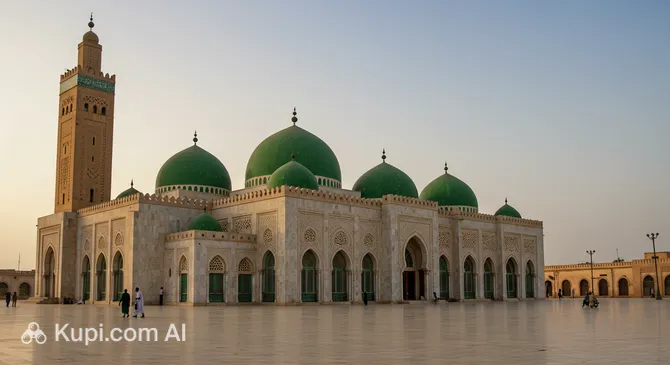
The central feature is the Great Mosque of Touba. This is not merely a house of worship, but the heart of the Mouride Sufi brotherhood and one of the largest and most significant religious buildings in Africa. The mosque is awe-inspiring in its scale: its majestic minarets, the tallest of which, Lamp Fall, reaches 87 meters, soar into the sky, while numerous domes create a unique silhouette. The interior is distinguished by its refinement, rich calligraphy, and ornaments, creating an atmosphere of reverence and peace.

The mosque's main sanctuary and the primary focus for believers is the mausoleum of the founder of the Mouride brotherhood, Sheikh Amadu Bamba Mbacké. Pilgrims from all over the world come here to his tomb to honor his memory and receive a blessing. Every year, Touba hosts the Grand Magal — a massive pilgrimage commemorating the anniversary of Sheikh Amadu Bamba's exile. This event draws millions of Mouride followers, transforming the city into a bustling center of prayer, religious chants, teachings, and charity, demonstrating the depth and scale of this unique spiritual movement.

In addition to prayer halls and the mausoleum, the Great Mosque complex includes other important facilities. It houses extensive libraries containing precious religious manuscripts and works on Mouridism and Islamic theology, underscoring Touba's role as a major educational and scholarly center for the brotherhood. The complex also includes administrative buildings and living quarters for staff. Visiting the Great Mosque provides an opportunity not only to see an impressive example of Islamic architecture but also to encounter a living spiritual tradition, experience the unique atmosphere of one of Africa's main religious centers, and understand a vital part of Senegalese culture.

Great Mosque of Touba. Illustration.
Source: Kupi.com AI

Traveler photos:

Local Cuisine

The gastronomy of Touba is a vibrant reflection of Senegal's rich culinary traditions, seasoned with local flavor. A journey here will provide unforgettable taste experiences, as food here is not just a way to satisfy hunger, but a true art form and a vital part of the city's spiritual culture.

The main gastronomic symbol of the region that you must try is thieboudienne — fragrant rice with fish, vegetables, and herbs. This dish can be found in cozy family cafes as well as in bustling street markets, where it is served directly from huge pots. Also look for chicken and lamb dishes generously seasoned with peanut sauce and exotic spices. These hearty and aromatic meals perfectly capture the spirit of local cuisine.

Among beverages, Ataya — traditional sweet tea — holds a special place. Its preparation is a whole ritual: the tea is brewed in three stages, with the taste and aroma becoming richer with each brewing. Sharing a cup of Ataya with locals is a way to experience their hospitality and social culture.

Locals and tourists often eat in small family establishments or right on the street. Touba's markets are a true kaleidoscope of tastes and aromas. Here you can buy fresh fruit, fragrant flatbreads, various spices, and try street snacks: fried plantains, meat or vegetable samosas, and crispy pastels. During religious holidays, especially the Magal, the streets are filled with the scents of roasted meat and sweet treats, and cafes offer special festive dishes with recipes passed down through generations.

Travel Tips

Welcome to Touba, a unique and spiritually significant city in Senegal! To make your journey as comfortable and respectful of local traditions as possible, we have prepared some practical tips.

  1. Clothing and Essentials:

    Touba has a hot climate, so choose light, breathable clothing made of natural fabrics (cotton, linen). Since Touba is a holy city, it is extremely important to follow the dress code, especially when visiting the Great Mosque and other religious sites: women should cover their heads, shoulders, and knees, while men should wear trousers and shirts with sleeves (no shorts or tank tops). Be sure to bring sunscreen, a hat, sunglasses, and comfortable shoes for long walks. Don't forget a universal power adapter for your electronics.

  2. City Transport:

    The main types of public transport in Touba are "car rapide" minibuses (old but colorful) and taxis. There are no metro or tram systems here. When using a taxi, always agree on the price in advance, as meters are rarely used. Travel between cities is often done in "sept-place" (seven-seat vehicles). Car rentals are possible but can be difficult due to local traffic patterns and road conditions.

  3. Finance:

    The local currency is the West African CFA franc (XOF). It is recommended to carry enough cash, as credit and debit cards are not widely accepted, mostly only in large hotels or shops, which may be few in Touba. ATMs exist, but their reliability and compatibility with international cards can be limited. You can exchange currency at banks or official exchange offices. Tipping is not strictly mandatory but is appreciated for good service (usually 5-10% in restaurants or a small amount for porters).

  4. Health and Safety:

    There are pharmacies in Touba, but their stock and hours may be limited; 24-hour pharmacies are rare. Bring a basic medical kit with you. Drink only bottled or boiled water. Touba is generally considered a safe city, especially due to its religious status. However, as everywhere, take basic precautions: watch your belongings in crowded places and do not display expensive jewelry. Respectful behavior and following local norms are your best guarantees of safety.

  5. Communication:

    The main spoken language is Wolof. French is the official language of Senegal and is also common. Few people understand English, primarily those in the tourism sector, which is less developed in Touba than on the coast. It is recommended to learn a few basic phrases in Wolof: "Salaam alaikum" (Hello), "Jerejef" (Thank you). Local SIM cards (e.g., Orange, Free) can be purchased upon arrival. Wi-Fi access may be limited, mostly found in hotels or internet cafes.

  6. Local Etiquette:

    The people of Senegal, and Touba in particular, are known for their hospitality ("teranga"). Greetings play an important role — don't hesitate to say hello. Use your right hand for handshakes and passing items. Dress modestly. Public displays of affection are not accepted. It is especially important to show respect for religious traditions, as Touba is a sacred city. Do not consume alcohol or smoke in public places, as this is largely prohibited in the city.

  7. What to Avoid:

    Categorically avoid alcohol consumption and smoking in public places — this is strictly frowned upon and prohibited in many parts of the city. Do not photograph people, especially those praying or women, without their explicit permission. Show maximum respect for religious sites and traditions; do not enter mosques in inappropriate clothing or footwear.

  8. Touba's Special Status – The Holy City:

    Remember that Touba is not just a city, but the spiritual center of the Mouride Sufi brotherhood and one of the most important holy cities for many Muslims in West Africa. The entire city is permeated with an atmosphere of devotion. If your visit coincides with the annual Grand Magal pilgrimage (the date varies), be prepared for a massive influx of pilgrims (millions of people), which creates a unique but very crowded environment. During this time, the city is transformed, but finding accommodation or moving around freely becomes much more difficult.

We hope these tips help you better prepare for your trip to Touba and ensure you have an unforgettable experience in this amazing place. We wish you an interesting and spiritual journey!

Entertainment & Nightlife

When planning evening entertainment in Touba, it is important to understand the unique character of this city. As a sacred city and the center of the Mouride Sufi brotherhood, Touba offers an experience that is fundamentally different from the traditional nightlife with bars and clubs found in other metropolises. Here, the evening passes in an atmosphere of tranquility, spirituality, and community life.

If you are looking for lively nightclubs, bars with loud music, or dedicated entertainment districts, you will not find them in Touba. The city strictly adheres to Islamic traditions, which excludes establishments serving alcohol and noisy secular parties. Instead, evenings take place in a more peaceful setting. Locals gather for prayer, spend time with family, or meet in small local cafes and eateries where you can try traditional Ataya tea and Senegalese cuisine. The atmosphere in such places is usually very welcoming and conducive to slow conversation.

While Touba does not offer late-night entertainment venues in the conventional sense, the main landmark that makes an indelible impression in the evening is the Great Mosque of Touba. Its majestic silhouette, often illuminated after sunset, serves as a symbol of the city and its spiritual life. It is a place for contemplation and reflection rather than amusement.

Great Mosque of Touba. Illustration.
Source: Kupi.com AI

Traveler photos:

When planning an evening in Touba, prepare for cultural immersion. You can get around the city by taxi, though it is best to agree on the fare in advance. Central areas, especially near the mosque, are generally safe due to the city's special status and respect for order, but general precautions are always advisable. Remember the need for modest clothing that respects local customs, especially when near religious sites.

During the day, the primary focus for tourists and pilgrims is the Great Mosque. This grand structure is not only an architectural masterpiece but also the most important center of Islamic culture in West Africa. A visit to the mosque, provided all rules are followed, will leave a deep impression. There are virtually no other typical tourist entertainments, such as large museums, theaters, or amusement parks, as the city lives primarily for its religious mission.

Parks & Museums

Touba, as one of the most important spiritual centers of Senegal and all of West Africa, offers visitors a unique immersion into culture and history that is largely centered around its religious heritage. While the city may not abound in traditional parks and museums in the European sense, its cultural wealth manifests in other forms.

Instead of the extensive park zones typical of many metropolises, the open spaces around Touba's main sanctuary hold special significance. The vast squares adjacent to the Great Mosque of Touba serve as gathering points for thousands of pilgrims, especially during religious festivals. These spaces, filled with people and permeated by a spirit of devotion, create a unique atmosphere and are an integral part of the urban landscape and cultural experience.

Great Mosque of Touba. Illustration.
Source: Kupi.com AI

Traveler photos:

The main cultural, historical, and architectural landmark of the city is undoubtedly the Great Mosque of Touba. It is not just a place of worship, but also one of the largest and most significant Islamic complexes in Africa, the center of the Mouride Sufi brotherhood. Its majestic minarets, massive domes, and exquisite interior decor are staggering. A visit to the mosque (subject to all rules and respect for local traditions) allows you to touch the heart of the city's spiritual life and appreciate the scale of this structure. It is a key site reflecting both the history and contemporary culture of Touba.

Although Touba lacks classic museums with artifact exhibitions, the city itself and its shrines can be viewed as a living museum. Here you can learn about the history and teachings of Sheikh Amadu Bamba, the founder of the Mouride brotherhood, to whom the mosque is dedicated. The Sheikh's mausoleum, located within the complex, is a major pilgrimage site. Immersing oneself in the city's atmosphere, observing religious practices, and interacting with locals provides a much deeper understanding of the culture than a standard museum display.

For a more authentic experience, take a walk through the lively streets surrounding the mosque. Here you can see the daily life of the city and visit local markets selling religious items, traditional clothing, and local products. If your trip coincides with the Grand Magal — the annual pilgrimage to Touba — you will witness one of the largest religious events in Africa, which is an unforgettable cultural experience in itself.

Getting Around

Public transport in Touba, an important religious center of Senegal, is mainly represented by buses and minibuses known as "car rapide" or "Ndiaga Ndiaye." There are no metro, trams, or trolleybuses in the city. These colorful and often crowded minibuses ply the main urban arteries and connect various districts. There are also larger buses serving both urban and suburban routes.

The payment system in Touba is predominantly cash-based. Bus tickets or fares for minibuses are paid directly to the driver or conductor upon boarding. Fares are usually fixed for specific routes but may vary slightly. Specialized transit cards or mobile payment apps for public transport are generally not available, so tourists are recommended to carry small bills.

To use public transport, simply head to a busy street and wait for a suitable bus or "car rapide." Stops are not always clearly marked, so locals often hail vehicles right on the road. Transport starts running early in the morning and usually stops at nightfall. During major religious events, such as the Grand Magal, the amount of transport increases significantly, but the crowding also increases many times over.

An alternative to public transport is taxis. In Touba, you can find both official taxis and private unlicensed drivers ("clandos"). Always agree on the fare in advance before getting into the car. In some areas, motorcycle taxis may be popular for short trips through narrow streets. Car-sharing services or formal bike rentals are poorly developed in the city, but walking short distances is quite possible, especially in central areas.

The main feature of Touba's transport system is its adaptation to the city's status as a major religious hub. During the annual Grand Magal pilgrimage, when millions of believers converge on the city, the transport infrastructure faces immense pressure. During these days, additional routes are organized and transport is brought in from other regions, but moving around the city can still be difficult. This should be taken into account when planning a trip.

Accommodation

In the city of Touba, an important religious center in Senegal, accommodation options for tourists and pilgrims may differ from standard tourist destinations. The main focus here is on accommodating the vast number of visitors, especially during major religious events.

The range of available housing in Touba typically includes guest houses (maisons d'accueil), small simple or mid-range hotels, and the option to rent rooms or houses from locals. Luxury resorts or international hotel chains are less common here. When choosing accommodation, it is best to look at areas near the Great Mosque of Touba or main transport arteries for ease of movement. Since the city attracts many pilgrims, the hospitality infrastructure is often oriented toward their needs.

When planning a trip to Touba, especially during major religious events like the Grand Magal, it is strongly recommended to book accommodation well in advance. During these periods, the demand for housing increases manifold, and finding vacancies on the spot can be extremely difficult. At other times of the year, the availability situation is more relaxed.

The price range for accommodation in Touba varies from budget to moderate options. Bookings can be made through local contacts, if available, or through the few online platforms that may offer listings in this specific region. Contacting guest houses or small hotels directly is also common practice. Given the city's specifics, be prepared for accommodation that may be modest but authentic.

Nearby Cities

For those who wish to explore the surrounding area, Touba serves as an excellent starting point for day trips to several interesting nearby locations:

CityPopulationDistance
Mbacké68 0547 km
Diourbel100 44543 km
Guinguineo15 62766 km
Darou Mousty32 94170 km
Fatick24 24380 km

These nearby destinations provide insight into the diverse culture and landscapes of the Senegal region. Each of these cities offers its own unique attractions and atmosphere, making them excellent choices for a short trip from Touba.

Shopping & Souvenirs

Shopping in Touba is not so much a hunt for brands as it is an immersion into local culture and an opportunity to purchase unique goods that reflect the city's religious significance. Here you won't find the usual shopping malls, but you can discover authentic markets and shops offering local handicrafts and items related to Islamic tradition.

The main shopping areas in Touba are concentrated around the Great Mosque of Touba, on the main streets leading to it, and in the city markets. This is where commercial life thrives, offering visitors a variety of goods from food to clothing and souvenirs.

Great Mosque of Touba. Illustration.
Source: Kupi.com AI

Traveler photos:

There are no large modern shopping centers in the Western sense in Touba. Shopping here is more traditional, centered on small shops and market trade. This gives the purchasing process a special character and allows for a closer look at the daily life of the city.

Touba's city markets are the heart of local trade. Here you can find fresh fruit, vegetables, and spices, as well as fabrics, traditional clothing, shoes, and household items. Markets are often noisy and crowded, but this is where you can feel the true atmosphere of a Senegalese city and find interesting local goods at affordable prices.

As souvenirs from Touba, it is worth bringing back items related to its spiritual heritage: prayer beads (tasbih), images and calligraphy with religious motifs, and traditional Muslim clothing (such as flowing kaftans or scarves). Local handicrafts are also popular, including leather goods, woven baskets, or jewelry.

Shops and stalls in Touba usually operate from morning until evening, though they may close during prayer times. The most common method of payment is cash (West African CFA franc, XOF). The ability to pay by bank card is extremely rare, so tourists are advised to carry a sufficient amount of cash.

Information regarding a Tax Free system for tourists in Touba is generally unavailable, as the city is not a major international tourist hub with developed duty-free trade infrastructure. The primary focus here is on local trade and pilgrimage.

Reached the end of the page?

That means the route is fully explored