Support

Tivaouane

About

Tivaouane is a colorful city, nestled in western Senegal, about 70 kilometers northeast of Dakar. It lies at the intersection of sandy expanses and fertile lands, creating a special atmosphere of peace and tranquility. Tivaouane is home to about 39,755 people, and the city plays a prominent role in the life of the Thiès region as an important trading hub.

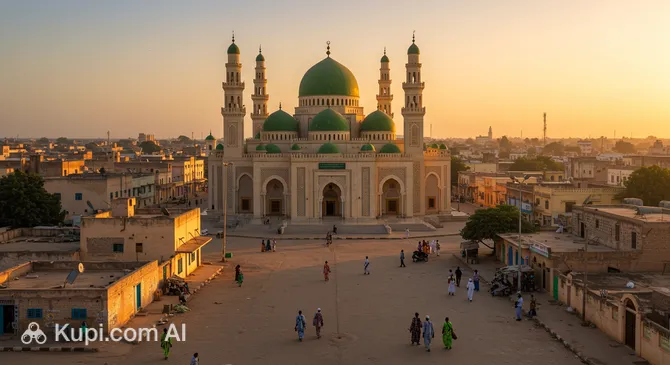
Tivaouane. Illustration.
Source: Kupi.com AI

Tivaouane is famous for its hospitality and authentic West African atmosphere. The city streets are filled with the scents of spices, the sounds of local music, and daily life that is far from the hustle and bustle of major metropolises. Among the city's unique features are its vibrant local markets, where you can find a variety of goods and observe colorful scenes. There is also a wonderful opportunity to meet local artisans and their creations, diving deeper into the region's culture.

A visit to Tivaouane is a chance to plunge into a world where past and present are harmoniously interwoven. Stroll through its shaded streets, try local cuisine, and enjoy the unhurried pace of life that energizes and inspires new discoveries. This city is a true gift for those seeking authentic experiences and wishing to feel the true spirit of Senegal.

You can find more interesting facts on the Tivaouane city history page.

Weather Overview

In Tivaouane, warm weather prevails year-round. The average annual temperature ranges from approximately 24°C to 29°C. The hottest months are October and November, when the maximum temperature can reach 32.5°C. The coolest months, with a minimum temperature of about 18.7°C, are January and March. Rainfall in the city is minimal for most of the year: from January to May, and also in November and December, there is practically none. A short rainy season occurs between June and October. August and September are the wettest months: during this period, about 4 mm of precipitation falls, and the number of rainy days can reach 12-14. In general, expect a hot summer with a short rainy season characterized by low precipitation, and very dry but warm winter months.

For more detailed information about the weather in different seasons, you can visit the Tivaouane Climate page.

Average monthly temperature

Average monthly precipitation

Interesting Facts

In addition to its fame as a spiritual center, Tivaouane holds several curious features that make it a truly unique place in Senegal. Here are just a few that might surprise you:

  • Tivaouane is one of the main centers of the Tijaniyya Sufi brotherhood. Its main mosque and mausoleum attract a huge number of pilgrims not only from all over Senegal but also from abroad, especially during major religious holidays.

  • Despite its deep spirituality, Tivaouane is also an important industrial center. In its vicinity are rich phosphate deposits, the extraction of which contributes significantly to the country's economy.

  • The city is closely linked to the names of prominent religious figures who played a key role in the spread and development of Sufism in West Africa. Their legacy is still revered in Tivaouane today.

  • A local legend says that Tivaouane was founded on a spot where an unusually bright star appeared to travelers, showing them the way. This story gives the city an aura of mysticism and destiny.

How to Get There

When planning a trip to the spiritual capital of the region, it is important to think through your route in advance. Tivaouane has a favorable geographical location, making it easily accessible for tourists arriving in Senegal. You can find all the details and consider various route options on the how to get to Tivaouane page.

The main air gateway for travelers heading to Tivaouane is Blaise Diagne International Airport (IATA: DSS). There is no airport in the city of Tivaouane itself, but this major hub is located in Dakar, just 41.5 km from your destination. This is the most modern and convenient arrival option. The journey from the airport to the center of Tivaouane by taxi or transfer will take approximately 1 hour 20 minutes, depending on traffic.

As an alternative, you can consider flying into Banjul International Airport (IATA: BJL), located in Banjul, Gambia. However, keep in mind that it is significantly further away — at a distance of about 178.7 km from Tivaouane. A trip from there will require a border crossing and take more than 5 hours by car, so this route is chosen less frequently, usually as part of combined tours across West Africa.

For convenience, here is summary information on the main airports used to reach the city:

AirportPassenger trafficDistance
Blaise Diagne International Airport2.9 mln42 km
Yundum International Airport418 807179 km
Ziguinchor60 000271 km
Cap Skirring111 771284 km

Since rail communication in this direction for passenger travel is poorly developed or non-existent, the main way to get from the airport to Tivaouane is by road. You can use official taxis, rent a car, or take intercity buses and shared taxis ("sept-places"), which regularly run between the major cities of the region.

Main Attractions

Tivaouane, located in Senegal, is one of the country's most important spiritual centers, especially for followers of the Tijaniyya Sufi brotherhood. Its attractions are deeply connected to this religious tradition, drawing pilgrims and those interested in Islamic culture and the history of West Africa.

One of the main shrines and architectural landmarks of the city is the Great Mosque of Tivaouane. It is not only a place for daily prayers and large religious gatherings but also an impressive structure reflecting the Islamic architectural traditions of the region. For tourists, it is an opportunity to see a significant religious site and feel the city's spiritual atmosphere.

A special place of pilgrimage is the Mausoleum of El Hadj Malick Sy, a prominent religious figure who played a key role in spreading the Tijaniyya teachings in Senegal and founded the spiritual center in Tivaouane. His tomb, along with the mausoleums of subsequent caliphs of the brotherhood, are objects of deep veneration and attract many believers. Visiting these sites allows one to touch the history and spiritual life of one of the largest Sufi orders.

Every year, Tivaouane becomes the center of a grand religious festival — Gamou, dedicated to celebrating the birthday of the Prophet Muhammad. During this time, the city is transformed, hosting hundreds of thousands, and sometimes millions, of pilgrims from all over Senegal and other countries. While Gamou is primarily a religious event, its significance for Tivaouane is immense, creating a unique cultural and spiritual atmosphere that may be of interest to observers seeking to understand Senegal's cultural traditions.

Local Cuisine

The gastronomy of Tivaouane is a fascinating immersion into Senegalese culinary traditions, where rice, fresh fish, and aromatic spices are the main stars on the table. A visit to this city will give you an unforgettable taste experience and introduce you to authentic West African cuisine.

The signature dish that is definitely worth trying in Tivaouane is thieboudienne. This is a hearty and fragrant dish of rice with fish, vegetables, and spices, prepared according to special family recipes. Thieboudienne is traditionally served on a large communal platter, symbolizing hospitality and bringing everyone together for the meal. Equally popular here are chicken and lamb dishes, often cooked over an open fire with the addition of peanut sauce or delicate coconut milk. For a snack or dessert, try fried bananas, sweet donuts, or the freshest seafood found at local markets.

Refreshing local drinks perfectly complement the meal. These can be natural juices made from exotic fruits or traditional Senegalese drinks, such as aromatic tea. The choice of drinks allows everyone to find something to their taste and refresh themselves on a hot day.

The food culture in Tivaouane is closely linked to vibrant markets and street food. It is at the markets where locals buy fresh produce, spices, and nuts. A walk through such a market is not only a gastronomic but also a cultural adventure, allowing you to observe the daily life of the townspeople and discover new flavors. Street vendors offer a variety of snacks and prepared dishes, from simple to more refined. Often in Tivaouane, especially during religious holidays, food festivals are held, filling the streets with the aromas of fresh pastries, grilled meat, and exotic drinks.

Tivaouane's gastronomic scene attracts tourists with its authenticity and diversity. The chance to try iconic dishes like thieboudienne or yassa (chicken or fish with onions and lemon), feel the atmosphere of the busy markets, and perhaps attend a local culinary festival makes Tivaouane an interesting destination for foodies wishing to get acquainted with real Senegalese cuisine.

Travel Tips

Welcome to Tivaouane, an important spiritual center of Senegal! To make your journey to this unique city as comfortable and memorable as possible, we have prepared some practical tips.

  1. Clothing and Essentials: Senegal has a predominantly hot climate, so choose light, breathable clothing made of natural fabrics (cotton, linen), especially if your trip falls during the dry season (November to May). From June to October, a rainy season is possible, so a light waterproof jacket may come in handy. Tivaouane is a sacred city, so the key rule is modesty in clothing, especially when visiting mosques and other religious sites. Women are recommended to wear long skirts or trousers, cover their shoulders, and have a scarf for covering the head. For men, trousers and shirts covering the shoulders are appropriate. Don't forget sunscreen, a hat, sunglasses, and comfortable walking shoes. Electrical outlets here are Type E (European), so an adapter will likely not be needed if you are coming from Europe, but it's best to check.
  2. City Transport: For moving between cities, for example, from Dakar to Tivaouane, "sept-places" (seven-seat collective taxis) and buses are popular. In Tivaouane itself, the main transport consists of regular taxis and moto-taxis, known as "Jakarta". Always agree on the cost of the trip in advance, as meters are not common. Car rental is possible in Dakar, but for moving around Tivaouane, it may be unnecessary and difficult due to the local driving style and road conditions.
  3. Finances: The local currency is the West African CFA franc (XOF). It is best to exchange currency at banks or official exchange offices in Dakar or other large cities in Senegal; in Tivaouane, options may be limited. Credit cards are accepted very rarely, mainly in some hotels (if any). Cash is your main companion. ATMs are infrequent, and it is better not to rely on their uninterrupted operation. An approximate daily budget can range from 25,000 to 50,000 XOF (about 38-76 EUR) per person, depending on your needs. Tipping is not strictly mandatory but is always welcomed for good service (usually 5-10%).
  4. Health and Safety: There are pharmacies in Tivaouane, but the range of medications may be limited, so it is better to bring basic medicines with you. Medical care can be obtained at local clinics or the hospital, but for serious cases, a trip to Dakar may be required. Travel insurance is mandatory. The city is generally considered safe, especially due to its religious status. Nevertheless, follow standard precautions: keep an eye on your belongings, especially in crowded places, do not display valuables, and avoid walking alone in unlit areas at night.
  5. Communication: The official language in Senegal is French. Wolof is widely spoken and is the native language for most of the population. Few people understand English, mostly in the tourism sector, which is not as developed in Tivaouane as in resorts. Learn a few phrases in French or Wolof: "Bonjour/Bonsoir" (Hello/Good evening), "Merci" (Thank you), "S'il vous plaît" (Please) in French; "Salaam aleekum" (Greeting), "Jërëjëf" (Thank you) in Wolof. A SIM card from local operators (Orange, Free, Expresso) can be purchased in Dakar or possibly in Tivaouane. Wi-Fi access is limited; it can be found in some hotels or internet cafes.
  6. Local Etiquette: Senegalese people are very hospitable and appreciate respect. Greetings play an important role; it is customary to greet with a handshake (using the right hand). Show respect for elders. Tivaouane is a city with deep religious traditions, so behave discreetly, especially near mosques. Take photos of people only with their explicit permission. It is not customary to publicly display affection or consume alcohol on the street. If you are invited for "ataya" tea, accept the invitation — it is a sign of respect.
  7. What to Avoid: Categorically avoid any criticism of Islam, religious leaders, or local traditions — this can deeply offend locals. Do not wear overly revealing clothes, especially for women. Try not to use your left hand for eating, handing over money, or objects, as it is traditionally considered "unclean."
  8. Special Tip – Gamou (Maulid al-Nabi): If your trip coincides with the celebration of Gamou (the birthday of Prophet Muhammad), be prepared for a huge influx of pilgrims from all over Senegal and other countries. This is a unique time to immerse yourself in the spiritual atmosphere of the city, but it requires careful advance planning of accommodation and transport. The dates of Gamou are floating as they are determined by the lunar calendar, so check them in advance.

We hope these tips help you better prepare for your trip and enjoy every moment of your stay in the amazing Tivaouane. Have a great trip and wonderful experiences!

Entertainment & Nightlife

In the evening, Tivaouane offers travelers a unique immersion into authentic Senegalese life, quite different from the noisy nightlife of major metropolises. Known primarily for its deep spiritual atmosphere, the city transforms as evening falls, offering quiet and culturally rich leisure options rather than traditional nightclubs.

Instead of the usual bars with loud music and dance floors, the nightlife in Tivaouane centers around local restaurants, where you can enjoy traditional Senegalese dishes, and cozy tea houses where locals gather for unhurried conversations. The main points of evening activity are often located near central streets, such as areas adjacent to the main mosques or around the central market. Look for small eateries and cafes there. The atmosphere here is rather peaceful and conducive to conversation rather than wild partying. Most of these establishments are hospitably open to visitors until about 10:00 PM or 11:00 PM, but do not operate all night.

While Tivaouane is not famous for nightlife districts in the European sense, and available data does not provide a list of specific nightclubs or large bars to recommend with links, it is in the authentic local establishments that you can feel the true spirit of the city. Specialized nightclubs are practically non-existent here; the emphasis is shifted towards more traditional and quiet forms of evening relaxation. As for the dress code, there are no strict rules, but it is recommended to choose modest, neat casual clothing out of respect for local cultural traditions.

For evening strolls, it is best to choose well-lit central areas. In terms of safety, Tivaouane is considered a relatively quiet city, but standard precautions, as anywhere else, are never out of place. For traveling after dark, it is most reliable to use taxi services, which can be arranged in advance through your hotel or with the help of locals. Dinner at a local restaurant or a snack from street food vendors is relatively inexpensive, offering excellent value for money.

During the day, Tivaouane offers different leisure opportunities. As an important religious center of Senegal, the city attracts pilgrims and tourists with its significant mosques and mausoleums, which are the main attractions. It is also worth walking through the local markets to experience the crafts and daily life of the townspeople. There are no major amusement parks or theater complexes in Tivaouane, but its rich cultural and spiritual heritage is a great attraction in itself for the thoughtful traveler.

Parks & Museums

Tivaouane, the spiritual heart of Senegal, offers visitors a unique immersion into culture and history, where sacred sites and community spaces play a central role. While the city may not boast extensive traditional parks, its atmosphere and significant religious complexes create special zones for contemplation and exploring heritage.

Instead of classic parks, in Tivaouane you will find vast courtyards and open spaces around the main mosques and mausoleums. These places serve not only for religious gatherings but also as centers of social life, where you can feel the calm and deep devotion of the residents. A walk through the city, especially in the vicinity of its spiritual centers, becomes an experience of getting to know the local way of life.

As for museums and cultural sites, in Tivaouane they are closely interwoven with its religious significance:

  • Mausoleum of El Hadj Malick Sy (Mausolée d'El Hadj Malick Sy): This is perhaps the most iconic place in the city. Although it is not a museum in the conventional sense, the mausoleum is a vital center of pilgrimage and a repository of history associated with the founder of the Tijaniyya tariqa branch in Senegal. Visiting this place (with due respect) allows you to touch the spiritual life of the region.
  • Great Mosque of Tivaouane (Grande Mosquée de Tivaouane): An impressive architectural structure and the city's spiritual center. Its grandeur and decorative details reflect Islamic traditions and the craftsmanship of local artisans. Observing life around the mosque provides insight into the culture and daily rituals.
  • Islamic Libraries and Educational Centers: Various centers for Islamic studies and libraries exist at religious institutions in the city. While access for the general public may be limited, they play a key role in preserving Islamic heritage, manuscripts, and knowledge, serving as living archives.

In addition to these key sites, the architectural appearance of Tivaouane itself is an attraction. The city is decorated with many other mosques, zawiyas (religious schools), and houses that belonged to prominent spiritual leaders, each bearing the mark of history and local architectural tradition.

For a more authentic experience, visit the local market, where daily life is in full swing and traditional goods can be found. Also, if the opportunity arises and it is appropriate, try to learn more about the traditions of the Tijaniyya tariqa from locals or guides, which will allow for a deeper understanding of the unique atmosphere of Tivaouane.

Getting Around

When planning your travel around Tivaouane, it's worth considering that the public transport system here has its own characteristics, differing from major metropolises. The city offers several ways to get around, relying mostly on more traditional and flexible types of transport rather than extensive metro or tram networks.

The backbone of public transport in Tivaouane consists of shared taxis and buses. This is the most common and affordable way to reach various parts of the city. Minibuses, often called "cars rapides" or "Ndiaga Ndiaye" here (though these are general Senegalese terms), run on specific but sometimes flexible routes. There is usually no fixed schedule — transport departs as it fills up. Buses may have more fixed routes and stops. There are no metros, trams, or trolleybuses in Tivaouane.

The fare system is quite simple. In the vast majority of cases, payment is made in cash directly to the driver or conductor upon entering or exiting the vehicle. The cost of a trip is usually low and depends on the distance. It is recommended to have small bills and coins with you, as the driver may not always have change for large banknotes. Specialized transport cards, passes, or mobile apps for fare payment are generally not used here.

Tourists planning to use public transport should be prepared for some specific details. Tickets as such are usually not issued. To understand the route, it is best to ask the driver, conductor, or local residents — they will readily help. Transport runs mainly during the day; in the evening and at night, the number of trips can significantly decrease. Ticket validation is not required as payment happens directly.

As an alternative to public transport in Tivaouane, you can use taxi services. There are both private taxis and collective ones (taxi-brousse), which depart in a certain direction as they fill up. It is recommended to agree on the cost of a trip in a private taxi with the driver in advance, before the trip begins, as taximeters are not always used. For short distances around the city, a walk is perfectly fine. Car-sharing systems or developed bike rentals have not yet become widespread in Tivaouane.

Accommodation

In Tivaouane, a significant religious center in Senegal, accommodation options are primarily geared towards pilgrims and visitors interested in the city's cultural heritage. The choice of housing here may not be as wide as in major tourist metropolises, but it is quite possible to find a suitable option.

Tourists mainly have access to small hotels and guest houses (auberges) offering basic amenities. Luxury resorts are generally not found here; the focus is on simpler and more functional accommodation. You can also consider renting rooms or apartments from locals, especially during major religious events when the demand for housing increases.

Regarding neighborhoods, most housing options are concentrated near the main mosques and religious sites, as well as along the city's primary transport arteries. This provides convenient access to key locations and facilitates movement. There are no specialized tourist districts in Tivaouane; city life is closely intertwined with its religious significance.

The price range for accommodation in Tivaouane is mainly in the budget and mid-range segments. Housing can be booked through local contacts upon arrival or in advance, especially if your trip coincides with important religious holidays or events. Some hotels may be listed on international booking platforms, but smaller guest houses often work via direct request. It is recommended to check availability and book accommodation well in advance, especially during peak periods, to ensure a comfortable stay.

Nearby Cities

For those who want to explore the surrounding area, Tivaouane serves as an excellent starting point for day trips to several interesting nearby locations:

CityPopulationDistance
Thiès394 54422 km
Mboro27 69322 km
Khombole12 88025 km
Mekhe22 94426 km
Pout23 72834 km

These nearby destinations provide an insight into the diverse culture and landscapes of Senegal. Each trip promises new experiences, whether it be bustling markets, historical landmarks, or simply getting to know the daily life of other cities.

Shopping & Souvenirs

Shopping in Tivaouane offers tourists a chance to immerse themselves in the authentic atmosphere of a Senegalese city, where the focus is on local goods and traditional markets. The city is not known for large shopping centers in the European sense, but you can find unique handmade products, colorful fabrics, and fresh produce here. Goods reflecting the cultural and religious significance of Tivaouane hold a special place.

The main commercial arteries of Tivaouane are usually concentrated around the central part of the city, especially near the main mosque and on the streets leading to the town market. Here you will find many small shops, stalls, and street vendors offering a variety of goods – from daily necessities to specific local items.

Large modern shopping malls are not a characteristic feature of Tivaouane. Shopping here is more traditional, and major purchases are made at markets or in small private shops. If you are looking for branded goods or large department stores, it is better to look for them in the capital of Senegal, Dakar.

Tivaouane's central market is the heart of the city's trade and a must-visit place. There is a lively atmosphere filled with the aromas of spices, fresh fruits, and vegetables. You can find almost everything at the market: from food and clothing to household goods and souvenirs. It's a great place to observe the daily life of the townspeople and haggle for items you like.

Traditional Senegalese souvenirs are worth bringing back from Tivaouane. Look for bright fabrics (for example, for sewing "boubou" clothing), handmade wooden products, woven baskets, and mats. Local jewelry, leather goods, and perhaps items related to the city's religious culture, such as prayer beads or incense, are also popular. Don't forget local spices or shea butter, which make excellent and useful gifts.

Shops and stalls in Tivaouane are usually open from the morning (around 9:00-10:00) until the evening (18:00-19:00), but many of them may close for a long lunch break, especially during the hottest part of the day, as well as for prayer times. Markets start early in the morning. The main method of payment, especially at markets and in small shops, is cash (West African CFA franc). The possibility of paying by bank card is rare, mainly in larger or visitor-oriented establishments, but it shouldn't be heavily relied upon.

In Senegal, there is a VAT refund system (Tax Free) for tourists on certain types of goods purchased in licensed stores. If you are making a large purchase, check with the seller about the possibility of processing documents for a tax refund. Be sure to keep your receipts and be prepared to present the goods upon leaving the country at the airport. It is recommended to familiarize yourself with the current VAT refund rules and procedures in advance.
Reached the end of the page?

That means the route is fully explored