Support

Cape Town Stadium

About

Cape Town Stadium is more than just a sports arena; it is one of the most striking modern landmarks in Cape Town and all of South Africa. This multi-purpose complex, which can accommodate over 64,000 spectators, was built to host matches for the 2010 FIFA World Cup and has since become an iconic city landmark. In addition to football matches, it regularly hosts World Rugby Sevens Series events, as well as concerts by international stars and other large-scale events.

The stadium's architectural design deserves special mention. Its futuristic look, resembling a floating cloud, was developed to blend harmoniously into the unique landscape. The facade is made of translucent fiberglass, giving it a light and airy feel. The arena's location allows spectators to enjoy not only the sporting spectacle but also stunning views of Table Mountain and the Atlantic Ocean.
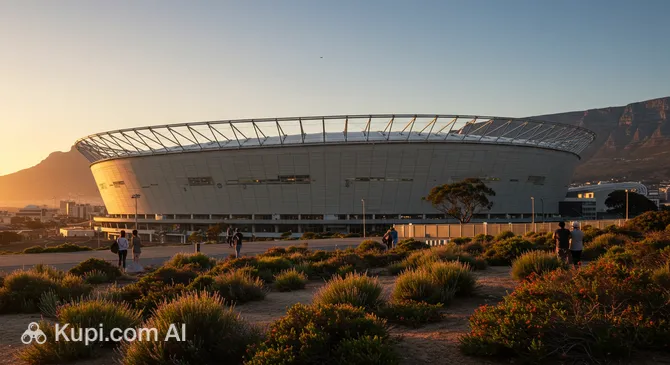
Cape Town Stadium. Illustration.
Source: Kupi.com AI

Traveler photos:

Today, Cape Town Stadium is more than just a venue for competitions. It has turned into a major tourist attraction, drawing fans of modern architecture and sports enthusiasts from around the world. It can be described as a giant abstract sculpture that has become an integral part of the cityscape and a symbol of the region's sporting heritage. A large park is laid out around the stadium, making it an ideal place for walks.

Contacts

If you would like to check the schedule of upcoming events, book a stadium tour, or obtain other information, please contact the administration through official channels. All the necessary contact details are provided below.

How to contactContact
AddressFritz Sonnenberg Rd, Green Point, Cape Town, 8051, South Africa
Phone number+27 21 417 0120
Websitedhlstadium.co.za

What to Do

A visit to Cape Town Stadium is a chance to experience the world of elite sports and grand shows. The main reason thousands of people come here is, of course, for the football matches and rugby competitions regularly held at the arena. Furthermore, the stadium serves as a venue for concerts by global stars and other cultural events, transforming into a multi-functional entertainment hub. By attending one of these events, you can fully appreciate the atmosphere of this magnificent structure.

Even if you don't plan to attend a specific event, the stadium offers unique experiences. One of its features is the unique parabolic design of the stands, which ensures an excellent view of the field from any seat. The panoramic views from the upper tier of the arena, which reaches a height of 25 meters, deserve special attention. From here, you can enjoy breathtaking landscapes of the Atlantic Ocean and the mountains surrounding Cape Town.

For those who want to learn more about the history and architecture of this iconic site, there are special tours. During the tour, you can peek into the players' changing rooms, walk through the tunnel leading to the pitch, and feel like a participant in a big match. On days when there are no games at the stadium, its galleries are open to the public, allowing guests to get a closer look at this impressive structure, which is rightfully considered one of the city's cultural hubs.

Getting There

Cape Town Stadium is conveniently located in the Green Point area, close to the city center and the popular V&A Waterfront. This makes it easily accessible for both locals and tourists. Key options include public transport, taxis, or a pleasant stroll for those staying nearby.

The most convenient and reliable way to reach the stadium is via the MyCiTi bus rapid transit system. Direct routes run regularly from the Civic Centre transport hub to the "Stadium" bus stop, located right next to the arena. You can also get off at Granger Bay station, which is just a few minutes' walk away. For residents of the suburbs, there is the option to take a Metrorail commuter train to Cape Town Central Station and then transfer to a MyCiTi shuttle bus heading to the stadium. On major event days, free shuttles are often organized from key points around the city for ticket holders.

A trip by taxi or ride-hailing services from the city center takes just a few minutes and is the quickest way when there is no traffic. However, on match and concert days, this option can be difficult due to road closures and heavy congestion. An excellent alternative for those nearby is the Fan Walk, a specially designated pedestrian route that provides safe access to the stadium. If you plan to drive, keep in mind that parking at the stadium is extremely limited. It is better to use the Park & Ride system: leave your car at one of the park-and-ride lots and take public transport to the arena.

Nearest city: Cape Town

History & Facts

The history of the modern Cape Town Stadium began with the demolition of its predecessor, the old Green Point Stadium, which was completely leveled in 2007. Construction of the grand new complex started in 2008 and was completed in record time by December 2009, specifically for the 2010 FIFA World Cup hosted by South Africa. This project marked a new era in the city's sporting life: while the previous stadium held only 18,000 spectators, the new arena was designed to accommodate nearly 65,000 fans, allowing it to host world-class events.

Interestingly, for a short time after completion, the stadium continued to bear the name of its predecessor, "Green Point." However, in 2009, the Cape Town City Council officially decided to rename the arena Cape Town Stadium to emphasize its significance to the entire city. Behind its impressive futuristic appearance is the work of the renowned German architectural firm Gerkan, Marg and Partners (gmp), while the ambitious project was brought to life by the construction company Murray & Roberts.

From the beginning, the architects aimed to create more than just a sports facility—a true symbol of the city and a landmark in an iconic location. The site was chosen for a reason: the stadium is situated in one of the most picturesque corners of the world, at the foot of the famous Table Mountain and Signal Hill, near the Atlantic coast. It is this unique location, set against a breathtaking landscape, that makes the stadium not just an arena but an integral part and a modern landmark of Cape Town.

Time Needed

A visit to Cape Town Stadium usually takes 1 to 2 hours. This is plenty of time to explore one of Cape Town's main modern landmarks at a relaxed pace, especially if you opt for a guided tour. This format allows you to take a look behind the scenes of this grand sporting structure.

The primary way to explore the stadium's interior is by joining an official tour. A standard tour offers a unique opportunity to see what is usually hidden from fans: player changing rooms, the tunnel leading to the pitch, VIP boxes, and even the holding cells located within the arena. Some tours offer an exclusive option—climbing to the stadium roof, which offers incredible views. If you don't plan to go inside, you should set aside about an hour for a walk around the stadium and through the adjacent Green Point Park.

Please note that the specified time does not include attending a sports match or concert, which, of course, will take several hours. Before your visit, it is highly recommended to check the current tour schedule on the stadium's official website. The schedule may change, especially during preparation for or during major events.

Working Hours

You can visit Cape Town Stadium as part of organized tours that run year-round. Stadium tours are available from Monday to Friday, but please note that tours may be cancelled on match days, concert days, or during other major events. This is a great opportunity to go behind the scenes of the famous arena, see the athletes' locker rooms, walk through the players' tunnel, and even visit the VIP areas.

While there is a standard schedule for tours, it is highly recommended to check for current information in advance and book tickets online via the official stadium website. This is particularly important during the peak tourist season, as group sizes are limited. Booking in advance guarantees your spot and helps avoid disappointment if the schedule changes on the day of your visit.

Nearby

Visiting Cape Town Stadium is just one part of the great adventure that awaits you in this area. Thanks to its prime location in Green Point, the arena is surrounded by many other points of interest that will make your trip even more rewarding. A walk through the neighborhood will allow you to better experience the atmosphere of Cape Town, combining impressions of the stadium's modern architecture with outdoor relaxation and visits to other iconic sites.

In the immediate vicinity of the stadium lies a vibrant and diverse world of entertainment and attractions. Just a few minutes' walk away, you will find the famous waterfront, cozy parks, and cultural centers. Exploring these places won't take long but will offer plenty of positive emotions and provide a complete picture of this part of the city.

NameDistance
Cape Town Resort0.7 km
Two Oceans Aquarium0.8 km
The Cape Wheel0.8 km
Victoria Wharf Shopping Centre0.8 km
V&A Waterfront1 km
Clock Tower1.1 km
Cape Town Diamond Museum1.1 km

Have you reached the end of the page?

So the route has been studied inside and out