Support

Cathedral of Santa Ana

About

Santa Ana Cathedral (Santa Iglesia Catedral Basílica de Canarias) is a majestic Catholic cathedral located in the heart of the historic Vegueta district of Las Palmas de Gran Canaria, on the picturesque island of Gran Canaria in the Canary Islands (Spain). Dedicated to Saint Anne, the city's patron saint, this cathedral is not only an important spiritual center but also one of the archipelago's architectural jewels. It serves as the cathedral of the Diocese of the Canary Islands and attracts both the faithful and lovers of history and art.
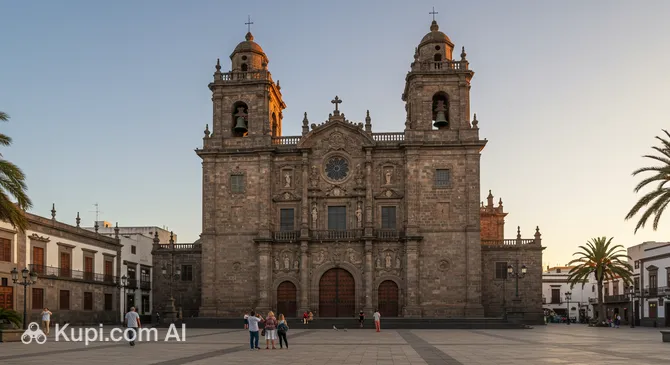
Cathedral of Santa Ana. Illustration.
Source: Kupi.com AI

Traveller photos:

The architectural appearance of Santa Ana Cathedral is a unique blend of styles, reflecting its long history of construction. The interior is primarily designed in the austere and lofty forms of Late Gothic, creating an atmosphere of reverence. At the same time, its monumental facade is a prime example of Neoclassicism, while certain decorative elements bear the mark of the ornate Baroque style. This combination makes the cathedral particularly interesting to study and admire.

Inside, the cathedral impresses with its space and light. It has a classic structure with three naves and a transept, but the main highlight of the interior is undoubtedly the elegant columns shaped like palm trunks—a tribute to the natural beauty of the Canary Islands. A visit to Santa Ana Cathedral will allow you to not only touch the history and spirituality of this place but also enjoy its unique architectural beauty, which makes it a must-see on any traveler's itinerary in Las Palmas.

Contacts

To get the most up-to-date information on opening hours, admission costs, and available tours at Santa Ana Cathedral, we recommend visiting the attraction's official website. You can also contact the tourist information centers in the city of Las Palmas, where they will provide you with all the necessary details to plan your visit.

How to contactContact
AddressPlaza Santa Ana, C. Obispo Codina, 13, 35001 Las Palmas de Gran Canaria, Las Palmas, Spain
Phone+34 928 33 14 30
Websitecatedraldecanarias.es

What to Do

Once inside Santa Ana Cathedral, visitors can spend time exploring its rich interior. Walk through the three naves and discover the thirteen chapels, each holding its own history and unique details. The Gothic-style interior decoration and the famous columns—shaped like palm trees, a symbol of the Canary Islands mentioned earlier—are particularly eye-catching and certainly deserve a closer look.

For a deeper dive into the cathedral's history and the region's religious art, be sure to visit the Diocesan Museum (Museo Diocesano de Arte Sacro), located in the south wing. It features a collection of valuable religious artifacts, paintings, sculptures, and church vessels, providing a better understanding of the spiritual heritage of Las Palmas and the Canary Islands. This is a great opportunity to learn more about the cathedral's history and its significance for the region.

In addition to prayerful solitude and viewing relics, staying in the cathedral is a chance to witness its complex architectural history. Take a close look at how different eras and styles intertwine: from the austere Gothic elements of the interior to the Neoclassical and Baroque details reflecting the long stages of construction. It is a true journey through time, where every stone and decorative element holds a piece of the temple's centuries-old history.

Getting There

Santa Ana Cathedral is conveniently located in the heart of the historic Vegueta district of Las Palmas de Gran Canaria, at Plaza de Santa Ana, 13. Thanks to its central position, getting there is easy, regardless of which part of the city you are staying in.

The cathedral is easily accessible by public transport. Las Palmas has a well-developed bus network, and many routes pass through or very close to the historic center. Look for stops near the Vegueta district or Plaza de Santa Ana. Alternatively, you can always take a taxi, which will quickly take you to the cathedral from anywhere in the city. A taxi ride from most hotels or central areas will be short and comfortable.

If you are staying in the Vegueta district itself or the neighboring historic district of Triana, walking to Santa Ana Cathedral will be a pleasant addition to your day. This area is rich in attractions, and the cathedral is within walking distance of iconic sites like the Atlantic Center of Modern Art (CAAM) and the Columbus House. Using these landmarks as guides, you will easily find the cathedral while enjoying the colorful architecture of the old town along the way.

Nearest city: Las Palmas

History & Facts

The history of Santa Ana Cathedral dates back to the late 15th century, when in 1487 the Pope issued a decree to move the Diocese of the Canary Islands from Lanzarote to Gran Canaria. That same year, the Catholic Monarchs of Spain announced the start of construction of a grand cathedral on the island. Work actually began in 1497 under the direction of architect Diego Alonso Montode. By 1570, the first stage of construction was partially completed, and the cathedral opened its doors for services, becoming an important spiritual center.

However, the road to completion was long and difficult. As early as 1557, due to financial difficulties, construction had to be suspended for many years. Work only resumed in 1781, when military engineer Miguel de Hermosilla took over the project. Under his leadership, the cathedral was expanded, and a dome was raised above it. After Hermosilla's death, the baton was passed to architect Luján Pérez, and then to Pedro Maffiotte, each of whom contributed to the appearance of this grand structure.

Remarkably, the construction of Santa Ana Cathedral continues to this day, making it a kind of living architectural monument. Evidence of this is the unfinished Sagrario Church, adjacent to the north side of the cathedral. It is also noteworthy that until 1819, the cathedral in Las Palmas remained the only cathedral in the entire Canary Islands until the Diocese of San Cristóbal de La Laguna was established. This long and rich history gives the cathedral a special significance and appeal to anyone interested in the culture and architecture of Spain.

Time Needed

A visitor should typically set aside about 1-2 hours to explore Santa Ana Cathedral in Las Palmas. This is usually enough time to walk peacefully through its majestic naves, admire the unique palm-tree-shaped columns mentioned earlier, and peek into some of the thirteen chapels, each with its own unique atmosphere and history.

If you plan a more in-depth visit, including the Diocesan Museum (Museo Diocesano de Arte Sacro), which houses valuable items of religious art, your visit may last 2-3 hours. Architecture and history buffs might also spend more time here, studying in detail the blend of Gothic, Neoclassical, and Baroque elements that reflect the long and fascinating construction history of this iconic cathedral in Spain. In any case, there is no need to rush—allow yourself to enjoy the atmosphere of this sacred place.

Working Hours

Unfortunately, the specific opening hours of Santa Ana Cathedral may vary, and for the most accurate information, we strongly advise checking the attraction's official website or verifying the details at tourist information points in Las Palmas just before your visit. Generally, no advance booking is required for a basic tour of the cathedral, but if you plan to visit the Diocesan Museum located within the cathedral or go up to the observation deck (if available), it is best to check the possibility and the need to purchase separate tickets beforehand.

Most major cathedrals, including Santa Ana Cathedral, are usually open to visitors throughout the year. However, visiting hours can vary depending on the season, and there may be schedule changes due to church services or special events. Therefore, checking for current information will help you plan your visit in the best possible way and avoid any inconvenience.

Nearby

Visiting an iconic site like Santa Ana Cathedral is a powerful experience in itself. However, to truly soak up the atmosphere of Las Palmas and enrich your travel experience, it's worth paying attention to its surroundings. Often, other interesting historical and cultural sites are concentrated near such majestic buildings, helping to create a more complete picture of the city.

Exploring nearby attractions will allow you to see Santa Ana Cathedral within the urban context and perhaps discover cozy corners and learn more about local life and history. This is a wonderful opportunity to extend your walk and make your visit even more rewarding and memorable.

NameDistance
Guiniguada Theatre0.1 km
Columbus House0.1 km
Canarian Museum0.1 km
Santa Ana Square0.1 km
Los 5 Sentidos0.2 km
Atlantic Center of Modern Art0.2 km
Vegueta Market0.3 km

Reached the bottom of the page?

Looks like you know this route inside out