Las Palmas de Gran Canaria is a vibrant metropolis that serves as a co-capital of the Canary Islands. As a major port in the Atlantic, the city boasts a cosmopolitan atmosphere where diverse cultures blend seamlessly with island traditions. It is a bustling urban center located within Spain, offering travelers a unique mix of city life and seaside relaxation.
Geographically, the city is situated in the northeastern part of the island of Gran Canaria. It is renowned for its exceptional climate, often described as having an "eternal spring" due to mild temperatures year-round. With a population of approximately 378,000 residents, it is the largest city in the archipelago, providing a lively environment filled with amenities and activity.
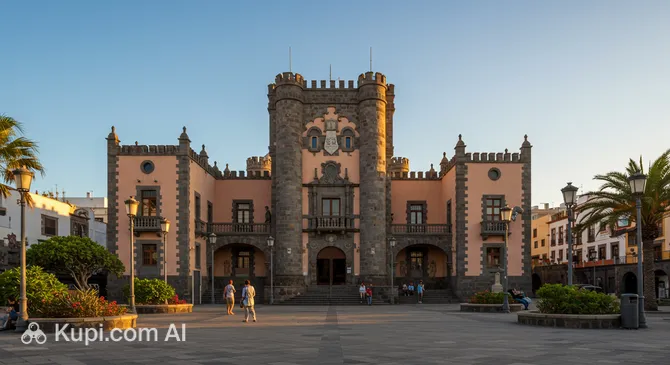
Las Palmas. Illustration.
Source: Kupi.com AI
The city's heritage is deeply rooted in the Age of Exploration. You can delve into the fascinating history of Las Palmas by visiting the historic district of Vegueta. This area features cobblestone streets and colonial architecture, including the impressive Santa Ana Cathedral and the Casa de Colón, a museum dedicated to Christopher Columbus.
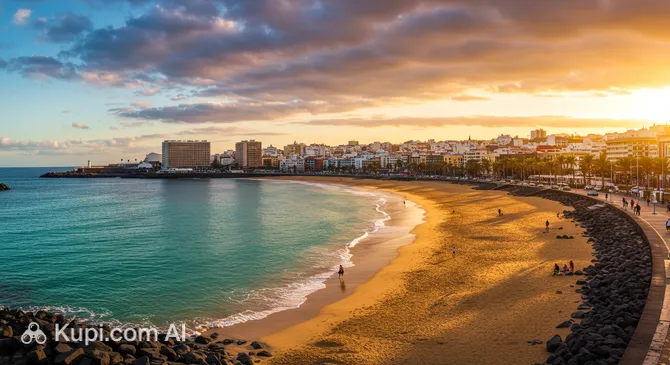
Beyond its historical charm, Las Palmas is famous for Las Canteras Beach, widely considered one of the best urban beaches in the world. Protected by a natural reef known as "La Barra," its calm waters are perfect for swimming and snorkeling. The promenade lining the beach is a hub of activity, packed with restaurants and cafes where visitors can enjoy fresh seafood and local tapas.
Whether you are seeking sun-soaked days on the sand, cultural exploration, or vibrant nightlife, Las Palmas offers an unforgettable experience. It is a destination that truly has something for everyone, inviting you to discover the warmth and energy of the Canary Islands.
Weather Overview
Las Palmas enjoys a pleasant subtropical climate, often celebrated for its consistency and year-round warmth. The city rarely experiences extreme heat or cold, making it a comfortable destination regardless of when you visit. For a comprehensive forecast and historical data, you can consult the detailed guide to the weather in Las Palmas to help pack for your trip.
During the winter months of January and February, average temperatures stay mild at around 16.5°C to 16.6°C, with daily highs reaching roughly 18°C. As summer approaches, the weather warms up gently without becoming oppressive; August is typically the hottest month with an average temperature of 22.2°C and highs around 24.0°C. Expect warm, dry summers with almost no rain, while the winter season remains mild with occasional showers, averaging about 7 to 8 wet days per month.
Average monthly temperature
Average monthly precipitation
Interesting Facts
Beyond its sun-soaked shores, Las Palmas de Gran Canaria holds fascinating stories that often escape the casual visitor. From literary connections to scientific accolades, the city’s secrets add depth to its vibrant character.
The World's Best Climate: According to a 1996 study by Thomas Whitmore at Syracuse University, Las Palmas was rated as having the most pleasant climate out of 600 cities worldwide. The researchers highlighted its mild, consistent temperatures and lack of extreme weather as the key factors earning it this prestigious title.
Agatha Christie's Refuge: The famous crime novelist visited the city in 1927 to recover from a difficult personal period. During her stay at the Hotel Metropole, she wrote parts of The Thirteen Problems and the short story The Companion. Today, a square near the beach is named Plaza Agatha Christie in her honor.
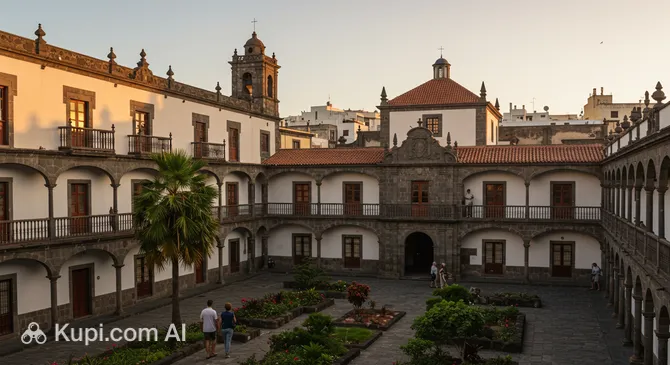
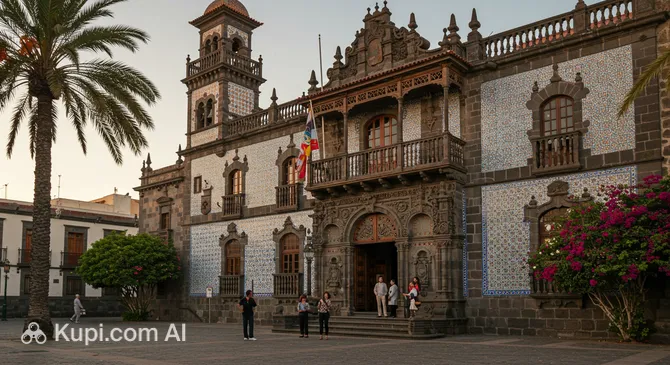
Columbus's Critical Stopover: Before crossing the Atlantic in 1492, Christopher Columbus anchored in the city's port to repair the rudder of his ship, the Pinta. This historic pause is commemorated at the Columbus House, a museum situated in the governor's former residence where the explorer is believed to have stayed.
A Natural Marine Reserve: Las Canteras Beach is unique due to "La Barra," a natural volcanic reef running parallel to the shore. This geological formation protects the sand from strong waves, creating a calm, swimming-pool-like lagoon teeming with fish, while surfers can still catch waves just beyond the barrier.
Columbus House. Illustration.
Source: Kupi.com AI
Traveler photos:
How to Get There
Reaching the capital of Gran Canaria is straightforward, with air travel being the primary method for international and domestic visitors. Whether you are arriving from mainland Europe or hopping over from a neighboring island, you can find more specific details in our guide on how to get to Las Palmas.
The main gateway to the city is Gran Canaria Airport (IATA: LPA), located approximately 22 km from the city center. It is a major international hub handling a large volume of passengers annually. The journey from the airport to Las Palmas typically takes about 20-25 minutes by taxi or roughly 30-40 minutes by bus, offering a scenic introduction to the island's coastline. Travelers can easily find car rental services, taxis, and public buses connecting the terminal to the capital.
For those planning a multi-island itinerary, you might consider flying into Tenerife South Airport (IATA: TFS) or Tenerife North Airport (IATA: TFN). However, please note that these airports are located on the neighboring island of Tenerife, specifically serving the Santa Cruz de Tenerife area. Tenerife South Airport is situated about 112 km away from Las Palmas (across the water), while Tenerife North Airport is roughly 97 km away. Arriving here would require a subsequent flight or a ferry ride to reach Gran Canaria.
For clarity, here is a summary of the main airports:
Since Las Palmas is located on an island, there are no railway connections to the city from the mainland. Besides air travel, the only other way to arrive is by sea. The Port of Las Palmas (Puerto de la Luz) is one of the busiest in the Atlantic, welcoming ferries from mainland Spain (such as Cádiz and Huelva) as well as regular connections from other Canary Islands.
Main Attractions
Las Palmas de Gran Canaria offers a diverse array of attractions that range from historical landmarks to modern architectural marvels. Exploring the city reveals a rich tapestry of culture and nature, ensuring that every traveler finds something to captivate their interest.
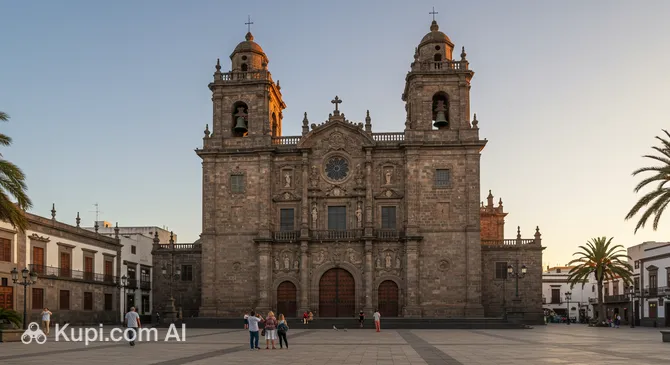
Standing as the spiritual heart of the historic Vegueta district, the Cathedral of Santa Ana is a commanding presence in the city. Construction began in the late 15th century, resulting in a fascinating mix of Gothic, Renaissance, and Neoclassical styles. Visitors are particularly drawn to the south tower, which can be climbed to reveal stunning panoramic views of the colorful cityscape and the Atlantic Ocean beyond.
Cathedral of Santa Ana. Illustration.
Source: Kupi.com AI
Traveler photos:
For a spectacular journey into the aquatic world, the Poema del Mar Aquarium is a modern highlight located near the port. This state-of-the-art facility is famous for its massive curved viewing window, one of the largest in the world, which offers an immersive glimpse into the deep ocean. Divided into three distinct zones—Jungle, Reef, and Deep Sea—it provides a mesmerizing experience with sharks, rays, and vibrant marine ecosystems.
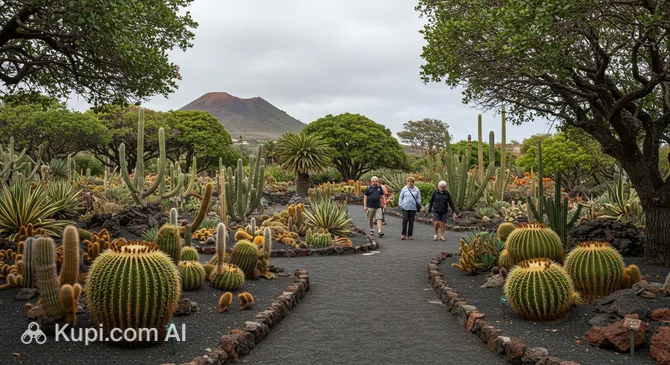
Nature lovers will find a sanctuary at the Viera y Clavijo Botanical Garden, often known simply as the Canarian Garden. It is the largest botanical garden in Spain and is dedicated to preserving the unique flora of the Canary Islands and the Macaronesian region. Walking through its terraced paths, you can admire exotic dragon trees, extensive cactus gardens, and endemic plant species in a tranquil valley setting.
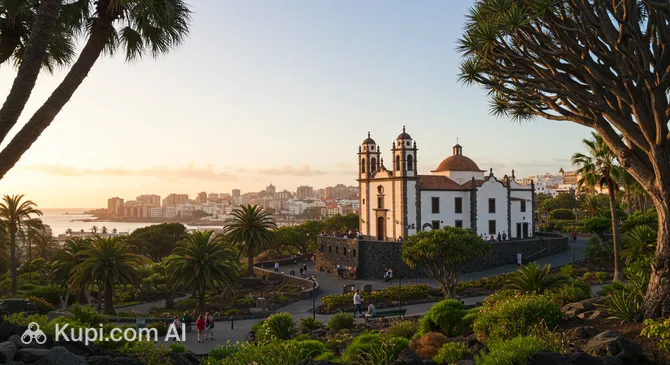
Viera y Clavijo Botanical Garden. Illustration.
Source: Kupi.com AI
Traveler photos:
Guarding the old harbor is the Castle of Light, or Castillo de la Luz, the oldest fortification on the island. Originally built to defend the city against pirate attacks and privateers, this square fortress has been beautifully restored and now serves as a cultural space. It is a significant historical site that offers insight into the maritime defense strategies of the past centuries.
Castle of Light. Illustration.
Source: Kupi.com AI
Traveler photos:
At the western end of the main beach stands the majestic Alfredo Kraus Auditorium. Named after the renowned local tenor, this fortress-like structure was designed to protect the concert hall from the crashing waves while providing exceptional acoustics. It is a cultural beacon hosting international music festivals, and its main hall features a unique window behind the stage that opens up to a view of the ocean, blending art with nature.
Local Cuisine
The culinary landscape of Las Palmas de Gran Canaria is a delicious reflection of its history as a crossroads between Europe, Africa, and the Americas. The local cuisine is characterized by simple yet flavorful ingredients, with a heavy emphasis on fresh produce and the bounty of the Atlantic Ocean. Dining here is not just about eating; it is a social ritual often enjoyed on sunny terraces or in bustling market halls.
No visit to the city is complete without trying the archipelago's most iconic dish: papas arrugadas con mojo. These small, "wrinkled" potatoes are boiled in salt water and served with generous dollops of mojo sauce. You will typically find two varieties: the red mojo picón, which is slightly spicy, and the green mojo verde, made with cilantro or parsley. Another staple is gofio, a toasted flour made from wheat or maize that has been part of the Canarian diet since pre-Hispanic times. It is often served as escaldón (mixed with fish broth) or even as a dessert mousse.
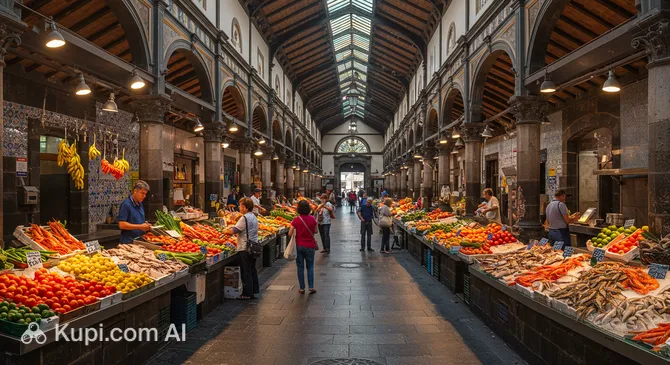
Vegueta Market. Illustration.
Source: Kupi.com AI
Traveler photos:
Given its coastal location, seafood is a star player on most menus. Local specialties include vieja (parrotfish), cherne (wreckfish), and grilled limpets served with green mojo. For a true taste of the island's maritime culture, head to the restaurants along the promenade or visit the historic Vegueta Market. This vibrant market offers a feast for the senses, where you can buy fresh tropical fruits like bananas and papayas, or sample local cheeses and delicacies at various stalls.
When it comes to drinks, the locals are proud of their production. You might enjoy a glass of local wine, as Gran Canaria has a thriving viticulture scene, or cool off with a Tropical, the island's popular local beer. To finish your meal, it is customary to sip on ron miel (honey rum), a sweet and smooth liqueur that is unique to the Canary Islands. For a non-alcoholic option, try Clipper, a strawberry-flavored soda that is a nostalgic favorite among residents.
For an authentic dining experience, look for a bochinche. These are traditional, rustic eateries—often family-run—that serve homemade wine and hearty portions of local food at affordable prices. A place like Bochinche El Chato is an excellent spot to immerse yourself in this casual dining culture and enjoy high-quality tapas in a friendly atmosphere.
Travel Tips
Preparing for a trip to Las Palmas is relatively stress-free thanks to its modern infrastructure and laid-back atmosphere, but a few practical insights can help your holiday run even smoother. Here are some essential tips to keep in mind before you pack your bags for this vibrant city in Spain.
Clothing and Gear: While the city is famous for its "eternal spring," the weather can be changeable. Pack breathable layers, as it can feel warm in the sun but cool in the shade or during the evening breeze. Comfortable walking shoes are a must for exploring the cobblestone streets of Vegueta. Don't forget high-SPF sunscreen and sunglasses, as the UV index is high even on cloudy days. If you plan to visit religious sites like the cathedral, modest dress (covering shoulders and knees) is respectful.
Transportation: The city has an excellent bus system, locally known as guaguas. The yellow municipal buses are frequent, affordable, and cover all main areas; you can pay with a contactless card on board. Taxis are also plentiful and reasonably priced compared to mainland Europe. Renting a car is generally unnecessary if you are staying within the city, as parking can be difficult and expensive, but it is recommended if you plan to explore the rest of the island.
Finances: The local currency is the Euro (€). Credit and debit cards are widely accepted in most restaurants, shops, and hotels. However, it is wise to carry some cash for small purchases at local markets, kiosks, or traditional bochinches. ATMs are widespread. Tipping is not mandatory but is appreciated for good service; rounding up the bill or leaving a few coins is standard practice.
Health and Safety: Las Palmas is generally a very safe city for tourists. Pharmacies are marked with a green cross and are well-stocked; look for a farmacia de guardia for 24-hour service. The tap water is safe to drink, though many locals prefer bottled water due to the taste. As in any major city, keep an eye on your belongings in crowded areas like the bus station or busy markets.
Communication: The official language is Spanish. While staff in hotels and major tourist spots usually speak English, it is less common in local neighborhoods and smaller shops. Learning a few basic phrases like hola (hello), por favor (please), and gracias (thank you) goes a long way. Free Wi-Fi is available in many public squares and cafes, and EU residents can use their mobile data at no extra cost.
Local Etiquette: Canarians are known for their friendliness and relaxed pace of life. It is polite to greet shopkeepers when entering and leaving a store. Dining times are typically later than in northern Europe; lunch is often served from 1:30 PM to 3:30 PM, and dinner usually starts after 8:00 PM. Do not be surprised if service is slower than you are used to—it is part of the island's charm.
What to Avoid: refrain from wearing beachwear (bikinis, swim trunks, or going shirtless) outside of the beach and promenade areas. Walking through the city center or entering shops and restaurants in swimwear is considered disrespectful and is often not allowed. Also, avoid rushing locals; the "island time" mentality means things happen when they happen.
Shopping Hours: Be aware of the traditional siesta schedule. Many smaller shops and businesses close between 1:30 PM and 4:30 PM, reopening for the evening until about 8:00 PM. However, major department stores and shopping centers usually remain open throughout the day without a break.
By keeping these practicalities in mind, you will be well-equipped to navigate the city like a pro. Las Palmas is a welcoming destination where a little local knowledge ensures you can focus entirely on enjoying the culture, the food, and the beautiful coastline.
Entertainment & Nightlife
Las Palmas de Gran Canaria comes alive when the sun goes down, offering a vibrant nightlife scene that rivals diverse European capitals. From relaxed rooftop terraces overlooking the ocean to pulsating nightclubs and traditional tapas bars, the city caters to every taste. The atmosphere is generally laid-back and welcoming, with locals and tourists mingling in the streets until the early hours of the morning.
The nightlife is primarily concentrated in two main districts, each with its own distinct vibe. For a more bohemian and traditional evening, head to the historic Vegueta and Triana districts. Thursdays are particularly popular here due to the "Ruta del Pincho," where bars offer discounted drinks and tapas. A central hub in this area is Plaza de las Ranas, a lively square surrounded by kiosks and terraces perfect for starting the night with a conversation and a local beer.
If you are looking for more intense energy and late-night dancing, the area around Santa Catalina Park and the port is the place to be. This district is famous for its open-air terraces, karaoke bars, and nightclubs that stay open until dawn. It is the epicenter of the city's Carnival celebrations but remains a bustling hotspot year-round, drawing a younger crowd and those eager to party.
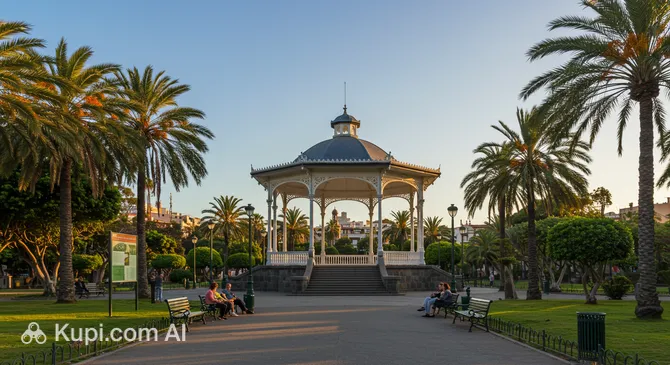
Santa Catalina Park. Illustration.
Source: Kupi.com AI
Traveler photos:
For live music enthusiasts, the city offers several intimate venues. Imaginario Drinks & Music is a well-regarded spot known for its great cocktails and regular live performances ranging from jazz to rock. If you prefer a club atmosphere with DJ sets and a dance floor, you might check out F29 Bar, which often features upbeat music and a lively crowd. Dress codes are generally casual-smart; while you don't need a tuxedo, beachwear is not appropriate for evening venues.
Practical advice for night owls: the action starts late. Dinner is usually around 9:00 PM or 10:00 PM, bars fill up around midnight, and clubs often don't get busy until 2:00 AM. Prices are quite reasonable compared to mainland Europe, with beers and mixed drinks costing significantly less. Getting around is easy; the yellow municipal buses run late night routes (Líneas Luna), and white taxis with a blue stripe are plentiful, safe, and inexpensive.
Safety is rarely a concern in Las Palmas, as the main nightlife areas are well-lit and populated. However, standard precautions apply: keep an eye on your belongings and stick to main streets when walking late at night. If you need a ride, you can easily hail a taxi on the street or find a rank near major squares.
During the day, entertainment options shift towards culture and leisure. You can catch a play or a concert at the historic Guiniguada Theatre, which hosts a variety of artistic performances. For families or those seeking active fun, the Trampoline Park Las Palmas offers a great way to burn off energy. Shoppers will enjoy browsing the extensive stores at Las Arenas Shopping Center, located right by the sea.
Parks & Museums
Las Palmas de Gran Canaria seamlessly integrates its urban vibrancy with serene green spaces and a deep respect for its cultural heritage. Visitors can easily transition from bustling city streets to tranquil gardens or immersive museums that narrate the island's fascinating past, offering a well-rounded travel experience.
One of the city's most enchanting green lungs is Doramas Park, located in the elegant Ciudad Jardín district. This landscaped garden is a tribute to the island's native flora, featuring dragon trees, ficus, and palm trees set amidst cascading fountains and statues. It provides a peaceful retreat from the urban noise, perfect for a leisurely stroll. Near the historic Triana neighborhood, you will find San Telmo Park. This historical square serves as a major transport hub but also houses a beautiful Art Deco kiosk and the old hermitage of San Telmo, making it a charming spot to observe local life.
Doramas Park. Illustration.
Source: Kupi.com AI
Traveler photos:
For those seeking a more rugged natural environment, El Confital offers a protected landscape just beyond the main city promenade. Known for its volcanic rock formations and wooden walkways, it is an exceptional place to watch the sunset and enjoy panoramic views of the bay without leaving the capital.
The city's museums are equally compelling, with the Canarian Museum standing out as an essential stop for history enthusiasts. Located in the Vegueta district, it houses the most complete collection of aboriginal archaeological remains in the Canaries. Visitors can explore the pre-Hispanic history of the islands through impressive displays of ceramics, idols, and mummies that shed light on the lives of the ancient Guanches.
Canarian Museum. Illustration.
Source: Kupi.com AI
Traveler photos:
On the modern side of the spectrum, the Elder Museum of Science and Technology invites interaction with its "forbidden not to touch" philosophy. Situated near Santa Catalina Park, this dynamic venue features a planetarium, a greenhouse, and a variety of hands-on exhibits, including a flight simulator and a robocoaster, making it a favorite for families. Art lovers should not miss the Atlantic Center of Modern Art (CAAM), which focuses on the tricontinental dialogue between the arts of Africa, Europe, and the Americas.
Among the significant historical landmarks is the Castillo de San Cristóbal. While the main fortification is largely in ruins, the iconic Tower of San Cristóbal still stands defiantly in the sea. This site marks the location of the city's first defensive castle and offers a glimpse into the maritime struggles of the 16th century.
For a quieter cultural experience, consider visiting the Perez Galdós House Museum. This beautifully preserved 19th-century home was the birthplace of Benito Pérez Galdós, one of Spain's greatest writers. Walking through its rooms offers an intimate look at domestic life during that era and the literary legacy of the author.
Getting Around
The public transport system in Las Palmas is efficient, affordable, and predominantly reliant on a comprehensive bus network. Locals refer to buses as guaguas, and they are the primary means of getting around the city. There is currently no underground metro or tram system in operation, although a high-capacity Bus Rapid Transit (BRT) line known as the MetroGuagua is under development. For now, the yellow municipal buses, operated by Guaguas Municipales, cover virtually every neighborhood, beach, and point of interest with high frequency.
For travelers planning to explore beyond the city limits, the blue buses operated by the Global company connect the capital to other towns and resorts across the island. The two main transportation hubs in the city are the San Telmo Station, located near the historic Triana district, and the Santa Catalina Interchange near the port and main beach. These stations serve as the starting points for both urban and interurban routes, making it easy to transfer between lines.
Paying for your journey is straightforward and tourist-friendly. You can purchase a single ticket directly from the driver using cash (small bills only) or, more conveniently, pay with a contactless bank card or mobile device upon boarding. A single trip typically costs around €1.40. If you plan to use public transport frequently, it is worth purchasing a rechargeable travel card, such as the BonoGuagua or the island-wide TransGC card. These cards significantly reduce the fare per trip and can be bought and topped up at bus stations, newsstands, and authorized kiosks.
Operating hours for most bus lines generally run from 6:00 AM to 11:00 PM. However, the city does not sleep when the main lines stop; a network of night buses, identified by the letter "L" (for Luna, meaning moon), ensures that you can still get around safely after midnight. To navigate the system easily, it is highly recommended to download the official GuaguasLPA app, which provides real-time arrival times, route planning, and stop locations.
Taxis are another popular and reasonably priced alternative in the city. They are easily recognizable by their white color with a blue stripe on the side. You can hail them on the street if the green light on the roof is on, or find them at designated ranks throughout the city. Taxis are metered, and while drivers are generally honest, it is always good practice to ensure the meter is running. Ride-hailing apps are also available but are less dominant than the traditional taxi fleet.
For a more active way to see the sights, Las Palmas offers a public bike-sharing system called Sitycleta. These distinctive yellow bicycles are stationed at various points across the city, particularly along the flat coastal avenues. Users can rent them via a mobile app for short periods, making them an excellent option for riding along the extensive bike lanes near the port and the maritime avenue.
Finally, for a relaxed overview of the main attractions, the City Sightseeing tourist bus is a great option. These red double-decker buses operate on a hop-on, hop-off basis, circling key landmarks like the Vegueta historic district, the Auditorium, and the main commercial areas. They offer audio guides in multiple languages, providing historical context as you travel between the city's highlights.
Accommodation
Where to Stay:
Accommodation in Las Palmas de Gran Canaria caters to a wide spectrum of travelers, ranging from budget-friendly hostels and surf camps to high-end luxury resorts and modern holiday apartments. Whether you are looking for a room with an ocean view, a historic boutique hotel, or a practical base for exploring the island, the city offers diverse options to suit every style and budget.
The most popular area for tourists is undoubtedly the Las Canteras Beach district. Staying here puts you right on the doorstep of the golden sands and the vibrant promenade, filled with restaurants and cafes. It is the ideal location for those who want a mix of city life and beach relaxation. For a more cultural experience, the historic neighborhoods of Vegueta and Triana offer charming accommodations housed in renovated colonial buildings, perfect for history buffs who want to be close to museums and the cathedral. Alternatively, the area around the Port (Puerto de la Luz) and Santa Catalina Park is excellent for business travelers and those seeking proximity to shopping centers and nightlife.
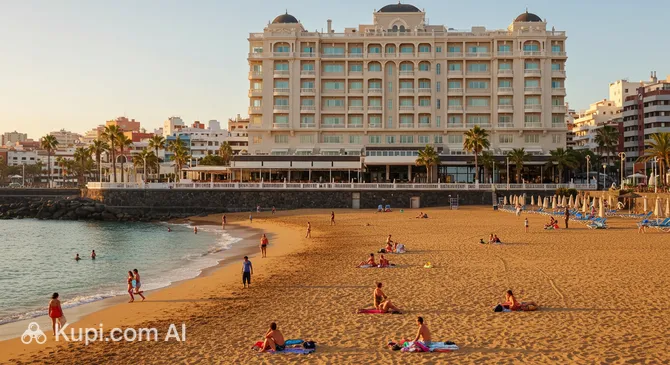
For travelers seeking a classic beachfront experience, the Reina Isabel & Spa is a well-known landmark located directly on the Las Canteras promenade. It offers immediate access to the sea and features a rooftop pool with stunning views. Another notable option, particularly convenient for those arriving by sea or interested in the maritime atmosphere, is the Puerto de la Luz Hotel, situated near the harbor and the bustling Isleta district.
Reina Isabel & Spa. Illustration.
Source: Kupi.com AI
Traveler photos:
Booking Tips: Las Palmas is a year-round destination, but the winter months (especially December to February) and the Carnival season (usually February or March) are peak times. During these periods, hotels fill up quickly, and prices can rise significantly. It is highly recommended to book your accommodation at least a few months in advance to secure the best rates and availability.
Prices and Booking: The price range varies widely. A bed in a hostel or a budget guesthouse can cost between €20 and €40 per night, while mid-range hotels typically range from €70 to €120. Luxury resorts and boutique hotels generally start from €150 upwards. Most accommodations can be easily booked via major online platforms, though contacting smaller, family-run establishments directly can sometimes yield better deals or specific room requests.
Nearby Cities
For those looking to explore the surroundings, Las Palmas serves as an excellent base for day trips to several interesting nearby locations:
City
Population
Distance
Arucas
38 535
8 km
Teror
12 667
13 km
Telde
102 769
14 km
Ingenio
31 932
23 km
San Bartolomé de Tirajana
53 066
26 km
Just a short drive south of the capital lies Telde, the island's second-largest city and one of its oldest settlements. It is renowned for its rich archaeological heritage and the historic district of San Juan, where visitors can wander through quiet cobblestone streets lined with colonial-style houses and visit the impressive Church of San Juan Bautista.
For a complete change of scenery, San Bartolomé de Tirajana is a vast municipality that encompasses some of Gran Canaria's most famous landscapes. While the administrative center is a traditional mountain village, the coastline features the spectacular Maspalomas Dunes, a protected nature reserve resembling a miniature desert that borders the ocean.
Travelers willing to venture a bit further can take a ferry to Santa Cruz de Tenerife on the neighboring island. As a fellow capital of the Canary Islands, it offers a distinct urban vibe with grand architecture, such as the Auditorio de Tenerife, and lush parks like García Sanabria, making it an exciting option for an inter-island day trip.
These nearby destinations offer a glimpse into the diverse culture and landscapes of the region.
Shopping & Souvenirs
Shopping in Las Palmas de Gran Canaria is a delightful experience, combining the charm of historic streets with the convenience of modern facilities. Thanks to the Canary Islands' special tax status, which applies the reduced Indirect General Canary Tax (IGIC) instead of the standard VAT found on the mainland, prices for many goods—especially perfumes, electronics, alcohol, and tobacco—are often significantly lower. This makes the city an attractive destination for those looking to indulge in some retail therapy while on vacation.
For a traditional high-street experience, the pedestrianized Calle Mayor de Triana is the place to be. Lined with beautiful modernist buildings, this vibrant street offers a mix of international fashion chains, boutiques, and cafes. It is an open-air commercial museum where you can shop while admiring the architecture. Another key area is Avenida José Mesa y López, a bustling commercial artery known for hosting large department stores and high-end boutiques, making it a favorite stop for luxury shoppers.
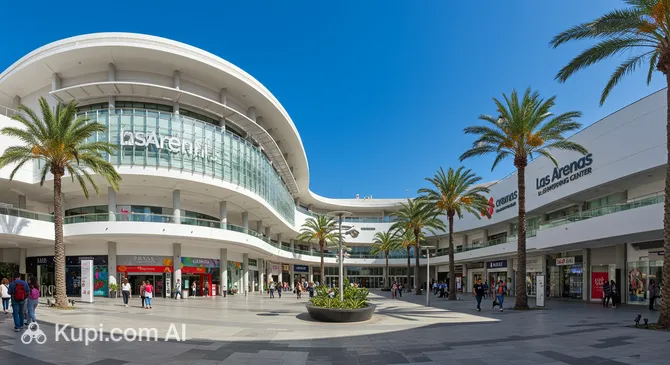
If you prefer the convenience of everything under one roof, the city boasts several impressive malls. The Las Arenas Shopping Center is a favorite among locals and tourists alike. Located at the western end of Las Canteras Beach, near the auditorium, it features a wide range of international brands and a cinema. For an open-air experience that takes advantage of the island's mild climate, the Alisios Shopping Center offers a modern layout with spacious walkways, lush greenery, and extensive leisure options on the outskirts of the city.
Las Arenas Shopping Center. Illustration.
Source: Kupi.com AI
Traveler photos:
To immerse yourself in the local culture, a visit to the city's markets is essential. The historic Vegueta Market, situated in the old town, is a feast for the senses with its colorful displays of tropical fruits, spices, and fresh produce. It is an excellent spot to discover local ingredients. Another bustling hub is the Central Market of Las Palmas, spanning two floors where residents shop for high-quality meat, fish, and vegetables. On Sundays, a flea market is typically held in San Telmo Park or near the port area, offering handicrafts and antiques.
When searching for the perfect souvenir, look beyond the standard trinkets. Gran Canaria is famous for its Aloe Vera products, considered some of the best in the world due to the favorable climate. Gastronomic souvenirs are also highly recommended, such as jars of red or green mojo sauce, vacuum-packed wedges of award-winning Canarian cheese, or a bottle of ron miel (honey rum). For something more durable, local pottery or a traditional "Canarian knife" (Naife) with a geometric handle makes for a unique gift.
Most large shopping centers and department stores operate continuously from 10:00 AM to 10:00 PM, Monday through Saturday. However, smaller boutiques and street shops often follow the traditional split schedule, opening around 10:00 AM, closing for a siesta between 1:30 PM and 4:30 PM, and reopening until 8:00 PM. Sunday trading is generally limited to specific tourist zones or cruise ship seasons. Credit and debit cards are widely accepted everywhere, though carrying some cash is useful for small purchases in markets.
Tourists residing outside the European Union are eligible for a VAT refund (tax-free shopping) on purchases made in stores that participate in the scheme. Since the Canary Islands have their own tax regime, the rules can differ slightly from the mainland, but the general principle of tax-free shopping for non-residents applies. Look for the "Tax Free" sign in shop windows and ask for the necessary forms at the checkout to claim your refund at the airport upon departure.