Support

Gran Canaria Airport

About the Airport

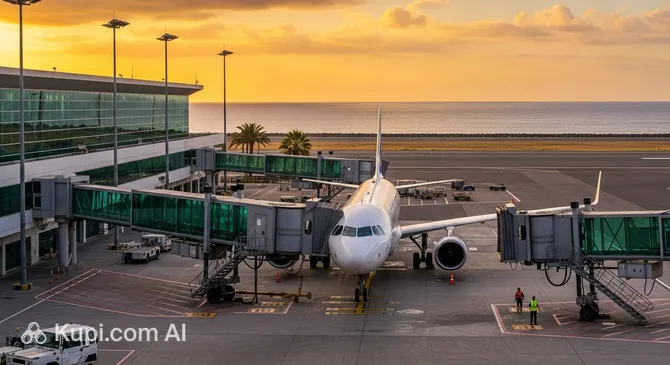
Gran Canaria Airport. Source: Kupi.com Binoculars

Gran Canaria Airport is not merely a transport hub, but a true gateway to the world of "eternal spring". Located on the eastern coast of the island, the terminal welcomes travellers with a warm ocean breeze and an atmosphere of serene relaxation from the very first minutes after landing. Thanks to its strategic location exactly halfway between the bustling capital in the north and the famous golden dunes in the south, the airport serves as the ideal starting point for any itinerary across this "continent in miniature".

IATA Code LPA
ICAO Code GCLP
City Las Palmas de Gran Canaria
Distance to Centre ~19 km
Status International
Passengers per Year approx. 13.9 million (2023)

Airport Features and Advantages

Gran Canaria Airport is distinguished by a high level of comfort and well-thought-out infrastructure capable of handling a large flow of tourists year-round. Passengers often note the convenient navigation and friendly staff, which makes passing through formalities quick and stress-free.

A key feature is the extensive Duty Free zone. Since the Canary Islands have a special economic status, prices for perfumes, cosmetics, and luxury goods here are often lower than in airports in continental Europe. For those who value privacy, the comfortable Galdós VIP lounge is available, featuring a terrace with views of the ocean and the runway.

Contact Information

For your convenience, we have compiled the main contact information for Gran Canaria Airport (LPA). We recommend checking the official website for the most up-to-date data before your trip.

  • Official Website: You will always find the most complete and current information on the official Aena Spanish airports portal: www.aena.es/es/gran-canaria
  • Information Service Phone: For information about flights, services, and airport operations, you can call the general Aena number: (+34) 91 321 10 00.
  • Airport Address: Autopista GC-1, 35230, Telde, Las Palmas, Spain.
  • Lost Luggage: Important! For issues regarding the loss or damage of checked baggage, please contact the representative of your airline directly. Airport services do not handle the search for passenger luggage.
  • Lost & Found (Personal Items): If you forgot something on the plane, contact your airline. If an item was lost within the airport terminal, contact the Lost & Found office by phone at (+34) 928 579 130 or by email: lpa.objetosperdidos@aena.es.
  • Passenger Support: Information desks are located in the arrival hall and the check-in area. Staff are always ready to assist with terminal navigation and answer your questions.

How to Get to the Airport

Reaching Gran Canaria Airport (LPA), located approximately 20 kilometres south of the island's capital, the city of Las Palmas, is possible via several convenient methods. The choice of transport depends on your budget, point of departure, and personal preferences. The airport is excellently integrated into the island's transport system, making trips simple for both tourists and local residents of Spain.

The most economical method is public transport, represented by a developed network of buses (locals call them "guaguas"). The "Global" company operates key routes. If you are travelling from the capital, you will need route No. 60, which runs between the San Telmo bus station in Las Palmas and the airport. Buses run frequently, approximately every half hour, and the trip takes about 20-30 minutes. The ticket price is just a few Euros. For tourists staying at southern resorts, other routes are suitable: No. 91 (connects Las Palmas with Playa del Cura via the airport) and No. 66 (departs from Faro de Maspalomas).

A more comfortable, though more expensive option, is a taxi or pre-booked transfer. Official taxis are white with a green stripe and are easily found at the terminal exits and in any resort town. A trip from the airport to the centre of Las Palmas will cost approximately 25-35 Euros, and to popular southern resorts such as Maspalomas or Playa del Inglés, it will be 35-45 Euros. Pre-booking a transfer can be especially beneficial for large groups or families with children, as the price is fixed and does not depend on traffic congestion.

For those planning to actively explore the island, the best solution is car rental. Many international and local rental companies have desks directly in the arrivals terminal. By booking a car in advance, you can set off on your journey immediately after landing, independent of public transport schedules. The roads in Gran Canaria are in excellent condition, and having your own vehicle gives you complete freedom of movement. Short-term and long-term parking facilities are available at the airport, which is convenient if you are returning a car before departure or meeting arriving passengers.

Terminals and Map

Gran Canaria Airport (LPA), despite its significant passenger traffic, is distinguished by a structure that is convenient and easy to understand for passengers. It consists of one large passenger terminal, which significantly simplifies navigation: all pre-flight and post-flight formalities take place in a single building.

After passing through general security control, passengers are distributed across three main departure zones depending on their final destination. This organisation helps effectively manage traveller flows:

  • Zone A: Serves flights between the Canary Islands.
  • Zone B: Designated for flights to mainland Spain and other Schengen Zone countries.
  • Zone C: Used for departures to countries outside the Schengen Zone.

The terminal layout is logically organised by floors. The Arrivals Zone is located on the ground floor (P0). Here you will find baggage claim belts, the customs control area, car rental desks, and exits to public transport. The Departures Zone is located on the first floor (P1), where check-in counters (from 101 to 404) and the main security checkpoint are situated. On the second floor (P2), you will find the food court and business lounges.

Check-in and security screening at the airport usually proceed quickly, taking about 30-45 minutes. However, during peak tourist seasons, such as summer or the Christmas holidays, it is recommended to arrive well in advance—at least 2-3 hours before an international flight. Navigating the terminal is easy thanks to clear signage in Spanish, English, and German, which will help you find the way to your boarding gate without difficulty.

Airport History

The history of Gran Canaria Airport is a reflection of the island's own history, closely tied to the development of tourism and the archipelago's strategic position. Officially, the airport, then known as Gando Airfield, was opened in 1930 and initially served as a military airbase. Civil aviation arrived later: in 1946, the airport opened for national civil flights, which was the first step towards its transformation into a major tourism hub.

A truly new era began after the Second World War. In 1948, the first passenger terminal was built, and in 1957, the runway was paved and modernised to accommodate larger aircraft. The real boom occurred in the 1960s when the Canary Islands became a popular tourist destination. To cope with the growing flow of travellers, a new, more spacious terminal was opened in 1973, which today primarily serves flights within the Schengen Zone.

One of the significant, though tragic, events in the airport's history is indirectly linked to the aviation disaster in Tenerife in 1977. On that day, Gran Canaria Airport accepted a huge number of diverted flights, which was a serious test of its capabilities and highlighted its importance for air traffic in the region. The next major reconstruction took place in the run-up to the 1992 Olympic Games in Barcelona: in 1991, a new international terminal was opened, allowing for a significant increase in capacity.

In the 21st century, the airport continued to develop: the runway was extended, and in 2002, a modern control tower was built. Today, Gran Canaria Airport consistently ranks among the busiest airports in Spain. An interesting fact: thanks to its long runways and good weather conditions, the airport was selected by NASA as one of the emergency landing sites for space shuttles. Additionally, a Spanish Air Force base is still located on its territory.

Services and Amenities

Gran Canaria Airport (LPA) offers passengers a wide range of services to make waiting for a flight as comfortable as possible. In the terminal, you will find numerous restaurants, cafés, and lounges to suit any taste—from fast food outlets to restaurants where you can try Canarian cuisine. Additionally, numerous shops are at your service, including a large Duty Free area where you can purchase perfumes, cosmetics, beverages, tobacco products, and local delicacies.

For those who value enhanced comfort, the Sala Galdós VIP Lounge operates at the airport. Here you can relax in a quiet atmosphere, enjoy complimentary snacks and beverages, and attend to work matters. Free Wi-Fi is available throughout the terminal, and numerous charging stations for electronic devices are located in the waiting areas.

Financial matters are easily resolved on-site: the airport has ATMs and currency exchange points. If necessary, you can visit the pharmacy or the first aid station. For travellers with children, there are special play areas and mother-and-child rooms equipped with changing tables.

The airport is fully adapted for passengers with reduced mobility. An assistance service is provided, which is recommended to be booked in advance through your airline. If you need to stay overnight near the airport, several hotels are located a few minutes away by taxi or shuttle. For business travellers, conference rooms and business services are available, allowing you to hold a meeting or work while waiting for departure.

Where to Eat

At Gran Canaria Airport (LPA), you will easily find a place to have a snack or a full meal while waiting for your flight. The selection of dining establishments here is quite broad and designed for different tastes and budgets—from cafés with aromatic coffee to restaurants offering international and local cuisine.

The majority of cafés and restaurants are located in the Departures Zone, after passing security control (airside). Establishments for every taste are concentrated here: from popular fast-food chains like Burger King to cosy coffee shops and lounges. In the public zone before control (landside), there are also several cafés where you can drink a cup of coffee and eat a sandwich if you are seeing someone off or have arrived too early.

To experience the local flavour, pay attention to establishments offering Canarian dishes. Be sure to try traditional Spanish sandwiches—bocadillos—with various fillings, such as local cheese. In some restaurants, you can also find the famous "papas arrugadas" potatoes with mojo sauces. For a quick bite, Pan's & Company or Starbucks outlets are ideal, and for a leisurely lunch, there are à la carte restaurants where you can order pasta, burgers, or salads.

Travellers with special dietary needs will also find suitable choices. Vegetarian dishes, such as salads and vegetable sandwiches, are on the menu of most cafés. Some large chains offer gluten-free or vegan options. We recommend carefully studying the menu or asking the staff for clarification on the ingredients of dishes to ensure they meet your requirements.

Prices at the airport are expectedly higher than in the city but remain within reasonable limits. The average bill for coffee and pastries will be around 5-8 Euros, a sandwich or bocadillo will cost 7-10 Euros, and you will have to pay between 15 and 25 Euros for a hot meal in a restaurant. Most establishments operate in accordance with the flight schedule, opening early in the morning and closing after the departure of the last aircraft.

Tips for Travellers

To ensure your journey through Gran Canaria Airport goes smoothly, make use of these proven tips. Planning is the key to a calm start and finish to your holiday in the Canary Islands.

Arrival Time and Check-in: Gran Canaria Airport (LPA) handles a large number of international and domestic flights. It is recommended to arrive 2.5-3 hours before the departure of international flights and flights to Schengen Zone countries. For inter-island flights, 1.5-2 hours is usually sufficient. During peak season (summer and Christmas holidays), allow extra time. To save time, complete online check-in and, if travelling only with hand luggage, proceed directly to security screening.

Security Control and Hand Luggage: Security checkpoints at the airport work efficiently, but queues can occur. Prepare your belongings in advance: take out your laptop and other large electronics, and pack all liquids up to 100 ml in one transparent bag. Remember that sharp objects, weapons, and flammable substances are prohibited in hand luggage. Be sure to check the weight and size limits for hand luggage on your airline's website, as they may vary.

Tips for Transit Passengers: If you are flying via Gran Canaria to other islands of the archipelago, the transfer process is usually straightforward. The airport has one large terminal, which simplifies navigation. Upon arrival, check the information screens to find the number of your next boarding gate. Customs control for those arriving from EU countries typically consists of a simple "green channel". For travellers from outside the European Union, standard customs declaration rules of Spain apply.

How to Save Money: Prices for food and drinks at the airport are traditionally higher. Bring an empty water bottle with you and fill it at drinking fountains after passing security control. It is more cost-effective to book a transfer to resort areas or the city of Las Palmas in advance online or use public transport (Guaguas buses), the stops for which are located right at the exit from the arrivals area.

In Case of Flight Delay: If your flight is delayed, first contact your airline representative for information. Depending on the length of the delay, under EU regulations, you may be provided with vouchers for food or drinks. The airport has free Wi-Fi, and many cafés and shops to help pass the waiting time. Paid VIP lounges are also available for a more comfortable rest.

Choosing a Seat on the Plane: And finally, a small tip—when flying from Gran Canaria or arriving on the island, choose a window seat. You may be treated to breathtaking views of the island's volcanic landscapes and the endless Atlantic Ocean. This will be a wonderful start or end to your journey.

Reached the end of the page?

That means the route is fully explored