Support

La Palma Airport

About the Airport

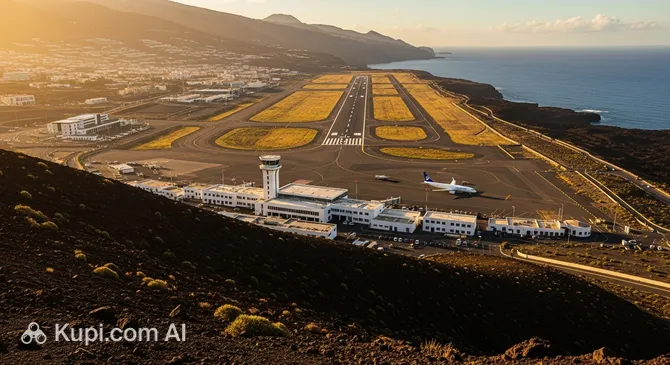
La Palma Airport. Source: Kupi.com Binoculars

La Palma Airport is not merely a transit point, but a picturesque gateway to "The Beautiful Island" (La Isla Bonita), as it is affectionately known by the locals. The runway stretches right along the shores of the Atlantic Ocean, offering passengers breathtaking views of the endless blue waters and majestic volcanic slopes even before landing. This modern yet cosy terminal is designed so that travellers can feel the relaxed atmosphere of the Canary Islands from the very first moments of their arrival.

IATA Code SPC
ICAO Code GCLA
City Santa Cruz de La Palma
Distance to Centre 8 km
Status International
Annual Passengers ~1.4 million people

Terminal Features and Amenities

Despite its compact size, La Palma Airport possesses all the necessary infrastructure for a comfortable wait for your flight. The new terminal, opened in 2011, is distinguished by an abundance of natural light and spacious halls. A particular point of pride for the airport is the open terrace, from where one can enjoy the sea air and watch the aircraft — a rare opportunity in modern airport terminals.

For shopping enthusiasts, there is a duty-free shop, as well as the unique boutique "Hecho en La Palma" ("Made in La Palma"). Here, you can purchase authentic souvenirs, local ceramics, and famous Canarian delicacies, including cheeses and desserts, to take a piece of the island home with you. In the departure zone, cafes, a children's play area, and free Wi-Fi are also available, making the wait for your flight pleasant and tireless.

Contact Information

Below you will find the main contact information for La Palma Airport (SPC), which serves the city of Santa Cruz de La Palma and the entire island.

  • Official Website: Up-to-date information on flights, services, and regulations can be found on the official website of the Spanish airport operator Aena: www.aena.es/es/la-palma.html
  • Information Service Telephone: For information, you may call the general Aena number: (+34) 91 321 10 00.
  • Airport Address: Carretera de Bajamar, s/n, 38738, Breña Baja / Villa de Mazo, Santa Cruz de La Palma, Spain.
  • Email: For written enquiries, you can use the address ocainformacion@aena.es or the dedicated contact forms on the Aena website.
  • Social Media: News and updates are published on Aena's general social media pages, such as X (formerly Twitter) (@aena) and Facebook.
  • Lost Luggage Information: For issues related to lost or damaged luggage, you must contact your airline's Lost & Found service directly. Airport staff do not handle these matters.
  • Passenger Support Contacts: Information desks are located within the terminal building where assistance can be obtained. You may also use the information service telephone.

How to Get to the Airport

Getting to La Palma Airport (SPC), located just 8 km from the island's capital, the city of Santa Cruz de La Palma, is possible via several convenient methods. The choice depends on your budget, time, and plans for exploring this picturesque corner of Spain.

Public Transport: Bus

The most economical way to get to or from the airport is by public bus. Route No. 500 connects the airport with the capital, Santa Cruz de La Palma, to the north and the popular tourist area of Los Cancajos. Buses run regularly, approximately every half hour throughout the day. The journey to the city centre takes just 15-20 minutes, and the ticket cost is only a few Euros. This is an excellent choice for budget travellers without a large amount of luggage.

Taxi and Private Transfer

For maximum comfort and speed, utilise taxi services. The taxi rank is located directly outside the arrivals hall exit. A trip to Santa Cruz de La Palma will take about 10 minutes, and the cost will be approximately 10-15 Euros. A taxi is an ideal option if you are travelling with family, heavy luggage, or simply wish to get to your hotel without extra hassle. You can also book a private transfer in advance, which guarantees a driver will meet you at the airport.

Car Rental

If you plan to actively explore the island of La Palma with its volcanoes, forests, and secluded beaches, renting a car is the best choice. Offices of several major international and local rental companies are located at the airport. It is recommended to book a vehicle in advance, especially during the high tourist season, to guarantee availability and secure a better price. The road from the airport to the main resorts and attractions is well signposted.

Airport Parking

La Palma Airport has an official car park located a few steps from the terminal. It offers both short-term and long-term parking options. This is convenient if you have arrived in your own or a rented car to meet or see someone off, or if you need to leave your car for the duration of your trip.

Connections to Other Canary Islands

La Palma Airport serves as an important hub for travel across the Canary Archipelago. Regular flights to neighbouring islands operate from here. You can easily reach airports such as Tenerife North Airport (TFN) and Tenerife South Airport (TFS), Gran Canaria Airport (LPA), as well as smaller islands served by La Gomera Airport (GMZ) and El Hierro Airport (VDE).

Terminals and Map

La Palma Airport (SPC) represents a modern and compact aviation hub distinguished by a simple and clear structure. This makes it very convenient for passengers, allowing them to orient themselves quickly and complete all pre-flight formalities without unnecessary stress.

Structure and Terminals

The airport operates with one passenger terminal, serving both domestic and international flights. All zones — arrivals, departures, check-in, and security — are under one roof, eliminating the need for transfers or long walks. The terminal building has two main levels:

  • Ground Floor (Level 0): Here lies the Arrivals Zone (Llegadas). Passengers arriving on the island proceed to this level to collect their luggage from the conveyor belts. The car rental desks, tour operator offices, and the exit to the taxi rank and buses are also located here.
  • First Floor (Level 1): This is the Departures Zone (Salidas). Here, travellers will find check-in counters (Facturación) and baggage drop-off points. After check-in, passengers proceed to the security screening area, and then into the airside zone with the boarding gates (Puertas de embarque).

Procedures and Navigation

Thanks to the compact size of the airport, passing through check-in and security control usually takes little time. On average, all formalities take about 20-40 minutes. However, during the peak tourist season (summer months and Christmas holidays), queues are possible, so it is recommended to arrive at the airport well in advance — at least 1.5-2 hours before departure.

Navigation inside the terminal is intuitively clear. Signs in Spanish and English are installed everywhere, as well as electronic boards with flight information. Since all processes take place in one building, getting lost is practically impossible. For passenger convenience, there are several cafes, Duty Free shops, and souvenir stalls in the departure lounge where one can comfortably spend time waiting for a flight.

Airport History

The history of La Palma Airport (SPC) is inextricably linked with the development of tourism and the need for reliable connections with one of the most picturesque Canary Islands. The island's air gateway, serving the city of Santa Cruz de La Palma, has gone through several important stages of establishment.

The first airfield on the island, known as Buenavista, was opened in 1955. However, its location frequently caused flight cancellations due to unfavourable weather conditions, particularly fog. This prompted the search for a new, more suitable location. As a result, on 15 April 1970, the new airport was ceremoniously opened at its current site in the municipality of Mazo. The first aircraft to land here was a Fokker F-27 of Iberia airlines.

Over the years, the airport has been constantly modernised to meet growing passenger traffic. In the 1980s, the runway was lengthened, allowing for larger aircraft and night flights. However, the most significant stage of development was a large-scale reconstruction completed in 2011. This project included the construction of a modern passenger terminal, a new control tower, and expanded aircraft parking aprons. This allowed the airport's capacity to increase to 3 million passengers per year.

One of the serious tests in the airport's recent history was the eruption of the Cumbre Vieja volcano in 2021. Clouds of volcanic ash repeatedly led to the temporary closure of airspace, highlighting both the importance and vulnerability of air travel for island life. Today, La Palma Airport is a modern transport hub playing a key role in the economy and daily life of the island, connecting it with mainland Spain and other European countries.

Services and Amenities

La Palma Airport (SPC) is a modern and convenient terminal offering passengers all necessary services for a comfortable wait for their flight. Despite its relatively small size, the airport is well-equipped and thoughtfully designed for the needs of travellers arriving on one of the most scenic Canary Islands.

Within the terminal, you will find several cafes and restaurants where you can have a snack, drink coffee, or enjoy a full meal featuring local and international cuisine. For shopping enthusiasts, a Duty Free shop operates with a wide range of perfumes, cosmetics, and tobacco products, as well as shops offering Canarian souvenirs, delicacies, and press.

For those who wish to stay connected, free Wi-Fi from the Aena network is provided throughout the airport. There are also designated areas for charging mobile devices. Passengers seeking enhanced comfort can utilise the services of the La Palma VIP Lounge, which offers a cosy atmosphere, beverages, snacks, and fresh press away from the general bustle.

Basic financial services are available at the airport, including ATMs for cash withdrawals. To ensure passenger safety and health, a First Aid point operates within the terminal where primary medical assistance can be provided. In case of more serious issues or questions, one should approach any airport staff member. Passengers with reduced mobility are provided with free assistance upon prior request (Sin Barreras service), and baby care rooms with changing tables are equipped for travellers with small children.

Although there are no hotels directly inside the airport building, numerous accommodation options are located a few minutes' drive away in nearby settlements such as Breña Baja and the island's capital, Santa Cruz de La Palma. Specialised conference rooms are not provided at the airport, however, the VIP lounge may be suitable for holding informal business meetings.

Where to Eat

La Palma Airport (SPC), despite its compact dimensions, offers passengers excellent opportunities for a snack or a full lunch while waiting for a flight. The main catering establishments are concentrated in the main terminal, making them easily accessible both before and after passing security control.

The central place for dining at the airport is the La Pausa cafe-restaurant. It is conveniently located in the departures zone (airside), immediately after the security checkpoint, allowing you to relax right before boarding. This establishment is ideal for both a quick coffee and a leisurely lunch. La Pausa operates as a self-service format, offering guests a wide selection of dishes.

For those in a hurry, the menu features fresh pastries, sandwiches, including traditional Spanish `bocadillos` (hearty baguette sandwiches), as well as various salads and refreshing drinks. If you have time to eat more substantially, consider the hot dishes: here you can often find pasta, grilled meat, and soups. This is an excellent opportunity to try some Spanish cuisine dishes, for example, `tortilla española` (potato omelette), without leaving the airport.

The choice for passengers with strict dietary restrictions (vegan, Halal, gluten-free) may not be very extensive, however, vegetarians will almost always be able to find salads or vegetable snacks. We recommend clarifying the ingredients with the staff. Prices in airport establishments can be characterised as average for European air hubs. The opening hours of cafes and restaurants are synchronised with the flight schedule: they open with the first morning departures and operate until the last aircraft leaves.

Travel Tips

A journey through La Palma Airport (SPC), the gateway to the "Beautiful Island" of Spain, will be a pleasant start or end to your holiday if you prepare in advance. The airport in Santa Cruz de La Palma is relatively small, but it can be busy during peak season. Here are a few tips to make your trip more comfortable.

Arrival Time and Check-in. For flights within the Schengen area, which includes most flights from Europe, it is recommended to arrive at the airport 1.5-2 hours before departure. If you are flying outside Schengen or need to check in luggage, it is better to arrive 2-3 hours early. To save time, complete online check-in in advance and save the boarding pass on your phone. Security checkpoints here usually work quickly, but it is better not to risk it, especially during the tourist season.

Seat Selection and Hand Luggage. La Palma is famous for its breathtaking volcanic landscapes. To enjoy them from the air, choose a window seat. Views during takeoff and landing can be stunning! Regarding hand luggage, standard EU rules apply: liquids no more than 100 ml in a transparent bag, no sharp objects. If you are taking home local delicacies, such as mojo sauces or honey, ensure they are packed in checked luggage if their volume exceeds 100 ml.

Customs Control and Transfers. The Canary Islands are part of the EU but have a special tax status, so there may be additional control upon departure, especially if you are carrying large quantities of tobacco products or other duty-free goods. Familiarise yourself with current duty-free import allowances. La Palma Airport mainly serves direct flights. If you have a connecting flight (most often in Tenerife or Gran Canaria), allow enough time, as you will likely have to pass through security control again.

How to Save. Prices for food and drinks at the airport are generally higher. To save money, bring an empty water bottle and fill it after passing security, and also bring light snacks. Airport transfers are best booked online in advance — this can be cheaper than taking a taxi on the spot, especially if you are travelling to a remote part of the island.

In Case of Flight Delay. If your flight is delayed, remain calm. First, find an information board or your airline's counter to get up-to-date information. Remember your rights as a passenger in the EU (EC Regulation 261/2004), which may provide for beverages, meals, and even accommodation depending on the length of the delay. In the small terminal, there are several cafes and shops where you can spend time waiting.

Reached the end of the page?

That means the route is fully explored