Support

Museo del Puro Palmero| Museum der palmerischen Zigarre

About

Immerse yourself in a world of ancient traditions and aromas on the island of La Palma by visiting the Palmero Cigar Museum (Museo del Puro Palmero). This unique space is dedicated to one of the region's most significant crafts—the art of creating the famous hand-rolled cigars that have long been a symbol of local quality and craftsmanship. Located in the picturesque Parque de Los Álamos in the town of Breña Alta, the museum opens a door to history for its guests, showing a time when tobacco was not just a plant, but the foundation of the island's socio-economic life.
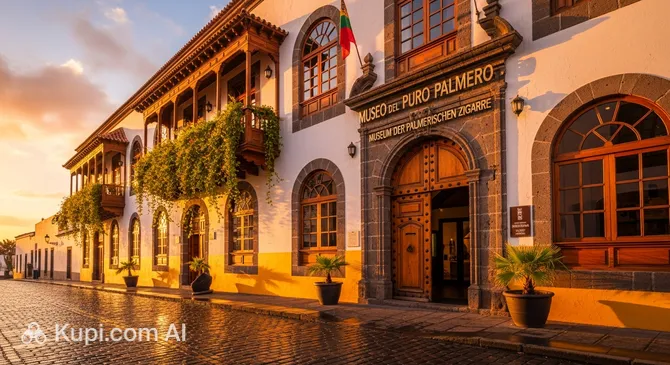
Palmero Cigar Museum
Palmero Cigar Museum. Иллюстрация. Источник: Kupi.com AI

The museum's exhibition details the long journey of the tobacco leaf: from a tiny seed on the plantation to a masterfully rolled product in the hands of an experienced torcedor. In the halls, you will find original tools, antique utensils, and multimedia installations that vividly demonstrate the "magic of smoke" and production techniques. Spain takes pride in its regional specialties, and this museum is an excellent place to understand how Canarian cigars earned recognition on par with Cuban ones.

A visit to Santa Cruz de la Palma and its surroundings would be incomplete without discovering this side of the island's culture. In addition to tobacco, the museum touches on themes of emigration and the influence of other cultures (wine, sugar cane, and bananas) on the development of La Palma. This place enchants visitors with its calm atmosphere and educational character, making history accessible and interesting for every traveler.

Contacts

To confirm up-to-date information before your visit, you can use the following museum contact details:

How to contactContact
AddressParque de Los Álamos, 38710 Breña Alta, Santa Cruz de Tenerife, Испания
Phone+34 922 42 95 67
Websitewww.museodelpuropalmero.com

What to Do

At the Palmero Cigar Museum, a fascinating journey along the "tobacco route" awaits you. You can trace the complete life cycle of a cigar: from examining live tobacco plants and the leaf-drying process to demonstrations of the fine art of hand-rolling. Special attention should be paid to the collection of tools and devices that local masters have used for decades, keeping production secrets unchanged.

Interactive panels and video materials, available in several languages, will help you gain a deeper understanding of not only the technical aspects but also the cultural significance of this craft. You will learn about the lives of people whose existence was inextricably linked to the plantations, and how the tobacco industry influenced music, architecture, and even local folklore. The halls also feature an interesting display of traditional musical instruments, including the famous Canarian timple.

After visiting the exhibition halls, be sure to take a walk through Parque de Los Álamos. If your visit coincides with the local market days, you can purchase not only souvenir cigars directly from the producers but also other authentic products from the island of La Palma. It is an ideal spot for a family visit, where history comes alive in the details and every exhibit is steeped in a love for tradition.

Getting There

The Palmero Cigar Museum is located in the picturesque San Pedro district of the Breña Alta municipality, just a few kilometers from Santa Cruz de la Palma. The drive via the LP-1 or LP-3 highways takes no more than 10–15 minutes. Convenient parking for visitors is available at the entrance to Parque de Los Álamos.

If you prefer public transport, you can use the regular bus routes (known on the island as "guaguas") that run from the capital or Los Llanos de Aridane toward Breña Alta. Get off at the stop near the central park or the market. A taxi ride from the center of Santa Cruz de la Palma is also quick and affordable.

For travelers arriving via La Palma Airport (SPC), the journey to the museum takes about 30–40 minutes. A visit here can be easily combined with a tour of the northeastern part of the island, enjoying the local landscapes and the authentic atmosphere of Canarian settlements.

Ближайший город: Santa Cruz de la Palma

History & Facts

The history of tobacco on the island of La Palma dates back to the 18th century; it is documented that the first crop was harvested in the Caldera de Taburiente as early as 1730. However, the industry's real boom began in the 19th century due to close ties with Cuba. Emigrants returning home brought back not only capital but also unique knowledge of growing elite tobacco varieties and the secrets of cigar rolling.

The period from 1900 to the 1960s was a "golden age" for the economy of Breña Alta. During this time, hand-rolled Palmero cigars gained international fame and were actively exported. Almost every local family was involved in the tobacco industry in one way or another, providing a livelihood for generations of islanders.

Unfortunately, in 1967, the industry faced a catastrophe: a "blue mold" epidemic almost completely destroyed the island's tobacco plantations. Production stalled for decades, and it was only in the 1980s that the craft began a gradual revival on a small, family-owned scale. The modern museum carefully preserves the memory of those times, telling the story through the lens of human destinies and passion for the craft.

The exhibition also highlights how tobacco culture coexisted with other industries vital to Spain and the Canary Islands: sugar production, wine, and banana cultivation. These monocultures took turns shaping the unique character and economic independence of La Palma over the centuries.

Time Needed

Exploring the museum's main exhibition usually takes 30 to 60 minutes. It is a compact and very informative space that can be explored independently at a comfortable pace.

If you plan to study the multimedia materials in detail, watch the videos about the production process, or take a stroll through the surrounding Parque de Los Álamos, set aside about an hour and a half for your visit. The museum is perfect for a short but educational stop as part of your road trip around the island.

Working Hours

The Palmero Cigar Museum is open to visitors throughout the week, except for Mondays and Sundays. The standard opening hours are as follows:

  • Tuesday – Friday: from 10:00 to 13:00;
  • Saturday: from 10:00 to 14:00;
  • Monday and Sunday: Closed.

As working hours may change depending on public holidays or local festivals, we recommend checking the museum's official website or calling ahead before your visit.

DayWorking hours
понедельникЗакрыто
вторник10:00–13:00
среда10:00–13:00
четверг10:00–13:00
пятница10:00–13:00
суббота10:00–14:00
воскресеньеЗакрыто

Nearby

After immersing yourself in the history of Palmero cigars, it is worth spending some time exploring the surroundings. The Breña Alta area is famous for its agricultural traditions and cozy squares, which allow you to feel the unhurried rhythm of island life.

Below are interesting locations near the museum that will help make your walk even more rewarding:

NameDistance
Casa Osmunda1 km
La Concepción Viewpoint1.1 km
Maroparque Exotic Animal Rescue Center1.9 km
Tè con Te Bar & Lounge2.7 km
Tasca Luis2.8 km
Church of El Salvador2.8 km
Royal Sanctuary of Our Lady of the Snows3 km

Reached the end of the page?

That means the route is fully explored