Support

Arboga

About

Arboga is a charming and atmospheric town where medieval heritage harmoniously intertwines with cozy modernity. A walk through its ancient streets seems to transport travelers back in time, allowing them to feel the spirit of bygone eras. This town is famous for its tranquility, picturesque river views, and unique architecture, which is carefully preserved by the local residents.

The town is located in the province of Västmanland, in the central part of Sweden. Arboga stands on the banks of the Arbogaån River, which historically played an important role in the trade and development of the region. The climate here is temperate, with mild summers and snowy winters, making the town attractive to visit at any time of year. The population is about 13,400 people, creating a cozy and friendly atmosphere ideal for those seeking a break from the hustle and bustle of metropolises.

A special place in the heart of every resident is occupied by the rich history of Arboga. It was here in 1435 that the first meeting of the Swedish parliament, the Riksdag, took place, forever writing the town's name into the country's annals. This event and its past status as an important trading hub have left a significant mark on the town's appearance, gifting it many ancient monuments.

Arboga. Illustration.
Source: Kupi.com AI

Among the main attractions, the town's oldest street, Västerlånggatan, stands out. It is paved with cobblestones and surrounded by perfectly preserved wooden houses, many of which date back to the 18th century. Another gem is the majestic Holy Trinity Church (Heliga Trefaldighets kyrka), founded by Franciscan monks as early as the 13th century. Fans of unusual exhibits will be interested in the Arboga Museum, located in an old manor, or even the unique Museum of Robots and Rockets, which tells the story of technological progress.

Arboga is an ideal place for leisurely walks, getting to know traditional Swedish culture, and enjoying the silence by the river. Be sure to include this town in your itinerary to personally touch the living history of Scandinavia and try the famous local beer, which is another point of pride for the region.

Weather Overview

The climate in Arboga is temperate and typical for central Sweden, making the town attractive to visit at any time of year with the right preparation. If you are interested in the current weather in Arboga to plan your trip, you should consider the seasonal characteristics of the region.

Summers here are mild and comfortable, ideal for walking. The warmest month is July, when the average temperature is about 17.7°C, and during the day the air can warm up to 22.1°C. However, an umbrella won't be superfluous: in the summer months, especially in August, there are up to 14 days with precipitation. Winters here are true Scandinavian, but not extremely severe. In January, the average temperature drops to -1.6°C, and at night frosts down to -3.6°C are possible.

Spring and autumn serve as smooth transition periods. Already in May, the air warms up to an average of 11.7°C, and September maintains a pleasant warmth at 12.9°C before temperatures begin to drop. Expect a moderately warm summer with occasional rain and cool winters with stable sub-zero temperatures.

Average monthly temperature

Average monthly precipitation

Interesting Facts

Arboga is a town that hides much more than it seems at first glance, and besides famous historical events, you can find many curious details here.
  • Medieval Beer Capital. In the old days, Arboga was famous throughout Sweden specifically for its beer. The drink was so important that its prices were regulated by law, and barrels of local ale served as a valuable export commodity. An old Swedish saying praising the quality of the drink from this town has survived to this day.

  • A 17th-century Swedish "Panama Canal". Very close to the town is the Hjälmare Canal — the oldest man-made waterway in Sweden, dug as early as 1639. This engineering masterpiece of its time, created for transporting iron and grain, is still in operation, and the locks are still opened by hand.

  • Residence of a Rebel Princess. The town is closely linked to the name of Cecilia Vasa, daughter of King Gustav Vasa. She lived here as the Countess of Arboga and was known for her adventurous character; according to some legends, she even engaged in privateering (piracy) in the Baltic to replenish the treasury.

  • Second Life of Merchant Manors. Local residents carefully preserve wooden architecture, turning old houses into cozy public spaces. For example, Ågården Restaurant is located in a classic town manor, allowing guests to dine in an authentic atmosphere of past centuries.

Ågården Restaurant. Illustration.
Source: Kupi.com AI

Traveler photos:

How to Get There

When planning a trip to this cozy Swedish town, it is worth thinking through the logistics in advance. Arboga is located in the central part of the country and has good transport accessibility, making it easy to get here from various parts of Sweden. You can learn more about how to get to Arboga by studying all available routes and types of transport.

Arboga itself does not have its own airport, so travelers usually fly into one of the aviation hubs located in neighboring cities. The most popular option is the international Stockholm Arlanda Airport (IATA: ARN), located in the city of Stockholm. This is the country's largest airport, receiving flights from all over the world. It is about 122 km from Arboga. The journey by car or taxi will take about 2 hours; you can also use the convenient rail connection between the airport and the region.

Another option for those flying on domestic flights or from nearby countries is Bromma Stockholm Airport (IATA: BMA), which is also in Stockholm, about 120 km from the destination. Closest to the town is the regional Örebro Airport (IATA: ORB) in the city of Örebro. The distance to it is only about 50 km, which allows you to reach the center of Arboga by taxi in about 50–60 minutes.

For clarity, here is summary information on the main airports:

AirportPassenger trafficDistance
Orebro-Bofors Airport80 69449 km
Stockholm Skavsta Airport685 26991 km
Kungsängen Airport103 00093 km
Linkoping City Airport145 000110 km
Dala Airport26 421117 km

Rail transport is also an excellent way to reach the region. If considering major transport hubs nearby, pay attention to the Örebro Central Station (IATA: XWR). It is located in the city of Örebro, about 38 km from Arboga. This is a large station with high passenger traffic, from where it is easy to continue the journey by regional train, bus, or taxi.

Eskilstuna Central Station (IATA: XFJ) in the city of Eskilstuna, located at the same distance — about 38 km — can also be a convenient transfer point. Using these large stations allows for flexible route planning, especially if you are traveling from remote regions of Sweden.

Below is information on the nearest major railway stations:

StationPassenger trafficDistance
Orebro Central Station2.5 mln38 km
Eskilstuna Central Station2.2 mln38 km
Sala Station73 km
Avesta Krylbo Station86 km
Norrköping Central Station2.5 mln91 km

Main Attractions

Arboga is a town best explored slowly, enjoying every detail. Most of the iconic sites here are located within walking distance of each other, allowing tourists to easily combine sightseeing of architectural monuments with gastronomic discoveries. The historical center of the town is an attraction in itself, but there are several locations that deserve special attention.

One of the architectural dominants of the town is the majestic Holy Trinity Church. It is not just a religious building, but a true symbol of the town, with its spire visible from afar. Inside, visitors are greeted by an impressive interior with medieval paintings and a unique Baroque pulpit. This place is definitely worth a visit to feel the breath of centuries and enjoy the silence under the ancient arches.

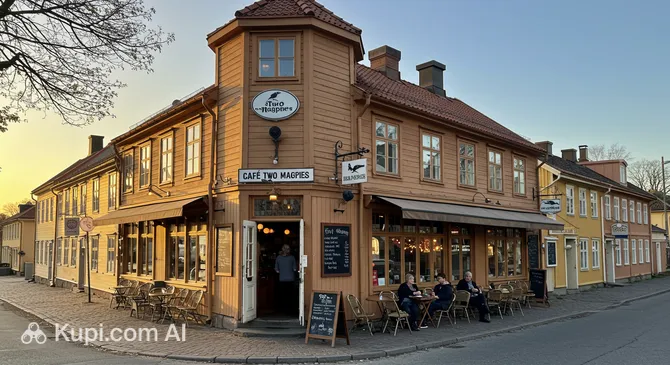
For those who want to immerse themselves in the atmosphere of Swedish coziness, the Two Magpies Café will be a real find. This establishment is the quintessence of the Swedish "fika" tradition (coffee break). The café is located in a charming wooden building painted in traditional red. Tourists love this place for its homemade pastries, especially cinnamon and saffron buns, as well as for its interior filled with vintage details and warmth.

Café Two Magpies. Illustration.
Source: Kupi.com AI

Traveler photos:

Another important point on the town map is the Ågården Restaurant. It is located in a historical manor and offers guests not only exquisite dishes but also the chance to touch the lifestyle of wealthy townspeople of the past. In summer, a beautiful garden terrace is open here, where you can dine surrounded by greenery. This place is perfect for ending a busy day, offering a menu based on high-quality local products.

Tech enthusiasts should check out the unique Robot Museum (Robotmuseet). Unlike medieval monuments, this exhibition transports guests to the era of the Cold War and technological progress. It houses an impressive collection of industrial robots, rocket engines, and flight simulators, many of which are in working condition. This is an unexpected and exciting side of the ancient town that will be of interest to both adults and children.

Local Cuisine

The gastronomic scene in Arboga is a cozy embodiment of Swedish traditions, where the emphasis is on the quality of local products and hearty dishes. Here you won't find pretentious molecular experiments, but you can fully enjoy real "husmanskost" — traditional home cooking. One of the main dishes worth trying is "raggmunk" (potato pancakes), served with crispy bacon and sweet lingonberry jam. This contrasting combination of flavors is considered a classic of regional cuisine.

Fish delicacy lovers must order a Toast Skagen. This is an open sandwich with a mountain of fresh shrimp mixed with mayonnaise, dill, and lemon, often garnished with roe. This dish is perfect for a light lunch and is served in almost all establishments in town. Also, seasonal menus often feature game, such as elk or deer meat, prepared with juniper berries and wild mushrooms, which are abundant in the forests of Västmanland province.

Drinks occupy a special place in the town's history and culture. For centuries, Arboga held the unofficial title of the beer capital of Sweden, and an old saying goes that local beer is famous for its quality far beyond the region. Be sure to try the famous "Arboga beer" (Arboga öl) — a strong and rich lager that is the pride of local residents. Popular non-alcoholic drinks include homemade lingonberry or blackcurrant juices, and, of course, coffee, which Swedes drink in large quantities.

Food culture in the town is inextricably linked with the "fika" tradition — a sacred coffee break for Swedes with a bun. Locals and tourists prefer to spend this time in atmospheric coffee shops with historical interiors. A perfect example of such a place is the Two Magpies Café, where you can try the freshest pastries surrounded by old wooden architecture. This is not just a snack, but an important social ritual that allows you to slow down and enjoy the moment.

For a more substantial meal, guests of the town choose restaurants located in historical manors. For example, Ågården Restaurant offers an immersion into the atmosphere of past centuries, combining authentic interiors with a menu of seasonal products. In summer, life moves to open terraces and courtyards, where dining in the fresh air becomes the main entertainment of the evening.

Travel Tips

A trip to Arboga promises to be a quiet and cozy immersion into history, but even in such a quiet town, a little preparation will make your holiday much more comfortable. We have compiled a list of practical recommendations for you that will help you feel confident and avoid typical tourist mistakes in this Swedish region.

  1. Clothing and Footwear. The weather in Sweden is changeable, so the best principle for your wardrobe is layering. Even in summer, it's worth having a light jacket or raincoat with you. Since the historical center of Arboga is famous for its ancient cobbled streets, comfortable flat shoes are not just advice, but a necessity. High heels are best left for dinner at the hotel.

  2. Transport. Arboga is a compact town, and all major attractions are within walking distance, so renting a car for moving within the town makes no sense. If you need to get to the station or remote areas, you can use a taxi, but keep in mind that "hailing" a car on the street is not common here — it's better to order via an app or by phone. A bicycle is also an excellent and popular way to get around.

  3. Finances. Sweden is one of the most "cashless" countries in the world. In Arboga, cards are accepted almost everywhere: in museums, small cafés, and even kiosks. Cash (Swedish kronor) may not be needed at all, but just in case, you can have a small amount in coins. ATMs (Bankomat) are available in the town center. Tipping is usually included in the bill, but rounding up the amount is considered good manners.

  4. Health and Safety. This is a very quiet and safe town where you can walk safely in the evening. Pharmacies are easy to find by the Apotek sign; however, there may not be 24-hour points in a small town, so it's better to bring essential medicines with you. Water can be drunk straight from the tap — it is of excellent quality here.

  5. Communication. Although the official language is Swedish, almost all locals, from teenagers to the elderly, speak English perfectly. Nevertheless, using simple phrases in the local language, such as Hej (Hello) and Tack (Thank you), always brings a smile and makes your interlocutor more well-disposed toward you. Free Wi-Fi is available in many public places, cafés, and on trains.

  6. Local Etiquette. Swedes highly value personal space and order. In shops, pharmacies, and ticket offices, always look for the electronic queue ticket machine — an attempt to approach the counter "just to ask" will be perceived negatively. When entering a private home, it is customary to take off your shoes.

  7. What to Avoid. Avoid loud conversations and noise in public places — restraint is considered a virtue here. Also, you should not compare Sweden with its neighbors (Norway or Finland) in a negative way or criticize high taxes and prices — these are sensitive topics for locals.

  8. Shopping Specifics. Keep in mind that the pace of life in Arboga is leisurely. Many shops close as early as 18:00 on weekdays and at 14:00–15:00 on Saturdays, and Sunday is often a day off. If you plan to buy wine or spirits, this can only be done in the state-run Systembolaget chain and strictly during working hours (usually until Saturday afternoon).

By following these simple tips, you can avoid minor domestic inconveniences and fully focus on the charm of Arboga's medieval streets. We wish you a smooth journey and pleasant impressions of Swedish hospitality!

Entertainment & Nightlife

Nightlife in Arboga fully reflects the character of the town itself: it is quiet, cozy, and devoid of the hustle and bustle of major metropolises. Do not expect loud raves or the neon signs of huge nightclubs operating until dawn here. Evening entertainment in Arboga primarily consists of atmospheric dinners, long conversations in pubs, and enjoying quality drinks in the company of friends or locals.

The epicenter of evening activity is concentrated in the historical town center, around the main square Stora Torget and its adjacent streets, such as Nygatan. This is where the main establishments are located where you can spend a pleasant time after sunset. The style of most places is "casual" or "smart casual"; there is no strict dress code, but a neat appearance is always welcomed.

To start a perfect evening, head to Ågården Restaurant. This establishment, located in a historical manor, transforms in the evening: dim lighting and antique interiors create a romantic and festive atmosphere. Here you can enjoy a leisurely dinner, tasting dishes made from local products with a glass of wine or local beer. This is one of the most popular places in town, so it is better to book a table in advance, especially on Friday or Saturday.

If you prefer a more intimate and relaxed setting for the early evening, stop by the Two Magpies Café. Although this place is better known for its daytime "fika," in the evenings there is a special warmth and coziness that encourages soulful conversation. In the warmer months, life spills out onto summer terraces and courtyards, where locals sit until late, enjoying the bright Swedish nights.

Fans of classic bar culture should pay attention to the pubs at local hotels (for example, Stadshotellet), which in small Swedish towns are traditionally centers of social life. This is where live music is often played on weekends, quizzes are held, and you can meet a diverse crowd — from tourists to long-time residents. Bars usually operate until 01:00 or 02:00 on weekends, while on weekdays they close earlier — around 22:00 or 23:00.

Practical Tips and Safety:

  • Prices: Alcohol in Sweden is expensive. A glass of beer in a bar will cost about 70–90 SEK, and cocktails start from 120 SEK.
  • Safety: Arboga is an exceptionally safe town. You can safely walk through the center at night; street crime is practically non-existent here.
  • Transport: Public transport runs infrequently at night. If your hotel is far from the center, write down the number of a local taxi service in advance, as you won't be able to hail a car on the street.

While the nightlife here is leisurely, the town offers equally interesting but more active entertainment during the day. In daylight hours, be sure to devote time to the cultural program: visit unique museums, walk along the Arbogaån river embankment, or explore medieval churches that create the unique look of this ancient Swedish town.

Parks & Museums

Arboga is a town where nature and centuries-old history exist in an inseparable symbiosis. The cultural landscape here is formed not only by museum exhibitions but also by the streets themselves, surrounded by greenery, while park areas serve as a natural continuation of the medieval quarters. For tourists, this is a wonderful opportunity to combine an educational holiday with relaxing walks in the fresh air.

Among the town's green zones, Ahllöfsparken deserves special attention. These are the "green lungs" of central Arboga, located just a few steps from the main square. The park was gifted to the town at the beginning of the 20th century and has since remained a favorite resting place for citizens. Here you will find well-kept alleys, lush flower beds, and a large playground. In summer, concerts and public events are often held in the park, making it a magnet for families with children and picnic lovers.

No less picturesque is the natural area along the Arbogaån River. A walking embankment stretches along the water, offering postcard views of old bridges and wooden houses reflected in the river surface. It is an ideal route for a morning jog or a leisurely evening stroll. Here you can feed the ducks, sit on a bench in the shade of trees, and feel the calm rhythm of life in provincial Sweden.

Immersion into the town's history should begin with the Arboga Museum, located in the majestic "Örströmska huset" building, built in 1846. The museum's exhibition covers different eras: from the town's medieval heyday as a trading center to the daily life of 19th-century citizens. Of particular value is the collection of silver and old photographs, as well as recreated interiors that allow you to literally step into the past. This place will be interesting for everyone who wants to understand how people lived in this region hundreds of years ago.

A completely different experience is offered by the unique Robot Museum (Robotmuseet). Unlike traditional local history exhibitions, it presents the fascinating story of technical progress. The collection includes industrial robots, flight simulators, and even elements of rocket technology, many of which are in working order. Visitors can not only look but also interact with some exhibits, which delights both adults and young travelers.

The historical center of Arboga itself can boldly be called an open-air museum. Walking along the cobbled streets, pay attention to the area around Västerlånggatan. Medieval wooden buildings that have survived fires and modernization are preserved here. These buildings are not fenced off — people live in them, craft shops and cafés operate, creating a lively and authentic atmosphere of antiquity.

Insider Tip: If you have time, visit the garden at the Holy Trinity Church. This is a quiet and secluded corner, hidden from the eyes of most tourists. Here, among old tombstones and centuries-old trees, absolute silence reigns, perfect for reflection and rest after a busy tour.

Getting Around

The public transport system in Arboga is characterized by its compactness and simplicity, which fully corresponds to the leisurely pace of life in this small town. Since most attractions and historical monuments are concentrated in the center, walking remains the main way for tourists to get around. Nevertheless, if you need to get to remote areas or the railway station, the local transport network works efficiently and reliably.

The main and only type of urban public transport is buses. The company VL (Västmanlands Lokaltrafik) is responsible for transportation in the town and region. The route network within Arboga is not very extensive, but it covers all key points, including residential neighborhoods, shopping areas, and the station. Buses here are modern, comfortable, and generally low-floor, which is convenient for travelers with luggage.

It is important to remember that Arboga, like the entire region, supports the concept of a "cashless society." It is impossible to pay the fare in cash to the driver. The most convenient way for a tourist is to download the VL mobile app, where you can buy a single ticket (Enkelbiljett) or a 24-hour pass. The ticket in the app is activated before boarding, and it must be scanned (or shown to the driver) when entering through the front door. Tickets can also be purchased at machines at the railway station or at authorized points of sale (usually Pressbyrån kiosks or supermarkets).

Arboga railway station is an important transport hub. Not only do trains to major cities depart from here, but also regional buses. If you plan trips around the Västmanland province, trains and intercity buses will be your best helpers. The schedule is coordinated to ensure convenient transfers.

As an alternative to public transport, the bicycle is very popular. Arboga is equipped with a good network of bike paths, and two-wheeled transport is a way of life here. If you prefer the comfort of a car, you can use taxi services. However, it is worth considering that "hailing" a car on the street is practically impossible here. Taxis must be ordered in advance by phone or through specialized apps, and the cost of the trip will be quite high compared to the bus.

Tourists should pay attention to the transport schedule. On weekdays, buses run regularly, but on weekends and holidays, the service intervals increase significantly, and in the evening, trips may stop quite early. Therefore, if you are planning a late dinner at a restaurant far from your hotel, check the schedule in the app in advance or book a taxi.

Accommodation

Where to stay:

Arboga is a small town, so the choice of accommodation here is intimate and cozy, without huge hotel complexes and faceless chain giants. Accommodation options are mainly represented by traditional town hotels (Stadshotell), small family-run bed and breakfasts (B&B), and budget hostels. For those traveling by car or preferring proximity to nature, campsites and cottages are available in the surrounding area, which are particularly popular during the summer season.

The most attractive area to stay is the historical town center. By staying here, you will be within walking distance of the main attractions, the Arbogaån river embankment, and cozy cafés. Living in the center means immersing yourself in the medieval atmosphere, enjoying views of cobbled streets right from your window. Another convenient option is the area near the railway station. This is a practical choice for those planning active trips around the region or arriving in town late in the evening.

Since there are no specific hotels provided for a detailed description, you should rely on the general standards of Swedish hospitality. Local hotels are often housed in historical buildings, which adds a special charm to your stay, though rooms may be small in size. Service in Arboga is traditionally excellent: cleanliness, hearty breakfasts (often included in the price), and attentive staff are the norm.

Booking Tips and Prices:

  • Seasonality: Arboga is a popular destination for domestic tourism, especially in summer and during medieval festivals. At these times, demand for accommodation rises sharply, so it is recommended to book a room 2–3 months before your trip.
  • Price Range: Accommodation prices correspond to the average level in Sweden. Budget options (hostels) will be cheaper, but the main segment is mid-range hotels. Luxury suites are difficult to find here.
  • How to Book: Most local hotels are listed on major international booking platforms. However, for small B&Bs, it is sometimes more advantageous or reliable to contact them directly through their official websites or by email.

Nearby Cities

For those who want to explore the surrounding area, Arboga serves as an excellent starting point for day trips to several interesting nearby locations. Thanks to its convenient location in the central part of the country, travelers can easily reach neighboring cultural centers. Just a 40-minute drive away is Örebro — a city famous for its magnificent castle on the water, which looks like an illustration from a fairy tale. History and water landscape lovers should visit Västerås, located on the shores of Lake Mälaren; here you can see an ancient cathedral and walk along a modern embankment. Also interesting is the city of Eskilstuna, known for its rich industrial heritage and zoo, making it an excellent choice for a family trip.

CityPopulationDistance
Köping17 74316 km
Hallstahammar15 20033 km
Orebro126 60438 km
Eskilstuna67 35938 km
Lindesberg9 67242 km

These nearby destinations provide an insight into the diverse culture and landscapes of the region, making your journey through central Sweden even more fulfilling and memorable.

Shopping & Souvenirs

Shopping in the town of Arboga is not a chase for world brands in huge shopping centers, but rather a cozy and leisurely exploration of local traditions. The town offers the atmosphere of "good old Sweden," where shopping becomes part of cultural leisure. Here you will find many small boutiques, antique shops, and interior design stores famous for their unique assortment and attentive attitude toward every customer.

The heart of the town's commercial life is its historical center. The main shopping artery is considered to be Nygatan street and the area around Stora Torget square. It is here, among the cobblestones and wooden houses, that clothing stores, jewelry salons, and home goods shops are concentrated. A walk through this area provides aesthetic pleasure: shop windows are decorated with impeccable Swedish taste, and the distances between shops are minimal.

Since Arboga is an intimate town, there are no giant malls typical of metropolises. Local residents usually make large purchases in neighboring larger cities. However, for everyday needs and gastronomic shopping, chain supermarkets such as ICA and Coop are available within walking distance of the center. In them, you can find a wide selection of high-quality Swedish products, from cheeses to traditional crispbreads.

A special place in shopping culture is occupied by markets and seasonal fairs. If your visit falls in August, you will witness the famous Medieval Days (Medeltidsdagarna). At this time, the town turns into one large historical market where artisans sell leather goods, wrought iron, ceramics, and textiles created using ancient technologies. At other times, "loppis" — flea markets and second-hand shops — are popular, where you can find real vintage items and unique pieces of Swedish life at very low prices.

As souvenirs from Arboga, people most often bring back goods that reflect the spirit of the region. First and foremost, this is the famous "Arboga beer" (Arboga öl). Please note that you can buy alcohol with a strength higher than 3.5% in Sweden only in the state-run chain of Systembolaget stores. It is also worth looking at products from local glassblowers, knitted items made of high-quality wool, and traditional wooden figurines, which will be an excellent reminder of Scandinavian coziness.

When planning a shopping trip, it is important to consider local opening hours. Most boutiques in the center are open from 10:00 to 18:00 on weekdays. On Saturday, the working day is shortened — usually until 14:00 or 15:00, and Sunday is a day off for many private shops. Payment is almost everywhere made by bank cards (Visa, Mastercard). Sweden is one of the most "cashless" countries in the world, so in many places, cash may simply not be accepted.

Tourists residing permanently outside the European Union can use the Tax Free system. Look for stores with the "Global Blue Tax Free" logo in the window or at the checkout. When purchasing for a certain amount (usually from 200 SEK), you can fill out a special check to receive a partial VAT refund when leaving the country, making shopping even more pleasant.

Reached the end of the page?

That means the route is fully explored