Support

The Grand Palace

About

The Grand Palace (Phra Borom Maha Ratcha Wang) is one of the most impressive and significant landmarks not only in Bangkok but in all of Thailand. This grand architectural complex, sprawling in the historical heart of the capital on the banks of the Chao Phraya River, served as the official residence of kings for many years. Today, this site is a symbol of the nation and its rich cultural heritage.
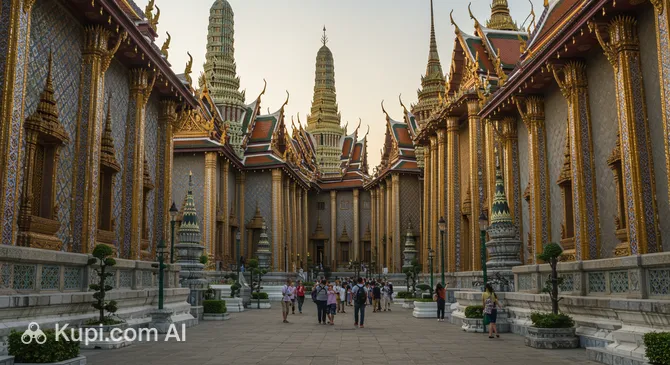
The Grand Palace. Illustration.
Source: Kupi.com AI

Traveler photos:

The architecture of the palace is a stunning blend of traditional Thai style and elegant European motifs, reflecting the country's historical development. The vast territory of the complex houses numerous magnificent buildings, throne halls, pavilions, and manicured courtyards, each striking in its beauty and grace. A walk through the palace is a true immersion into the history and art of Siam.

The crown jewel and most important sanctuary of the entire complex is the Temple of the Emerald Buddha (Wat Phra Kaew). This is where the famous Buddha statue, carved from a single block of jadeite, is kept—one of the most revered religious objects in the country. A visit to this temple leaves a lasting impression and provides a glimpse into the spiritual life of Thailand.

Contacts

To get the most up-to-date information on opening hours, ticket prices, and visiting rules for the Grand Palace, as well as to clarify specific details, you can use the official contact information. The most complete and current data is always available on the complex's official website.

How to contactContact
AddressPhra Borom Maha Ratchawang, Phra Nakhon, Bangkok 10200, Thailand
Websitewww.royalgrandpalace.th

What to Do

A visit to the Grand Palace is an immersion into a world of royal splendor. You can spend several hours walking through its extensive grounds, exploring the numerous courtyards and pavilions. Take the time to admire the exquisite facades of the buildings, richly decorated with intricate carvings, colorful mosaics, and sparkling gilding. Every corner of the complex is a work of art and a perfect opportunity for vibrant photos against a backdrop of unique pagodas and well-kept gardens.

The main highlight for every visitor is the Temple of the Emerald Buddha, which houses one of Thailand's most revered relics—a Buddha statue carved from a single piece of jade. Additionally, the palace grounds feature interesting museums and exhibitions. Here, you can learn more about the history of the royal dynasty, traditional art, and the country's culture, making the visit not only beautiful but educational.

While walking through the complex, you may witness the colorful changing of the guard ceremony, which adds authenticity and solemnity to the visit. Visiting the Grand Palace is more than just sightseeing; it's an opportunity to observe rituals and touch the spiritual life of the Thai people, feeling the unique atmosphere of this historic place.

Getting There

The Grand Palace is located in the heart of historical Bangkok, in the Phra Nakhon district along the banks of the Chao Phraya River. Thanks to this prime location, there are several ways to reach the capital's main attraction. The easiest methods are by taxi or a colorful local tuk-tuk, a ride that can be a small adventure in itself.

One of the most convenient and scenic routes is by water. Take the Chao Phraya Express Boat, which runs along the city's main waterway. You should get off at the Tha Chang pier (Pier No. 9), which is just a few minutes' leisurely walk from the palace entrance. This trip not only saves time by avoiding traffic but also offers magnificent views of the city from the water.

Additionally, the palace complex is easily accessible by numerous city buses heading to the city center. This is the most budget-friendly option. If you are staying at one of the hotels in the central areas, a walk to the Grand Palace can be a pleasant addition to your tour, allowing you to get a better feel for the old city, its streets, and its atmosphere.

Nearest city: Bangkok

History & Facts

The history of the Grand Palace is inextricably linked to the founding of Thailand's new capital. Construction of the complex began in 1782 by order of King Rama I, the founder of the ruling Chakri dynasty. It was he who decided to move the capital from Thonburi to the other side of the river, to Bangkok. Initially, the palace buildings were made of wood, but over time they were replaced with stone, and the complex itself was constantly expanded and supplemented with new magnificent structures.

From the beginning, the complex was intended not just as a royal residence but also as the administrative and spiritual center of the kingdom. On its vast territory, covering an area of about 200,000 square meters, not only royal quarters but also government offices were built. A key part of the ensemble was the Temple of the Emerald Buddha, built specifically for the King's personal worship and to house the country's main relic.

For more than 150 years, the Grand Palace served as the main residence and home for the Kings of Siam. Although the royal family lives elsewhere today, the palace has not lost its high status. It remains the venue for the most important state ceremonies, official receptions, and royal celebrations. The entire complex, featuring about 95 pagodas and many unique buildings, remains a living testament to Thailand's rich history and cultural greatness.

Time Needed

When planning a visit to the Grand Palace, you should allow for 2–4 hours to get a full sense of its magnificence. This is usually enough time for a leisurely tour of the main buildings, a visit to the famous Temple of the Emerald Buddha, as well as checking out the museums on the complex's grounds and taking souvenir photos. Given the scale of the palace and the wealth of details requiring attention, less time may not be sufficient.

If you are short on time, you can do an express tour in 1.5–2 hours, focusing on key highlights—the Temple of the Emerald Buddha and the central courtyards. However, for a deeper immersion and to learn more about the history and art of Thailand, it is recommended to allocate at least 3 hours. This will allow you to enjoy the atmosphere without rushing, appreciate the exquisite decor, and visit additional exhibitions, such as the Queen Sirikit Museum of Textiles.

Working Hours

The Grand Palace in Bangkok is open to visitors year-round. Standard opening hours are daily from 8:30 AM to 3:30 PM. It is important to remember that this is an active ceremonial complex, so its doors may be temporarily closed to tourists during royal or state events. To ensure your visit goes smoothly, it is highly recommended to check the official palace website for up-to-date information on opening hours shortly before your planned trip.

Tickets can be purchased directly at the ticket offices at the entrance; however, to avoid long lines, especially during the high tourist season, it is worth considering buying them online. While pre-booking is not a strict requirement, it will help save time and make your visit to one of Thailand's main attractions more comfortable.

8:30 – 15:30

Nearby

Visiting the Grand Palace is just the beginning of your journey into the historical heart of Bangkok. The surroundings of this majestic complex are filled with other iconic landmarks that allow you to dive deeper into the culture and history of Thailand. A walk through the old streets of the Rattanakosin district will enrich your experience, as many of the capital's key attractions are literally within walking distance of each other.

Exploring nearby temples, bustling markets, and famous streets will help create a more complete picture of city life. Each of these places has its own unique atmosphere and history, complementing the splendor of the royal residence. Below is a list of interesting sites located in the immediate vicinity of the Grand Palace.

NameDistance
Rajadamnern Stadium2.2 km
Chinatown2.2 km
Wongwian Yai2.6 km
Amphorn Sathan Residential Hall3.3 km
ICONSIAM3.3 km
Kodtalay The Riverfront Seafood Buffet4.5 km
Côte by Mauro Colagreco4.6 km

Have you reached the end of the page?

So the route has been studied inside and out