Support

Chaguanas

About

Chaguanas is the largest borough by population and the fastest-growing city in Trinidad and Tobago, known for its bustling commercial activity and dynamic atmosphere. This city is an important economic and cultural center of the country, attracting both locals and tourists alike.

Located in the central part of Trinidad island, south of the capital Port of Spain, Chaguanas has about 101,297 inhabitants. The city features a tropical climate typical of the region, with high humidity and warm weather year-round, making it an attractive place to visit at any time.

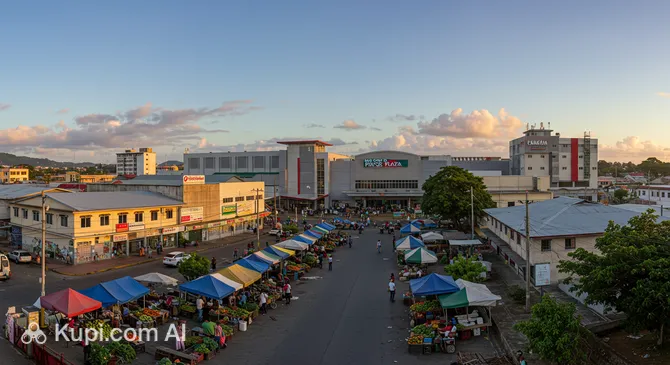
Chaguanas. Illustration.
Source: Kupi.com AI

Key highlights of Chaguanas include its famous market, where you can immerse yourself in authentic local life, purchase fresh produce and handicrafts, and try street food. Another major attraction is Diwali Nagar – the center for celebrating the Hindu festival of Diwali, which attracts thousands of visitors annually with its colorful performances, music, and exhibitions showcasing the rich Indo-Trinidadian heritage. Also worth noting is the Lion House (Anand Bhavan), a historic building associated with the family of the famous Nobel Prize-winning author V.S. Naipaul.

Chaguanas offers a unique blend of shopping, cultural immersion, and a glimpse into everyday Trinidadian life. A visit to this city will leave lasting impressions and provide a better understanding of the island's multifaceted culture.

You can find more interesting facts on the history of Chaguanas page.

Weather Overview

The climate in Chaguanas is tropical, with high humidity and consistently warm temperatures throughout the year. The average annual temperature fluctuates only slightly, remaining in a comfortable range from 25.6°C in January to 27.5°C in September. Expect warm weather year-round with a distinct rainy season. The highest amount of rainfall and rainy days occur from June to November (for example, in July there is an average of 6 mm of rain and 28 rainy days), while from February to April, drier weather is observed (for example, in March there is only 1 mm of rain and 10 rainy days).

For more detailed information, including monthly forecasts, we recommend visiting the Chaguanas Climate page.

Average monthly temperature

Average monthly precipitation

Interesting Facts

In addition to its bustling markets and cultural centers, Chaguanas hides several curious details that make it even more interesting to explore. Here are some little-known facts about this dynamic city in Trinidad and Tobago:

  • Origin of the Name: The city owes its name to the indigenous American Chaguane tribe, which once inhabited these lands. This serves as a reminder of the island's rich history preceding the colonial period.

  • Literary Fame: Chaguanas is immortalized in world literature. It was this city and its surroundings that served as the primary setting for the famous novel "A House for Mr. Biswas," written by Nobel laureate Sir V.S. Naipaul, whose family had historical roots here.

  • Diwali Center of Global Importance: While Diwali Nagar is widely known for its annual festival of lights, many do not know that this complex is considered one of the largest and most significant Diwali celebration centers outside of India. It functions as a cultural hub for the Indo-Trinidadian community year-round.

  • From Sugarcane to Commercial Giant: Originally, Chaguanas was a small village whose economy relied entirely on the surrounding sugarcane plantations. Its rapid growth and transformation into the country's main commercial hub, even surpassing the capital in population, happened relatively recently, mainly in the second half of the 20th and early 21st centuries.

How to Get There

When planning a trip to Chaguanas, it's important to think about your route in advance. The primary way for most international tourists to reach this bustling city in Trinidad and Tobago is by air. The city has good road connections with the rest of Trinidad island, facilitating transfers from the airport.

The main air gateway for traveling to Chaguanas is Piarco International Airport (IATA: POS). This major international airport is located in Port of Spain, the country's capital, only about 11.9 km north of Chaguanas. Piarco Airport receives numerous flights from North and South America, Europe, and the Caribbean. A taxi ride or a rental car from the airport to the center of Chaguanas usually takes about 30-45 minutes, depending on traffic.

Another airport in Trinidad and Tobago is A.N.R. Robinson International Airport (IATA: TAB), located in Scarborough on the island of Tobago. The distance to Chaguanas from there is about 94.4 km, which involves an inter-island crossing (via a domestic flight or ferry). This medium-sized airport serves both international and domestic flights and can be convenient if your itinerary includes visiting both islands. Upon arriving on Trinidad island, Chaguanas can be reached by land transport.

For travelers touring the Caribbean region, an alternative arrival point could be Maurice Bishop International Airport (IATA: GND) in St. George's, the capital of Grenada. It is located approximately 169.5 km from Chaguanas. This airport also accepts international flights. To get from Grenada to Chaguanas, an additional regional flight or sea connection to Trinidad is required, followed by a trip across the island.

Upon arrival at any of the airports serving the Chaguanas area, you can use taxi services. Car rentals are also common, providing more flexibility for moving around the island. It is recommended to check information regarding route taxis or buses in advance, as the public transport system may have its own specifics.

For clarity, here is a summary of the main airports through which you can reach Chaguanas:

AirportPassenger trafficDistance
Piarco International Airport2.9 mln12 km
A.N.R. Robinson International Airport739 62294 km
Maurice Bishop International Airport178 020170 km
Jose Tadeo Monagas International Airport110 000209 km
Santiago Marino International Airport850 000283 km

Main Attractions

Chaguanas, as the bustling hub of Trinidad and Tobago, offers several interesting places that provide a deeper understanding of the island's culture and daily life. Among them, a few key attractions stand out and are worth including in your itinerary.

One of the main draws is the Chaguanas Central Market. This is not just a place to buy the freshest tropical fruits, vegetables, and aromatic spices, but a true kaleidoscope of local life. Here you can find unique handicrafts, souvenirs, and, of course, sample authentic street food. Visiting the market is a great opportunity to soak up the city's colorful atmosphere and observe its residents.

A significant cultural site is Diwali Nagar. This complex, whose name translates to "City of Light," is particularly famous for the annual celebration of Diwali – one of the most important Hindu festivals. During this period, Diwali Nagar transforms into a spectacular sight with thousands of lights, music and dance performances, exhibitions, and fairs. However, throughout the rest of the year, this site serves as an important center for Indo-Trinidadian culture, where visitors can learn more about the traditions and heritage of this community.

For lovers of literature and history, the Lion House (Anand Bhavan) is a must-see. This historic building is inextricably linked to the name of the Nobel Prize laureate in literature, Sir V.S. Naipaul. This very house served as the prototype for the protagonist's home in his famous novel "A House for Mr. Biswas." Visiting this place offers a chance to touch the history of the writer's family and better understand the context in which his work was shaped.

Local Cuisine

The gastronomy of Chaguanas is a vibrant reflection of the multi-ethnic culture of Trinidad and Tobago, having absorbed Indian, African, Creole, Chinese, and European culinary traditions. Visiting this city will give you an unforgettable taste experience full of exotic aromas and unexpected combinations.

Be sure to try the famous local dishes. Start your gastronomic journey with "doubles" – this is a highly popular street food consisting of two "barra" flatbreads filled with curried chickpeas and various sauces. Another iconic dish is "roti," which comes in several types, such as "dhalpuri" (roti with a layer of ground yellow split peas) or "buss-up-shut" (literally "torn shirt" – roti torn into pieces). It is served with various curries: chicken, goat, beef, or vegetable. Don't miss the chance to try "callaloo" – a thick puréed soup made from dasheen (taro) leaves, spinach, okra, and coconut milk, often with added crab meat.

Popular drinks in Chaguanas include fresh juices from tropical fruits like passion fruit, sorrel (hibiscus), and soursop. Refresh yourself with coconut water straight from the nut. Among alcoholic beverages, the local rum is noteworthy, famous for its quality, as well as popular beer brands like Carib and Stag. Fans of unusual flavors can try "mauby" – a bittersweet drink made from tree bark.

Dining culture in Chaguanas is very democratic. Locals and tourists enjoy eating at small family restaurants known as "cook shops," which serve home-style food. However, the true heart of the city's gastronomic life is street food. Many stalls with various snacks can be found particularly around the Chaguanas Central Market. This market, known for its abundance of fresh produce, is also a great place to sample authentic local delicacies and observe the daily life of the townspeople.

Chaguanas' gastronomic scene attracts tourists with its incredible variety of flavors, affordability, and authenticity. Everyone will find something to their liking here – from spicy curries and hearty rotis to refreshing tropical drinks. It is a true kaleidoscope of tastes that will allow you to dive deeper into the culture of Trinidad and Tobago.

Travel Tips

Heading to Chaguanas, the fastest-growing city in Trinidad and Tobago? To make your trip go smoothly and leave only pleasant impressions, we've prepared some practical tips to help you better navigate this lively center of Caribbean life.

  1. Clothing and Essentials: Chaguanas has a tropical climate year-round – hot and humid. Bring light, breathable clothing made from natural fabrics (cotton, linen). During the rainy season (June-November), a light raincoat or umbrella will come in handy. Don't forget sunscreen, a hat, sunglasses, and comfortable shoes for walking around the city and markets. For electrical appliances, you'll need an adapter (Trinidad and Tobago uses Type A and B sockets, 115V). When visiting religious sites like Diwali Nagar, choose modest clothing that covers shoulders and knees.

  2. City Transport: The main form of public transport in Chaguanas and across the island is maxi-taxis – they run on fixed routes and are relatively inexpensive. Regular taxis are also available; it's best to agree on the fare in advance as meters aren't always used. Car rental is possible (remember left-hand traffic!), but for getting around the city, it's often more convenient to use taxis. There are no metros or trams in Chaguanas.

  3. Finance: The local currency is the Trinidad and Tobago Dollar (TTD). You can exchange currency at banks or exchange bureaus. Credit cards (Visa, MasterCard) are accepted in most hotels, restaurants, and large stores, but in markets and small shops, it's better to have cash. There are ATMs in the city. Tipping in restaurants is usually 10-15% if not included in the bill. It's customary for taxi drivers to round up the fare or leave a small tip.

  4. Health and Safety: There are pharmacies in Chaguanas. Be sure to get travel medical insurance before your trip. The city is quite safe during the day, especially in busy shopping areas. However, as elsewhere, follow basic precautions: keep an eye on your belongings, don't display expensive jewelry, and be mindful in crowded places. At night, avoid poorly lit and deserted streets. Always drink bottled water and use insect repellent.

  5. Communication: The official language in Trinidad and Tobago is English, so you shouldn't have any communication problems. Locals also speak Trinidadian Creole English. You can buy a local SIM card (e.g., from Digicel or bmobile) at the airport or mobile shops in town. Wi-Fi is available in most hotels and many cafes.

  6. Local Etiquette: Trinidadians are friendly and hospitable people. A simple "Hello" or "Good morning/afternoon" is a great conversation starter. Politeness is valued. If you want to photograph locals, it's better to ask permission. In public places, behave discreetly and respectfully toward others.

  7. What to Avoid: Try not to engage in discussions on sensitive political or racial topics unless you're sure of the context. Also, avoid excessive criticism of local ways or traditions – be a respectful guest.

  8. Special Tip for Chaguanas: Be sure to set aside time to visit the Chaguanas Central Market, especially on Saturday morning. It's not just a place for shopping but a true center of city life, where you can sample authentic street food, buy fresh fruit and souvenirs, and most importantly – feel the unique atmosphere of this Caribbean city.

We hope these tips help you better prepare for your trip to colorful Chaguanas and enjoy all its charms. We wish you an exciting journey and bright discoveries in the heart of Trinidad and Tobago!

Entertainment & Nightlife

While Chaguanas is better known as a bustling commercial and cultural center of Trinidad and Tobago rather than a capital of vibrant Port of Spain-style nightlife, the city offers its own more local and authentic options for evening leisure. Here, you can immerse yourself in the true island atmosphere and relax after a busy day, enjoying the unique flavor of the local nightlife.

Evening entertainment in Chaguanas is mainly centered around cozy bars, often called "rum shops," where you can enjoy famous local rum and chat with friendly locals. Restaurants offering delicious dinners in a pleasant setting are also popular, many of which are open late into the evening. In some establishments, especially on weekends, you can hear live music – popular Caribbean rhythms such as soca, calypso, and chutney. Although the number of large nightclubs in Chaguanas may be small compared to the capital, it is quite possible to find small but lively spots with dance music. Unfortunately, we cannot provide specific names and addresses of establishments at this time, as current data for this is unavailable. For specific places and events, we recommend seeking advice from locals or checking recent online reviews, as the city's nightlife map can be quite dynamic.

Main evening activity usually concentrates along the Main Road and adjacent commercial areas, where most shops, restaurants, and bars are located. These parts of the city can be quite busy, especially on Friday and Saturday nights. The atmosphere in Chaguanas venues is generally relaxed and welcoming. The dress code in most places is casual or smart-casual, making you feel comfortable. The crowd is predominantly local, creating an authentic setting. Establishments usually come alive towards the evening and stay open late into the night, especially on weekends.

If you're planning an evening out, the best time is Friday and Saturday nights when the city comes to life. Prices in Chaguanas bars and restaurants are usually more affordable than in major tourist centers, making evening leisure easy on the wallet. For getting around at night, it is recommended to use licensed taxis. Always agree on the fare in advance, as not all taxis are equipped with meters. You can ask to have a taxi called from your hotel or directly from the establishment you are visiting.

From a safety perspective, try to stick to well-lit and busy streets in the evening, especially if you are unfamiliar with the city. Avoid walking alone in deserted or poorly lit areas late at night. Calling a taxi from a bar, restaurant, or hotel is the safest way to return to your accommodation. Overall, Chaguanas is considered a relatively safe city for tourists, but following standard precautions is always a good idea.

During the day, Chaguanas offers other leisure activities to complement your experience. You can explore its famous Central Market, which bustles with life and offers many local goods and delicacies. It's also worth visiting the Diwali Nagar cultural center to learn more about the island's Indo-Trinidadian heritage. While the city may not have large theaters or massive amusement parks, its cultural richness, authenticity, and lively shopping atmosphere offer plenty of opportunities for an interesting time and an introduction to real life in Trinidad and Tobago.

Parks & Museums

Chaguanas, being the dynamic commercial heart of Trinidad and Tobago, offers its guests not only bustling markets and shopping streets but also opportunities for cultural enrichment and, to some extent, outdoor relaxation. While the city is not famous for extensive park zones, there are iconic places reflecting its rich heritage and multicultural character.

Speaking of green zones, it's worth noting that Chaguanas is primarily a densely populated urban center. Here you are more likely to find small public squares or landscaped areas around significant sites rather than large landscaped parks. However, for those seeking seclusion with nature, the surroundings of Trinidad island offer many options for exploration. In the city itself, the main focus is on cultural and historical sites.

Among the key cultural attractions that can be viewed as a kind of open-air museum or heritage center, Diwali Nagar stands out. This is not just a venue for the annual celebration of the Hindu festival of Diwali, but a year-round center demonstrating Indo-Trinidadian culture through architecture, exhibitions, and events. A visit to Diwali Nagar allows for a deeper understanding of the cultural diversity of the city and the country.

Another important historical and cultural site is the Lion House (Anand Bhavan). This house, associated with the family of Nobel Prize laureate V.S. Naipaul and immortalized in his novel "A House for Mr. Biswas," is a living testament to history and literary heritage. For lovers of literature and history, this place is a must-visit as it offers a unique opportunity to touch the past.

While there are no traditional large fine arts museums or extensive historical exhibitions in the classical sense in Chaguanas, its cultural wealth is revealed through sites like those mentioned above, as well as through the lively atmosphere of the Chaguanas Central Market. The market itself is a kind of "museum" of everyday life, where you can see, hear, and taste the local color.

For authentic impressions, besides the well-known sites, try walking through the city's less touristy streets to observe the daily lives of its inhabitants. This will help you better feel the rhythm of Chaguanas and discover its hidden corners. Pay attention to the local architecture, which often combines different styles, reflecting the history of the city's development.

Getting Around

Getting around Chaguanas and its surroundings can be done in several ways, each with its own characteristics. Public transport here is mainly represented by route taxis and buses, offering quite affordable options for exploring the city and the island.

The main and most popular type of public transport in Chaguanas, as in all of Trinidad and Tobago, are route taxis, known as "maxi-taxis." These are minibuses that run along established routes. They are easy to recognize by the colored stripes on their bodies: different colors correspond to different zones and directions. For example, yellow stripes are usually on route taxis operating within the city and its immediate surroundings. Maxi-taxis stop on demand at stops or convenient locations along the route. In Chaguanas, there are no modes of transport such as metros, trams, or trolleybuses.

Also, buses from the state company Public Transport Service Corporation (PTSC) run within the city and between settlements. They cover a wider network of routes, including long-distance trips across the island, but may run less frequently than route taxis. PTSC buses are a good option for longer trips on a fixed schedule.

The fare payment system is quite simple. In maxi-taxis, payment is usually made in cash directly to the driver or conductor (if there is one) upon boarding or exiting. The cost depends on the distance but is usually very affordable. It is recommended to carry small bills for convenience. For PTSC bus trips, tickets can be purchased at ticket offices at bus stations or, on some routes, from the driver. It's best to check on-site about the availability of transit cards or specialized transport apps, as cash payment traditionally prevails. Public transport costs in Trinidad and Tobago are generally low.

Here are a few practical tips for tourists: PTSC bus tickets should be bought in advance at bus stations if a trip on a popular route is planned. For maxi-taxis, no special ticket purchase is required – payment happens on the spot. Ticket validation in the usual European sense is usually absent. Maxi-taxis run quite often throughout the day, especially during peak hours. PTSC bus schedules can be found on the company's official website or at bus terminals. Public transport operates mainly during the day and evening; at night, the frequency decreases significantly.

As an alternative to public transport, taxis are always available. This is a convenient option for trips on an individual route, at night, or with luggage. It's important to remember that the fare should be agreed upon with the driver in advance, as meters are not always used. Car rental is also popular, providing freedom of movement throughout the island. However, left-hand traffic and local driving style features should be taken into account. Car-sharing services or city bike-share systems have not yet become widespread in Chaguanas.

Accommodation

When planning a trip to Chaguanas, you can choose a suitable accommodation option that matches your budget and preferences. The city offers a variety of choices: from inexpensive guest houses and budget hotels, ideal for thrifty travelers, to more comfortable mid-range hotels offering a good balance of price and quality. You can also find apartments or rooms for rent in Chaguanas, which is especially convenient for families or those planning a longer stay. Although Chaguanas is not a major resort center with luxury resorts, you can find cozy and welcoming housing here.

When choosing a place to stay in Chaguanas, pay attention to its location. Areas near the city center or along major transport routes are considered most convenient for tourists. This will provide easy access to shops, restaurants, and iconic spots like the bustling Chaguanas Central Market or the Diwali Nagar cultural center. Staying in these areas will also simplify getting around the city using public transport.

To ensure the best choice and most favorable terms, it is recommended to book accommodation in advance, especially if your trip coincides with popular local events like Diwali celebrations or falls during the peak tourist season. The price range for accommodation in Chaguanas varies from budget to mid-range. Most hotels and apartments can be easily found and booked through popular international online platforms. Some small guest houses may also accept bookings directly via phone or email.

Nearby Cities

For those looking to explore the surroundings, Chaguanas serves as an excellent starting point for day trips to several interesting nearby locations:

CityPopulationDistance
Cunupia8 7686 km
Freeport11 8508 km
Couva48 8589 km
Aranguez4 00014 km
Tunapuna17 65015 km

These nearby destinations provide a glimpse into the diverse culture and landscapes of the region.

Shopping & Souvenirs

Shopping in Chaguanas is a vibrant, noisy, and incredibly colorful experience that differs greatly from visiting the capital's boutiques. This city is often called the shopping capital of Trinidad and Tobago due to its high concentration of commercial enterprises and affordable prices. An atmosphere of an Eastern bazaar mixed with Caribbean ease reigns here. Chaguanas is particularly famous for its jewelry, textiles, and authentic goods with Indian flair, making it a unique shopping destination.

The heart of the city's trade life is the Chaguanas Main Road. This is a bustling artery lined with endless rows of small shops, stalls, and street vendors. You can find literally everything here: from clothes and shoes to electronics and household goods. Walking down this street requires some skill due to the large number of people and heavy traffic, but it's here that you can feel the real rhythm of the city and find the best deals by bargaining with local sellers.

For those who prefer a more comfortable and modern shopping experience with air conditioning, there are several large shopping complexes in Chaguanas. One of the most popular is Price Plaza. This is a modern open-air shopping center featuring international brands, fashion boutiques, restaurants, and a cinema. Another well-known spot is Centre City Mall, located closer to the city center. It offers a wide selection of clothing, cosmetics, and accessories stores, serving as a convenient point for family shopping.

It is impossible to talk about shopping in Chaguanas without mentioning its famous Central Market. This place is a true explosion of colors and smells. The market is an important part of the city scene where farmers sell the freshest tropical fruits, vegetables, and greens. Of particular interest to tourists are the rows of spices and seasonings, which are the backbone of local cuisine. The market is most active on weekends when residents from all around the area flock here.

When choosing souvenirs, look for items reflecting the region's cultural heritage. Chaguanas is known for its jewelry stores, offering quality gold jewelry (often 10, 12, or 14 karat) with unique designs at competitive prices. It's also worth looking at traditional Indian clothing (saris, kurtas), which is presented here in a huge assortment due to the ethnic composition of the population. Local spices, hot pepper sauces, and cocoa products make excellent gifts.

Most shops in the city center are open from 8:00–9:00 AM to 5:00–6:00 PM Monday through Saturday. Shopping centers like Price Plaza stay open longer, often until 8:00 or 9:00 PM. On Sundays, many small shops on the Main Road are closed, but large malls and the market continue to operate, albeit on a reduced schedule. Regarding payment, credit cards are accepted without issues in large stores and shopping centers, but at the market and in small street kiosks, it is preferable to have cash (Trinidad and Tobago dollars).

In Trinidad and Tobago, there is a tax refund (VAT) system for foreign tourists. If you make large purchases in stores participating in the Tax Free program, you can complete the necessary documents for a refund of part of the funds spent when departing the country. Be sure to have your passport with you when purchasing and check with sellers for the "Tax Free Shopping" sign in the window or at the register.
Reached the end of the page?

That means the route is fully explored