Support

St. George's

About

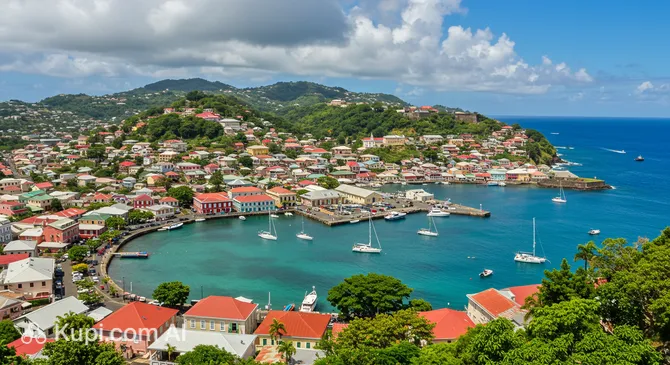
St. George's is widely regarded as one of the most picturesque harbor towns in the Caribbean. As the vibrant capital of Grenada, this city captivates visitors with its colorful pastel houses rising up the steep hillsides from the waterfront. The town surrounds a horseshoe-shaped harbor known as the Carenage, creating a stunning natural amphitheater that serves as the heart of local life and tourism.

Geographically, the city is located on the island's southwest coast, resting on the slopes of an ancient volcano crater. With a population of approximately 12,500 residents, St. George's maintains a friendly, small-town atmosphere despite being the center of government and commerce. The climate is tropical and warm year-round, making it an inviting destination for travelers seeking sun and culture.

St. George's. Source: Kupi.Binoculars

The city's architecture is a charming blend of French and British colonial influences, featuring red-tiled roofs and traditional brick buildings. Visitors interested in the events that shaped this unique urban landscape can delve deeper into the history of St. George's to understand its rich heritage. A walk through the narrow, winding streets reveals a tapestry of stories from the past.

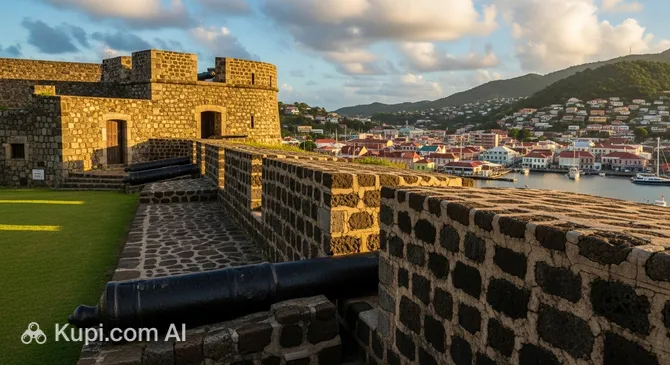
Among the top attractions is the Fort George, built in the early 18th century, which offers breathtaking panoramic views of the town and the open sea. Another highlight is the bustling Market Square, where the air is filled with the scent of nutmeg, cinnamon, and vanilla, showcasing why the island is known as the "Spice Isle." Whether you are strolling along the scenic waterfront or exploring historic fortifications, St. George's offers an unforgettable Caribbean experience.

Weather Overview

St. George's enjoys a warm, tropical climate that makes it an inviting destination at any time of year. Temperatures remain remarkably consistent, typically fluctuating between an average of 25.4°C in February and reaching around 27.5°C in September. Even during the cooler months, the weather is pleasant, with minimum temperatures rarely dropping below 24.6°C.

Rainfall patterns define the seasons more than temperature changes do. The early part of the year, particularly February through April, constitutes the drier season, characterized by fewer wet days and lower precipitation levels. Conversely, the period from June to November sees a significant increase in humidity and rainfall, with August often recording up to 26 wet days. To help plan your activities around these patterns, you can consult the detailed guide to the weather in St. George's. Expect warm temperatures year-round, with a dry spell in the spring and a wetter season bringing frequent showers from summer through late autumn.

Interesting Facts

Beyond the main attractions, St. George's holds many fascinating secrets that reveal its resilience and unique architectural character. Dig a little deeper into the city's past, and you will uncover stories of engineering marvels and maritime legends that most visitors miss.
  • The Backward Fort: Perched high above the city, Fort Frederick is famously known as the "backward facing fort" because its cannons point inland rather than out to the ocean. The French began its construction to defend against British attacks from the landward side, realizing that this was the strategic weak point after they themselves had successfully captured the island using that very route.

  • A Tunnel Through Time: The city features a unique piece of Victorian engineering called the Sendall Tunnel, built in 1894. This narrow, 340-foot passage cuts directly through the solid volcanic rock of the ridge separating the harbor from the Esplanade, serving as a shared shortcut for both cars and pedestrians to this day.

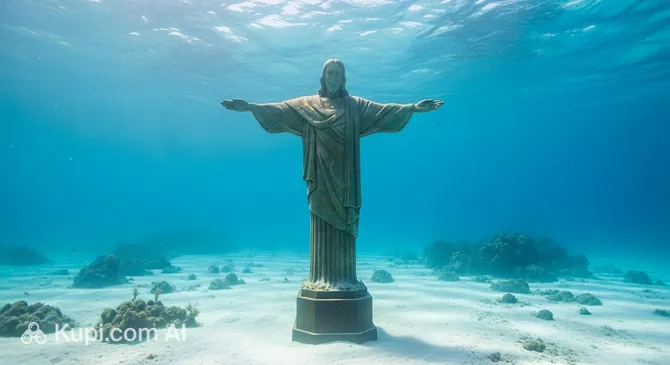
  • A Monument to Bravery: The statue of Christ of the Deep stands proudly on the Carenage waterfront, rather than underwater as its name often implies. It was gifted to the city by Costa Cruise Line to honor the heroism of local residents who rescued hundreds of passengers and crew when the liner Bianca C—often called the "Titanic of the Caribbean"—caught fire and sank in the harbor in 1961.

  • Roofs from Ship Ballast: The charming orange, fish-scale tiles that adorn many of the city's historic roofs have a surprising origin. They were originally brought over in the holds of European trading ships as weight ballast; once the ships arrived, the tiles were offloaded to make room for the valuable spices and sugar that would be transported back to Europe.

Fort Frederick. Source: Kupi.Binoculars

How to Get There

Planning a trip to this vibrant Caribbean capital is the first step toward an unforgettable adventure. For a comprehensive look at all travel options, including sea routes and local tips, you can visit our detailed guide on how to get to St. George's. Most visitors arrive by air, landing directly on the island to begin their exploration of the "Spice Isle."

The primary entry point for the city is the Maurice Bishop International Airport (IATA: GND). Situated approximately 7 km from the center of St. George's, it is the main hub for international and regional flights. The airport is well-connected to the city, and a trip by taxi or bus usually takes about 30 minutes. This facility handles the majority of tourist traffic, making it the most convenient and common way to reach the destination.

Travelers island-hopping through the Caribbean might also find themselves near other regional transport hubs, though these require connecting flights or boat transfers to reach Grenada. For example, Argyle International Airport (IATA: SVD) in Kingstown is located about 138 km away on the neighboring island of St. Vincent. Similarly, A.N.R. Robinson International Airport (IATA: TAB) in Scarborough lies approximately 142 km from St. George's. While these airports do not offer ground transport to the city due to the ocean separation, they serve as vital links in the regional travel network.

For clarity, here is a summary of the main airports in the region:

Airport Name City Passenger Traffic Km from City
Piarco International Airport Port of Spain High 167.7
A.N.R. Robinson International Airport Scarborough Medium 141.6
Hewanorra Airport Castries Medium 204.7
Argyle International Airport Kingstown Medium 138.2
Maurice Bishop International Airport St. George's Medium 7.0

St. George's does not have a railway station, and there is no passenger rail service available on the island of Grenada. Transportation within the city and to other parts of the island is entirely road-based. Visitors typically rely on the extensive network of minibuses, taxis, and rental cars to navigate the hilly terrain and scenic coastal roads.

Main Attractions

St. George's is a city best explored at a leisurely pace, offering a delightful mix of historical intrigue and vibrant island flavor. Visitors will find that the capital's charm lies not just in its scenic harbor and colonial architecture, but also in its unique cultural and social spots that showcase the true spirit of Grenada.

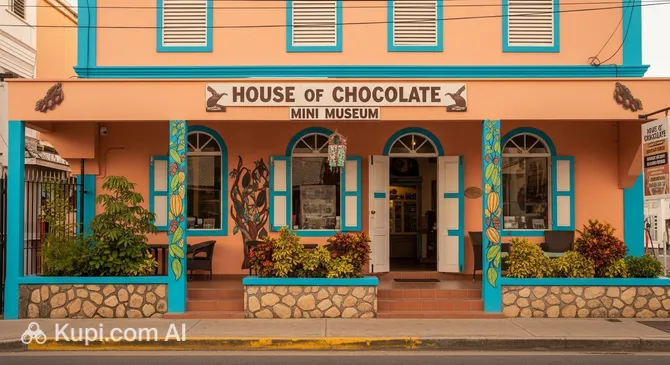
A must-visit for anyone with a sweet tooth is the House of Chocolate Mini Museum. Located in the heart of the town, this cozy establishment celebrates the island's reputation as a world-class cocoa producer. It serves as both a museum and a café, where tourists can learn about the history of chocolate making, from the cocoa bean to the finished bar. The experience is interactive and sensory, allowing you to sample organic treats and purchase locally made spices and cocoa products to take home.

House of Chocolate Mini Museum. Source: Kupi.Binoculars

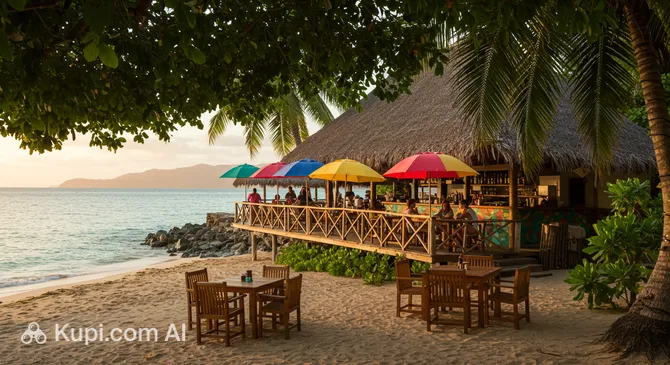
For those looking to experience the island's famous beach culture, Umbrella's Beach Bar is a key destination. Situated on the pristine sands of Grand Anse Beach, just a short distance from the city center, this popular spot embodies the relaxed Caribbean lifestyle. It is a favorite among both locals and tourists for its live music, casual dining, and vibrant atmosphere. Spending an afternoon here offers the perfect opportunity to enjoy fresh local food while watching the sun dip below the horizon.

Umbrella's Beach Bar. Source: Kupi.Binoculars

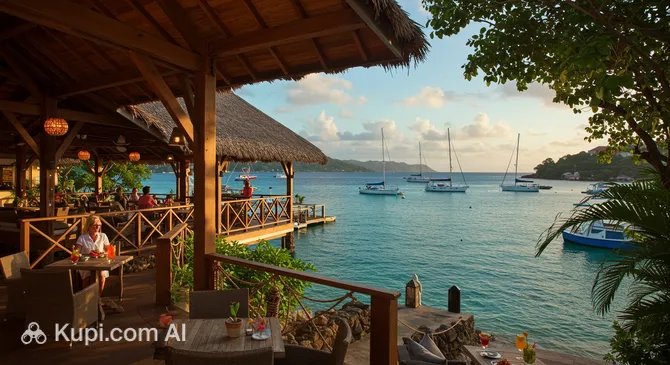
To fully appreciate the beauty of the city's waterfront, a visit to Sails Restaurant & Bar is highly recommended. Located directly on the Carenage, this venue offers some of the best unobstructed views of the harbor. It is an excellent place to sit back and watch the colorful fishing boats and luxury yachts navigate the crystal-clear waters. Whether for a refreshing drink or a meal by the water's edge, it provides a scenic vantage point to admire the picturesque red-tiled roofs of St. George's rising up the hills.

Sails Restaurant & Bar. Source: Kupi.Binoculars

Local Cuisine

The culinary landscape of St. George's is a flavorful reflection of Grenada's status as the "Spice Isle." Local cuisine here is rich, hearty, and heavily seasoned with the nutmeg, cloves, and turmeric that grow abundantly on the island. The undisputed star of the table is Oil Down, the national dish. This savory one-pot stew is a must-try for any visitor; it typically combines breadfruit, dumplings, salted meat or fish, and dasheen leaves (callaloo), all simmered slowly in coconut milk and turmeric until the liquid is absorbed, leaving a rich, golden coating.

Beyond the national dish, the city offers an abundance of fresh seafood caught daily by local fishermen. You can find excellent grilled fish, lobster, and "lambie" (conch) prepared in curries or stews at many eateries along the waterfront. For a quick and filling lunch on the go, rotis are a local favorite. These soft, wrap-style flatbreads are filled with curried chicken, beef, or vegetables and can be found at small street stalls and casual counters throughout the town.

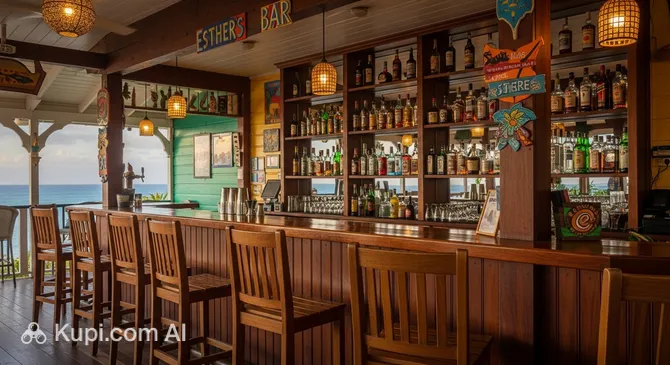
No gastronomic tour is complete without sampling the local beverages. Grenada produces excellent rum, and a classic Rum Punch—often dusted with freshly grated nutmeg—is the signature drink to enjoy while watching the sunset. For a more authentic local nightlife experience, you might visit Esther's Bar. Located in the Grand Anse Craft and Spice Market, it is famous for its potent mojitos and friendly atmosphere, making it a perfect spot to mingle with residents. Non-alcoholic options are equally delightful, particularly cocoa tea, a warm, spiced chocolate drink often served at breakfast, and refreshing juices made from passion fruit, mango, or sorrel.

Esther's Bar. Source: Kupi.Binoculars

The food culture in St. George's revolves around fresh ingredients and social gathering. The bustling Market Square is the heartbeat of this scene, where farmers sell mounds of colorful spices, fruits, and vegetables. While tourists often flock to the scenic restaurants on the Carenage for waterfront dining, locals frequently enjoy the vibrant street food scene near the bus terminal or the casual "shacks" near the beaches. Whether you are dining in an upscale establishment or grabbing a bite from a roadside vendor, the food here is prepared with soul and a generous hand of spices.

Travel Tips

Welcome to St. George's! To help you navigate the steep, winding streets of this picturesque capital and make the most of your island getaway, we have compiled a list of essential travel advice. A little preparation goes a long way in ensuring your visit to the "Spice Isle" is as relaxing and enjoyable as possible.

  1. Clothing and Gear: Given the tropical climate, pack lightweight, breathable fabrics like cotton or linen to stay cool. However, the most critical item to bring is a pair of sturdy, broken-in walking shoes. St. George's is built on steep hillsides, and exploring the town involves plenty of climbing and navigating uneven surfaces. While beachwear is perfect for the coast, remember to cover up with a sarong, shorts, or a t-shirt when entering shops, restaurants, or walking through town.
  2. Transportation: The most authentic and affordable way to get around is by using the local minibuses. Look for buses with a "Zone 1" sticker on the windshield to travel within the St. George's area; they are frequent, lively, and cheap. Taxis are widely available but are not metered, so you must agree on the fare in East Caribbean Dollars (XCD) or USD before starting your journey. If you choose to rent a car, remember that driving is on the left side of the road, and the terrain can be challenging for inexperienced drivers.
  3. Finances: The official currency is the East Caribbean Dollar (XCD), though US dollars are widely accepted at a fixed exchange rate. It is advisable to carry local cash for small purchases at the market, bus fares, and street food vendors. ATMs are readily available in the city and near Grand Anse. Major credit cards are accepted at hotels and larger restaurants, but smaller establishments often prefer cash. Tipping around 10–15% is customary for good service.
  4. Health and Safety: St. George's is generally safe, but standard travel precautions apply; avoid walking alone in poorly lit areas at night and keep valuables secure. Pharmacies are available in the city center and the Grand Anse shopping area, but they are typically closed on Sundays. Since Grenada is a tropical island, mosquito repellent is essential to protect against bug bites, and staying hydrated with bottled water is recommended while exploring in the heat.
  5. Communication: English is the official language and is spoken by everyone, often with a distinct Caribbean lilt. You will have no trouble communicating. Wi-Fi is widely available in hotels, cafes, and restaurants. If you need constant connectivity, you can easily purchase a prepaid SIM card from local providers like Flow or Digicel in the city center; just remember to bring your passport for registration.
  6. Local Etiquette: Grenadians are known for their warmth and politeness. It is customary to greet people with a friendly "Good morning," "Good afternoon," or "Good evening" before asking a question or starting a conversation. Skipping this greeting can be seen as rude or dismissive. When taking photos of locals or their property, always ask for permission first as a sign of respect.
  7. What to Avoid: Strictly avoid wearing camouflage clothing. It is illegal for civilians to wear camouflage patterns (including children) in Grenada and many other Caribbean nations. Customs officials may confiscate such items upon arrival, and wearing them in public can lead to fines.
  8. Sunday Shutdown: Be aware that St. George's becomes very quiet on Sundays. Most shops, the central market, and many restaurants in the town center close down as locals spend the day with family or at church. If you are in the city on a Sunday, plan for a beach day at Grand Anse or book a nature tour, as urban sightseeing/shopping will be limited.

By keeping these practical tips in mind, you will be well-equipped to embrace the laid-back rhythm and vibrant culture of St. George's. Enjoy the stunning harbor views, the scent of spices in the air, and the warm hospitality that makes this Caribbean city so special.

Entertainment & Nightlife

Entertainment in St. George's is defined by the local concept of "liming"—the art of relaxing, socializing, and enjoying good company with a drink in hand. Unlike destinations famous for high-energy mega-clubs, the nightlife here is intimate, friendly, and centered around open-air bars, beach lounges, and vibrant marina spots. The historic city center tends to quiet down after sunset, with the focus of evening activities shifting south towards the Grand Anse and True Blue areas, where tourists, medical students, and locals mingle.

For those seeking a lively atmosphere, the Grand Anse strip is the place to be. A standout venue here is Umbrella's Beach Bar. While it is a popular lunch spot during the day, at night it transforms into a hub of activity, frequently hosting live bands and offering a spirited environment where dancing in the sand is encouraged. It is the perfect location to transition from a sunset dinner to a fun-filled evening without ever leaving the beach.

If you are looking for a more authentic, grassroots experience, make your way to Esther's Bar located in the Grand Anse Craft and Spice Market. This unassuming spot is legendary among those in the know for serving some of the island's most potent and delicious mojitos. It offers a fantastic opportunity to chat with residents and experience the genuine warmth of Grenadian hospitality without the pretense of a high-end club.

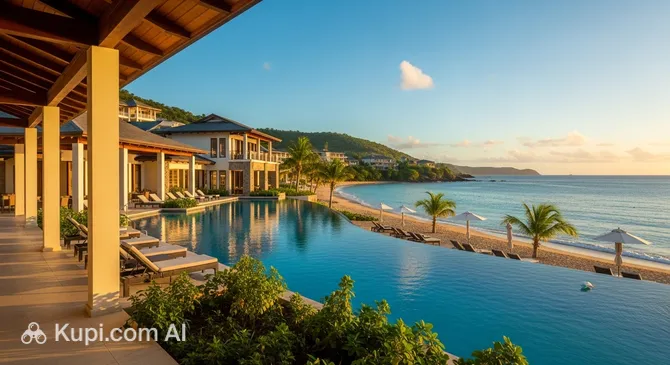
Travelers desiring a more upscale and sophisticated evening should consider visiting Silversands Grenada. The resort's lounge areas provide an elegant setting for sipping craft cocktails and enjoying fine wine. With its sleek, modern design and ambient lighting, it offers a stark but delightful contrast to the rustic charm of the beach shacks, making it ideal for a romantic night out or a quiet drink in luxury.

Silversands Grenada. Source: Kupi.Binoculars

Beyond these specific venues, the True Blue district—often frequented by students from St. George's University—offers a variety of pubs and grilles that host themed nights, trivia, and DJ sets. Prickly Bay Marina is another hotspot, particularly on Friday nights, where you can enjoy live music, bingo, and a bustling social scene by the water. The dress code across most venues is "elegant casual"; while shorts and sandals are acceptable in beach bars, a slightly neater appearance is appreciated in resorts and marinas.

When enjoying the nightlife, safety and logistics are straightforward. While St. George's is generally safe, it is advisable to use taxis for getting around at night rather than walking along unlit roads between districts. Taxis are reliable and can be called by your hotel or the venue staff. Prices are usually fixed, so confirm the fare in advance. The best time to head out is around 9:00 PM, as the "lime" typically continues well past midnight, especially on weekends.

During the daylight hours, entertainment in St. George's takes a more cultural and relaxed turn. Visitors can explore the charming House of Chocolate Mini Museum to indulge in sweet treats or stroll through the sensory-filled Market Square. For nature lovers, the surrounding seas offer excellent diving opportunities, including underwater sculpture parks, while the city itself serves as a gateway to island tours and sailing excursions.

Parks & Museums

St. George's is a city where history and nature are seamlessly interwoven, offering visitors a rich tapestry of cultural heritage and scenic beauty. Beyond its bustling harbor and colorful architecture, the capital invites exploration through its fascinating museums, historic fortifications, and unique natural areas that reflect the soul of Grenada.

The cultural anchor of the city is the Grenada National Museum, housed in a building that dates back to 1704. Originally constructed as French barracks and later used as a British prison, this structure is a piece of history in itself. Inside, visitors can journey through the island's timeline, with exhibits showcasing indigenous Amerindian pottery, artifacts from the colonial plantation era, and displays dedicated to the whaling industry. It provides an essential context for understanding the diverse influences that have shaped modern Grenada.

For art lovers, the city serves as a canvas for local creativity. While there are no massive art complexes, intimate venues like the Yellow Poui Art Gallery and Art Fabrik offer a glimpse into the island's artistic community. These spaces often feature vibrant batik fabrics, paintings, and sculptures inspired by the island's lush landscapes and folklore, making them perfect stops for those looking to appreciate or purchase authentic Caribbean art.

When it comes to green spaces, St. George's redefines the concept with its world-famous Molinere Underwater Sculpture Park. Located just a short boat ride north of the harbor, this is one of the city's most celebrated natural attractions. It was the world's first underwater sculpture park and serves as both an artistic installation and an artificial reef. Snorkelers and divers can float above life-size statues that have been slowly colonized by coral and marine life, creating a hauntingly beautiful interaction between art and the environment.

Back on land, the Carenage itself acts as the city's premier promenade. This horseshoe-shaped waterfront is perfect for a leisurely stroll, offering the refreshing sea breeze and shaded spots under the eaves of historic buildings. Along this route, you will encounter significant monuments, including the bronze statue of Christ of the Deep. This striking figure stands with arms raised toward the harbor entrance, commemorating the gratitude of the locals and the survival of passengers from a shipwreck in the 1960s.

Christ of the Deep. Source: Kupi.Binoculars

For a panoramic perspective of the city's layout and its surrounding greenery, a climb to Fort George is indispensable. Built in 1705, this bastion is the oldest on the island and remains a focal point of the skyline. While it is a historical site rather than a park, its open ramparts offer the best "green" views, overlooking the lush hillsides, the red-tiled roofs of the town, and the azure expanse of the Caribbean Sea.

Insider Tip: If you are looking for a quiet escape within the city limits, visit the grounds of the St. George’s Anglican Church. Although the church was damaged by hurricanes, the surrounding area offers a peaceful atmosphere and a unique vantage point for photography, contrasting the gothic architecture with the tropical blue sky.

Getting Around

The public transport system in St. George's is primarily defined by a robust and energetic network of privately owned minibuses. There is no metro, tram, or large municipal bus service in the city. Instead, these 15-seater vans serve as the main mode of transit for locals and visitors alike. They are an efficient and cost-effective way to navigate the steep terrain and connect the city center with surrounding neighborhoods and beaches. The central hub for these buses is the bustling Melville Street Bus Terminal, located near the cruise ship complex, where you can find routes departing to all parts of the island.

For navigation, the system relies on a zoning structure. Each minibus displays a sticker on its windshield indicating its route number and destination. For travel within St. George's and to the popular Grand Anse area, you will mostly use the Zone 1 buses. These vehicles are not just a means of transport but a cultural experience, often featuring colorful custom artwork and playing vibrant local music. While there are designated bus stops with shelters, it is common practice to flag down a bus anywhere along its route by simply waving your hand.

Payment is strictly cash-based, and there are no travel cards, apps, or digital ticketing systems. Fares are fixed by the government according to the distance traveled. You should pay the conductor (or the driver if there is no conductor) typically when you reach your destination or sometimes upon entering, depending on the specific driver's preference. It is highly recommended to carry small denominations of the local currency, the East Caribbean Dollar (XCD), as drivers may not have change for large bills or foreign currency. Prices are very affordable, making it easy to hop on and off throughout the day.

A unique and scenic alternative specific to St. George's is the water taxi service. Small, colorful motorboats ferry passengers across the harbor, typically connecting the Carenage or the cruise ship terminal to Grand Anse Beach. This mode of transport offers a quick shortcut across the water, bypassing the road traffic and providing stunning views of the city's red-tiled skyline from the sea. Operators usually wait until the boat has a sufficient number of passengers before departing, and you pay the fare in cash directly to the captain.

Standard taxis are also widely available and are the best option for travelers with heavy luggage or those moving around late at night. Unlike the minibuses, taxis do not have meters. Fares are set for standard routes, but it is essential to confirm the price with the driver before getting into the vehicle to avoid misunderstandings. Taxis can be found at the airport, the bus terminal, major hotels, and the Carenage. While car rentals are an option, visitors should be aware that traffic in the city can be congested, and the narrow, hilly one-way streets require improved driving skills.

Tourists should keep in mind that the minibus system operates primarily during daylight and early evening hours. Service begins around 6:00 AM and starts to taper off significantly after 7:00 PM or 8:00 PM. On Sundays and public holidays, the frequency of buses drops drastically, and in some areas, they may not run at all. If you plan to be out late or are traveling on a Sunday, it is prudent to arrange a taxi in advance or ensure you have the contact number of a reliable driver.

Accommodation

Where to Stay:

Accommodation in St. George's caters to a wide spectrum of travelers, ranging from budget-conscious backpackers to luxury seekers. The city and its immediate surroundings offer a diverse mix of options, including charming colonial-style guesthouses, modern apartments, and world-class beachfront resorts. While the historic town center provides easy access to museums and the harbor, many visitors prefer to stay just a few miles south along the coast, where the accommodation combines proximity to the capital with direct access to the island's stunning beaches.

The most popular area for tourists is undoubtedly Grand Anse. Located just a short drive or water taxi ride from the city center, this district is the hub of Grenada's tourism. Here, you will find the highest concentration of hotels, restaurants, and amenities. For travelers who prefer a quieter atmosphere, the neighborhoods of Lance aux Epines and True Blue offer private villas and mid-range hotels, often favored by those looking for a more residential feel or proximity to the university.

For those seeking an exceptional luxury experience, Silversands Grenada stands out as a premier destination. Situated on Grand Anse Beach, this resort is renowned for its sleek, contemporary design and its 100-meter infinity pool, the longest in the Caribbean. It exemplifies the high-end offerings available near the capital, providing a sophisticated retreat with easy access to the vibrant life of St. George's.

When planning your stay, it is important to consider the seasonality of travel. The peak tourist season runs from December to April, coinciding with the dry weather and winter escapes from colder climates. During this period, hotels can fill up quickly, so it is highly recommended to book your accommodation several months in advance to secure your preferred dates and rates.

Price ranges vary significantly depending on the location and type of lodging. Budget travelers can find affordable guesthouses and Airbnb rentals for under $100 USD per night, particularly if they are willing to stay slightly inland. Mid-range hotels typically range from $150 to $300 USD, while luxury resorts can exceed $800 USD per night. Most accommodations can be booked easily through major online travel platforms, though contacting smaller, family-run guesthouses directly can sometimes yield better rates or more personalized service.

Nearby Cities

For those looking to explore the surroundings, St. George's serves as an excellent base for day trips to several interesting nearby locations:

City Population Distance (km)
Carriacou 8000 57

Beyond the immediate vicinity of the capital, the region offers diverse experiences just a short journey away. Carriacou, known as the "Land of Reefs," is the largest sister island and a favorite getaway for those seeking a tranquil atmosphere. Accessible via a scenic ferry ride or a short flight, it invites visitors to explore pristine coral reefs at Sandy Island and experience unique cultural traditions like the Big Drum Dance.

On the main island, the town of Gouyave on the west coast is famously known as the fishing capital of Grenada. It is home to one of the island's largest nutmeg processing stations, where tours provide a fascinating look into the spice industry. Further inland and to the east lies Grenville, the second-largest town. It serves as the agricultural heart of the nation, bustling with a vibrant market that showcases fresh produce and spices from the fertile interior.

These nearby destinations offer a glimpse into the diverse culture and landscapes of the region.

Shopping & Souvenirs

Shopping in St. George's offers a vibrant and aromatic experience that reflects the island's culture rather than the high-end luxury retail found in some other Caribbean destinations. The city is not known for sprawling designer boutiques, but rather for its authentic local products, particularly spices, handicrafts, and tropical clothing. Visitors will find that the best purchases here are those that capture the essence of the "Spice Isle," making shopping a journey of discovery through scents and colors.

The main shopping activity within the city concentrates around the waterfront and the historic streets rising from the harbor. The Carenage and Young Street are excellent areas to browse for souvenirs, local art, and jewelry. Walking along these thoroughfares, you will find a variety of small, independent shops housed in colonial-era buildings, offering everything from batik fabrics to handmade leather sandals. The area near the cruise ship terminal on Melville Street is also a bustling hub, specifically catered to visitors looking for duty-free goods and quick gifts.

For a more modern and comprehensive shopping experience, visitors often head to the few established malls in the area. Esplanade Mall, located near the cruise terminal, is a key spot for duty-free jewelry, perfumes, and branded watches. Just a short drive south to the Grand Anse area, you will find Spiceland Mall, the island's premier shopping complex. It features a large supermarket, a bank, clothing stores, and a food court, providing a comfortable air-conditioned environment for stocking up on supplies or browsing for international brands.

The true heart of commerce in St. George's, however, beats in its markets. The Market Square is an unmissable landmark where the air is thick with the scent of nutmeg, cinnamon, and cloves. Here, local vendors pile high tables with fresh fruits, vegetables, and colorful packets of spices. It is the best place to engage with locals and see the island's agricultural bounty firsthand. For a more tourist-focused atmosphere near the beach, the Grand Anse Craft and Spice Market offers a collection of vendor stalls selling spices, woven baskets, and beachwear in a relaxed, open-air setting.

When it comes to souvenirs, spices are the undisputed top choice. You can buy beautifully packaged baskets of nutmeg, vanilla essence, and saffron to take home. Chocolate is another must-buy item, given the island's high-quality cocoa production. The House of Chocolate Mini Museum is not only a place to learn but also an excellent shop for purchasing organic chocolate bars, cocoa butter, and cocoa balls for tea. Other popular items include locally distilled rum and guava cheese, a traditional sweet treat.

Store hours in St. George's typically follow a traditional schedule. Most shops open around 8:00 AM and close by 4:00 PM on weekdays. On Saturdays, many businesses operate on a half-day schedule, closing around 12:00 PM or 1:00 PM, and almost everything is closed on Sundays. While the US Dollar is widely accepted, carrying the local East Caribbean Dollar (XCD) is recommended for small purchases in markets and street stalls. Credit cards are generally accepted at malls, hotels, and larger restaurants, but cash is preferred by smaller vendors.

Tax-free shopping is a significant draw for international visitors. Tourists can purchase goods such as jewelry, electronics, and liquor at duty-free prices, particularly at the Esplanade Mall and the airport. To qualify for these exemptions or to receive a VAT refund at participating stores, you will typically need to present your passport and travel documents at the point of purchase.
Reached the end of the page?

That means the route is fully explored