Support

Barbier Mausoleum

About

In the heart of one of the most revered cities in the Islamic world lies the Barber's Mosque (or Mausoleum of Sidi Sahab) — an architectural gem and one of the most important shrines in Kairouan. This religious complex is built on the burial site of Abu Zama'a al-Balawi, a devoted companion of the Prophet Muhammad. According to legend, he kept three hairs from the Prophet's beard, which gave the place its unusual name.
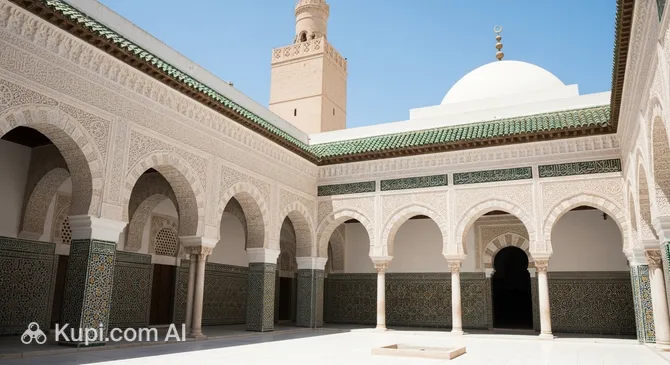
Barbier Mausoleum
Barbier Mausoleum. Иллюстрация. Источник: Kupi.com AI

Founded in the 14th century, the complex is a magnificent example of Islamic art characteristic of Tunisia. Visitors are struck by the exquisite craftsmanship: walls adorned with vibrant ceramic tiles and intricate stone carvings create an atmosphere of an Oriental fairy tale and deep spiritual peace.

Today, the Barber's Mosque is not just a historical monument but an active pilgrimage center, housing a mosque, the Mausoleum of Sidi Sahab, and a madrasa. It is considered the spiritual heart of the region, attracting thousands of believers and architecture enthusiasts from around the world.

Contacts

For more information before your visit or to arrange a group tour, you can use the following contact details:

Please note that an official website is not listed in open sources, so it is best to check current details on-site.

How to contactContact
AddressM3JR+R2R, Кайруан, Тунис
Phone+216 77 231 897

What to Do

The main reason to visit this site is the opportunity to experience ancient traditions and see masterpieces of decorative art. Visitors are recommended to start their tour in the courtyards, where you can spend hours admiring the intricate patterns on the walls and vaults. The ceramic tiles covering the halls are striking for their vibrant colors, which have not faded over the centuries.

Inside the complex, be sure to visit the madrasa — an ancient religious school. Here, you can imagine how Muslim scholars once studied and appreciate the austere yet majestic architecture of the classrooms. A special atmosphere of reverence reigns in the Mausoleum of Sidi Sahab itself; it is an ideal place for those seeking solitude and spiritual reflection.

For photography enthusiasts, the complex offers endless subjects: from sun-drenched open galleries to the finest details of stone carving. Remember that this is an active religious site, so please show respect to worshippers and maintain silence while exploring the interiors.

Getting There

The shrine is located at Av. de la République, making it easily accessible for travelers. Kairouan is located in the central part of the country, and you can get here from the capital, Tunis, in about 2–2.5 hours by car or intercity bus.

If you are already in the city center, the most convenient way to reach it is by taxi — the ride will take only a few minutes. Many tourists also prefer to visit the complex as part of organized tour groups, which include the mausoleum in standard itineraries through the region's holy sites.

For those traveling independently in a rental vehicle, the coordinates are: 35.682061° N and 10.090226° E. Parking is usually available near the site.

Ближайший город: Kairouan

History & Facts

The history of this place dates back to the 7th century when Abu Zama'a al-Balawi, known as Sidi Sahab, arrived in North Africa. He was a companion of the Prophet Muhammad and, according to tradition, always carried three hairs from the Prophet's beard — one under his tongue, one near his heart, and one on his right shoulder. This is why the complex received its nickname — the Barber's Mosque.

The architectural ensemble we see today began to take shape in the 14th century. Before that, only a modest structure stood over the saint's grave. The main buildings, which are breathtaking in their beauty, date back to the 17th century when the complex was significantly expanded and decorated in the best traditions of Tunisian architecture.

Sidi Sahab is revered as the spiritual patron of Kairouan. For the city's residents, it is not just a historical monument but a place of great power and protection. Over the centuries, the complex has been restored several times, maintaining its status as a vital center of Islamic heritage in the Maghreb.

The significance of this site is underscored by the status of the city itself. Kairouan is among the four holiest cities of Islam, and for many believers, visiting its major shrines is equivalent to a pilgrimage to more distant lands.

Time Needed

For a standard introduction to the complex and a visit to the mausoleum itself, 30–45 minutes is sufficient for most travelers. This is enough time to see the main courtyards and appreciate the elegance of the decor.

If you plan to study the unique ceramic tiles in detail, examine the complex stone carvings in the madrasa, and simply soak in the peaceful atmosphere of this place, it's worth setting aside about 1–1.5 hours for your visit. This will allow you to take photos and visit all accessible parts of the complex without rushing.

Working Hours

The complex is open to visitors daily from 08:00 to 19:00. This schedule applies to all days of the week, including weekends, making it very convenient for tourists to plan their trip.

However, before visiting, it is recommended to consider the times of religious ceremonies and potential schedule changes during Islamic holidays. It is best to check for up-to-date information on-site or at the city's tourist information centers.

08:00–19:00

Nearby

Exploring the surroundings of the Barber's Mosque will allow you to dive deeper into the atmosphere of the ancient city and see how different eras of the region's history intertwine. Both important religious sites and family leisure spots are within walking distance.

A walk from the shrine to the city center will reveal majestic mosques, ancient water basins, and the colorful streets of the Medina, which are considered some of the most authentic in all of Tunisia.

NameDistance
Aghlabid Basins0.7 km
Kasbah of Kairouan0.8 km
El Brija Restaurant1.2 km
Great Mosque of Kairouan1.3 km

Reached the end of the page?

That means the route is fully explored