Support

Kebili

About

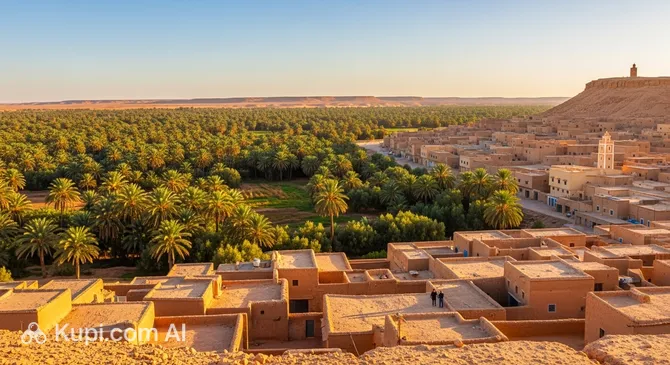
Kebili is a true oasis of life, situated on the threshold of the great Sahara Desert. As the administrative center of the province of the same name, this city attracts travelers with its authentic atmosphere and unique geographical location south of the famous Chott el Djerid salt lake. For those planning to visit southern Tunisia, Kebili is an essential stop, opening the doors to a world of endless sands and ancient traditions.

Kebili. Illustration.
Source: Kupi.com AI

This location is considered one of the oldest settlements in North Africa. Stretching back through the centuries, the history of Kebili bears witness to the fact that people have lived here for millennia, using the oasis as a vital stop on trade routes. Today, the city is primarily known for its vast palm groves. It is here that the famous "Deglet Nour" dates are grown, whose sweetness and quality are prized worldwide.

The region has a desert climate, so the best time to visit is spring or autumn, when the heat is less severe. Among the main attractions, the old part of town (the medina) stands out with its labyrinth of narrow streets and traditional architecture designed to provide shade from the sun. Proximity to the Chott el Djerid salt flat allows tourists to see fantastic landscapes and, with a bit of luck, the famous mirages. Kebili is an ideal destination for those who want to see a "different" side of the country, far from the coastal resorts, and immerse themselves in the tranquil rhythm of desert oasis life.

Weather Overview

The climate in this region is typical of desert oases: expect a very hot, dry summer and a mild winter with cool nights. Rainfall is a rarity here at any time of year, so clear skies will accompany you almost constantly.

The summer months (June, July, August) are a true test of endurance: the average daytime temperature often exceeds 37–40°C, and there is practically no rain. July is the hottest month, with maximums above 40°C. If you plan a trip during this period, be sure to take care of sun protection and water supplies.

Winter, on the other hand, brings pleasant coolness. In January and February, daytime temperatures hover around 17–20°C, but nights can be quite cold, dropping to 6–8°C. The current weather in Kebili will tell you if you should bring a warm jacket for evening walks. Spring and autumn are considered the most comfortable times to visit, when the heat has not yet arrived or has already subsided, and the air warms up to a comfortable 20–25°C.

Average monthly temperature

Average monthly precipitation

Interesting Facts

Beyond its status as the "gateway to the desert," Kebili holds many surprising secrets revealed only to curious travelers. This city is not just an oasis, but a place where natural records have been set and traces of deep antiquity have been found.
  • Cradle of civilization in the region: Kebili is considered one of the oldest human habitats in North Africa. Archaeologists have discovered stone tools and animal bones in the city's vicinity, estimated to be approximately 200,000 years old, indicating a human presence here as far back as the Early Stone Age.

  • African heat pole: The city is known for its harsh climate and holds a historical temperature record. According to meteorologists, the highest temperature ever recorded on the African continent was measured here—+55°C, making Kebili one of the hottest spots on the planet.

  • World capital of "fingers of light": The region is famous for producing the world's best "Deglet Nour" dates (which translates to "fingers of light"). In honor of the region's main treasure, the colorful International Date Festival is held annually in the city, where you can not only taste the harvest but also see traditional marathons and folk group performances.

  • Unique cultural fusion: Due to its location at the crossroads of ancient caravan routes, Kebili has become home to a fascinating blend of ethnicities. Traditions of Berbers, Arabs, and descendants of people from Sub-Saharan Africa are harmoniously intertwined here, creating a unique cultural code that distinguishes this city from other settlements in the country.

  • Land of mirages: Proximity to the giant salt lake Chott el Djerid gives visitors a unique natural spectacle. In hot weather, complex mirages (Fata Morgana) often appear above the horizon, which for centuries misled caravans and today delight tourists heading to Tunisia for the exotic.

How to Get There

When planning a trip to this colorful oasis, it is wise to consider logistics in advance, as the city is located deep within the country. You can find out more about how to get to Kebili to choose the most convenient route that combines comfort with the chance to enjoy Tunisia's landscapes.

Kebili itself does not have an airport, so the aerial gateways are located in neighboring regions. The nearest hub is Tozeur–Nefta International Airport (IATA: TOE), located in the city of Tozeur. It is approximately 84 km from Kebili. This is a small but convenient airport for those wanting to reach the south of the country quickly. The journey from here by taxi or transfer takes about 2 hours 25 minutes.

A much larger and more popular option among tourists is Djerba–Zarzis International Airport (Melita) (IATA: DJE), serving Djerba island and the city of Midoun. The distance to Kebili is about 168 km. This is a major international hub with a high passenger volume. The journey from here takes more time—approximately 4 hours 30 minutes by car—but this route is often chosen due to the large number of regular and charter flights.

You can also fly into Monastir Habib Bourguiba International Airport (IATA: MIR) in the city of Monastir. This is one of the country's key tourist airports with high passenger traffic. It is significantly further away, at a distance of about 280 km from Kebili, so a trip by taxi or bus will take roughly 7 hours 20 minutes. This option is suitable if you are planning a large journey across the country from north to south.

For clarity, here is a summary of the main airports:
AirportPassenger trafficDistance
Tozeur Airport32 10884 km
Melita Airport2.2 mln168 km
Sfax El Maou Airport174 000194 km
Guemar Airport250 000204 km
Cheikh Larbi Tebessi Airport12 607207 km

There is no direct rail connection to Kebili itself. Tourists who prefer trains usually travel to the station in Gabes, which is the terminus of the coastal railway line, or to the station in Tozeur. From these cities, Kebili can be reached by intercity buses or the "louages" (shared taxis) popular in Tunisia, which depart as they fill up.

Main Attractions

Although Kebili is often perceived as a transit point on the way to the deep desert, the city and its surroundings possess their own unique charm. The attractions here are predominantly natural and historical, allowing tourists to experience the daily life of oasis residents and witness the majesty of Saharan landscapes.

Old Kebili (Ancienne Medina) is the historical heart of the city, where time seems to have stood still. A walk through the narrow, winding streets of the ancient medina reveals the region's traditional architecture, built to protect against the scorching sun and sandstorms. Buildings here are constructed from local materials, and covered passages provide much-needed shade. This place is steeped in history: Kebili was once an important center for trade, and today the old town attracts visitors with its authentic atmosphere and tranquility, so unlike the bustling medinas of northern resorts.

It is impossible to visit this region without seeing Chott el Djerid. This giant salt lake, located north of the city, is one of the most impressive natural landmarks that Tunisia is famous for. The endless salt crust, shimmering in shades of white, pink, and purple, creates an otherworldly landscape. This is where tourists most often observe the famous mirages, as the hot air distorts the horizon. The road across the lake, running along an embankment, offers excellent photo opportunities, especially at sunrise or sunset.

The Palm Groves (Palmeraie) around Kebili are not just agricultural land but a true green labyrinth that provides life in the middle of the desert. The oasis contains hundreds of thousands of date palms, irrigated by a complex system of channels known as "segia." A walk on foot or a carriage ride under the canopy of trees allows you to see how the famous "Deglet Nour" dates are grown. It is the perfect place to escape the heat, listen to birdsong, and learn about the traditional farming methods that have sustained life in this arid land for many centuries.

Local Cuisine

The culinary traditions of Kebili are the taste of the real desert, where every dish must be hearty and energizing. The foundation of local gastronomy consists of products provided by the oasis itself, most notably the famous dates. Here in the south, which reveals a "different" Tunisia to travelers, "Deglet Nour" dates are not just a dessert but a vital part of the diet. They are eaten fresh with milk, stuffed with nuts, or used to make a sweet paste.

The most iconic dish of the region is rightfully considered Mtabga, often called "Berber pizza" by tourists. It is a stuffed flatbread made of dense dough, filled with a mixture of finely chopped onions, tomatoes, hot peppers, garlic, and mutton fat. Mtabga is baked on a traditional clay or metal surface and ends up quite spicy but incredibly delicious. It is the perfect snack for exploring the medina.

Meat lovers should pay attention to dishes made from camel meat. In Kebili and neighboring settlements, camel is a common ingredient. It is stewed in clay pots (known as "goula"), added to couscous, or grilled. The local couscous has a reddish tint due to the abundance of tomato paste and spices and is often served with vegetables grown right in the oasis.

As for drinks, be sure to try Lagmi—date palm sap. It comes in two types: fresh (sweet and non-alcoholic) and fermented (with alcohol). And, of course, no meal is complete without traditional green tea with mint and plenty of sugar, brewed here until a thick foam appears, symbolizing the hospitality of the desert dwellers.

Travel Tips

Preparing for a trip to Kebili requires attention to detail, as this city is the gateway to the real desert. To ensure your journey to southern Tunisia goes smoothly and leaves only pleasant memories, we have gathered the most important recommendations, taking into account local customs and climatic features.

  1. Clothing for a desert climate. The weather here is contrasting: it can be scorching sun during the day and piercing cold at night. Bring loose-fitting clothes made of natural fabrics (cotton, linen) that cover your shoulders and knees—this protects against sunburn and conforms to local standards of modesty. Be sure to pack a warm fleece or windbreaker for evening walks, as well as comfortable closed shoes for walking on sand and stony streets.
  2. Transport and movement. The city center is compact enough for walking, but for trips to the palm groves or neighboring villages, it's better to use a taxi. Yellow taxis here are inexpensive, but always ask the driver to turn on the meter when you get in or clearly agree on the price before the trip begins. Car rental is only practical if you are an experienced driver and plan long excursions into the desert.
  3. Financial matters. Cash is king in Kebili. Credit cards are only accepted at a few large hotels, so always have a supply of Tunisian dinars, especially small bills. It's best to exchange currency at banks or official exchange offices, keeping your receipt until the end of the trip. There are ATMs in the city, but they don't always work properly, so you shouldn't rely solely on withdrawing cash.
  4. Health and water. In a hot climate, dehydration happens unnoticed. Drink only bottled water and avoid iced drinks in street cafes, as the ice may be made from tap water. Pharmacies in the city are marked with a green cross (often with the word "Pharmacie"), and you can find basic medications there, but it's better to bring specific preparations with you.
  5. Language and communication. The main language of communication is Arabic; many locals understand French well. English is not widely spoken here, so we recommend downloading an offline translator or learning a few phrases in Arabic, such as "Aslema" (hello). For stable internet, buy a local SIM card (Ooredoo, Orange, or Tunisie Telecom) at an official store using your passport immediately upon arrival.
  6. Etiquette and interaction. People in the south are famous for their hospitality but value respect. It is customary to say hello when entering a shop or stall. If you are offered tea, do not refuse—it may be taken as an offense. Always ask permission before photographing people, especially women and elderly men.
  7. What to avoid. Refrain from public displays of affection (kissing, hugging), as Kebili is a city with conservative values. You should also not openly consume alcohol on the streets or appear intoxicated in public places; alcohol is mainly available only in bars at tourist hotels.
  8. Buying dates. Being in the "date capital," don't buy dates in pretty boxes at the supermarket. Go to the local market where you can taste the harvest right from the branch. The tastiest and freshest fruits are sold loose, and here you must haggle—it's part of the cultural ritual.

Following these simple rules will help you feel confident and safe in Kebili. Respect local traditions, and this desert land will open its heart to you, giving you a unique experience and the sincere hospitality of its people.

Entertainment & Nightlife

Nightlife in Kebili is strikingly different from the noisy parties at Tunisia's seaside resorts like Sousse or Hammamet. Here, on the edge of the desert, evening is a time for slow conversations, the aroma of mint tea, and gazing at the starry sky, which seems incredibly close in these parts. Entertainment in the city is traditional in nature, offering tourists a chance to immerse themselves in the authentic atmosphere of southern hospitality, where social interaction is the main event.

The center of gravity in the evening shifts to the numerous coffee shops and tea parlors, which serve as clubs for the local residents. Life hums on the central streets, where establishments remain open late. It is customary here to order strong coffee, sweet tea with pine nuts, and smoke a hookah (shisha). The atmosphere in such places is very relaxed: quiet Arabic music plays while patrons are absorbed in games of cards or dominoes. Tourists are always welcome here, and although the crowd in traditional cafes is predominantly male, foreign women are also welcome to enter.

Among the popular places to spend a pleasant evening, El Majless Coffee Lounge is worth highlighting. The establishment is known for its cozy interior and excellent service. They serve wonderful non-alcoholic cocktails and fresh juices, and the open terrace is a lovely spot to enjoy the cool air after a hot day. Another well-known location is Cafe Bayka, which attracts guests with quality hookah and a wide selection of drinks. For those looking for a combination of good food and evening relaxation, Le Théâtre Café-Resto is suitable, often serving as a gathering spot for the local intelligentsia and youth.

If you are looking for establishments that serve alcohol, you will have to head to the bars at the large tourist hotels. Within the city of Kebili itself, the sale of alcohol is limited, and you won't find typical "European" bars on the streets. Hotel lounges offer a more familiar setting for Western tourists: here you can order beer or wine, listen to live music, or watch performances by folk groups, which often stage belly dancing shows for guests.

For lovers of romance, the best nighttime activity is a walk under the moon. Safety in the city is high, and an evening promenade through the center or the outskirts of the palm grove poses no threat. However, as with anywhere, it is best to avoid unlit alleys when alone. Taxis in Kebili are inexpensive, so getting back to your hotel at night is easy, but it's better to have a local service's phone number or arrange a ride with a driver in advance.

During the day, the city offers quieter leisure activities that transition smoothly into the evening. Travelers can visit local markets to buy souvenirs and spices, or take an excursion to the Sahara Museum (located in the nearby town of Douz), which houses exhibits about the life of nomads. Jeep tours and camel rides through the surrounding dunes are also popular—a great opportunity to see the desert in all its glory before the city sinks back into its measured nighttime rhythm.

Parks & Museums

The cultural and natural landscape of Kebili is unique: you won't find typical European squares or massive exhibition complexes here, but the city itself is a living open-air museum surrounded by the majestic greenery of the oasis. A journey here is an opportunity to touch history written in ancient walls and rest in the shade of thousands of palms that shield you from the breath of the Sahara.

The main "green zone" of the region is undoubtedly the Palm Grove (La Palmeraie). This is not just agricultural land, but a huge natural park with over a hundred thousand trees. A walk here brings long-awaited coolness and peace. Tourists can see the complex traditional irrigation system, listen to birdsong, and enjoy the contrast between the dry desert and the lush vegetation of the oasis. It is an ideal spot for morning jogs or leisurely evening promenades.

Another significant natural and historical site is the area around the Ras El Ain spring. This is the heart of the oasis, a natural spring around which life in this region first began. The territory around the spring is landscaped and serves as a small park where locals like to relax. Here you can see how water is distributed through the channels and appreciate the importance of every liter of moisture in the arid southern climate that Tunisia is known for.

Regarding museums, it's worth noting that in Kebili itself, the Old Medina plays the role of the main exposition. It is an architectural monument through which you can study the history of desert urban planning. Walking through the covered passages and examining the ancient doors with their characteristic knockers, you immerse yourself in the life of past centuries. The walls of the houses here hold memories of caravans and ancient dynasties, and the lack of modern noise enhances the time-travel effect.

For those wanting to dive deeper into ethnography, it is recommended to visit the Sahara Museum, located in the neighboring town of Douz (just 25-30 minutes away from Kebili). Although technically outside the city limits, it is a key cultural site for the entire region. The museum houses rich collections of clothing, jewelry, tools, and household items belonging to Bedouin nomads. The exhibition clearly tells the story of how people survived and thrived for centuries in the harsh desert conditions.

Insider Tip: Try to find time to visit the small marabouts (tombs of saints) scattered on the outskirts of the oasis. These snow-white domed structures are not only photogenic against the backdrop of sand and palms but are also important spiritual centers for local residents, where a special atmosphere of peace and quiet prevails.

Getting Around

The public transport system in Kebili is simple and functional, perfectly matching the measured pace of life in this desert oasis. You won't find subways, trams, or trolleybuses typical of large metropolises. The city is quite compact, and most movement is done either on foot or by vehicle. This makes navigation easy even for those who are in the region for the first time.

The most popular and colorful type of transport connecting Kebili with its suburbs and neighboring cities (such as Douz or Tozeur) is the louages. These are shared white minibuses with a red stripe on the side. They have no fixed schedule: the vehicle departs as soon as all passenger seats (usually 8 people) are filled. The louage station is the city's transport hub, where life is always buzzing. It is a fast, cheap, and authentic way to get around, allowing you to experience local flavor.

For trips within the city limits, yellow taxis are the primary means of transportation. They are easy to hail on the street with a wave of the hand or find at stands near markets and hotels. Unlike taxis in the capital, drivers here do not always turn on the meter for short trips, preferring to quote a fixed price. However, by law, payment should be by the meter. We recommend insisting on turning on the device ("compteur") when getting in or clearly agreeing on the price beforehand to avoid misunderstandings.

Bus service in the city is provided by regional operators. Buses run between settlements in the province and connect the oasis with major coastal cities. For a tourist, this type of transport may seem less convenient than louages due to infrequent trips and a lack of air conditioning in older models. Stops often lack clear signs, so it's best to check the boarding location with locals or hotel staff.

The fare payment system here is exclusively cash. No transport cards, mobile apps, or validators are used in Kebili. Payment is made to the driver upon boarding (in taxis, at the end of the trip). It is extremely important to have small dinars and coins (millimes) with you, as drivers often do not have change for large bills. The fare in louages is fixed and depends on the distance, while taxis have a night tariff (usually from 21:00 to 5:00), which is 50% higher than the daytime rate.

As an alternative to public transport, you can consider renting a car. This is a great option if you plan to independently explore the surroundings of Chott el Djerid or venture deeper into the desert. Rental points are located in the city center and at large hotels. Bicycle rental is poorly developed and is most often offered as a service directly at guest houses for rides through the palm groves. Car-sharing and international taxi-hailing apps (like Uber) do not work in Kebili.

Practical tip for travelers: On Friday, the holy day for Muslims, as well as on holidays, transport intensity may decrease, especially around midday. When planning to leave the city by louage, try to arrive at the station in the first half of the day, as the flow of vehicles thins out significantly by evening, and the wait for departure can be long.
Accommodation

Accommodation options in Kebili and its surroundings generally reflect the character of the desert region: you won't find glass high-rises or ultra-luxury global chains here. Instead, the city offers travelers cozy mid-range hotels, colorful guest houses ("dars"), and campsites that allow you to feel the spirit of the Sahara. The infrastructure is designed to provide a comfortable rest after an eventful day spent in the sands or palm groves.

In terms of location, the most attractive area for tourists is the zone adjacent to the palm oases (Palmeraie). This is where the larger resort-style hotels are located. Staying in this part of the city allows you to enjoy the silence, greenery, and often a swimming pool, which is a true lifesaver on hot days. For those passing through the city or preferring to be closer to transport hubs and markets, small budget hotels in the city center near the old medina are suitable.

In recent years, the guest house format has been gaining popularity in the region. These are small private properties converted into mini-hotels, where the hosts offer not just a bed, but an immersion into local culture. The interiors of such places are often decorated with traditional rugs and ceramics, and breakfast includes homemade flatbreads and fresh dates. This is an excellent choice for those seeking authenticity and wanting to see how the people of southern Tunisia live.

The price range for housing in Kebili can be described as budget and mid-range. Even during the peak tourist season, the cost of living here remains significantly lower than in the country's popular seaside resorts. Booking is available through major international online platforms; however, for smaller guest houses, it is sometimes more effective to contact them directly via social media or messengers.

Booking tip: Despite the affordable prices, it is worth planning your trip in advance if you are traveling during the winter months or school holidays, when the south of the country is in high demand. Special attention should be paid to the dates of the International Date Festival—during these days, the best accommodation options are booked out weeks in advance, so you should take care of your reservation early.

Nearby Cities

For those wishing to explore the surrounding area, Kebili serves as an excellent starting point for day trips to several interesting nearby locations:

Just 82 kilometers from the city is Gafsa. This is a place with a rich history, known for its ancient Roman pools, which have been preserved to this day and are still filled with water. A trip here allows you to experience the heritage of the Capsian culture and see architecture distinct from desert settlements, as well as visit an interesting archaeological museum.

Heading toward the coast, about 106 kilometers away, lies Gabes—a unique maritime oasis, the only one of its kind in the Mediterranean. Here, the palm groves reach the very shore of the sea. The city is famous for its colorful Souq Jara market, where you can buy the best henna in the country, spices, and local handicrafts.

A bit further, at a distance of about 147 kilometers, lies Medenine. This city attracts tourists with its unusual architecture—traditional "ghorfa" granaries that resemble honeycombs. Additionally, it is a cult location for Star Wars fans, as it was used to film scenes of the Mos Espa slave quarters.

CityPopulationDistance
Douz47 18228 km
Seiyada34 54856 km
Mdhilla12 81468 km
El Guettar14 08870 km
El Ksar33 72974 km

These nearby destinations provide insight into the diverse culture and landscapes of the region, from the seacoast to historical monuments deep inland.

Shopping & Souvenirs

Shopping in Kebili is far from the usual stroll through glittering shopping centers and global brand boutiques. Here, trade is part of an ancient culture, involving lively interaction and immersion in the atmosphere of an Eastern bazaar. The city's main shopping venues are the traditional markets (souks) and small craft shops, where you can find unique items that hold the warmth of local craftsmen's hands and the breath of the desert.

The undisputed "king" of local purchases is dates. Since the region is the country's primary producer of this fruit, leaving without a box of the sweet harvest would be a mistake. The most prized variety is the translucent, amber "Deglet Nour," which is sold here at its freshest. It's best to buy dates loose at the market rather than in souvenir packaging: this way you can taste the product before buying and choose the juiciest fruits, often still on their branches.

As an oasis, Kebili is famous for products made from plant materials. Local artisans skillfully weave various household items from palm leaves and fibers: baskets, sun hats, mats, and fans. These items are not only picturesque but also practical in the hot climate. It's also worth looking at traditional clothing, such as the burnous (a woolen cloak with a hood) or the chechia (a red felt cap), which make excellent gifts for lovers of ethnic style.

A unique souvenir found only in the Sahara's vicinity is the "desert rose." This is a whimsical crystalline formation of sand and gypsum, shaped like a blooming flower bud. These "stone flowers" are created by nature itself under the influence of wind and sun. In Kebili's shops, they are available in various sizes—from tiny crystals to huge compositions weighing several kilograms.

When you go shopping, remember an important rule: haggling is mandatory. Prices at markets are often not fixed, and the seller initially quotes an inflated price, expecting a counter-offer. The bargaining process should be done with a smile and respect; it is a kind of social game that allows you to establish contact. For payments, it is best to have cash in Tunisian dinars, as credit cards are practically not accepted in the bazaars and small shops.

Reached the end of the page?

That means the route is fully explored