Support

Tataouine

About

Tataouine is a colorful city in the south of the country, often called the gateway to the Sahara Desert. It attracts travelers with its unique atmosphere, where ancient Berber traditions are interwoven with stunning landscapes reminiscent of extraterrestrial worlds.

The city is located in a picturesque valley surrounded by mountains in the southern part of Tunisia. About 95,000 people live here. The climate in the region is arid and hot, so the best time to visit is spring or autumn, when the temperature is most comfortable for long walks and excursions.

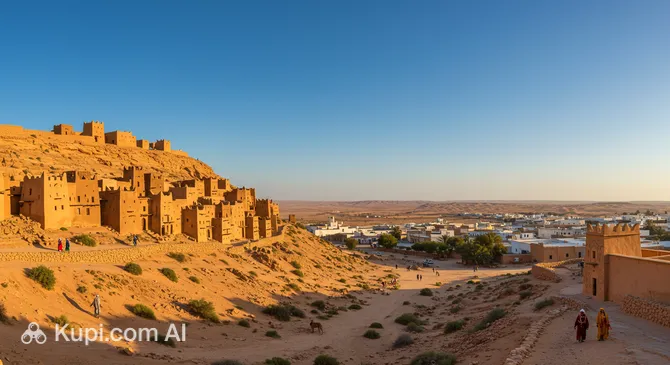
Tataouine. Illustration.
Source: Kupi.com AI

The fascinating history of Tataouine is closely linked to nomadic tribes and caravan routes. The main architectural feature of the region is the ksour — fortified Berber granaries. The most famous of them, Ksar Ouled Soltane and Ksar Hadada, capture the imagination with their multi-tiered vaulted cells and serve as the hallmark of the area.

The city gained worldwide fame through cinema: the name Tataouine inspired George Lucas to name Luke Skywalker's home planet Tatooine in the "Star Wars" saga, and the city's surroundings served as filming locations. Additionally, this region is famous for its gastronomic traditions, especially the delicious "gazelle horn" pastries, which are well worth trying at the local market.

A journey to Tataouine will be an unforgettable adventure for those who want to touch the ancient culture of North Africa and see with their own eyes the places that have become legends of world cinema.

Weather Overview

The climate of this region is typical for the edge of the desert: a dry and sunny atmosphere prevails most of the year. Before your trip, keep in mind that the weather in Tataouine can be contrasting depending on the season, offering both sweltering heat and bracing coolness.

Summer here is truly hot: in July and August, the average temperature stays around 29-30°C, and during the day, the air often heats up to 35-36°C. During this period, rain is completely absent, so the sky remains cloudless. Winter brings noticeable relief: in January, average figures drop to 11.2°C, and night temperatures can reach a low of 6.6°C, requiring warm clothing for evening walks.

Expect a hot, arid summer and mild, dry winters with plenty of sunny days. Precipitation is a rarity here at any time of year; even in the "wettest" winter months, there are no more than 3 rainy days recorded.

Average monthly temperature

Average monthly precipitation

Interesting Facts

Besides its cinematic fame, this region holds amazing secrets, from the traces of prehistoric giants to space visitors. Here are a few facts that will allow you to look at this corner of Tunisia from a new perspective:
  • Land of Dinosaurs. Tataouine is a true treasure trove for paleontologists. Fossils of dinosaurs that roamed here millions of years ago, including fragments of Spinosaurus and Carcharodontosaurus skeletons, have been discovered in this region. Local finds are so significant that the "Memory of the Earth" Museum, dedicated to the geological history of the area, was opened here.

  • A Space Guest. In 1931, the outskirts of the city became the crash site of a unique meteorite. This rare achondrite, named after the city, is distinguished by its unusual mineral structure and greenish crystals. The event caused a great sensation in the scientific world, and fragments of the celestial body are still prized by collectors.

  • Symbol of the End of the World. The city's name entered the French language as an idiom. The expression "to go to Tataouine" (aller à Tataouine) means to go to an unimaginably distant or remote place. This is an echo of colonial times when a military penal camp, the "Battalion of Africa," was located here, considered a place of harsh exile on the very border of inhabited lands.

  • Festival of the Ksour. Every year, the city becomes the center of a major cultural event — the International Festival of the Saharan Ksour. This is a colorful celebration that revives Berber traditions, accompanied by parades in national costumes, Arabic horse racing, and demonstrations of nomadic crafts.

How to Get There

When planning a trip to this southern region, it is important to note that the city does not have its own airport. Travelers must first fly to one of the nearby major transport hubs and then continue their journey by land. Detailed information on routes, transfers, and travel costs can be found on the page how to get to Tataouine.

The most convenient and popular option is to fly to Djerba. The closest airport to Tataouine is Djerba–Zarzis International Airport (DJE), located near the resort town of Midoun, approximately 110 km from the destination. It is a major international hub receiving many scheduled and charter flights. The journey from here by taxi or rental car usually takes about 2 hours.

An alternative solution could be Sfax–Thyna International Airport (SFA), located in the city of Sfax. The distance to Tataouine is about 200 km. Although this airport serves fewer tourist flights, it may be convenient for certain routes. A car trip from Sfax will take approximately 3–3.5 hours.

To compare flight options, we have prepared a summary table of the nearest airports:

AirportPassenger trafficDistance
Melita Airport2.2 mln110 km
Sfax El Maou Airport174 000201 km
Zintan212 km
Tozeur Airport32 108245 km
Mitiga Airport715 300264 km

Rail travel in this part of the country is not an optimal choice for tourists due to the distance of the stations and irregular schedules. The main form of intercity transport remains buses and the famous "louage" shared taxis. They depart regularly from the bus stations of nearby major cities, providing a reliable and inexpensive connection to Tataouine.

Main Attractions

Tataouine is the perfect starting point for exploring the unique architecture of the south and immersing yourself in the region's history. The main pride of the area is its ksour — fortified Berber granaries, and ancient villages that seem to merge with the cliffs. Here are several places that should definitely be included in your travel itinerary.

Ksar Ouled Soltane is perhaps the most photogenic and majestic ksar in the city's vicinity. This fortified complex is famous for its multi-tiered vaulted storage rooms (ghorfas), which rise up to four stories around two spacious courtyards. Tourists come here to admire the craftsmanship of ancient builders and feel the atmosphere of fantastic worlds: these very settings were used for filming the slave quarters in Episode I of "Star Wars."

Chenini Village is an ancient Berber settlement located atop a mountain range west of Tataouine. The village is literally carved into the rocks, and many dwellings here are troglodyte caves where people still live, preserving a centuries-old way of life. The summit is crowned by a white mosque, offering a stunning panorama of the desert landscapes. A walk along the winding paths of Chenini allows you to touch the living history of North Africa's indigenous population.

Ksar Hadada attracts travelers with its unusual, intricate architecture resembling a labyrinth. Unlike the strict geometry of other granaries, the passages, stairs, and terraces here create a whimsical pattern. This place is also closely linked to film tourism: fans of the space saga will recognize the streets of Mos Espa in its interiors. Part of the complex has been restored, allowing for a detailed look at the layout of traditional storehouses.

The "Memory of the Earth" Museum, located in the city itself, offers a shift from a historical to a geological focus. The Tataouine region is known for its rich paleontological finds. The museum's exhibition features fossils of dinosaurs that lived here millions of years ago, as well as fragments of the famous meteorite that fell in this area in 1931. This educational site will be interesting for both adults and young explorers.

Local Cuisine

A gastronomic journey to Tataouine is an immersion into Berber culinary traditions, where simple ingredients are transformed into rich and aromatic dishes. The local cuisine differs from the northern part of Tunisia: the influence of the desert is felt more here, with hearty meat products and an abundance of spices, among which the spicy harissa paste remains king.

The main gastronomic symbol of the city, which brings sweets lovers from all over the country, is the "gazelle horns" (Cornes de Gazelle). Unlike the versions found in the capital, in Tataouine this dessert is prepared according to a special recipe: the dough is rolled thin, generously filled with a mixture of almonds, sesame, and nuts, then fried in oil and soaked in honey syrup. These pastries are sold in specialized confectioneries at every turn, and leaving without a box of these treats is simply impossible.

Exotic food lovers should try dishes made from camel meat. Camel meat is considered a delicacy here and is often used for preparing couscous or stewed with vegetables in pots. Another signature southern dish is meat "a la gargoulette". Lamb is simmered in a clay jug, which is sealed and placed in hot coals or sand for several hours. The meat turns out incredibly tender and literally melts in your mouth.

Among drinks, traditional green tea with mint holds the top spot, served very sweet and hot, often with the addition of pine nuts or almonds. On a hot day, locals refresh themselves with lagmi — date palm sap. Fresh lagmi is a non-alcoholic drink with a pleasant sweet taste, harvested directly from the tree trunk. Alcohol is harder to find in this conservative region than on the resort coast, but tourist hotels usually serve local wines or the date liqueur "Thibarine."

The food culture in Tataouine is casual and hospitable. There aren't many fancy restaurants, but there is an abundance of small cafes and street stalls where the food is always fresh and inexpensive. For the best sweets and spices, head to the city market (souk), and for a hearty lunch, look for establishments where the locals eat: they will offer you the most authentic versions of brik, chorba, and tagines.

Travel Tips

A journey to Tataouine is an immersion into the authentic atmosphere of the south, which requires a little preparation for maximum comfort. To ensure your trip through this colorful region goes smoothly and leaves only pleasant memories, we have gathered a list of the most important practical recommendations.

  1. Clothing and Gear. Since Tataouine is on the edge of the desert, layering is key. Even if it is hot during the day, evenings can be cool, so a windbreaker or fleece jacket is essential. Avoid overly revealing clothing (short shorts, deep necklines) out of respect for the conservative traditions of the locals. For exploring the ksour and rocky terrain, bring sturdy, comfortable closed-toe shoes rather than beach flip-flops.

  2. Transport and Getting Around. Yellow taxis circulate in the city itself and are inexpensive, but for trips to the famous ksour and "Star Wars" locations, public transport is not suitable. The best solution is renting a car (preferably an SUV), which will give you freedom of movement. If you don't drive, you can negotiate with a taxi driver for the whole day at a fixed rate or use the "louage" intercity shared taxis to move between cities.

  3. Finances and Payment. Unlike resort areas, credit cards are not accepted everywhere in Tataouine (mostly only in large hotels). Always carry a supply of cash — Tunisian dinars, especially small bills for markets and cafes. ATMs are available in the city center, but they may not work or may not accept some foreign cards. Tipping is not mandatory, but rounding up the bill or leaving 1–2 dinars as a thank you is very well received.

  4. Health and Safety. The sun here is very strong even in cloudy weather, so a hat and high-SPF cream are your main companions. Always carry bottled water with you to avoid dehydration. The city is safe for tourists, but as everywhere, you should keep an eye on your belongings in crowded places. Pharmacies are marked with a green cross; many pharmacists speak French and can help with selecting medications.

  5. Language and Communication. The main language is Arabic, followed by French, which almost everyone understands. English is not widely spoken here, so download an offline translator or learn a few phrases in French. For navigation and communication, we recommend buying a local SIM card (Ooredoo, Orange, or Tunisie Telecom) upon arrival or at the operators' offices in town, as Wi-Fi in cafes can be slow.

  6. Local Etiquette. Residents of southern Tunisia are known for their hospitality but also their religiosity. Greet people with "Aslema" (Hello). Photographing locals, especially women, should only be done with their explicit permission. If you are invited into a home or offered tea, refusing can be seen as rude — it's better to take a sip out of politeness.

  7. What to Avoid. It is strictly not recommended to consume alcohol in public places and on the street — this is only acceptable in hotel bars or licensed restaurants. Also, refrain from public displays of affection (kissing and hugging), as this is considered indecent in a traditional society.

  8. Tip for Explorers. Plan your visits to the ksour (granaries) for the early morning or pre-sunset hours. During these times, not only does the exhausting heat subside, but the soft sunlight paints the clay walls of the buildings in incredible terracotta hues, guaranteeing you stunning photos without the crowds of tourists.

By following these simple rules, you will easily find common ground with the locals and safely enjoy the unique beauty of Tataouine. May your journey be filled with bright discoveries and oriental hospitality!

Entertainment & Nightlife

Nightlife in Tataouine is fundamentally different from the usual European format or noisy coastal parties. It is a conservative city in southern Tunisia, where the concept of "nightlife" means leisurely socializing, immersion in local traditions, and contemplating the starry sky rather than dancing until dawn. A calm, almost meditative atmosphere prevails here, allowing you to take a break from the hustle and bustle.

The center of evening activity is the numerous traditional tea houses (Salons de Thé), located along the main streets and around the market square. This is where local residents (mostly men) gather to discuss news, play cards, smoke hookah (shisha), and drink the omnipresent strong mint tea with pine nuts. Tourists are welcome to join these gatherings: it is safe, inexpensive, and very atmospheric. A cup of tea or coffee costs only a couple of dinars.

For lovers of classic bars and alcoholic cocktails, it is worth knowing that Tataouine is a city of strict customs, and alcohol is not sold in regular cafes and shops. The only places where you can spend an evening with a glass of wine or beer are the bars at large tourist hotels. For example, Hotel Sangho Privilege or Hotel Dakyanus usually have bars for guests where the atmosphere is more familiar to Western tourists, and the dress code remains casual.

A unique form of night entertainment in this region is stargazing. Due to the lack of light pollution, the sky over Tataouine and the surrounding desert areas is revealed in all its glory. Many tourists specifically head out of town by taxi or rental car to enjoy the view of the Milky Way in the silence of the Sahara. This is a perfectly safe activity as long as you don't wander far from the road, though it is better to do it with company or a guide.

As for daytime entertainment, it is primarily educational. Besides the already mentioned museums and ksour, it is worth spending time walking through the city market (Souk). During the day, it is full of life: you can observe craftsmen at work and buy Berber jewelry, spices, and fabrics. The market is the heart of the city, where the pulse of daily southern life is felt most strongly.

Practical tips for the evening:

  • The best time to head out into the city is after 8:00 PM, when the heat subsides.
  • Choose modest clothing for walks to avoid unnecessary attention and show respect for local traditions.
  • The city is safe for evening promenades, especially the central lit streets. However, solo female travelers are advised to avoid remote alleys and male-dominated coffee houses late at night.
  • Yellow taxis operate around the clock and are inexpensive; they are easy to flag down on the street or request at hotel receptions.

Parks & Museums

Although Tataouine is located at the edge of the desert and cannot boast lush botanical gardens in the conventional sense, the city and its surroundings offer unique natural areas and exhibitions that introduce guests to the region's geological and cultural wealth. Here, green oases contrasting with ocher cliffs serve as "parks," while museums tell stories spanning millions of years — from the era of dinosaurs to Berber traditions.

The main natural attraction within the city and its outskirts are the palm oases. These islands of greenery are a true miracle of irrigation in an arid climate. A walk along shaded alleys among date palms, pomegranate, and fig trees provides long-awaited coolness. It is an ideal place for a picnic or quiet relaxation, where you can see how locals have cultivated the land for centuries using traditional irrigation systems. The silence of the oasis, broken only by the rustling of palm fronds and birdsong, creates an atmosphere of peace.

For fans of unusual landscapes, the so-called Dinosaur Park is of interest. This is not a classic park, but rather an open-air display with large-scale sculptures of prehistoric reptiles, located near the city entrance and the museum. Statues of spinosaurs and other giants whose remains were found in this region serve as excellent backdrops for photos and remind us that these arid lands were once a swampy delta teeming with life.

Among cultural institutions, the absolute leader is the "Memory of the Earth" Museum (Musée de la Mémoire de la Terre). This is a mandatory stop for any tourist. The museum's exhibition is dedicated to the geological history of southern Tunisia. The halls present impressive collections of fossils, dinosaur skeletons, and traces of ancient reptiles. A special place is given to the meteorite exhibition, including fragments of the famous Tataouine meteorite. The museum is organized very clearly and will be interesting for visitors of all ages, allowing you to literally touch eternity.

Another important destination is the ethnographic museums in the ksour. While there are no large galleries in the city center, many ancient granaries (for example, in Ksar Ouled Soltane or Chenini) function as open-air museums. In some restored "ghorfas" (grain storage cells), enthusiasts have created small displays of daily life: here you can see ancient utensils, traditional Berber clothing, looms, and farming tools, providing a deeper understanding of the harsh but beautiful way of life of the local tribes.

Insider Tip: If you want to see a true hidden gem, head to the water source in the oasis at sunset. This is when local farmers often finish their work, and you can not only enjoy the "golden hour" for photography but might also be treated to fresh dates picked right from the tree — a taste that cannot be compared to store-bought ones.

Getting Around

The public transport system in Tataouine differs significantly from what residents of major metropolises are used to. You won't find subways, trams, or trolleybuses here. The city is quite compact, and its transport network is simple and functional, focusing primarily on road transport.

The main way to get around the city is via yellow taxis. They are easy to recognize by their bright color and the license plate on the roof. This is the most convenient and affordable way to get from one point to another. Taxis can be caught by simply raising your hand on the street or found at special stands near the main squares. Payment is made strictly by meter, so make sure the driver turns it on when you get in. Trips around town are very cheap, usually costing just a few dinars.

For trips to surrounding villages and the famous ksour (granaries), locals and tourists use louages. These are shared taxis — white microbuses with a colored stripe on the side. For travel within the region, look for vehicles with a blue stripe (a red stripe indicates long-distance intercity routes). Louages do not have a fixed schedule: they depart from the special station (Gare Routière) once the vehicle is full. This is an authentic and cheap way to travel, but be prepared to wait a little for departure.

Regular buses operated by the regional transport company also run in the city. However, for a short-term tourist, this is not the most convenient option: buses are infrequent, their schedules can be unstable, and routes do not always cover tourist locations. Stops often lack clear markings, so you'll have to rely on help from locals to find your way.

The payment system in Tataouine is extremely conservative: cash is the only way to pay. No transport cards, mobile apps, or validators exist. In taxis, you pay the driver at the end of the trip; in louages and buses, you pay either the driver upon entry or at the station ticket office before boarding. It is crucial to always carry small cash (coins), as the driver may not have change for large bills.

Given the nature of the region, where the main attractions are scattered across the desert, the best alternative to public transport is renting a car. This provides freedom of movement and allows you to visit remote locations where shared taxis do not go. Rental points are available in the city center, but the selection of cars may be limited, so it is better to book a car in advance. Car-sharing and developed bike-sharing systems are not currently available in the city.

The central part of Tataouine is easy and pleasant to explore on foot. Distances here are small, and walking will allow you to better feel the city's atmosphere, look into local shops, and cafes without being dependent on transport.

Accommodation

Choosing accommodation in Tataouine is not just about finding a place to sleep; it is part of the adventure and immersion into the flavor of southern Tunisia. Here, you won't find the typical skyscrapers of international chains or ultra-luxurious five-star resorts. The region's hotel stock consists mainly of authentic mid-range hotels, cozy guest houses ("dars"), and budget options for transit travelers.

The most popular locations for staying are divided into two categories: the city center and the picturesque outskirts. In the center of Tataouine, it is convenient for those traveling by public transport who want to be closer to markets, shops, and the louage station. However, the most memorable options are located on the outskirts or in nearby Berber villages such as Chenini or Douiret. There, you can have the unique experience of spending the night in "troglodyte" rooms — chambers carved directly into the rock where local tribes have lived for centuries.

Many hotels in the region, even modern constructions, are specifically styled after traditional architecture like ksour or caves. At the same time, they offer the necessary level of comfort, including air conditioning and, most importantly in the desert climate, swimming pools. Having a pool is a true lifesaver after a hot day of sightseeing. Such complexes often feature their own gardens and restaurants serving home-cooked meals.

Price Range and Booking

The cost of living here is noticeably lower than in the country's popular seaside resorts. The main segment is budget and mid-range. A night in a standard room is very affordable. International aggregators are convenient for booking larger hotels. However, keep in mind that many small family-run guesthouses may not have an online presence, and you might sometimes need to contact them directly or find them through social media.

Booking Tip: Even though the city is not overcrowded with tourists year-round, demand for quality accommodation (especially those with pools) rises sharply during peak seasons (spring and autumn) and during the Festival of the Ksour. During these times, it is highly recommended to book rooms in advance, at least a few weeks before your trip, to guarantee comfortable lodging.

Nearby Cities

For those who want to explore the surrounding area, Tataouine serves as an excellent starting point for day trips to several interesting nearby locations.

Just an hour's drive away is Medenine, an important transport hub and cultural center of the region. This city is famous for its impressive ksar in the center, which is much better preserved than many others and became another filming location for the "Star Wars" saga (Anakin Skywalker's home). A visit to Medenine allows you to see the bustling life of a modern southern city alongside centuries-old traditions.

If you want to swap desert landscapes for coastal ones, head to Gabès. This is a unique "maritime oasis," the only one of its kind in the Mediterranean, where palm groves reach right to the shoreline. Gabès is famous for its spice and henna market, Souk Jara, where the aromas of saffron, cumin, and dried pepper create an unmistakable oriental bazaar atmosphere.

Slightly further away, on the border with the vast salt lake Chott el Djerid, lies Kebili. This is one of the oldest oases in North Africa, known for its sweet dates and the historical architecture of its old town. A trip here is a chance to see how life flourishes in the heart of harsh sands.

CityPopulationDistance
Ghomrassen15 95719 km
Medenine109 40947 km
Remada10 17367 km
Ben Gardane79 91276 km
Mareth17 38580 km

These nearby destinations provide an insight into the diverse culture and landscapes of the region, from coastal oases to historical fortresses deep inland.

Shopping & Souvenirs

General Overview

Shopping in Tataouine is fundamentally different from typical shopping trips in large tourist centers. Here, you won't find galleries with global brands or luxury boutiques. Shopping in this city is primarily about immersion in local culture and traditions. The city is famous for its handicrafts, authentic products, and the absence of intrusive marketing common in resort zones. It is an ideal place to find unique handmade items that hold the warmth of southern craftsmen's hands.

Main Shopping Areas and Streets

All commercial life is concentrated in the city center. The main artery for shoppers is the streets adjacent to the central square and market. A walk along Avenue Hédi Chaker and neighboring alleys will allow you to visit most local shops. Small shops selling clothing, household goods, and food are located here. The compactness of the center allows you to visit all points of interest on foot, enjoying the slow pace of city life.

Shopping Centers

It is important for tourists to know that Tataouine lacks large shopping and entertainment centers or European-style malls. The role of "supermarkets" is played by chain stores like Magasin Général or Monoprix, where you can buy food, water, and basic goods at fixed prices. If you need to purchase something specific like electronics or branded clothing, it is better to wait until you visit larger cities like Sfax or the capital of Tunisia.

Markets

The heart of local shopping is the city market, or Souk. This is a colorful place where you can find everything from the freshest fruits and vegetables to Berber jewelry. It is especially lively on market days (usually Monday and Thursday), when farmers and craftsmen from surrounding villages bring their goods. At the market, you should look for fragrant spices, home-pressed olive oil, dried mint, and of course, the various types of dates the region is famous for.

Souvenirs

From Tataouine, it is worth bringing back souvenirs that reflect the spirit of the desert and Berber traditions. First and foremost are the famous "gazelle horns" (Cornes de Gazelle), which are considered the best in the country here. Also, look out for Berber rugs (mergoums and kilims) with characteristic geometric patterns — they are cheaper than on Djerba. Items made from camel leather (bags, sandals), rustic ceramics, and traditional silver jewelry are also popular. Don't forget natural cosmetics based on olive oil and ghassoul clay.

Opening Hours and Payment

Shops in Tataouine usually open from 8:00 or 9:00 AM until late evening, but with a mandatory siesta break during the hottest time of the day (roughly from 1:00 PM to 4:00 PM). On Friday (the holy day), many shops may be closed or operate on a reduced schedule. As for payment, cash is king here. Credit cards are only accepted in a few large supermarkets and hotels. At the market and in private shops, payment is made exclusively in Tunisian dinars. Bargaining is appropriate and encouraged at the market, but in shops with price tags, prices are fixed.

Tax Free

The Tax Free system is practically non-existent in Tataouine. Most purchases are made at markets or in small shops that do not participate in the international VAT refund system. If you plan on making large purchases with Tax Free, it is better to do so in specialized shops at airports or large tourist zones on the coast.
Reached the end of the page?

That means the route is fully explored