Support

Zarzis

About

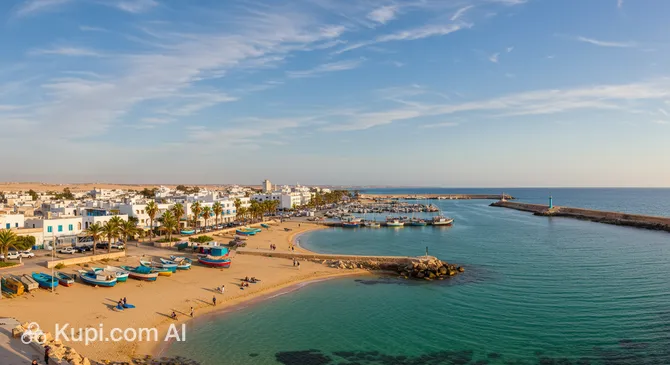
Zarzis is a picturesque resort town in the southeast of Tunisia, often referred to as a "coastal oasis." Located near the famous island of Djerba and just 150 kilometers from the sands of the Sahara, it offers tourists a unique combination of seaside relaxation and desert landscapes. With a population of about 80,000, Zarzis maintains the atmosphere of a cozy and peaceful place where life flows slowly and the air is filled with the scents of the sea and spices.

Zarzis. Illustration.
Source: Kupi.com AI

The climate here is one of the mildest and warmest in the region: the beach season begins as early as April and lasts until the end of October, and the sea warms up faster than on the northern coasts. The city is interesting not only for its natural conditions but also for its past. The rich history of Zarzis has left its mark on the culture and traditions of the local residents, creating a unique character that distinguishes this corner from typical tourist zones.

The main pride of the resort is its endless white beaches, which gradually transition into dense olive groves. There is no hustle and bustle of big metropolises here, but there is an opportunity to enjoy authentic nature: from the azure waters of the Mediterranean Sea to salt lakes and sand dunes. It is an ideal starting point for those who want to combine relaxation by the water with exciting trips to the desert or boat tours.

Zarzis enchants with its hospitality and tranquility. It is a wonderful place for family vacations, romantic trips, and for everyone looking for inspiration in new colors and flavors. Come here to stroll along the promenade at sunset, try fresh seafood in local cafes, and feel the true breath of the southern Mediterranean.

Weather Overview

The weather in Zarzis delights travelers with an abundance of sun and a mild climate characteristic of the southern Mediterranean. The proximity of the desert leaves its mark: it is dry and warm for most of the year. If you are planning a trip and want to know what the weather in Zarzis will be like, rest assured—prolonged rains are unlikely to bother you, as the region features low humidity.

The summer season here is truly hot. From June to August, the average air temperature stays confidently in the 26–29°C range, and during the daytime, it often exceeds 30–32°C. Precipitation during this period is an exceptional phenomenon: statistics show a complete absence of rainy days throughout the summer. This is an ideal time for those who love the scorching sun and warm sea.

Winter in Zarzis is more like an early European spring. The coolest months, January and February, show average temperatures around 14–15°C, while night minimums rarely drop below 10°C. Even during this period, precipitation occurs very rarely: a maximum of 4 rainy days per month with minimal moisture. Expect a hot, dry summer and a mild, comfortable winter, which is perfect for walks and excursions.

Average monthly temperature

Average monthly precipitation

Interesting Facts

Zarzis is not just a resort, but a place with deep traditions that holds surprising features hidden from the eyes of the mass tourist. Here are a few facts that will help you look at this city from a new perspective.

  • The warmest corner of the country. Zarzis is considered one of the southernmost resorts in Tunisia, which gives it a unique microclimate. The beach season here lasts longer than in other regions, allowing tourists to enjoy the sea and sun even in months when the north of the country is already getting cool.

  • Capital of "liquid gold." Olive groves are the main symbol of the landscape around the city. Olive oil production is the pride of local residents, and the product from Zarzis itself is recognized as one of the best in the country and is highly valued on the international market.

  • Mirror Lake. One of the most impressive natural attractions is the salt lake Sebkha el Melah. On sunny days, its surface turns into a giant mirror where the play of light on salt crystals creates fantastic, almost alien landscapes.

  • A city without skyscrapers. In Zarzis, you won't see the high-rise hotels and noisy nightlife quarters common in large resorts. The city consciously preserves its historical appearance with low-rise buildings, ancient mosques, and traditional synagogues, allowing guests to immerse themselves in the true, unhurried life of the region.

How to Get There

Zarzis is a popular resort, and the easiest way to reach it is by air, using the airports of neighboring cities, as the town does not have its own airport. You can find all the ways to get to the city on a separate page, but below we will look at the most convenient arrival options.

The main air gateway for tourists heading to Zarzis is Melita Airport (IATA: DJE), also known as Djerba–Zarzis International Airport. It is located in the town of Midoun on Djerba island, about 50 km from the center of Zarzis. This is a major transport hub receiving many international and charter flights. The journey from the airport to Zarzis hotels by taxi or tourist transfer takes about 50–60 minutes, passing through the scenic Roman Road that connects the island to the mainland.

An alternative option could be Sfax–Thyna International Airport (IATA: SFA), located in the city of Sfax. It is significantly further away—about 140 km from Zarzis—and passenger traffic there is more modest. Travel time by car is about 2–2.5 hours. Additionally, Habib Bourguiba International Airport (IATA: MIR) in Monastir is sometimes used for charter programs, but it is more than 250 km away, so the transfer will take more than 3.5 hours.

For clarity, here is summary information on the main airports:

AirportPassenger trafficDistance
Melita Airport2.2 mln50 km
Sfax El Maou Airport174 000140 km
Mitiga Airport715 300215 km
Zintan220 km
Habib Bourguiba International Airport1.8 mln252 km

Regarding rail travel, there is no train station directly in Zarzis. The nearest major station is in the city of Gabès, about 100 km to the north. Most travelers arriving by train from the capital or other regions to Gabès transfer there to intercity buses or shared taxis ("louages") to complete the rest of the journey to the resort. The drive from Gabès to Zarzis takes about 1.5 hours.

Main Attractions

While Zarzis is primarily famous for its beaches and relaxed atmosphere, there are several iconic places in the city and its surroundings. They allow you to diversify your vacation and touch the rich cultural heritage of Tunisia.

The Ancient City of Gightis

Just a few dozen kilometers from Zarzis, near the village of Bou Grara, lie the ruins of the ancient city of Gightis. This is one of the most significant archaeological sites in the south of the country. Walking among the remains of the Roman forum, temples, and baths, it is easy to imagine the grandeur of this trading port that flourished many centuries ago. This place will especially appeal to history buffs and those seeking inspiration in ancient architecture against the backdrop of desert landscapes.

Zarzis Synagogue

Zarzis has historically been home to various cultures and faiths, and the local synagogue, built in the early 20th century, serves as a vivid testament to this. This elegant building with traditional architectural elements is an important monument of Jewish heritage in the region. Although it is not as famous as the El Ghriba synagogue on the neighboring island of Djerba, this place has a special intimate atmosphere and tells the story of the city's rich multicultural past.

El Bibane Lagoon (Bahiret el Bibane)

For nature lovers, a trip to the El Bibane Lagoon, located south of the city, will be a real discovery. This is a huge body of water separated from the sea by a narrow spit, famous for its unique ecosystem. People come here to see flocks of pink flamingos and other migratory birds, as well as to observe the traditional way of fishing. The lagoon is considered one of the best places in the region for fishing, and the local scenery is simply mesmerizing with its pristine beauty.

Local Cuisine

The gastronomic scene in Zarzis is a true paradise for foodies, where the culinary traditions of Tunisia harmoniously intertwine with Mediterranean accents. Thanks to its coastal location, the local menu is based on the freshest seafood. The main signature dish of the resort is "friture mixte"—an assortment of shrimp, squid, and various types of fish, deep-fried or grilled over an open fire. This simple but incredibly tasty dish allows you to fully experience the flavor of the sea.

Meat lovers should look out for "brochettes". These are juicy pieces of meat or fish on skewers, grilled until golden brown. The secret of the special taste lies in the use of traditional Tunisian spices and spicy sauces that give the food a characteristic heat and aroma. Main courses are often served with fresh flatbreads, which are traditionally dipped in local olive oil—the pride of the Zarzis region.

Those with a sweet tooth must try the dessert "mhalbi" (or malbia). It is a delicate creamy pudding, generously decorated with nuts and infused with the aroma of rose water. Local markets and street stalls also offer a wide variety of pastries and fresh fruits that ripen here year-round. Street food in Zarzis is a separate cultural layer: grabbing a fresh flatbread on the go or buying sweets from a vendor is common practice.

As for drinks, meals traditionally end with strong green tea with mint and plenty of sugar, sometimes with pine nuts added. Among soft drinks, freshly squeezed juices are popular, especially orange and lemon. Although Tunisia is a Muslim country, local alcoholic beverages are available to tourists: light wines (gris, rosé, and red), the famous date liqueur "Thibarine," and fig brandy "Boukha."

The food culture in Zarzis is casual. Locals like to gather in small cafes to discuss news over a cup of coffee, while tourists can choose between cozy fish restaurants in the port and establishments in the tourist zone. Additionally, food festivals are regularly held in the city. This is a great opportunity not only to taste the best dishes but also to see the cooking process, talk to chefs, and immerse yourself in the festive atmosphere.

Travel Tips

Welcome to sunny Zarzis! To ensure your vacation in this "coastal oasis" is as comfortable and carefree as possible, we have prepared a list of useful recommendations. These simple tips will help you easily navigate local realities and feel confident in any situation.

  1. Wardrobe and Dress Code. The climate here is hot, so prioritize loose clothing made from natural fabrics (cotton, linen). Be sure to bring comfortable walking shoes and a hat for protection from the active sun. Remember that Tunisia is a country with Muslim traditions. Within the hotel grounds, you can wear any beach attire, but for trips into the city, especially when visiting markets or religious sites, choose outfits that cover your shoulders and knees.

  2. Transport Nuances. The most convenient way to get around Zarzis is yellow taxis. They are available and inexpensive, but always ask the driver to turn on the meter ("compteur") when you get in to avoid inflated prices. Apps like Uber are practically non-existent here. For trips to neighboring cities, look for "louage" stations (minibuses with colored stripes)—it's cheap and authentic.

  3. Money and Tipping. The national currency is the Tunisian Dinar (TND). You can exchange dollars or euros at banks or hotel receptions (be sure to keep the exchange receipt for reverse conversion at the airport!). Cards are accepted in large supermarkets and hotels, but you will definitely need cash for taxis, small cafes, and souvenir shops. Tipping is not mandatory but appreciated: 1–2 Dinars for a maid or waiter is considered good manners.

  4. Health and Water. Tap water in Zarzis is not suitable for drinking—use only bottled water for drinking and brushing your teeth. The sun in the south is very active, so a high SPF (50+) sunscreen is needed even in cloudy weather. Pharmacies are marked with a green cross; many medications are sold without a prescription and often have French names.

  5. Language and Connectivity. The main languages of communication are Arabic and French. Hotel staff understand English, but it is less common in the city. Learn a couple of words: "Aslema" (Hello) and "Shukran" (Thank you)—this will melt the ice in communication. For stable internet, it's better to buy a local SIM card (Ooredoo, Orange, or Tunisie Telecom) at an official office with your passport, as hotel Wi-Fi is often overloaded.

  6. Etiquette Rules. Tunisians are very friendly. It is customary to say hello when entering a shop or taxi. If you eat with your hands (which is acceptable in some traditional cafes) or hand over money, use your right hand—the left is considered "unclean." Before taking photos of locals, especially women, always ask for permission.

  7. What to Avoid. Do not consume alcohol on the streets or in public places outside of hotels and bars—this may be seen as disrespectful. Also, refrain from excessive displays of affection (kissing and hugging) in public. It is strictly forbidden to photograph police posts, military installations, and government buildings with flags.

  8. The Art of Bargaining. In fixed-price stores, bargaining is inappropriate, but in the markets and souvenir shops of the medina, it is part of the culture. Sellers often name a price 2–3 times higher than the real one. Haggle with a smile, politely and confidently—it is perceived as a game and social interaction rather than a conflict.

Zarzis is a place where sincere hospitality meets southern tranquility. By following these simple tips, you can avoid awkward situations and take home only warm memories of the Tunisian sun, delicious cuisine, and the warmth of the locals.

Entertainment & Nightlife

Nightlife in Zarzis is noticeably different from the noisy parties of Sousse or Hammamet. Here, you won't find endless rows of neon signs and mega-clubs thumping until morning. This is a resort for those who appreciate a relaxed pace, soulful conversations to the sound of the surf, and colorful evenings in an Oriental style. Most after-sunset activity is concentrated in the Tourist Zone (Zone Touristique), which stretches along the coast in the Sangho area. This is where the main hotels, restaurants, and a few entertainment venues are located where you can have a pleasant time.

Most night entertainment is found on the grounds of large hotel complexes. Many hotels open their doors not only to their guests, offering them the chance to visit their bars, lounge areas, and discos. The atmosphere here is casual and relaxed; the dress code is usually "casual," but it's better to choose an elegant outfit for visiting restaurants. The music ranges from international hits to infectious Arabic rhythms that make it impossible to stay still.

If you want to venture outside the hotel, be sure to visit Le Dauphin Restaurant. This is a legendary establishment in Zarzis, located in the port area. Although it is primarily a restaurant, it is famous for its cozy atmosphere and excellent bar where you can enjoy a glass of local wine and the freshest seafood. It is an ideal place for a romantic dinner or a quiet evening with friends.

For fans of more active night leisure, the club at the Sangho Club Zarzis hotel is a good fit. This complex has historically been considered one of the resort's entertainment hubs. Theme parties, show programs, and discos are often held here, attracting both tourists and local youth. Another popular spot is the bar and disco at the Giktis hotel, where you can dance and try a variety of cocktails.

Practical tips for night owls:

  • Transport: The safest and most convenient way to get around at night is by yellow taxis. They are inexpensive and easy to catch at any hotel. Agree on the price in advance or ask to turn on the meter.
  • Safety: The tourist zone and city center are quite safe for evening walks; however, avoid unlit and deserted beaches at night.
  • Timing: Life in venues starts to buzz after 9:00 PM or 10:00 PM. During Ramadan, operating hours and alcohol sales may be limited.

During the day, Zarzis also offers plenty of interest for active tourists. If museums and slow walks bore you, head into the desert on ATVs or buggies—this exciting adventure will provide plenty of adrenaline. Water sports are popular on the beaches, from jet skis to windsurfing. And for those seeking true exoticism, trips are organized to the Ksar Ghilane oasis, where you can swim in a thermal spring in the middle of the Sahara sands.

Parks & Museums

While Zarzis is not famous for large urban parks with European-style landscaping, this corner of Tunisia offers travelers a unique combination of untouched natural areas and intimate cultural sites. The city and its surroundings are an open-air museum where history intertwines with landscapes of olive groves and the seacoast.

A central place in the cultural program is occupied by the Zarzis Museum (Musée de Zarzis). It is housed in the building of the former Catholic church of Notre-Dame-de-la-Garde, built in the early 20th century. The architectural appearance of the building itself, combining European and Oriental features, is of great interest. Inside, there is an impressive collection of artifacts found during excavations of the ancient city of Gightis, as well as ethnographic exhibits telling the story of the life of local fishermen and farmers. For tourists, this place is interesting for the chance to see rare Roman mosaics and learn more about how people lived in this region centuries ago.

The role of the region's main "green lungs" is played not by fenced squares, but by the endless olive groves surrounding the city. This is a true forest of millions of trees, some of which are hundreds of years old. A walk or bike ride through these plantations gives a sense of peace and allows you to see how the famous Tunisian olives are grown. In spring, when the ground under the trees is covered with a carpet of wildflowers, this place becomes ideal for photo sessions and picnics in nature.

Another important natural area is the coast of the El Bibane Lagoon. Although it is not a park in the classic sense, it is a protected natural area of great ecological importance. People come here to observe pink flamingos and other migratory birds in their natural habitat. This place attracts those seeking silence and communion with nature away from the noisy beaches of the hotel zone.

For those looking for authentic experiences, we recommend looking into the small private galleries of local artisans in the Medina area, where works by artists inspired by the sea and the desert are often exhibited. And the best place for an evening promenade remains the city waterfront, where you can enjoy the sea breeze and observe the slow-paced life of the resort.

Getting Around

The public transport system in Zarzis is quite simple, which is typical for small resort towns. Here you won't find a metro, trams, or a complex network of trains. The main burden of passenger transport falls on taxis and shared minibuses, which allow for fairly comfortable travel both within the city and beyond.

The most popular and convenient form of transport for tourists is the yellow taxi. They are easily recognizable by their bright color and the license plate on the roof. Taxis can be hailed right on the street by raising your hand or found at special stands near large hotels and in the city center. All official cars are equipped with meters. When getting in, be sure to check that the driver turns the device on. At night (usually from 9:00 PM to 5:00 AM), a night tariff applies, which is 50% higher than the daytime rate.

For trips to neighboring cities or to Djerba island, locals and experienced travelers use "louages". these are white shared taxis (usually minibuses) that run on fixed routes. A red stripe on the side means an intercity trip, while a blue stripe means a suburban one. Louages do not have a fixed schedule: the vehicle departs as soon as all passenger seats are filled. It's a fast and budget-friendly way to get around, but be prepared for basic comfort.

City buses exist in Zarzis, but they are not very convenient for tourists due to infrequent service and difficulties with the schedule, which often exists only in Arabic or is not strictly followed. Buses are mainly used by local schoolchildren and workers. If you still decide to use this mode of transport, tickets are purchased from the conductor on board for cash.

The payment system in Zarzis is conservative: cash only. Bank cards, contactless payments, or mobile apps do not work in public transport. Always carry small bills and coins (Dinars and millimes) with you, as taxi drivers often do not have change for large banknotes. Taxi fares within the city are very affordable, and a louage ride is even cheaper.

As an alternative to public transport, car rental is popular. This is the best option for those who want to independently explore the surroundings, go to the desert, or the salt lakes. Rental points are located in the tourist zone and the city center. Also, in the resort area, you can find horse-drawn carriages (calesas)—this is more of a tourist attraction for evening rides than a full-fledged transport, and the price for the trip should be agreed upon in advance.

Taxi-hailing apps (like Uber or Bolt) are virtually non-existent in Zarzis or work inconsistently. The most reliable way is to ask the reception of your hotel to call a car or to agree with a trusted driver by taking his phone number for future trips. To overcome the language barrier, it is recommended to have the hotel's business card or show the destination on a smartphone map.

Accommodation

The hotel infrastructure in Zarzis differs from the noisy and crowded resorts of the north. Club-type complexes predominate here, harmoniously integrated into the natural landscape and offering guests a relaxed atmosphere of seclusion. Accommodation options range from large resort hotels to cozy apartments, making it easy to find a suitable option for both families with children and independent travelers discovering Tunisia.

Most popular hotels are concentrated in a special Tourist Zone (Zone Touristique), which stretches along the Mediterranean coast north of the city center. A characteristic feature of local hotels is their extensive green areas, nestled in palm gardens and flowers. High-rise buildings are rarely built here; guests are most often accommodated in cozy bungalows or low-rise buildings styled after traditional Tunisian "menzel" architecture with white walls and domes.

The main vacation format in Zarzis is the "All Inclusive" system, which is particularly convenient given the distance of some hotels from urban infrastructure. Hotel complexes typically have their own equipped beaches on the first coastline, swimming pools, and spa centers. Special attention is paid to thalassotherapy: many hotels offer courses of wellness treatments using seawater and seaweed, for which this region is famous.

For those who prefer independence and want to get closer to the local way of life, there is a private rental market. In the center of Zarzis and in the port area, you can rent furnished apartments or stay in small guesthouses (Maison d'hôtes). This is an excellent choice for budget tourists and those who plan to cook for themselves using products bought at colorful local markets.

When booking a hotel in Zarzis, it is useful to know a few nuances:

  • Hotel categories. The basis of the room stock consists of 3 and 4-star hotels. There are few "five-star" hotels, but the service level in 4-star ones is often very decent and oriented towards European tourists.

  • Tourist tax. Remember that a state tourist tax is charged when checking into hotels in Tunisia. It is not included in the tour price and is paid at reception in cash in Dinars. The amount depends on the hotel's star rating and the number of nights.

  • Air conditioning. Given the hot southern climate, make sure your chosen room is equipped with air conditioning. In some budget options or apartments, this option may be absent or require an additional fee.

Nearby Cities

For those who want to explore the surroundings, Zarzis serves as an excellent starting point for day trips to several interesting nearby locations:

Medenine. Located just an hour's drive from the coast, this city is an important trading hub and keeper of Berber traditions. The main attraction here is the unique "ghorfa" granaries, resembling honeycombs. These multi-story clay buildings with semi-circular vaults became world-famous thanks to the Star Wars saga, where they depicted the slave quarters on the planet Tatooine.

Gabès. This is the only coastal oasis in the Mediterranean, where green palm groves come right to the water's edge. The city is famous for its spice and henna market in the Jara quarter, as well as the opportunity to take a horse-drawn carriage ride along the shaded alleys of the oasis, enjoying the coolness and scent of flowers even on the hottest day.

Sfax. The country's second-largest city attracts those looking for authenticity without the tourist crowds. Its medina, surrounded by impressive 9th-century battlements, is considered one of the best-preserved in the region. Here you can watch artisans at work and try the best olive oil and traditional sweets.

CityPopulationDistance
Midoun63 52832 km
Ajim24 29440 km
Ben Gardane79 91242 km
Houmt Souk75 90446 km
Medenine109 40958 km

These nearby destinations provide an insight into the region's diverse culture and landscapes.

Shopping & Souvenirs

Shopping in Zarzis differs from what big metropolises offer. Here you won't find huge shopping malls with luxury brands, but you can immerse yourself in the atmosphere of a real Oriental bazaar and purchase authentic goods. The city is famous for its craft traditions and agricultural products. Shopping here is more of an opportunity to touch the local culture, chat with sellers, and find unique handmade souvenirs than to update your wardrobe with fashionable clothes.

The main commercial life is concentrated in the city center (Centre Ville). The main streets around the central square are filled with small shops selling everything from clothing and shoes to household utensils and jewelry. For tourists, the "Tourist Zone" (Zone Touristique) along the coast is also of interest. There, you can find shops with "Fixed Price" signs, where you can calmly choose souvenirs without having to haggle, which is convenient for those not used to Oriental buying and selling traditions.

There are no large European-style shopping and entertainment centers in Zarzis. The role of modern stores is played by supermarket chains such as Monoprix and Carrefour Market. They are located closer to the city center and offer a wide range of food products, cosmetics, and essential goods at fixed prices. These are the best places to buy factory-packed olive oil, tuna, halva, and dates if you want to be sure of storage standards and costs.

The true heart of trade in Zarzis is the markets. The central municipal market (Souk) operates daily but becomes especially lively on market days (usually Monday and Friday), when farmers from surrounding villages bring their harvest. This is the place to look for the freshest fruits, vegetables, and, of course, spices, the aroma of which spreads through the entire quarter. The fish market deserves separate attention: since Zarzis is a city of fishermen and a port, you can always find a rich catch of seafood at very attractive prices.

When choosing what to bring back from a trip to Tunisia, pay attention to the main treasures of the Zarzis region. First and foremost, it is olive oil, which is considered one of the best in the country due to the special climate. Natural sea sponges make a unique souvenir—their harvesting is a traditional trade of the local people. Ceramic products, leather bags, and shoes (babouches) are also popular, as well as gastronomic souvenirs: spicy harissa paste, dates, and Oriental sweets.

Shops in Zarzis usually open around 8:00 or 9:00 AM. In the summer, many private shops close for a long break (siesta) during the hottest time of the day—from 1:00 PM to 4:00 PM, after which they work until late in the evening. Supermarkets and shops in the tourist zone often work without breaks until 9:00 PM or 10:00 PM. The main payment method is cash in Dinars. Bank cards are accepted in large supermarkets (Monoprix, Carrefour) and some souvenir shops at hotels, but it is impossible to pay by card at the market and in small shops.

The Tax Free system exists in Tunisia, but it is quite difficult to use in Zarzis. Most local shops do not work with this system as they are oriented toward the domestic market or small-scale trade. It is theoretically possible to arrange a tax refund when purchasing expensive goods (for example, carpets or jewelry) in specialized certified stores, but such cases are rare here. Be sure to check with the seller for this option before making a purchase.
Reached the end of the page?

That means the route is fully explored