Support

Spice Bazaar

About

The Egyptian Bazaar (Mısır Çarşısı), also known as the Spice Market, is one of the most colorful and atmospheric places in Istanbul, Turkey. This historic covered market, the second largest after the famous Grand Bazaar, has for centuries been a hub for the trade of spices brought from India and other Eastern countries via Egypt, which gave it its name. Visiting the bazaar is a true immersion into a world of oriental aromas, flavors, and colors.

The air here is literally saturated with the scents of cardamom, cinnamon, saffron, mint, and dozens of other spices. On the counters, besides spices, you will find an incredible variety of goods: from famous Turkish sweets like Turkish delight and baklava to dried fruits, nuts, medicinal herbs, and premium varieties of tea and coffee. It is the perfect place to buy authentic souvenirs and delicacies.
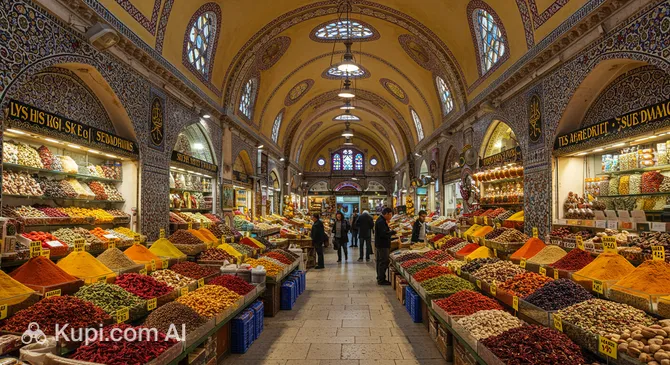
Spice Bazaar. Illustration.
Source: Kupi.com AI

Traveler photos:

Built in the 17th century, the Egyptian Bazaar was originally part of the New Mosque complex and served to provide its financial support. Architecturally, it is an "L"-shaped building with six entrances. Located in the historic Eminönü district near the Galata Bridge, the bazaar remains today not just a marketplace but an important landmark attracting both tourists and locals alike.

Contacts

Planning a visit to the Egyptian Bazaar? Below is some contact information that may be useful when visiting this famous Istanbul landmark.

How to contactContact
AddressRüstem Paşa, 34116 Fatih/İstanbul, Türkiye
Phone number+90 212 513 65 97
Websitewww.misircarsisi.org.tr

What to Do

The main activity at the Egyptian Bazaar is, of course, shopping and gastronomic discoveries. Here you can buy a wide range of goods: from aromatic spices and exotic dried fruits to all sorts of nuts and famous Turkish sweets. Be sure to try several varieties of Turkish delight or baklava to choose the most delicious one. In addition to edible souvenirs, you will find colorful ceramics, high-quality textiles, and other products from local artisans on the shelves.

Visiting the bazaar is a true immersion into the atmosphere of an oriental market with its vibrant colors, aromas, and bustling trade. Don't rush to just buy; enjoy the moment: breathe in the spicy scents, admire the mountains of spices and sweets that are perfect for a photo. Don't hesitate to bargain with the sellers—it is an integral part of the local culture and an exciting process. Many merchants will be happy to offer you different types of tea or sweets, turning a trip to the market into a fascinating adventure and a chance to observe the daily life of Istanbul.

Getting There

The Egyptian Bazaar is conveniently located in the heart of historical Istanbul, in the vibrant Eminönü district, making it very accessible for travelers. One of the easiest and most popular ways to get here is by public transport. The T1 high-speed tram line (Bağcılar – Kabataş) will take you to the "Eminönü" stop, which is just a few minutes' leisurely walk from the market entrance. You can also choose a more scenic route by taking one of the many ferries to the Eminönü pier, enjoying views of the Golden Horn along the way.

If you are exploring the historic peninsula on foot, reaching the Spice Market is a breeze. It is located very close to other key attractions, such as the New Mosque, Galata Bridge, and Sultanahmet Square. A walk from the Blue Mosque or Hagia Sophia takes about 15–20 minutes and allows you to immerse yourself deeper into the atmosphere of the old city. This walking route is a great way to combine a visit to the bazaar with sightseeing at other iconic locations.

Nearest city: Istanbul

History & Facts

The history of the Egyptian Bazaar (Mısır Çarşısı) dates back to the end of the 16th century. Its construction began in 1597 but was only completed nearly 70 years later, in 1664. Originally, the market was an integral part of the New Mosque architectural complex, with rental income from the shops used for its maintenance and charitable purposes. Initially, the bazaar was called the "New" or "Mother's" market, but over time, the name "Egyptian" became firmly established. This is because its construction was funded by taxes from the Ottoman province of Egypt, and most of the spices and goods were brought to Istanbul from India via Egypt.

Court architects were responsible for designing this iconic site in Turkey. The work was started by Koca Kasim Ağa and finished by another master, Mustafa Ağa. This took place after a devastating fire in Istanbul in 1660, which provided a new impetus for the area's development. Interestingly, in its early years, the stalls were strictly divided: some were for spice merchants (aktars), and others for cotton sellers.

Throughout its centuries-long history, the Egyptian Bazaar has survived several major trials. It suffered heavily from devastating fires twice—in 1691 and 1940. Subsequent restorations, especially after the 1940 fire, unfortunately, led to the loss of many original architectural details. It was then, in 1941, that the bazaar was physically separated from the New Mosque by a road built between them, slightly altering the original vision of a unified complex. Despite all the changes, the market still retains its unique historical character today.

Time Needed

For a full experience at the Egyptian Bazaar, it is recommended to set aside 1 to 2 hours. This is generally enough time to leisurely stroll through all the main stalls, admire the colorful displays, breathe in the spicy aromas, and, of course, do some shopping. During this time, you will have the chance to explore the rich assortment of spices, Turkish delights, teas, and dried fruits, and perhaps enjoy a cup of traditional tea at one of the local cafes.

Your visit can be shorter if you just want to quickly soak up the atmosphere of an oriental market. A quick look and a few photos will take no more than 30–40 minutes. However, if you are looking for meaningful shopping and unique goods, it is worth allowing more time. The process of choosing, bargaining with sellers, and exploring the stalls in the streets surrounding the main bazaar building can easily extend your stay. Many experienced travelers note that better prices can often be found in these outer rows.

The time spent at the market also depends on your desire to dive deeper into the local culture. Don't refuse offers to try different types of Turkish delight or cheese—it's all part of the fun. If you decide to relax and watch the bustling trade from a cafe or visit the historic restaurant on the second floor, feel free to add another hour to your plan. Thus, a visit to the Egyptian Bazaar can range from a short tour to a leisurely half-day gastronomic adventure.

Working Hours

The Egyptian Bazaar is generally open to visitors daily, making it a convenient attraction to visit at any time of year. Standard opening hours are from 9:00 AM to 7:00 PM. However, please note that during national holidays and religious events, such as Ramadan, the operating schedule may change. No advance booking or tickets are required to enter the market.

For a quieter and more comfortable experience exploring the bazaar's offerings, it is recommended to plan your visit on a weekday morning. There are usually fewer visitors at this time, allowing you to stroll through the aisles without rushing. As exact opening hours may vary, it is a good idea to check for up-to-date information on Istanbul's official tourism websites or other reliable local sources before your visit.

8:00 – 19:30

Nearby

A visit to the Egyptian Bazaar is just one part of a grand adventure in the historical heart of Istanbul. Its ideal location in the Eminönü district makes it an excellent starting point for further exploration of the area. A stroll through the nearby streets will allow you to discover other iconic sites, each with its own unique atmosphere and history.

To help you plan your route, we have compiled a list of interesting attractions within walking distance of the Egyptian Bazaar. Just a few minutes' walk, and you can see famous mosques, bridges, and parks that make up the cultural heritage of this amazing city.

NameDistance
Salt Galata0.9 km
Galata Tower1.1 km
Basilica Cistern1.1 km
Mehmet Emin Tokadi Tomb1.1 km
Hidden Garden1.1 km
Hagia Sophia Grand Mosque1.2 km
GRACE Rooftop Restaurant1.2 km

Have you reached the end of the page?

So the route has been studied inside and out