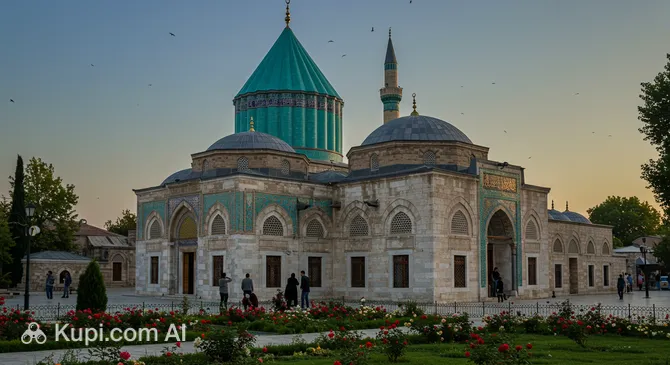
In the heart of Konya, one of the oldest cities in Turkey, lies the Mevlana Museum — an iconic site of immense cultural and spiritual significance. This complex is more than just a museum; it is a mausoleum dedicated to the great 13th-century Persian Sufi poet and thinker Jalaluddin Rumi, whom his followers affectionately called Mevlana, meaning "Our Master." The complex is easily recognized by its magnificent turquoise dome, which rises above the tomb.
Originally, this site was a monastery (tekke) for the dervishes of the Mevlevi Order, founded by Rumi himself. Today, visitors can immerse themselves in the atmosphere of Sufi culture by exploring former dervish cells, the kitchen, the library, and the ritual hall (semahane). The exhibition features handwritten copies of the Quran, musical instruments, Rumi's personal belongings, and everyday items of the dervishes, telling the story of their lives and spiritual practices.
The Mevlana Museum is not only one of the country's main tourist attractions but also an important pilgrimage center for Muslims from around the world. Every year, it is visited by about two million people, making it one of the most popular museums in Turkey. It is a place where history, philosophy, and art intertwine, offering visitors a unique opportunity to touch the legacy of one of humanity's greatest spiritual teachers.
Traveler photos: