Support

Hierapolis Ancient Theater

About

The Hierapolis Antique Theater is one of the most impressive and well-preserved ancient theatrical structures, located in famous Pamukkale in modern-day Turkey. As one of the top historical attractions, it is considered one of the largest ancient theaters in the country, with an estimated capacity of 10,000 to 15,000 spectators. Built in the Hellenistic style, it sprawls majestically across a hillside, offering breathtaking views of the ruins of the ancient city of Hierapolis, the world-famous snow-white travertines, and the picturesque surrounding valley.
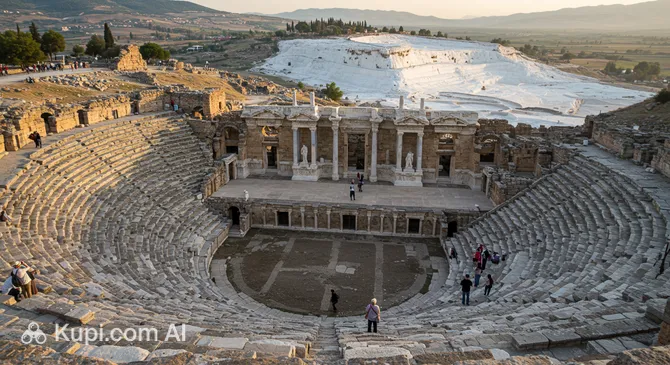
Hierapolis Ancient Theater. Illustration.
Source: Kupi.com AI

Traveler photos:

The theater is a classic ancient structure featuring a characteristic semicircular seating area (theatron) and a stage (skene). Its two-story skene was decorated with a majestic Doric facade, reflecting the high level of architectural mastery of the time. An interesting feature is the use of different materials for the seating: the rows for common spectators were made of local travertine, while seats made of fine marble were reserved for high-ranking guests and nobility.

The numerous and skillfully executed reliefs decorating the wall behind the skene are of particular artistic and historical value. These bas-reliefs depicted various scenes from Greek myths, as well as various ritual ceremonies and festivities. Statues of gods and emperors placed in specially designed niches in this wall complemented the theater's splendor, making it not just a venue for performances, but a true center of cultural and social life in ancient Hierapolis.

Contacts

The Hierapolis Antique Theater is an integral part of the extensive archaeological complex of the ancient city of Hierapolis, located on the world-famous travertine terraces of Pamukkale in Turkey. To visit the theater, travelers usually first need to reach Pamukkale itself and then follow the signs within the Hierapolis site leading to this majestic structure. For detailed information on opening hours, ticket prices, and exact routes within the complex, it is best to check the official website of the archaeological park or visit tourist information centers upon arrival.

How to contactContact
AddressPamukkale, 20190 Pamukkale/Denizli, Türkiye

What to Do

A visit to the Hierapolis Antique Theater is a true journey through time. Once here, you can fully immerse yourself in the atmosphere of the ancient world and admire the genius of ancient architects. Be sure to climb to the upper tiers of the theater: from there, you can enjoy a truly breathtaking panoramic view of the ancient city ruins of Hierapolis spread out below, the world-famous white travertine terraces of Pamukkale, and the picturesque valley. It's the perfect spot to take stunning photos and get a deeper sense of the grandeur of ancient architecture.

Inside the theater, you'll have the chance to explore its various parts in detail. Walk across the stage (skene), where dramatic performances once took place, stroll through the rows of seating while imagining the ancient audience, and take a close look at the surviving decorative elements. Of particular interest are the intricate reliefs and architectural details that vividly demonstrate the exceptional skill of ancient builders. You'll see both original fragments and carefully reconstructed parts that help recreate how the theater looked in its prime. Note the different sections of seating—in ancient times, they were intended for different social classes of society.

Getting There

The Hierapolis Antique Theater is located within the extensive Hierapolis-Pamukkale archaeological complex in Denizli province, Turkey. The easiest way to reach this amazing site is to first get to the town of Pamukkale. If you are in the nearby major city of Denizli, located about 20 kilometers away, shuttle buses known as dolmush run regularly to Pamukkale. The dolmush ride takes about 30-40 minutes and is a very economical option.

Besides dolmush, you can easily reach Pamukkale from Denizli by taxi, which is faster but more expensive, or rent a car if you prefer independence. For those traveling from more distant parts of Turkey, a convenient option is to first reach Denizli. This can be done via comfortable intercity buses connecting Denizli with many cities across the country, or by flying into Denizli-Çardak Airport. The airport is about 65 kilometers from Pamukkale, and from there, you can use local transport such as taxis or transfers to reach your destination.

For those who prefer a fully organized trip and don't want to worry about logistics, many travel companies offer day or multi-day tours to Pamukkale from popular resort towns in Turkey, such as Antalya, Marmaris, Bodrum, and others. These tours typically include transfers, guide services, and sometimes entrance fees to the Hierapolis archaeological complex, of which the magnificent Hierapolis Antique Theater is a part. Once inside the complex, finding the theater is easy by following the signs.

Nearest city: Pamukkale

History & Facts

The history of the Hierapolis Antique Theater is inextricably linked with the fate of the ancient city of Hierapolis itself, founded in the 2nd century BC during the time of the powerful Seleucid Empire. Initially, the theater was built according to Hellenistic canons, harmoniously integrated into the hillside—a characteristic feature of many ancient structures of this type. However, its original appearance has not survived to this day in its pristine form. In 60 AD, a powerful earthquake caused severe damage to the theater, marking a turning point in its history and necessitating extensive restoration work.

The theater's revival began during the Flavian dynasty and proved to be quite lengthy, concluding only around 206 AD. This massive reconstruction didn't just restore the building's functionality but gave it a new, more lavish appearance characteristic of Roman architecture. It was then that the wall behind the stage (skene) was richly decorated with numerous reliefs depicting captivating mythological scenes and solemn ceremonies. Statues, likely of gods and emperors, were placed in specially created niches in this wall, emphasizing the grandeur and importance of the theater as a cultural center.

The impressive decorative elements of the theater bear witness to the high skill of ancient stonemasons and sculptors. It is known that various craft guilds participated in decorating the theater. For example, the "Purple Artists' Association" contributed to the exquisite finishing of the Dokimeion marble used for the first and second tiers of the structure. The modern era of studying and preserving this unique monument began in the 1950s, when archaeologists started systematic excavations and restoration work, which continues to this day, gradually revealing new chapters in the history of the Hierapolis Antique Theater.

Time Needed

When planning a visit to the Hierapolis Antique Theater, expect to spend 1 to 2 hours here. This is generally enough time to leisurely explore the main elements of this grandiose structure and climb to the upper rows, which offer magnificent panoramic views of the ruins of the ancient city and the surrounding landscape. You will have time to take memorable photos and perhaps read the information boards explaining the theater's history and architectural features.

This timeframe will allow you to get a fairly complete impression of the theater itself. However, it's important to remember that the Hierapolis Antique Theater is part of the large Hierapolis archaeological complex, which sits next to the famous travertine terraces of Pamukkale. If your plans include visiting not only the theater but also the many other attractions of Hierapolis—such as the necropolis, the Temple of Apollo, the Plutonion, or swimming in Cleopatra's Pool—as well as walking along the travertines themselves, you should set aside a full day for this extensive program. This will allow you to enjoy all the wonders of this unique place without rushing.

Working Hours

The Hierapolis Antique Theater is part of the large Hierapolis-Pamukkale archaeological complex. Access to the theater is generally granted during the general operating hours of the entire complex. Typically, such sites in Turkey are open to visitors year-round, though specific hours may vary depending on the season (for instance, hours might be extended in summer and shortened in winter) and the day of the week. Currently, exact information regarding operating hours is unavailable.

It is highly recommended to check the current opening hours and any potential need for advance ticket booking on the official website of the Hierapolis-Pamukkale archaeological complex or at local tourist information centers in Pamukkale before your visit. This will help you plan your trip effectively and avoid any potential inconvenience.

Nearby

Visiting the majestic Hierapolis Antique Theater is undoubtedly a highlight, but Pamukkale and its surroundings have much more to offer the inquisitive traveler. To make your immersion into the history and culture of this amazing region of Turkey as complete as possible, it is worth spending time at other iconic sites nearby. Each of these attractions is unique in its own way and will help form a more holistic picture of the rich past and natural beauty of these lands.

Exploring nearby sites will not only broaden your horizons but also help you better understand the context in which ancient Hierapolis existed and developed. From archaeological finds to natural wonders, the area around the theater holds many secrets and discoveries that can enrich your journey with unforgettable impressions. Below is a list of some interesting places located in the immediate vicinity of the Hierapolis Antique Theater:

NameDistance
Hierapolis Archaeological Museum0.5 km
Pamukkale South Gate0.5 km
Hierapolis0.6 km
Pamukkale Travertines0.6 km
Hierapolis Basilica1 km
Pamukkale Natural Park1.1 km
Tıkır Grill House1.2 km

Have you reached the end of the page?

So the route has been studied inside and out