Support

Hierapolis

About

Hierapolis is a stunning ancient city located in southwestern Turkey, in the Denizli province. Its name, translated from Greek as "Holy City", is fully justified, as Hierapolis, together with the unique springs of Pamukkale, is listed as a UNESCO World Heritage site. This is a place where history and nature have created a truly breathtaking spectacle, covering a total area of about 1,077 hectares.
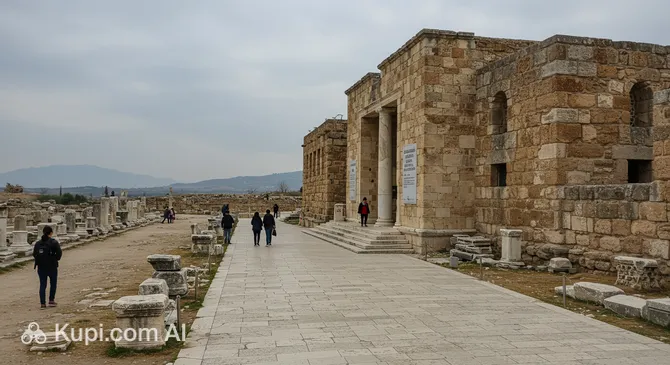
Hierapolis. Illustration.
Source: Kupi.com AI

Traveler photos:

Situated on top of a nearly 200-meter hill, Hierapolis towers over the famous travertine terraces of Pamukkale. It was here that calcium-rich thermal waters have surfaced for millennia, creating the "Cotton Castle" (the literal translation of "Pamukkale" from Turkish) that attracts travelers from all over the world. The ancient ruins set against the backdrop of snow-white cascades are an unforgettable combination.

Today, the Hierapolis Archaeological Museum (Hierapolis Arkeoloji Müzesi) operates within the ancient city. Its exhibition features numerous artifacts discovered during many years of excavation. A visit to the museum allows for a deeper dive into the history of this unique place, showcasing everyday items, magnificent sculptures, and other valuable finds that tell the story of the life and culture of the ancient city.

Contacts

To get up-to-date information on opening hours, ticket prices, and available tours of Hierapolis, it is recommended to visit the official website of the Hierapolis Archaeological Museum or contact local tourist information centers in Pamukkale. Major historical sites like this are usually easy to reach by public transport or as part of organized tours from nearby cities. Checking this information in advance will help you plan your visit effectively.

How to contactContact
AddressPamukkale, 20280 Pamukkale/Denizli, Türkiye
Phone number+90 258 241 08 66
Websitewww.turkishmuseums.com

What to Do

Immerse yourself in the atmosphere of antiquity by exploring the majestic ruins of Hierapolis. Here, you can see the remains of ancient temples, public baths, and other Hellenistic structures that tell of the city's former greatness. Be sure to visit the impressive Necropolis of Hierapolis—one of the largest ancient cemeteries in Anatolia, where various tombs and sarcophagi have been preserved, testifying to the burial traditions of the past.

To fully immerse yourself in the history of Hierapolis, don't miss the chance to visit the local Archaeological Museum. Its collection includes valuable artifacts found by archaeologists during excavations of the ancient city. These finds, ranging from household items to magnificent sculptures, will help you better imagine the daily life and culture of its ancient inhabitants.

Beyond its rich historical heritage, Hierapolis is inextricably linked with a natural wonder—the snow-white travertine terraces of Pamukkale. Walk along these unique cascading formations, enjoying breathtaking views (remember to follow the rules to preserve their beauty). After an informative walk, you can experience the healing power of the thermal springs for which Hierapolis has been famous since Roman times. Swim in pools of warm mineral water, which stays around 36°C, and feel how tiredness gives way to pleasant relaxation.

Getting There

Reaching the ancient city of Hierapolis is quite simple, especially if you are staying in Pamukkale or the neighboring city of Denizli. Located just 17 km from Denizli, Hierapolis is a popular destination for day trips. Local minibuses (dolmuşes) and taxis run regularly from Denizli, as well as from the village of Pamukkale itself, to the complex entrances, making the trip convenient and affordable.

You can access the vast territory of Hierapolis through one of three official entrances. The Central Entrance is often the most popular, as it also leads to the Hierapolis Archaeological Museum. Additionally, there are North and South Entrances. Each entrance is equipped with ticket offices and turnstiles, so you can easily purchase tickets and begin your fascinating journey into the past of this ancient city.

If you are traveling by rental car, the South Entrance might be the most convenient option. There is parking available here, although an additional fee may apply (reportedly around 20 Turkish Liras). The choice of entrance may also depend on which part of the ancient city you plan to see first, but generally, all of them provide access to all the main attractions of Hierapolis.

Nearest city: Pamukkale

History & Facts

The history of Hierapolis dates back to the 2nd millennium BC, when the first human settlements appeared in this fertile spot. However, it was established as a proper resort city much later, at the end of the 2nd century BC, by the rulers of the Pergamon Kingdom from the Attalid dynasty. It was King Eumenes II of Pergamon who, in 190 BC, ordered the construction of a new city here, naming it Hierapolis, which means "Holy City" in Greek. Interestingly, to populate these lands quickly, Emperor Antiochus the Great relocated about 2,500 Jewish families here, contributing to the formation of a significant Jewish community in ancient Hierapolis.

In 133 BC, Hierapolis came under the protection of powerful Rome, opening a new, vibrant chapter in its centuries-long history. The city survived a severe earthquake in 17 AD but was gradually and lovingly restored. By the 60s AD, Hierapolis gained widespread fame among the Roman aristocracy as a prestigious thermal resort, marking the period of its greatest peak and prosperity. However, fate had more trials in store: in 60 AD, another devastating earthquake practically wiped it off the face of the earth. Later, the city was rebuilt and even expanded through the efforts of Roman emperors, notably Titus Flavius Domitian and Hadrian, who invested significant funds in its revival.

Throughout the first century AD, Christianity spread actively in the region, and soon one of the first Christian churches was founded in Hierapolis, giving the city additional spiritual significance. It is believed that Saint Philip, one of the twelve apostles, was martyred here. Today, the majestic ruins of ancient Hierapolis, inextricably linked with the unique snow-white travertine terraces and thermal springs of Pamukkale, are a UNESCO World Heritage site, attracting researchers, pilgrims, and curious travelers from all corners of the globe.

Time Needed

When planning a visit to Hierapolis, it's worth setting aside enough time to enjoy this extensive archaeological complex without rushing. For a general overview of the main ruins of the ancient city, including the antique theater, the impressive necropolis, and the main streets, as well as a visit to the Hierapolis Archaeological Museum, a typical visitor will need approximately 3-4 hours. This time allows for a good sense of the scale and significance of this ancient site.

If you plan to explore Hierapolis in more detail, want to stroll leisurely through all its corners, carefully study the museum exhibits, and perhaps combine this with a visit to the famous travertine terraces of Pamukkale, which are visible from the ruins, then count on half a day (4-6 hours). Some travelers, especially those passionate about history and archaeology, may spend even more time here, enjoying the atmosphere and discovering new details of this amazing heritage in Turkey.

Working Hours

The ancient city of Hierapolis is generally open to visitors year-round, but its opening hours may vary depending on the season (summer and winter schedules). Usually, the archaeological complex opens in the morning around 8:00 AM and stays open until evening, roughly until 7:00 PM or even 9:00 PM in the summer, and until 5:00 PM - 6:00 PM in the winter. Since exact opening hours can change, it is strongly recommended to check the current information on the official website of the archaeological site or at local tourist information centers in Pamukkale before your visit.

As for tickets, they can be purchased on-site at the entrance to the complex. However, to avoid potential queues, especially during peak tourist season, it may be advisable to buy tickets online in advance if such an option is available on the official resource. Advance booking is usually not required for individual visitors, but different rules may apply for group tours. Given the popularity of Hierapolis and Pamukkale, checking information in advance will always be helpful for comfortable planning of your visit.

7:00 – 21:00

Nearby

Visiting an iconic site like Hierapolis is an unforgettable experience in itself. However, to make your trip to Pamukkale even more enriching and complete, it is worth paying attention to other nearby attractions. Exploring the surroundings will allow you to dive deeper into the region's atmosphere, discover new facets of its history and culture, and simply enjoy a variety of impressions.

Often, the brightest memories are made from a mosaic of different places and events. By extending your itinerary beyond one, albeit very significant, location, you will get a more holistic view of Pamukkale and its unique heritage. Below is a list of interesting sites near Hierapolis that could complement your travel program.

NameDistance
Hierapolis Archaeological Museum0.1 km
Pamukkale Travertines0.1 km
Hierapolis Ancient Theater0.6 km
Pamukkale South Gate0.7 km
Pamukkale Natural Park0.7 km
Yagmur Bar & Cig Kofte0.8 km
Hanımeli Gözleme0.8 km

Have you reached the end of the page?

So the route has been studied inside and out