Support

Ephesus

About

Ephesus is one of the most impressive and well-preserved ancient cities in modern-day Turkey, located near the town of Selçuk. This massive open-air museum literally allows you to immerse yourself in the atmosphere of a flourishing metropolis of the Roman Empire. Due to its exceptional historical value, the ancient city was included in the UNESCO World Heritage List in 2015.
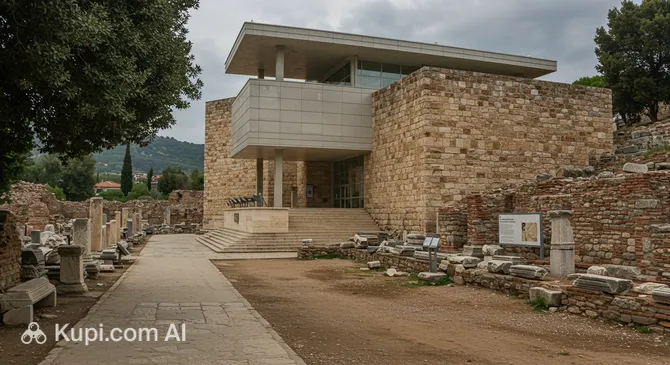
Ephesus. Illustration.
Source: Kupi.com AI

Traveler photos:

In antiquity, Ephesus owed its fame to the legendary Temple of Artemis—one of the Seven Wonders of the World. Although only one reconstructed column remains of the temple today, its grandeur still captures the imagination. The city was one of the key centers of Ionia during the Classical Greek period and later became one of the most important cities of the Roman Empire, with a population of up to 225,000 people.

Today, the ruins of Ephesus occupy a vast territory, a walk through which becomes a real journey back in time. Visitors can walk along ancient marble streets, see the facade of the majestic Library of Celsus, which once housed 12,000 scrolls, and marvel at the scale of the Great Theater, which held up to 24,000 spectators. You can also explore the ruins of the Temple of Hadrian, marketplaces (agoras), fountains, and residential houses featuring intricate mosaics.

A visit to Ephesus is a unique opportunity to touch the history of great civilizations and see architectural masterpieces that have survived for millennia with your own eyes. This place leaves an unforgettable impression and is a must-see on the itinerary of any traveler interested in ancient culture.

Contacts

To plan your visit to Ephesus, it is recommended to check the official website for the latest information on opening hours and ticket prices. Below are the main contact details for the archaeological site.

How to contactContact
AddressAtatürk, Efes Harabeleri, 35920 Selçuk/İzmir, Türkiye
Websitewww.efesantikkenti.com.tr

What to Do

To get the most out of Ephesus, start your tour from the upper (Magnesian) entrance and slowly descend to the lower one. This route is not only physically easier, especially on a hot day, but also allows you to gradually immerse yourself in the atmosphere of the ancient city, moving from administrative buildings to its heart. Set aside at least 3-4 hours for your walk to explore all corners of this massive complex without rushing.

While walking through the ancient streets, don't limit yourself to only the most famous structures. Pay attention to less obvious but equally interesting details that help bring history to life. Peek into the public latrines—an example of Roman engineering—and look for the gaming boards carved into the marble slabs and the famous footprint, considered to be the world's first advertisement. If you have the time and opportunity, be sure to visit the Terrace Houses (for an additional fee) to see the luxurious mosaics and frescoes that adorned the homes of wealthy Ephesians.

Preparation is key to a comfortable trip. Be sure to wear comfortable shoes with non-slip soles, as you will be walking on uneven marble slabs. In summer, Ephesus is very hot with almost no shade, so bring plenty of drinking water, a hat, and sunscreen. To make your walk not only beautiful but also educational, use an audio guide or the services of a licensed guide—their stories will help you truly understand the grandeur and daily life of this ancient metropolis.

Getting There

You can reach Ephesus, one of the greatest ancient monuments in Turkey, in several convenient ways as it is located near major transport hubs. The main starting point for independent travelers is the nearby town of Selçuk. From the nearest metropolis, Izmir, Selçuk is easily accessible by bus or train, with the journey taking approximately 1–1.5 hours. Local minibuses (dolmuses) or taxis regularly run from Selçuk bus station or train station to the archaeological complex, taking you to the entrance in just a few minutes.

For those who value independence and want to explore the surroundings at their own pace, renting a car is an excellent option. Roads from Izmir and other cities are well-signposted, and having a car allows you to comfortably visit other attractions in the region. Additionally, numerous day trips are organized for tourists staying at popular Aegean resorts like Kusadasi, Bodrum, or Marmaris. This is one of the easiest ways to visit Ephesus, as organized tours usually include hotel transfers, professional guide services, and entrance fees.

Nearest city: Selcuk

History & Facts

The history of Ephesus dates back to antiquity, specifically the Neolithic era, around 6000 BC. The first permanent settlements emerged around two millennia BC near the Cayster River (today known as the Küçük Menderes) on the fertile lands of modern Turkey, close to the town of Selçuk. Its location by the Aegean Sea contributed to the early development of the city as an important trading port.

A key turning point in the city's fate occurred around 300 BC thanks to Lysimachus, one of Alexander the Great's generals. He made a strategic decision to move the city 2 kilometers into the valley between the mountains to protect the inhabitants from malaria, which was spreading due to the marshy terrain of the old port. Powerful fortress walls were built around the new settlement, the remains of which can still be seen today. Showing personal affection, Lysimachus named the flourishing city Arsinoea after his wife.

Ephesus reached its peak during the Roman Empire, falling under its rule around the 2nd century BC. The Romans transformed it into one of the greatest metropolises of its time, constructing iconic structures such as the majestic Library of Celsus, a massive theater, public baths, and aqueducts. During the reign of Emperor Augustus, the city not only became the capital of the Roman province of Asia but also achieved status as a major trading center, second in importance only to Rome itself.

Time Needed

When planning a visit to Ephesus, it's important to budget your time correctly to fully enjoy its atmosphere. For a standard tour of the main highlights of the archaeological complex, such as the Library of Celsus and the Great Theater, it is recommended to allow at least 3–4 hours. This is enough time to walk leisurely through the ancient city's main streets, take photos, and feel its historical grandeur without feeling rushed.

If you want to delve deeper into history and explore Ephesus in more detail, you should plan for half a day or even a full day. The ruins cover a vast area, and besides the main route, there are many interesting corners here. Additionally, the Ephesus Archaeological Museum, located in the town of Selçuk, is of significant value. It houses unique artifacts found during excavations, including the famous statues of Artemis. You should add another 1–2 hours to your total time to visit it.

Working Hours

The Ephesus archaeological complex is open to visitors year-round, but opening hours depend on the season. During the summer period, which usually lasts from April 1st to October 31st, the open-air museum stays open longer—typically from 08:00 to 19:00. In the winter season, from November 1st to March 31st, visiting hours are reduced, and the complex closes earlier, around 17:00–17:30. The ticket offices close approximately one hour before the site itself. Given potential changes, it is strongly recommended to check the current schedule on the official website before your trip.

To avoid long queues, especially during the peak tourist season (from May to September), tickets can be purchased in advance online. This will not only save you time but also allow you to better plan your visit. It's best to arrive right at opening time to avoid both the midday heat and the large crowds of tour groups that arrive en masse around 10:00. Visiting Ephesus is a journey into the heart of Turkey's ancient history, and advance preparation will make it as comfortable and memorable as possible.

8:00 – 18:00

Nearby

A visit to Ephesus is a grand event in itself, but exploring its immediate surroundings can make your journey even more enriching and complete. The town of Selçuk and its outskirts, where the ancient polis is located, hold many other historical treasures within walking distance. Exploring these sites will provide a deeper understanding of the scale and significance of Ephesus in the ancient world and show how closely the city's life was connected to the shrines and buildings surrounding it.

Even within the archaeological complex itself, there are key points that deserve special attention, while just a few kilometers away lie other monuments closely linked to the history of Ephesus. Below is a list of nearby attractions to help you create the perfect itinerary for exploring this corner of Turkey.

NameDistance
Ephesus Theatre0.1 km
Library of Celsus0.2 km
Hercules Gate0.4 km
Church of Mary0.5 km
Odeon of Ephesus0.5 km
Ephesus Archaeological Site0.7 km
House of the Virgin Mary1.2 km

Have you reached the end of the page?

So the route has been studied inside and out